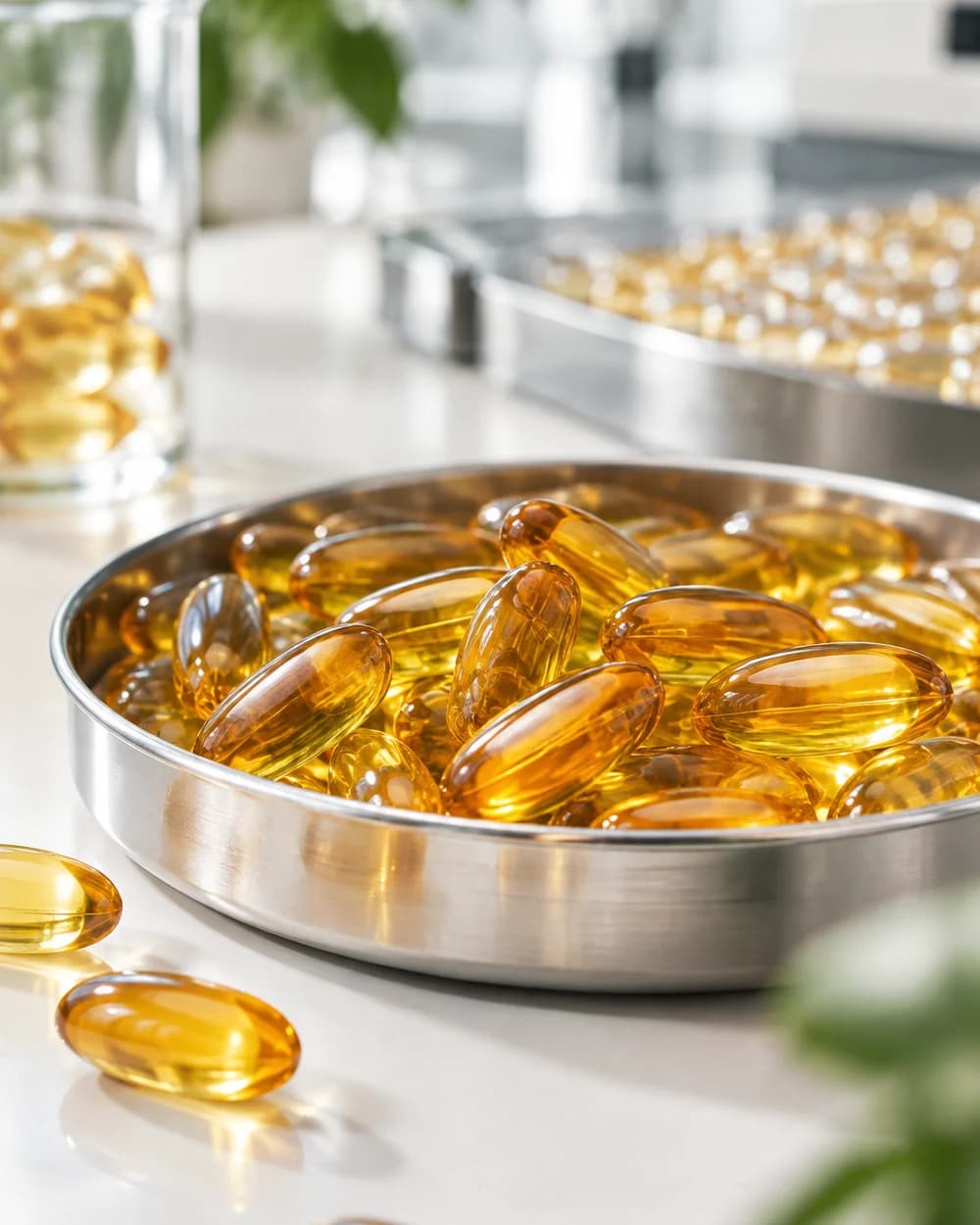
Algae Oil Softgel Manufacturer for Vegan Omega-3 Brands
Algae oil softgels deliver DHA and EPA without fish. This page covers fill weights, shell options, MOQs, lead times and certifications for brands sourcing a contract manufacturer in Guangdong, China.
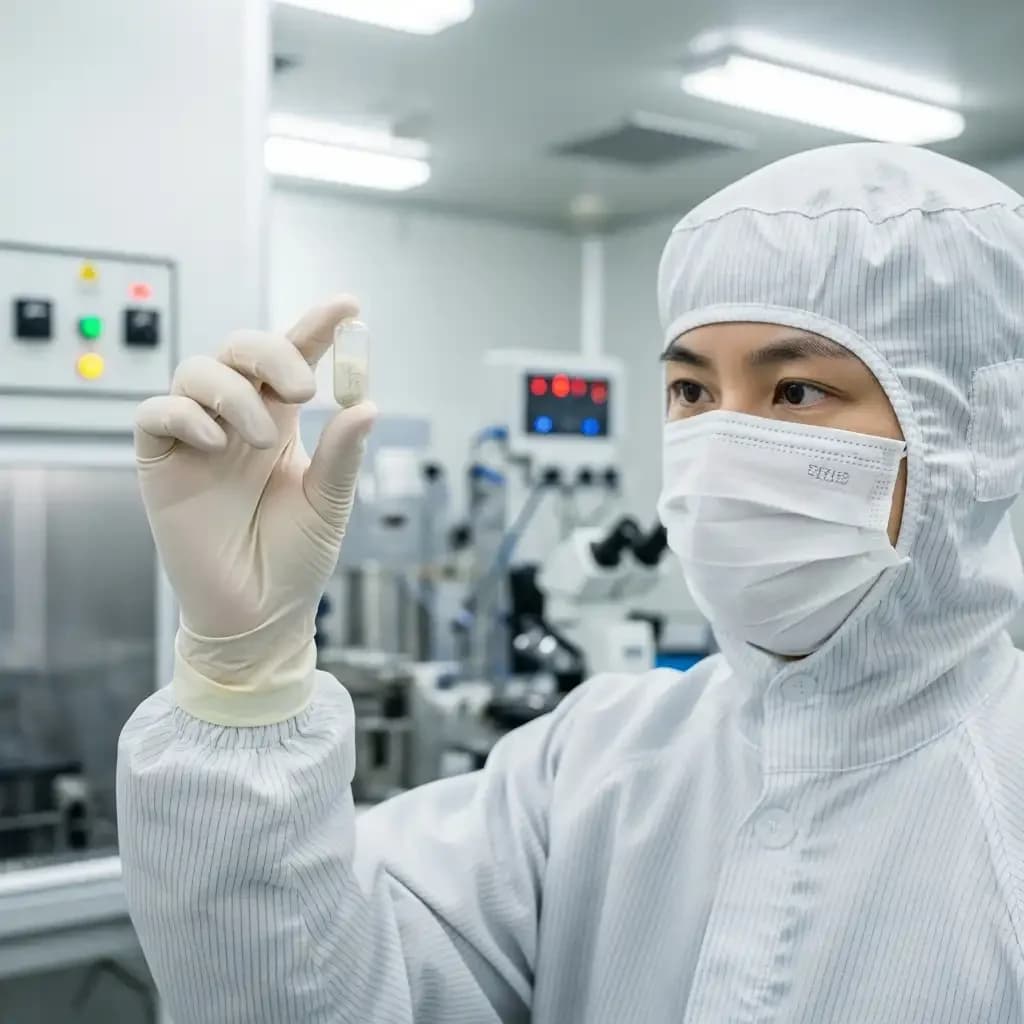
Overview
Algae oil is the plant-based route to omega-3. It suits vegan, vegetarian and allergen-conscious labels, and it avoids the fishy aftertaste that limits repeat purchase in fish oil capsules. Softgel format protects the oil from oxidation and gives a clean, easy-to-swallow dose. EUPHM produces algae oil softgels from 1,000 units per SKU, with pilot runs available below that. This page sets out the specifications, formulation choices and compliance documents buyers usually ask for before placing a first order.
| MOQ | 1,000 units per SKU for retail bottling; lower for pilot runs |
|---|---|
| Fill weight range | 250 mg to 1,200 mg oil per softgel |
| Softgel sizes | 8, 10, 12, 14, 16, 18, 20 oval; 8 and 10 round |
| Sample lead time | 7–10 working days |
| Mass production | 20–35 working days after sample approval |
| Certifications | GMP, ISO 9001, ISO 22000, HACCP, NSF/ANSI 455-2, halal, FDA-registered |
Softgel Production Capability
The plant runs rotary die encapsulation lines for oil-based fills. Algae oil is sensitive to heat and oxygen, so the fill room is temperature-controlled and nitrogen flushing is available on the oil line. Typical output is 300,000 to 600,000 softgels per day depending on size and shell formulation. For a 500 mg oval, a 1,000-unit pilot run and a 500,000-unit retail order use the same equipment and the same process parameters.
Drying and finishing follow encapsulation. Softgels pass through tumble dryers and then a drying tunnel at controlled humidity, typically 24 to 72 hours depending on shell thickness. After drying, they are inspected, polished and held for QC release before bottling. Bottling runs cover 30, 60, 90 and 120 count, with induction seals, child-resistant caps and desiccant options. Bulk softgels in food-grade drums are also available if you fill in-house.
Algae Oil Formulation Detail
Algae oil is derived from fermented microalgae, most commonly Schizochytrium sp. Standard grades carry 35–40% DHA and 10–15% EPA, or a higher DHA ratio for prenatal and cognitive-positioned products. Oil is sourced from suppliers with documented fermentation and refining processes, and each lot arrives with a certificate of analysis covering fatty acid profile, peroxide value, anisidine value and heavy metals. You can set a minimum DHA or total omega-3 claim on the finished label.
Shell formulation matters as much as the fill. Standard shells use bovine or porcine gelatin. For vegan and vegetarian labels, we use modified starch or carrageenan-based shells, which are slower to dry and need tighter humidity control. Shell plasticisers, opacifiers and colours are adjustable. Common requests include carob, titanium dioxide-free opaque white, and natural colours such as chlorophyllin. Enteric and delayed-release shells are available for products where a fishy reflux or stomach-release profile is a concern.
Quality, Compliance and Shipping
Every batch is tested before release. Incoming algae oil is checked for identity, fatty acid profile, oxidation markers and contaminants. Finished softgels are tested for fill weight, disintegration, microbial limits and, where relevant, residual solvents. Retain samples are kept for the shelf-life period. Stability studies at accelerated and ambient conditions support a 24-month shelf life, and we can run a real-time study for your specific shell and packaging combination.
Documentation covers certificates of analysis, GMP, ISO 22000 and HACCP records, plus halal or vegan certification where the formulation requires it. The facility is FDA-registered for dietary supplements. Shipping is by air or sea from Shenzhen or Hong Kong. Air freight typically takes 5–10 days to the US or EU; sea freight takes 25–40 days. We handle export documents, commercial invoices and packing lists, and can work with your freight forwarder or arrange door-to-door delivery.
Quality Control and Batch Documentation
Every algae oil softgel batch is tested against a written specification before release. Identity is confirmed by fatty acid profile (GC-FID), and potency is assayed for DHA and EPA content, with typical fill tolerances of ±5% of label claim. Microbial testing covers total aerobic count, yeast and mould, E. coli and Salmonella. Heavy metals (lead, cadmium, arsenic, mercury) are tested against EU and US pharmacopoeial limits, and disintegration is checked to USP <2040> for softgels. Testing occurs on incoming oil, on the bulk fill before encapsulation, and on the finished softgel.
The certificate of analysis (COA) issued with each batch lists batch number, production date, expiry date, fill weight, DHA and EPA content, peroxide value, anisidine value, microbial results, heavy metals and disintegration time. Retention samples of every batch are held for 24 months at 25°C/60% RH, and accelerated stability at 40°C/75% RH is run for three months to support a two-year shelf life. If you need a specific marker, such as total omega-3 or a particular sterol profile, state it at quotation so the specification and COA template can be agreed before the first batch.
Documentation is provided in English as standard, with Chinese or bilingual versions on request. Batch records are retained for five years and can be made available for audit. For algae oil softgels, we also record the origin and refinement status of the oil, since oxidation control is critical to taste and shelf life. Each batch is nitrogen-flushed during encapsulation and packed under nitrogen where the format allows. This is not a marketing claim but a process control that is recorded in the batch file and reflected in the peroxide value on the COA.
Packaging, Labelling and Retail Readiness
Algae oil softgels can be packed in HDPE bottles (30, 60, 90, 120 or 180 count), blister packs, stick packs or single-serve sachets. Bottles are induction-sealed and fitted with child-resistant or standard caps depending on market. Desiccant is added where humidity exposure during shipping is a risk. For Amazon and retail, we can apply FNSKU labels, poly-bag the bottles and print carton markings to your specification. Carton dimensions and pallet configurations are agreed at order stage: a typical 60-count bottle carton holds 24 units, with 48 cartons per pallet layer and up to 20 layers per pallet, depending on bottle size.
Labels must include the FDA dietary supplement statement of identity, net quantity, ingredient list, supplement facts panel, directions, warnings and the manufacturer or distributor name and address. We can print labels from your artwork or supply blank bottles for your own labelling. Lot and expiry coding is applied by inkjet or laser on the bottle and carton. Expiry is set from the stability protocol, normally 24 months from production when the oil is nitrogen-protected and the bottle is induction-sealed.
For EU retail, the label must also carry the food supplement symbol, the recommended daily portion, a warning not to exceed it, and storage instructions. Allergen declarations are not normally required for algae oil, but the shell may contain glycerol, carrageenan or modified starch, which must be declared. We check artwork against the destination market's basic requirements before printing, but final legal review remains with the brand owner. Retail-ready packaging, including shelf-ready trays and display cartons, can be quoted separately.
MOQ, Lead Times and Delivery
The standard MOQ for algae oil softgels is 1,000 units per SKU for retail bottling. Pilot runs below this are possible, with a minimum of 500 units, but the unit cost is higher because setup and cleaning are spread over fewer softgels. Samples are produced in 7–10 working days after artwork and specification approval, and sample costs are credited against the first mass-production order. Mass production runs 20–35 working days after sample approval, depending on softgel size, fill weight and packaging format. Larger orders and multi-SKU orders are scheduled to share encapsulation runs where the fill is identical.
Shipping is by air or sea. Air freight from Guangdong to Europe or North America typically takes 5–8 days door to door, while sea freight takes 25–35 days port to port. We quote EXW, FOB Shenzhen or Hong Kong, and DDP for selected destinations. DDP includes customs clearance and duties but requires a valid importer of record and product compliance in the destination market. For small orders, air freight is often more economical once inventory carrying cost is considered; for repeat orders above 500 kg, sea freight is usually lower per unit.
Documents provided with each shipment include the commercial invoice, packing list, COA for each batch, MSDS, and a free-sale certificate where required. A phytosanitary certificate is not normally relevant for softgels, but a health certificate can be arranged if your market requires one. We do not provide certificates of origin unless requested at quotation, as the form and issuing body vary by destination. All documents are issued in English, and we can coordinate with your freight forwarder or use our nominated forwarder for FOB and DDP terms.
Configurations to Compare
Vegan shell
Modified starch or carrageenan shell for vegan and vegetarian labels. No gelatin. Slightly longer drying time, same finished appearance.
DHA or EPA focus
Choose an oil grade with higher DHA for prenatal and cognitive products, or a balanced DHA/EPA ratio for general omega-3 positioning.
Enteric release
Enteric shell delays breakdown until the intestine, reducing reflux and aftertaste. Useful for higher fill weights and sensitive consumers.
Custom bottle and count
30, 60, 90 and 120 count bottles, induction seal, child-resistant cap, desiccant. Label and carton artwork handled to your spec.
Production in Six Steps
- 01
Brief and quote
Send fill weight, oil grade, shell type, count and target market. We return a quote with MOQ, unit cost and lead time, usually within 2 working days.
- 02
Sample production
We produce samples to your specification in 7–10 working days. Samples include a certificate of analysis and, where relevant, a vegan or halal declaration.
- 03
Sample approval
You review appearance, fill weight, smell and label fit. Adjustments to shell, colour or oil grade are made before mass production starts.
- 04
Mass production
Production runs in 20–35 working days after approval. You receive batch records and a certificate of analysis before release.
- 05
QC and release
Finished goods are tested for fill weight, disintegration, microbial limits and oxidation markers. Retain samples are held for the shelf-life period.
- 06
Shipping and documents
We pack for air or sea freight, prepare export documents and ship from Shenzhen or Hong Kong. Door-to-door delivery is available on request.
Why EUPHM
Vegan without compromise
Plant-based shell and algae-derived fill. Suitable for vegan, vegetarian and allergen-conscious labels without a fish oil supply chain.
Low MOQ for market tests
Start at 1,000 units per SKU, with pilot runs below that. Test a new DHA claim or shell colour before committing to a full batch.
Documents ready for audit
GMP, ISO 9001, ISO 22000, HACCP, NSF/ANSI 455-2 and halal certification; FDA facility registration for US-bound shipments.
Questions buyers ask.
What is the MOQ for algae oil softgels?+
MOQ is 1,000 units per SKU for retail bottling. Pilot runs below 1,000 units are possible for market testing, with a higher unit cost. Bulk softgels in drums have a separate MOQ based on batch size.
Can you make a vegan softgel shell?+
Yes. We use modified starch or carrageenan shells instead of gelatin. Vegan certification is available. Drying takes longer than gelatin shells, so add roughly 3–5 working days to the production schedule.
What DHA and EPA levels can you fill?+
Standard algae oil grades carry 35–40% DHA and 10–15% EPA. Higher-DHA grades are available for prenatal and cognitive products. We match the oil grade to your label claim and confirm the fatty acid profile in the certificate of analysis.
How long does production take?+
Samples take 7–10 working days. Mass production takes 20–35 working days after sample approval, depending on softgel size, shell type and bottling requirements. Vegan shells and enteric shells sit at the longer end of that range.
Which certifications do you hold?+
The facility is GMP-certified and holds ISO 22000 and HACCP. Halal and vegan certification are available depending on the formulation. The facility is FDA-registered for dietary supplements. We do not claim FDA approval of any product.
Can you supply algae oil softgels with a specific peroxide value limit?+
Yes. Peroxide value is a key oxidation marker for algae oil. We routinely test it on incoming oil and on finished softgels, and we can set a specification limit, typically below 5 meq/kg for fresh oil and below 10 meq/kg at end of shelf life. If you need a tighter limit, state it at quotation so the oil supplier and encapsulation process can be matched to that requirement. The COA will report the actual result against the agreed limit.
Do you offer low-temperature or cold-chain shipping for algae oil softgels?+
Algae oil softgels are stable at ambient temperatures when protected from light and moisture. We do not normally use cold-chain shipping. For destinations with extreme summer heat, we can add insulated liners or desiccant and ship in ventilated containers. If your stability data require storage below 25°C, we can include temperature-logger data on request. The decision on cold-chain should be based on your stability protocol and market climate, and we can advise on packaging options.
What is the shelf life of your algae oil softgels and how is it supported?+
Shelf life is set at 24 months from production when the softgels are nitrogen-flushed, induction-sealed in HDPE bottles and stored below 25°C away from direct light. This is supported by three-month accelerated stability at 40°C/75% RH and ongoing real-time retention samples. If you need a 36-month shelf life, we can discuss a stability programme at quotation, but it would require additional testing and may affect packaging choice. The expiry date on the label is calculated from the batch production date.
Have a product in mind?
Send us the brief and we will come back with a formulation direction, indicative price and a realistic lead time — usually within one working day.