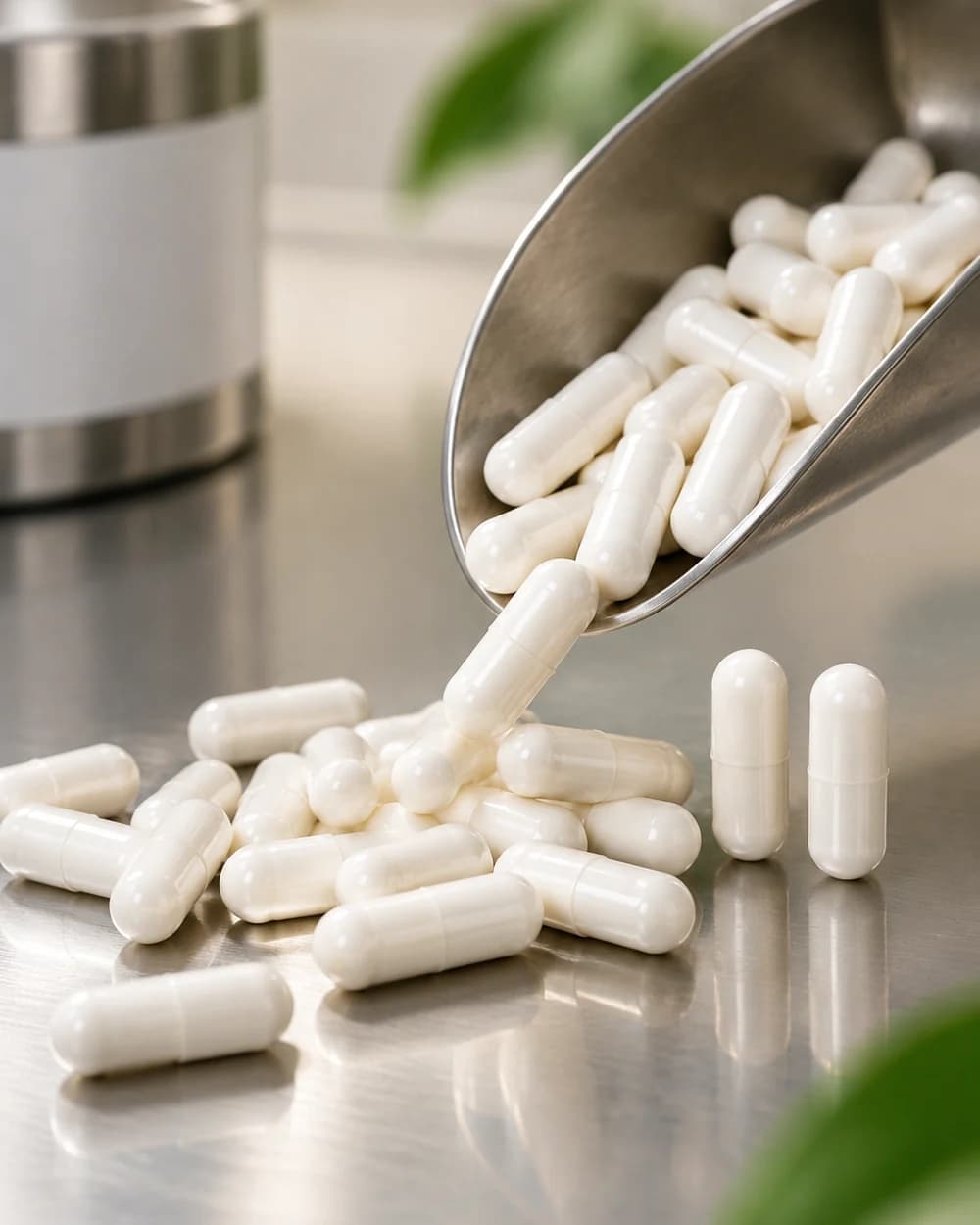
Capsule Manufacturer for Dietary Supplements
EUPHM is a GMP-certified capsule manufacturer in Guangdong, China. We produce vegan, gelatin, and delayed-release capsules at MOQ 1,000 units, with 7–10 day samples and 20–35 day mass production.
Overview
Sourcing capsules requires a manufacturer that controls fill weight, shell integrity, and documentation. EUPHM runs capsule filling lines for sizes 0–3, with fill weights from 100 mg to 1,200 mg. We handle vegan HPMC, bovine gelatin, and enteric-coated shells. Certifications include GMP, ISO 22000, HACCP, plus halal, and vegan where applicable. This page covers our capsule capabilities, formulation support, quality systems, and order logistics.
- MOQ
- 1,000 units per SKU; lower for pilot runs
- Capsule sizes
- 0, 1, 2, 3; custom sizes on request
- Fill weight range
- 100 mg to 1,200 mg
- Shell options
- Vegan HPMC, bovine gelatin, enteric-coated
- Sample lead time
- 7–10 working days
- Mass production
- 20–35 working days after approval
Capsule Filling Capacity and Formats
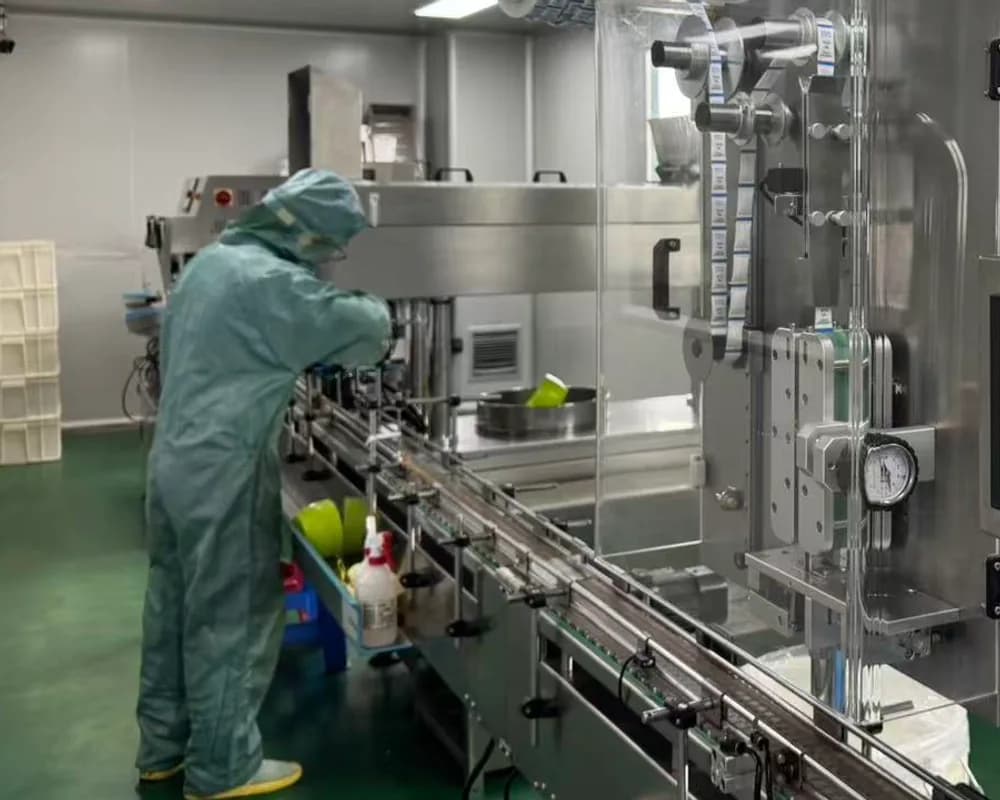
Our capsule filling suite runs automatic and semi-automatic lines. Monthly capacity is 12–18 million capsules across sizes 0–3. We fill powders, granules, pellets, and small tablets into capsules. For two-piece capsules, we control fill weight to ±3% and lock length to ±0.3 mm. This matters when your label claim depends on exact dosage. We also handle banding and sealing for hygroscopic or high-value formulas.
Format options include standard two-piece, enteric-coated, and delayed-release capsules. Enteric coating protects acid-sensitive ingredients such as probiotics, enzymes, and certain botanicals. We run in-process checks every 30 minutes for weight, lock length, and appearance. Batch records capture every adjustment. If your product needs a specific capsule colour or print, we source shells from qualified suppliers with 4–6 week lead times.
Formulation Support for Capsule Products
Capsule formulation is not just filling. Flowability, particle size, and hygroscopicity affect fill weight consistency and shell stability. Our R&D team reviews your formula and recommends excipients such as silicon dioxide, magnesium stearate, or microcrystalline cellulose. We can also develop a formula from scratch if you provide a target ingredient list. Typical development takes 5–10 working days for a lab-scale prototype.
We work with a wide ingredient range: vitamins, minerals, amino acids, herbal extracts, probiotics, enzymes, and specialty blends. For probiotics, we use low-humidity filling and nitrogen flushing to maintain CFU counts. For herbal extracts, we check mesh size and bulk density before filling. If an ingredient is sticky or static-prone, we adjust the filler and run a trial batch. All formulas are reviewed for compatibility with the chosen shell material.
Quality Systems and Order Logistics
Our facility is GMP-certified and holds ISO 22000 and HACCP. We are FDA-registered for dietary supplements. Depending on the project, we can produce under halal, or vegan certification. Every batch is tested for identity, potency, microbial limits, heavy metals, and disintegration. We retain samples for 2 years. Certificates of analysis are issued per batch. Third-party lab testing is available on request.
Logistics are straightforward. We ship FOB Shenzhen or Hong Kong, or CIF to your port. Air freight for samples and small orders takes 3–7 days. Sea freight for full containers takes 18–35 days depending on destination. We provide commercial invoices, packing lists, certificates of origin, and health certificates. For repeat orders, we hold your approved formula and artwork for 12 months. Lead time for mass production is 20–35 working days after sample approval and deposit.
Capsule Manufacturing Quality Control and Batch Documentation
Every capsule batch is tested against a written specification before release. Incoming raw materials are sampled for identity by FTIR or HPLC, and each active ingredient is assayed for potency. Excipients such as magnesium stearate and silicon dioxide are checked for conformity. During encapsulation, in-process checks record fill weight every 15 minutes, with a target tolerance of ±5% for most formulas. Shell integrity is inspected visually and by leak testing on a defined AQL sampling plan.
Finished capsules are tested for microbial limits (total aerobic count, yeast and mould, E. coli and Salmonella), heavy metals (lead, cadmium, arsenic, mercury) by ICP-MS, and disintegration time according to the method in the relevant pharmacopoeia. Where a product claims enteric release, acid resistance is tested in simulated gastric fluid. Pesticides and residual solvents are tested when the ingredient risk profile requires it. Results are recorded on a certificate of analysis (COA) that lists specification, method, result and pass/fail status for each parameter.
Retention samples from every batch are stored under labelled conditions for at least two years after the expiry date, or for the duration of the shelf life plus one year, whichever is longer. Stability studies follow a bracketed protocol at 25°C/60% RH and 40°C/75% RH, with testing at 0, 3, 6, 12, 18 and 24 months. Accelerated data supports the initial shelf-life assignment; ongoing studies confirm it. The capsule manufacturer provides the stability summary and COA with each shipment, and batch records are retained for inspection.
Documentation is available in English as standard, with bilingual labelling support where needed. The COA includes the product name, batch number, manufacturing date, expiry date, capsule size and shell type, fill weight, and the test results mentioned above. A separate specification sheet lists the approved formula and capsule dimensions. If your market requires a specific format, such as a customer-supplied COA template, we can complete it during the order set-up.
Capsule Packaging, Labelling and Retail-Ready Presentation
Capsules can be packed in HDPE bottles with induction seals and child-resistant or standard closures, in blister packs using PVC/PVDC or alu-alu, in stick packs, or in single-serve sachets. Bottle sizes range from 30 cc to 500 cc, with typical counts of 30, 60, 90, 120 or 180 capsules. Blister cards are available in 10, 12 or 14 cavity formats. Stick and sachet formats suit powder-filled capsules or blends and are filled on separate lines. We confirm the packaging format and count per SKU before artwork approval.
For the US market, labels must include the statement of identity, net quantity of contents, supplement facts panel, ingredient list, allergen declaration where applicable, and the manufacturer or distributor name and address. We can print lot number and expiry date by inkjet or laser, with a clear format such as LOT 12345 and EXP 2026-08. For EU and UK markets, the label must show the food business operator, a best-before date, storage conditions and any required warnings. We do not provide regulatory advice, but we check that the artwork you supply contains the mandatory fields before printing.
Cartons are specified to protect the primary pack during transit. A typical export carton holds 12 to 48 bottles, depending on size, and is labelled with product name, batch number, quantity and gross weight. Pallets are built to a standard 1,200 x 1,000 mm or 1,200 x 800 mm footprint, stretch-wrapped and corner-protected. We can apply Amazon FNSKU labels, poly-bag units for retail-ready shipments, and remove or cover prices as required. Retail compliance checks are limited to label and packaging format; the brand owner remains responsible for marketplace compliance.
Artwork approval follows a two-stage proof: a PDF proof for text and layout, then a physical or digital mock-up for colour and finish. Lead times for printed packaging add 10 to 15 working days to the production window. If you supply your own packaging components, we can run a compatibility check on filling lines before the main production run. All packaging materials that contact the product are food-grade and supported by supplier declarations.
Capsule Manufacturing MOQ, Lead Times and Delivery Terms
Sample orders start at 1,000 to 5,000 capsules per SKU, and pilot runs can be lower on request. Sample production takes 7 to 10 working days after formula and shell confirmation, plus shipping time. Mass production runs 20 to 35 working days after sample approval and receipt of packaging materials. Printed labels and cartons add 10 to 15 working days. We provide a written schedule at order confirmation and update it if raw material or packaging delays occur.
Air freight is typically used for samples and urgent orders, with transit times of 5 to 10 working days to the US, EU and UK, and 4 to 8 working days to the Middle East. Sea freight takes 25 to 40 days depending on destination port and routing. We quote EXW, FOB Shenzhen or Hong Kong, and DDP for selected destinations. For DDP, we confirm the importer of record and duty payment terms in writing before booking. Shipping documents include commercial invoice, packing list, bill of lading or air waybill, COA and MSDS.
A free-sale certificate is available on request for markets that require it. A phytosanitary certificate is issued only where the product contains plant-derived materials that fall under the importing country's plant health rules; we confirm this at order stage. Certificates of origin can be provided for preferential tariff treatment where applicable. The capsule manufacturer ships from Guangdong and works with freight forwarders experienced in dietary supplement imports.
Order quantities above 100,000 capsules per SKU are scheduled on dedicated filling blocks to reduce changeover risk. For repeat orders, we keep the approved formula, shell specification and artwork on file, so the reorder process starts from a confirmed specification rather than a new development cycle. Lead times for repeat orders are typically 5 working days shorter than first orders, subject to packaging availability.
Why hard capsules still win — and where they stop working
A two-piece hard capsule is the cheapest way to deliver 50–800 mg of powder with no heat, no water and no compression force, which is why it remains the default for vitamins, minerals, amino acids and most botanical extracts. It is also the most label-friendly: the shell is transparent or opaque, vegetarian HPMC or gelatin, and release is immediate unless you specify a delayed-release shell.
It stops working for three things: liquids and oils (that is a softgel), highly hygroscopic powders that pull moisture through the shell and go brittle or sticky, and actives that need taste masking because a capsule cannot hide a bad flavour if the customer opens it. Low-dose potent actives also need dilution with a carrier to fill the capsule consistently — a 5 mg active in a 500 mg capsule is a blending problem before it is a filling problem.
Capsule filling: the numbers that decide batch quality
Fill weight is controlled to ±2–3% by dosator or auger, checked every 15 minutes, and the filling room is held at 45–55% RH because dry shells crack and damp shells deform in the closing station. For powder blends the real risk is segregation: we validate blend uniformity to a CV below 5% and re-check it after transport to the machine.
Every batch gets disintegration (typically under 15 minutes for immediate release), microbio and, where the claim requires it, dissolution. Liquid-fill and banded capsules get a seal-integrity check because a leaking seam is invisible until the bottle is opened six months later. Capsules are also the format where your choice of shell material is a marketing decision: HPMC for vegan and halal claims, gelatin where cost and oxygen barrier matter more.
What We Can Build
Vegan HPMC capsules
Plant-based shell for vegan, vegetarian, and clean-label products. Available in sizes 0–3. Suitable for most powder and pellet fills.
Gelatin capsules
Bovine or porcine gelatin. Lower cost for standard formulas. Good for oil-based and low-moisture fills. Halal grades available.
Enteric-coated capsules
Delayed release for acid-sensitive ingredients. Protects probiotics, enzymes, and certain botanicals through the stomach.
Custom colours and print
Match brand colours with titanium dioxide or natural pigments. Axial or radial printing for logo and dosage. 4–6 week shell lead time.
How a Project Runs
- 01
Send your formula
Share your ingredient list, target fill weight, and capsule size. We review for feasibility and flag any compatibility issues within 2 working days.
- 02
Quotation and MOQ
We quote per unit based on formula, shell type, and order quantity. MOQ is 1,000 units per SKU. Pilot runs are available at lower MOQ.
- 03
Sample production
We produce a lab-scale or pilot batch. Sample lead time is 7–10 working days. You receive samples with a preliminary COA for approval.
- 04
Sample approval
You test the samples for appearance, fill weight, and disintegration. We adjust the formula or shell if needed. Approval triggers mass production.
- 05
Mass production
We schedule your batch on the filling line. Production takes 20–35 working days. In-process checks run every 30 minutes. Batch records are kept.
- 06
QC and shipping
Final QC tests identity, potency, microbials, and heavy metals. We issue a COA and ship FOB or CIF. Air freight takes 3–7 days; sea freight 18–35 days.
Why EUPHM
Low MOQ for pilots
Start with 1,000 units per SKU. Lower MOQ for pilot runs. Scale to 12–18 million capsules per month as demand grows.
Certified quality
GMP, ISO 9001, ISO 22000, HACCP, NSF/ANSI 455-2 and halal certification; FDA facility registration for US-bound shipments.
Fast sampling
7–10 working days for samples. 20–35 working days for mass production. Clear timelines from quote to delivery.
Questions buyers ask.
What is the MOQ for capsule manufacturing?+
MOQ is 1,000 units per SKU for retail bottling. For pilot runs, we can go lower, typically 1,000 units, depending on formula and shell type. MOQ is confirmed at quotation.
How long does sample production take?+
Sample lead time is 7–10 working days after we receive your formula and confirm the shell type. This includes lab-scale production, in-house testing, and shipping. You receive a preliminary COA with the samples.
Can you produce vegan capsules?+
Yes. We fill vegan HPMC capsules in sizes 0–3. Vegan certification is available. We also run gelatin and enteric-coated capsules on separate lines to avoid cross-contamination.
What certifications does your facility hold?+
We hold GMP, ISO 22000, and HACCP. We are FDA-registered for dietary supplements. Halal, and vegan certifications are available depending on the project. Certificates are provided with each batch.
Do you ship to the US, EU, UK, and Middle East?+
Yes. We ship FOB Shenzhen or Hong Kong, or CIF to your port. Air freight takes 3–7 days; sea freight takes 18–35 days. We provide commercial invoices, packing lists, certificates of origin, and health certificates for customs clearance.
Can you encapsulate heat-sensitive or hygroscopic ingredients?+
Yes, with process controls. Heat-sensitive ingredients are handled with short residence times and controlled room temperature and humidity (typically 20–25°C and below 45% RH). Hygroscopic materials may require shell selection or a desiccant in the finished pack. We run a small-scale trial to confirm fill weight stability and disintegration before committing to production. If an ingredient is not suitable for capsule filling, we will say so at the quotation stage.
What is your policy on allergen and cross-contact control?+
We maintain an allergen register and apply line clearance and cleaning verification between products containing major allergens and those that do not. Shared lines are unavoidable in a contract facility, so we do not claim allergen-free status unless the formula and line schedule support it. For products making allergen claims, we review the full ingredient and processing chain and provide a written assessment. The brand owner remains responsible for final label claims.
How do you handle formula confidentiality and intellectual property?+
We sign a mutual non-disclosure agreement before receiving your formula. Batch records and specifications are access-controlled and shared only with staff involved in production and quality. We do not use your formula for any other customer or for our own products. On request, we can restrict the COA to test results without disclosing full quantitative composition. Tooling and artwork files remain your property.
Other versions built in this dosage form.
- Vegan Capsule Manufacturer
- HPMC Capsule Manufacturer
- Enteric Capsule Manufacturer
- Two-Piece Capsule Manufacturer
- Pullulan Capsule Manufacturer
- Delayed-Release Capsule Manufacturer
- Two-in-One Capsule Manufacturer
- Hard Gelatin Capsule Manufacturer
- Vitamin B Complex Capsule Manufacturer
- Vitamin K2 Capsule Manufacturer
- Vitamin E Capsule Manufacturer
- CoQ10 Capsule Manufacturer
- Probiotics Capsule Manufacturer
- Prebiotics Capsule Manufacturer
- Hyaluronic Acid Capsule Manufacturer
- Selenium Capsule Manufacturer
- Chromium Capsule Manufacturer
- Ashwagandha Capsule Manufacturer
- Turmeric Capsule Manufacturer
- Apple Cider Vinegar Capsule Manufacturer
- Glutathione Capsule Manufacturer
- NMN Capsule Manufacturer
- NAD+ Capsule Manufacturer
- Berberine Capsule Manufacturer
- Milk Thistle Capsule Manufacturer
- Mushroom Extract Capsule Manufacturer
- Maca Capsule Manufacturer
- Ginseng Capsule Manufacturer
- Propolis Capsule Manufacturer
- Royal Jelly Capsule Manufacturer
- Glucosamine Capsule Manufacturer
- MSM Capsule Manufacturer
- Psyllium Fiber Capsule Manufacturer
- Taurine Capsule Manufacturer
- L-Theanine Capsule Manufacturer
- GABA Capsule Manufacturer
- 5-HTP Capsule Manufacturer
- Weight Management Capsule Manufacturer
- Menopause Capsule Manufacturer
- Prostate Capsule Manufacturer
- Joint Health Capsule Manufacturer
- Detox Capsule Manufacturer
Have a product in mind?
Send us the brief and we will come back with a formulation direction, indicative price and a realistic lead time — usually within one working day.