Liquid Supplement Manufacturer for Scalable Production
EUPHM produces liquid dietary supplements in Guangdong, China. We handle tinctures, shots, syrups, and suspensions from pilot runs to 50,000-unit batches. MOQ starts at 1,000 units per SKU.
Overview
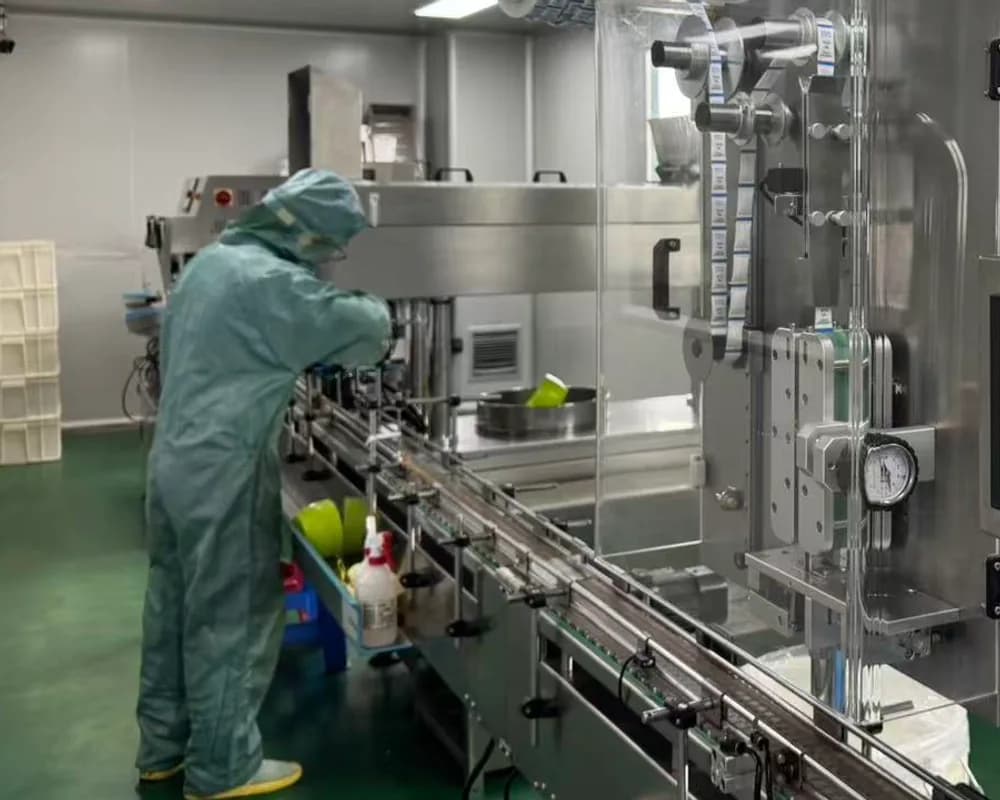
Liquid formats offer faster absorption and easier swallowing than tablets or capsules. They also demand tighter control of solubility, preservative systems, and fill accuracy. Our GMP-certified facility runs dedicated liquid lines with inline filtration and nitrogen purging. We support both alcohol-based tinctures and water-based shots. Pilot runs start at 1,000 units; retail bottling at 1,000 units per SKU.
| MOQ (retail bottling) | 1,000 units per SKU |
|---|---|
| Pilot run MOQ | 1,000 units per SKU |
| Fill volume range | 10 mL to 1,000 mL |
| Sample lead time | 7-10 working days |
| Mass production lead time | 20-35 working days after sample approval |
| Certifications | GMP, ISO 9001, ISO 22000, HACCP, NSF/ANSI 455-2, halal, FDA-registered |
Liquid Filling and Packaging Capability
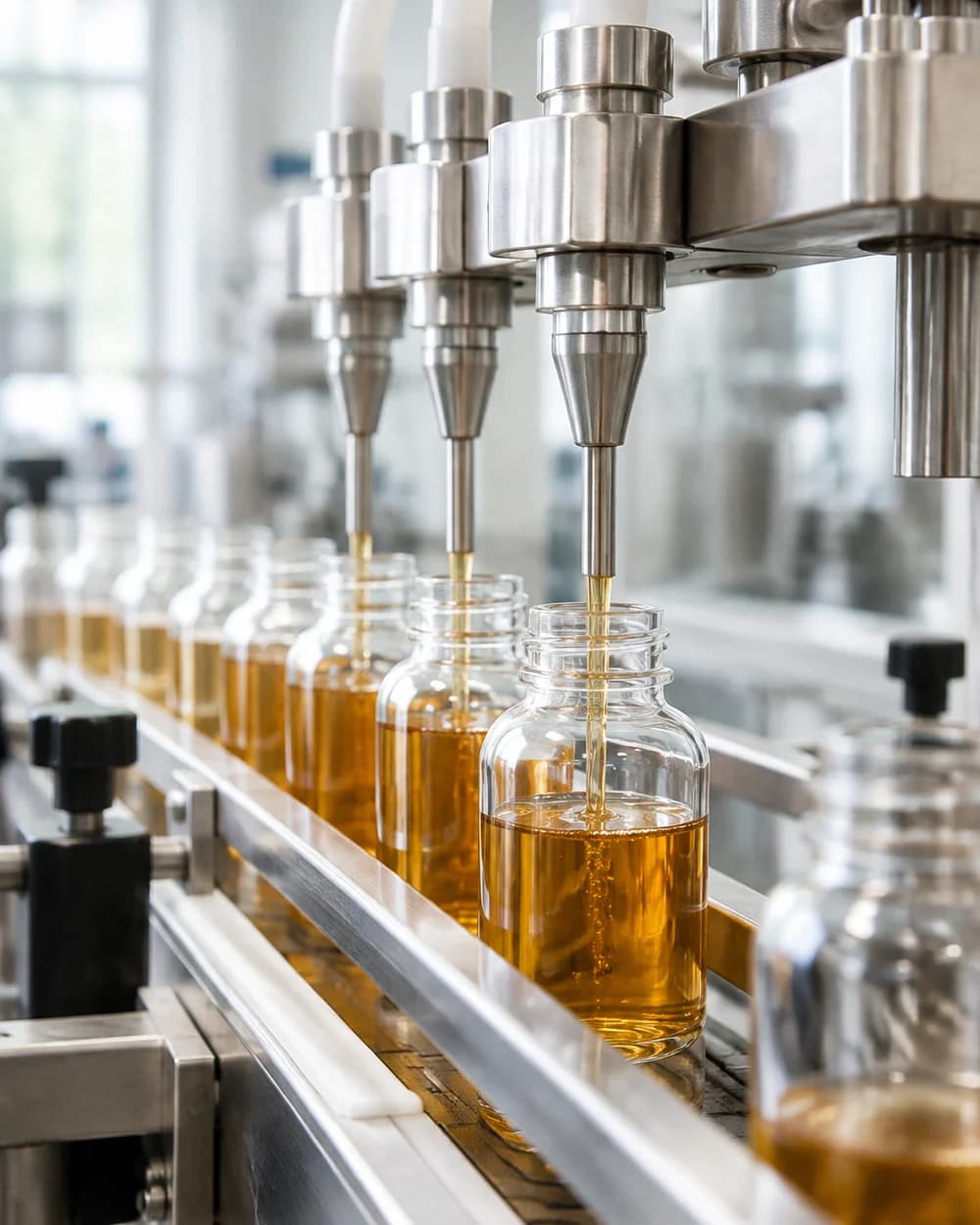
Our Guangdong plant operates four automated liquid filling lines. They handle amber glass dropper bottles, PET shot bottles, HDPE syrups, and single-serve sachets. Fill accuracy is ±1% for volumes above 50 mL and ±2% for smaller fills. We run nitrogen purging for oxidation-sensitive actives and inline 0.2-micron filtration for microbial control. Changeover between SKUs takes 4-6 hours, which keeps small batches economical.
We stock standard bottle sizes: 30 mL, 50 mL, 60 mL, 100 mL, and 250 mL. Custom moulds for unique bottle shapes add 15-20 working days and a one-time tooling cost. Caps, droppers, and tamper-evident seals are sourced from qualified suppliers. Labelling options include pressure-sensitive, shrink sleeve, and direct print. We can also pack into retail cartons with your artwork.
Formulation Support for Liquid Dosage Forms
Liquid formulations are sensitive to pH, ionic strength, and temperature. Our R&D team helps you select the right solvent system: water, ethanol, glycerin, propylene glycol, or a blend. For tinctures, we recommend 40-60% ethanol for preservation. For alcohol-free shots, we use potassium sorbate and sodium benzoate at 0.1% each, combined with citric acid for pH 3.5-4.0. Suspensions require xanthan gum or microcrystalline cellulose to keep actives dispersed.
We source ingredients from approved suppliers with full traceability. Common actives include vitamin D3, vitamin B12, melatonin, elderberry, CBD isolate, and herbal extracts. We test every incoming lot for identity, potency, and heavy metals. Flavour masking is available for bitter actives. We can also match a competitor's taste profile within 2-3 sample rounds.
Quality Control and Compliance
Every liquid batch undergoes in-process checks: pH, viscosity, specific gravity, and fill volume. Finished products are tested for microbial limits, heavy metals, and potency by third-party labs. We retain samples for 24 months. Our facility is GMP-certified, ISO 22000, and HACCP. We also hold halal and vegan certifications where applicable.
Documentation includes Certificate of Analysis, MSDS, and full batch records. We provide stability data for 24-month shelf life at room temperature. For US-bound products, we can supply FDA-registered facility documentation. For EU and UK, we assist with compliance to EC 1924/2006 and UK novel food rules. Our team also handles export paperwork for Middle East markets.
Batch Testing, COAs and Retention Samples
Every liquid batch is tested at three stages: incoming raw materials, in-process fill checks, and finished product release. Identity and potency are confirmed by HPLC or titration against a validated standard, with microbials tested to USP <61> and <62> limits, heavy metals to USP <232> or EU 2023/915, and pH, viscosity and density recorded per batch. Fill weight is checked every 30 minutes on the line, with a tolerance of ±2% for volumes above 100 mL and ±3% below.
Release testing includes a preservative efficacy test where applicable, plus a 14-day accelerated stability check at 40°C/75% RH before the batch is signed off. Each shipment carries a certificate of analysis listing the test method, specification, result and pass/fail status for every parameter. Retention samples of every batch are held for 24 months at ambient conditions, and a second set is stored at 30°C/65% RH for ongoing stability monitoring.
Stability protocols follow ICH Q1A(R2) guidelines, with real-time data at 25°C/60% RH and 30°C/65% RH for 24 months, plus accelerated conditions at 40°C/75% RH for six months. Where a product is marketed in tropical climates, we add a 30°C/75% RH arm. The stability protocol is agreed before pilot runs, and the first three commercial batches are placed on the programme automatically. Results are shared as interim reports at 3, 6, 12 and 24 months.
Deviation handling is documented under our GMP quality system. Any out-of-specification result triggers a root-cause investigation, and the batch is placed on hold until disposition is approved by the quality manager. We do not release product on a certificate alone; the batch record, line clearance checklist and environmental monitoring data for the filling room are reviewed together. Records are retained for five years, which meets EU and US expectations for dietary-supplement documentation.
Packaging, Labelling and Retail Readiness
Liquid formats can be filled into amber or clear glass bottles, PET bottles, single-serve stick packs, sachets or 10 mL to 30 mL shot bottles. Closures include tamper-evident screw caps, dropper assemblies and child-resistant caps where the product requires them. We hold stock tooling for common bottle sizes and can quote custom moulds for a new shape, typically with a 25 to 35 day tooling lead time. Label application is done inline, with vision inspection for placement and lot code readability.
Labels are set up to meet FDA dietary-supplement requirements: statement of identity, net quantity, supplement facts panel, ingredient list, allergen declaration, and the manufacturer or distributor address. We support bilingual labels for EU and Middle East markets, and can add halal marks only where the relevant certificate covers the specific SKU. Lot and expiry coding is applied by inkjet or laser, with the format agreed at artwork approval. We do not print claims that require substantiation unless the brand provides the supporting file.
Carton specifications are agreed per SKU: typical retail cartons are 12, 24 or 48 units, with dimensions and board grade confirmed against a dieline. Pallet configurations are built to a maximum height of 1.8 m for sea freight and 1.6 m for air, with shrink-wrap and edge protectors. We can print and apply Amazon FNSKU labels, poly-bag units where required, and prepare cartons for FBA with the correct box weight and dimension limits. Retail compliance checks cover barcode scannability and carton drop testing.
Before mass production, we produce a packaging approval sheet showing the bottle, closure, label and carton together. The brand signs this off, and it becomes the reference for the line. Any change to bottle supplier, label stock or carton printer after approval requires a new sign-off. For private-label launches, we can hold packaging components in our warehouse and schedule bottling in phases, so the brand does not need to take the full MOQ in a single delivery.
MOQ, Lead Times and Delivery
Sampling starts with a formulation brief and target dosage. We provide a quotation within three working days, and a pilot sample in 7 to 10 working days once the brief is confirmed. If a new flavour or colour system is required, add 5 working days. Sample costs are quoted per project and are credited against the first mass-production order. The sample is sent with a draft specification sheet, so the brand can confirm taste, mouthfeel, pH and appearance before committing to a pilot run.
Mass production runs 20 to 35 working days after sample approval, depending on bottle availability and whether the label is supplied by the brand or printed by us. Pilot runs at 1,000 units are scheduled in shorter windows, usually 10 to 15 working days. We confirm the production slot in writing once the deposit is received and artwork is approved. Delays in artwork or packaging supply move the slot, so we ask brands to lock label files at least 10 working days before the planned start.
Shipping is quoted on EXW, FOB Shenzhen or Hong Kong, and DDP for selected destinations. Air freight is typically 5 to 8 days door to door and suits pilot or launch volumes; sea freight is 18 to 35 days depending on port and takes LCL or FCL. We provide a commercial invoice, packing list, certificate of analysis, material safety data sheet where relevant, and a free-sale certificate for markets that require one. Phytosanitary certificates are issued only where the product contains botanical ingredients that the destination country regulates.
For DDP shipments, we handle customs clearance and duty where the destination allows, and confirm the landed cost before booking. We do not ship without a signed artwork approval and a confirmed shipping document set. Where a brand needs to split delivery across multiple Amazon fulfilment centres, we can prepare separate carton markings and ASN data. Delivery dates are confirmed against the production schedule, and any change is notified in writing with a revised date.
Why liquids feel fast — and why they are the hardest to keep stable
A liquid is the easiest format to dose and the fastest to be believed: syrup, drops, shots and tonics need no swallowing, can be measured to a child's weight, and consumers read 'liquid' as 'absorbs faster'. That perception is worth a lot in kids, sleep and immunity categories, and the fill cost is low.
Stability is where it gets expensive. Water is a reaction medium, so hydrolysis, oxidation and microbial growth all become live problems: you need a preservative system validated by a preservative efficacy test, pH control, and often a chelator. Many actives simply will not survive 24 months in water — vitamin C, probiotics and most enzymes among them — and a liquid that separates or changes colour on the shelf is a return, not a complaint.
Liquid line control: pH, preservative and fill volume
Preserved syrups usually sit at pH 3.5–4.5, where the preservative works and most flavours stay stable; the exact set point is fixed per formula and checked on every batch before filling. Preservative efficacy is tested against the target market's pharmacopoeial method, not assumed from the supplier's data sheet. Viscosity is measured in cP so the fill nozzle and the mouthfeel both stay in spec.
Filling runs on volumetric or net-weight principle with fill volume held to ±1–2%, followed by cap torque, leak and label checks. Stability runs at 25 °C/60% RH and 40 °C/75% RH for the full shelf life, with taste and colour panels because a liquid can pass assay and still be unsellable. Shots and single-dose bottles add a sterilisation or hot-fill decision to the process, which is set at formula stage — not at the filler.
Options for Your Format
Tinctures and drops
Alcohol or glycerin-based extracts in 30-60 mL dropper bottles. Suitable for herbal actives and CBD. Fill volumes from 10 mL to 100 mL.
Shots and vials
Single-serve 60-100 mL PET or glass bottles. Ideal for energy, immunity, and beauty shots. Nitrogen purged for shelf stability.
Syrups and suspensions
Viscous liquids in 100-500 mL bottles. Used for cough syrups, multivitamins, and mineral supplements. Preservative systems available.
Sachets and stick packs
Single-use 10-30 mL foil sachets. Lightweight for e-commerce and travel. Fill accuracy ±2%. MOQ 5,000 units per SKU.
From Enquiry to Delivery
- 01
Share your brief
Send your target actives, fill volume, bottle type, and market. We confirm feasibility and send a quote within 2 working days.
- 02
Formulation and sampling
Our R&D team develops a formula. You receive 2-3 sample rounds in 7-10 working days per round. Adjust taste, colour, and viscosity.
- 03
Sample approval
You approve the final sample and sign off on the specification sheet. We lock the formula and order raw materials.
- 04
Production and QC
Mass production runs 20-35 working days after approval. In-process checks occur every 30 minutes. Third-party lab testing follows.
- 05
Packaging and labelling
We fill, cap, label, and pack into retail cartons. Artwork proofing takes 2-3 working days. We can apply your barcodes and batch codes.
- 06
Shipping and documentation
We arrange air or sea freight from Shenzhen or Hong Kong. Full export documents, COA, and MSDS are provided. Lead time to US West Coast: 18-25 days by sea.
Why EUPHM
Low MOQ for pilot runs
Start with 1,000 units to test the market. Scale to 50,000 units without changing equipment or suppliers.
Fast sampling
Receive initial liquid samples in 7-10 working days. Two revision rounds included at no extra cost.
Full compliance support
We provide documentation for FDA, EU, UK, and Middle East markets. Certifications include halal and vegan.
Questions buyers ask.
What is the MOQ for liquid supplements?+
For retail bottling, MOQ is 1,000 units per SKU. Pilot runs start at 1,000 units. Sachets and stick packs have a higher MOQ of 5,000 units due to tooling setup. We can mix bottle sizes within one order to reach the total.
How long does sampling take?+
Sample lead time is 7-10 working days after we receive your brief and any reference samples. Complex formulations with multiple actives may take 10-15 working days. You get 2-3 sample rounds to adjust taste, colour, and viscosity before approval.
Do you offer preservative-free liquid options?+
Yes. We can produce preservative-free liquids using nitrogen purging, hot fill, or sterile filtration. These require refrigerated storage after opening. We recommend a 12-month shelf life for preservative-free formats. Stability testing confirms the exact shelf life for your formula.
What certifications does your facility hold?+
Our Guangdong facility is GMP-certified, ISO 22000, and HACCP. We also hold halal and vegan certifications for relevant product lines. We can provide copies of all certificates and third-party audit reports on request.
Can you match a competitor's liquid formula?+
We can match taste, colour, and viscosity within 2-3 sample rounds. We do not copy proprietary formulas exactly, but we can reverse-engineer a similar profile using approved ingredients. Send us a sample and we will provide a development quote within 2 working days.
What is the shelf life of your liquid supplements, and how is it validated?+
Shelf life is set from real-time stability data, typically 18 to 24 months for water-based liquids and 24 to 36 months for alcohol-based tinctures. We place the first three commercial batches on a 24-month stability programme at 25°C/60% RH and 30°C/65% RH, with accelerated data at 40°C/75% RH. The labelled expiry is only issued once the supporting data covers the claimed period.
Can you fill and label under our brand without listing your facility on the label?+
Yes. The label can carry your brand and address as the distributor, with the statement 'Distributed by' or 'Manufactured for' as required by the destination market. We remain the contract manufacturer in our quality records, and the facility name is available to regulators on request. For EU markets, the responsible person address must also appear on the label, and we can support that setup.
How do you handle flavour, colour and preservative changes between batches?+
Flavour and colour systems are specified with a tolerance range, and each batch is checked against a retained reference sample. Preservative systems are fixed at formulation approval; any change requires a new preservative efficacy test and a stability restart. We do not substitute suppliers for critical excipients without written brand approval, and the change is recorded in the batch documentation.
Other versions built in this dosage form.
- Drop Manufacturer
- Syrup Manufacturer
- Liquid Shots Manufacturer
- Liquid Drops Manufacturer
- Single-Dose Liquid Manufacturer
- Liquid Emulsion Manufacturer
- Liquid Suspension Manufacturer
- Liquid Tonic Manufacturer
- Baby Drop Manufacturer
- Kids Drop Manufacturer
- Sugar-Free Drop Manufacturer
- Vitamin D3 Drop Manufacturer
- Vitamin B12 Liquid Manufacturer
- Omega-3 Liquid Manufacturer
- Fish Oil Liquid Manufacturer
- Algae Oil Liquid Manufacturer
- Cod Liver Oil Liquid Manufacturer
- MCT Oil Liquid Manufacturer
- Collagen Liquid Manufacturer
- Hyaluronic Acid Liquid Manufacturer
- Melatonin Liquid Manufacturer
- Zinc Liquid Manufacturer
- Iron Liquid Manufacturer
- Elderberry Liquid Manufacturer
- Apple Cider Vinegar Liquid Manufacturer
- Electrolytes Liquid Manufacturer
- Glutathione Liquid Manufacturer
- NAD+ Liquid Manufacturer
- Sea Moss Liquid Manufacturer
- Ginseng Liquid Manufacturer
- Propolis Liquid Manufacturer
- Propolis Drop Manufacturer
- Royal Jelly Liquid Manufacturer
- Taurine Liquid Manufacturer
- Sleep Support Liquid Manufacturer
- Energy shot Manufacturer
- Detox Liquid Manufacturer
Have a product in mind?
Send us the brief and we will come back with a formulation direction, indicative price and a realistic lead time — usually within one working day.