Best Supplement Manufacturers in Asia
Finding the best supplement manufacturers in Asia means balancing cost, compliance, and lead time. This guide covers what separates reliable Asian contract manufacturers from the rest, with concrete benchmarks for MOQ, certifications, and production capacity.
Overview
Asia produces a large share of the world's dietary supplements, but quality varies widely. Buyers sourcing from the US, EU, UK, and Middle East need partners who meet GMP, ISO 22000, and HACCP standards, and who can handle halal, or organic requirements. This page outlines the operational and regulatory factors that define top-tier manufacturers, using realistic plant parameters to help you shortlist and vet suppliers.
Manufacturing Capability and Scale
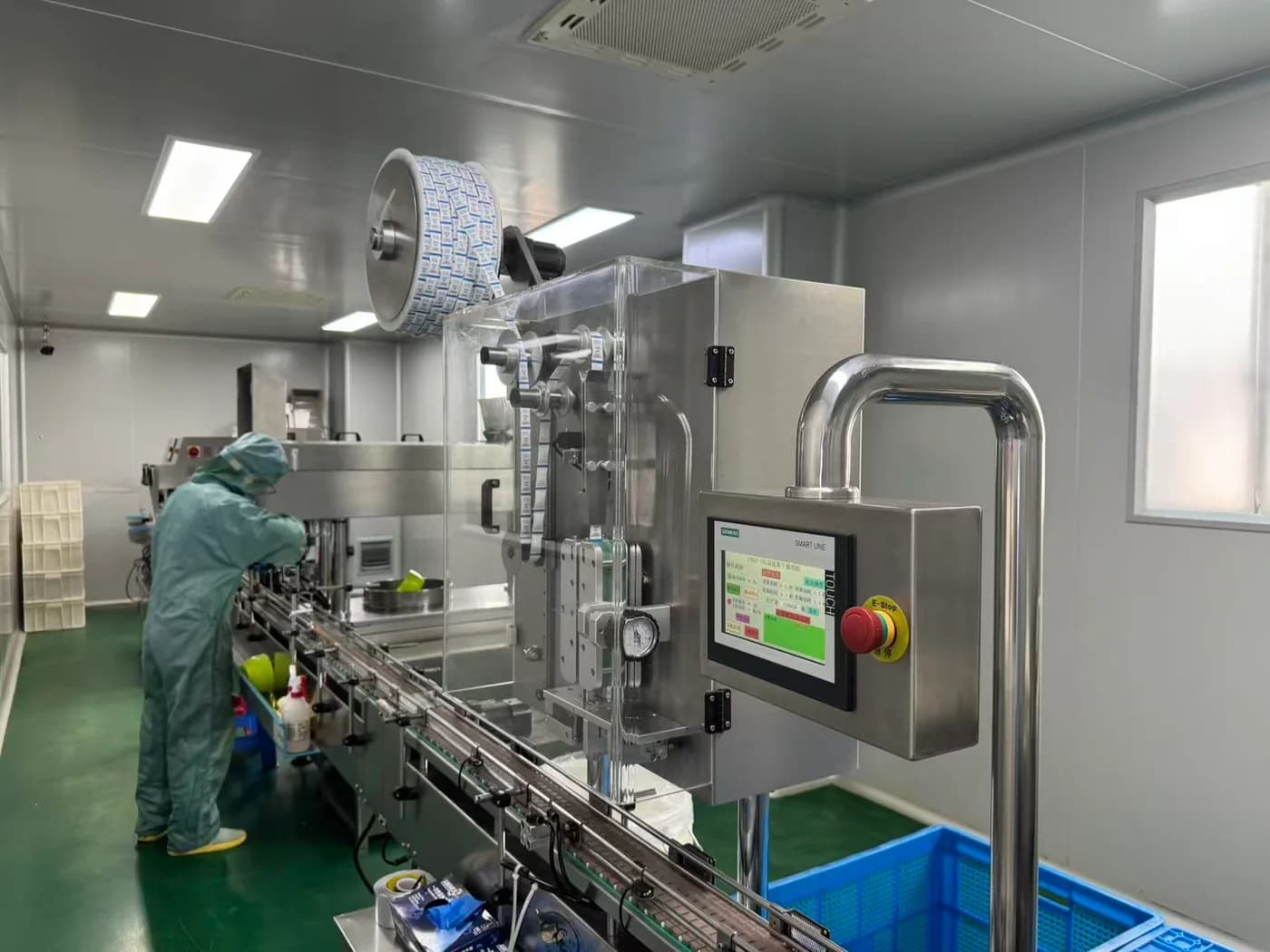
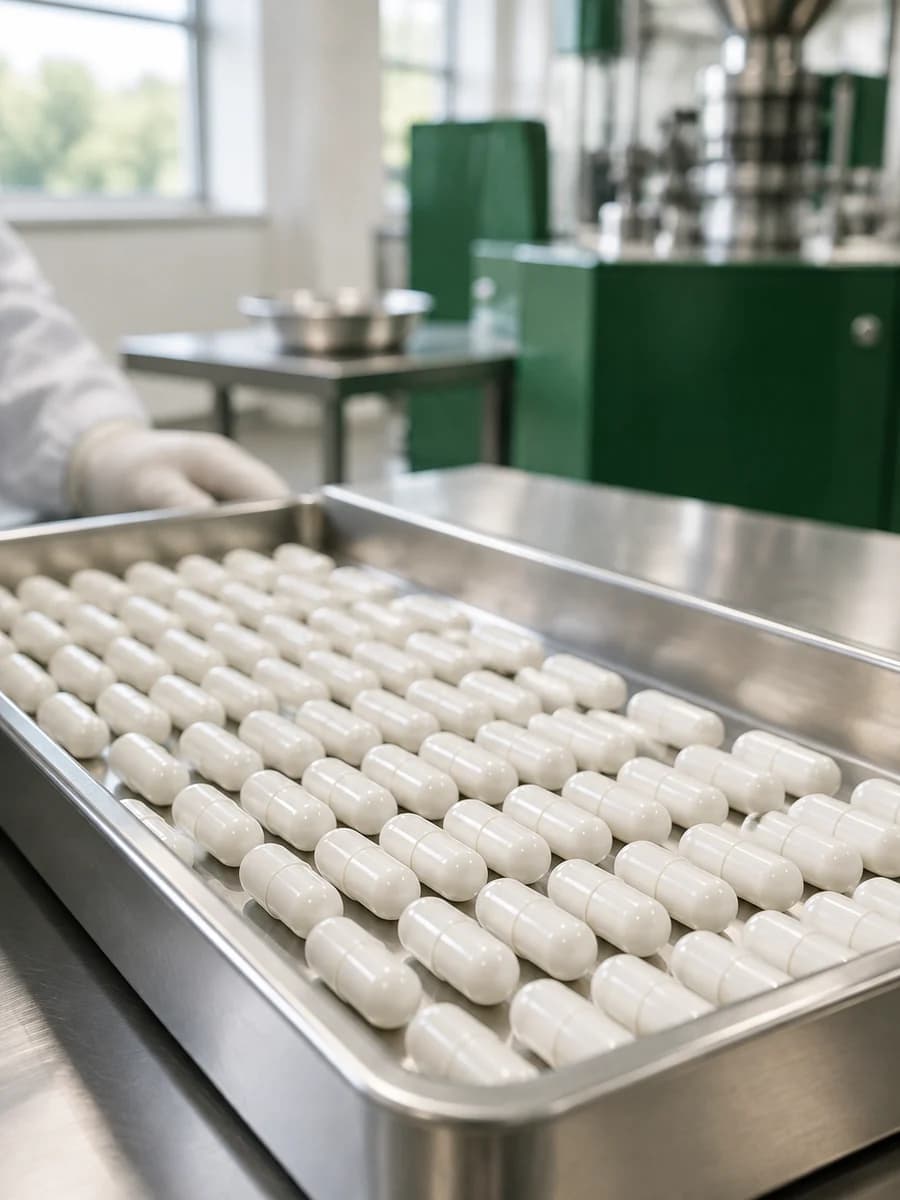
Asia's leading supplement manufacturers operate multiple production lines for capsules, tablets, softgels, and powders. A plant with 2 million units monthly capacity can handle both small pilot batches and large retail orders. Key equipment includes high-speed encapsulation machines, tablet presses, and fluid-bed dryers. Buyers should request a capacity statement and current lead times, as top facilities often run at 70–85% utilisation.
When evaluating capability, ask about minimum order quantities. Retail bottling typically starts at 1,000 units per SKU. Pilot runs can be lower, often 500–1,000 units, but expect higher per-unit costs. Confirm whether the manufacturer can scale with you: a partner that supports 5,000 units today should be able to deliver 50,000 units in six months without requalification.
Formulation and Ingredient Sourcing
The best Asian manufacturers maintain relationships with ingredient suppliers across the region and can source specialty actives like curcumin, ashwagandha, or probiotics. They should provide certificates of analysis (CoA) for every lot and support custom formulations. For vegan or organic lines, verify segregation procedures to avoid cross-contamination. Ask for allergen control protocols if your product contains soy, dairy, or gluten.
Formulation support varies. Some plants only execute your formula; others have in-house R&D to adjust taste, flowability, or stability. If you need a proprietary blend, confirm the manufacturer will sign an NDA and won't use your formula for other clients. For halal certification, the facility must be audited by recognised bodies, and ingredient sources must be approved by those authorities.
Quality Assurance and Regulatory Compliance
Compliance is non-negotiable. A GMP-certified facility follows strict hygiene, documentation, and testing protocols. ISO 22000 and HACCP add food safety management. For the US market, the facility should be FDA-registered. For the EU, check compliance with EC No 1925/2006 and novel food rules. Middle East buyers often require halal certification from a body recognised in their country.
Quality control includes raw material testing, in-process checks, and finished product testing for potency, heavy metals, and microbials. Ask for a sample certificate of analysis and a stability testing protocol. A manufacturer that shares third-party lab results and batch records is more reliable than one that only provides a certificate of compliance. Regular audits, either on-site or virtual, help maintain standards.
Quality Control and Batch Documentation at Asian Supplement Manufacturers
Batch records should be traceable from the raw material lot to the finished lot, including mixing times, fill weights, and line clearance checks. A manufacturer that cannot produce a batch record on request is a risk. For exports to the EU or US, the COA may also need to confirm compliance with the destination's contaminant limits, such as the EU maximum levels for lead in food supplements or the US FDA's heavy metal guidance. Ask for a sample COA before placing an order and check that the lot numbers and test methods are consistent.
Packaging and Labelling for Retail-Ready Supplements from Asia
For Amazon FNSKU compliance, the manufacturer can apply FNSKU labels and poly-bag units if required. Retail-ready packaging may include display cartons or shelf-ready trays. Buyers should request dielines and artwork proofs before printing, and confirm that the manufacturer can handle multi-language labels for the EU, Middle East, or Asia. A common pitfall is a mismatch between the label claim and the COA, so the label review should be tied to the finished product specification.
MOQ, Lead Times and Delivery from Asian Supplement Manufacturers
Payment terms are usually 30% deposit and 70% before shipment, though some manufacturers offer 30/70 against documents. Buyers should confirm who handles export clearance and whether the manufacturer has experience with the destination's import requirements, such as US FDA prior notice or EU food contact compliance. A pre-shipment inspection by a third party can be arranged for larger orders. Documentation should be sent before shipment so the buyer can review and clear customs without delays.
Packaging, Labelling and Retail Readiness
Asian supplement manufacturers offer several packaging formats: HDPE bottles (30–500 mL) with induction seals and child-resistant caps, blisters (PVC/PVDC or alu-alu), stick packs (2–20 g), and sachets (5–30 g). Bottle labelling can be wrap-around or pressure-sensitive, with up to six panels. For the US market, the label must include the statement of identity, net quantity, supplement facts panel, other ingredients, and the manufacturer/distributor address. FDA does not pre-approve labels, but the manufacturer should provide a label review against 21 CFR 101.
Lot and expiry coding are applied by inkjet or laser, with formats such as LOT YYMMDD and EXP YYMM. Cartons are typically 12–24 bottles per shipper, with pallet configurations of 48–60 cartons per layer and 4–6 layers high. For Amazon FBA, the manufacturer can apply FNSKU labels and poly-bag units with suffocation warnings. Retail-ready packaging such as shelf-ready trays or display cartons is available for club stores, but requires a dieline and usually adds 5–7 days to lead time.
For the EU and UK, labels need the food supplement category, recommended daily dose, warning not to exceed, and storage conditions. Halal marks must be supported by certificates. Organic claims require USDA NOP or EU organic certification for the finished product, not just the ingredient. The manufacturer should supply a print-ready artwork template and a pre-press proof. Buyers should budget 3–5 working days for artwork approval and request a physical proof for colour-critical packaging.
Options for Your Format
Capsules and tablets
Hard capsules 300–1,200 mg, tablets 200–1,500 mg. Suitable for vitamins, minerals, herbal extracts. High-speed lines ensure consistent fill weight and disintegration.
Powders and stick packs
Bulk powders 5–500 g, stick packs 2–10 g. Ideal for protein, collagen, pre-workouts. Fluid-bed agglomeration improves flowability and mixability.
Softgels and liquids
Softgels for oils and fat-soluble vitamins. Liquids in bottles or sachets. Requires specialised filling and sealing equipment for oxidation control.
Private label and custom
Stock formulas with your branding or fully custom formulations. MOQ 1,000 units for private label; custom runs may start at 5,000 units.
From Spec to Shipment
- 01
Define your requirements
Specify dosage form, fill weight, target MOQ, certifications, and target markets. This helps filter suppliers quickly.
- 02
Shortlist certified suppliers
GMP, ISO 9001, ISO 22000, HACCP, NSF/ANSI 455-2 and halal certification; FDA facility registration for US-bound shipments.
- 03
Request samples
Ask for samples of similar products. Sample lead time is typically 7–10 working days. Evaluate quality, packaging, and labelling.
- 04
Negotiate terms
Discuss MOQ, pricing tiers, payment terms, and lead times. Mass production usually takes 20–35 working days after sample approval.
- 05
Place a pilot order
Start with a small batch to test the manufacturer's communication, quality consistency, and delivery reliability.
- 06
Scale and audit
Once satisfied, increase order volume. Schedule regular audits and request batch records to maintain compliance.
Why EUPHM
Cost efficiency
Lower labour and raw material costs in Asia can reduce per-unit price by 20–40% compared to Western manufacturers, without compromising GMP compliance.
Regulatory expertise
Experienced manufacturers understand export requirements for the US, EU, UK, and Middle East, and can provide the documentation your market needs.
Scalable capacity
Plants with multi-million-unit monthly capacity can grow with your brand, from pilot runs to full-scale retail distribution.
Questions buyers ask.
What is the typical MOQ for supplement manufacturing in Asia?+
For retail bottling, MOQ is usually 1,000 units per SKU. Pilot runs can be lower, sometimes 500–1,000 units, but expect higher per-unit costs. Some manufacturers offer flexible MOQs for first orders.
How long does production take?+
Sample lead time is 7–10 working days. Mass production takes 20–35 working days after sample approval. Add shipping time, which varies by destination and method.
Which certifications should I look for?+
At minimum, GMP, ISO 22000, and HACCP. For specific markets, halal, organic, or vegan certifications may be required. Always verify certificates are current.
Can Asian manufacturers handle organic or halal products?+
Yes, many certified facilities can. Ensure the manufacturer holds the relevant certification and follows segregation and cleaning protocols to avoid cross-contamination.
How do I verify quality before placing a large order?+
Request samples, third-party lab results, and a certificate of analysis for each lot. Start with a pilot order and schedule an audit if possible. Consistent batch records indicate reliable quality control.
What is the difference between a COA and a certificate of free sale, and do I need both?+
A COA documents the test results for a specific batch, including identity, potency, microbials, and heavy metals. A certificate of free sale confirms that the product is legally manufactured and sold in the country of origin, often required for registration in the Middle East, Asia, or Latin America. You need a COA for every batch and a free sale certificate for product registration or customs in some markets. Ask the manufacturer to provide both, and check that the free sale certificate is issued by a recognised authority.
Can the manufacturer handle small-batch production for market testing before scaling up?+
Many Asian supplement manufacturers offer pilot runs of 500 to 1,000 units per SKU, though this may carry a higher per-unit cost and a separate setup fee. Pilot runs are useful for market testing, but they may use the same line as mass production, so the quality should be representative. Confirm the MOQ for the pilot and the MOQ for the first commercial order, as these can differ. Some manufacturers require a minimum order value rather than a unit count.
How do I ensure the product meets the labelling requirements of my destination market?+
Provide the manufacturer with the destination market's labelling regulations, such as the US FDA 21 CFR 101, EU Regulation 1169/2011, or Gulf Standardization Organization requirements. The manufacturer should have a label review process and can provide artwork templates. Request a proof before printing and check that the supplement facts, ingredient list, allergen declarations, and claims comply. For the EU, the label must include the address of the food business operator in the EU. A third-party label review can reduce the risk of customs rejection.
Have a product in mind?
Send us the brief and we will come back with a formulation direction, indicative price and a realistic lead time — usually within one working day.