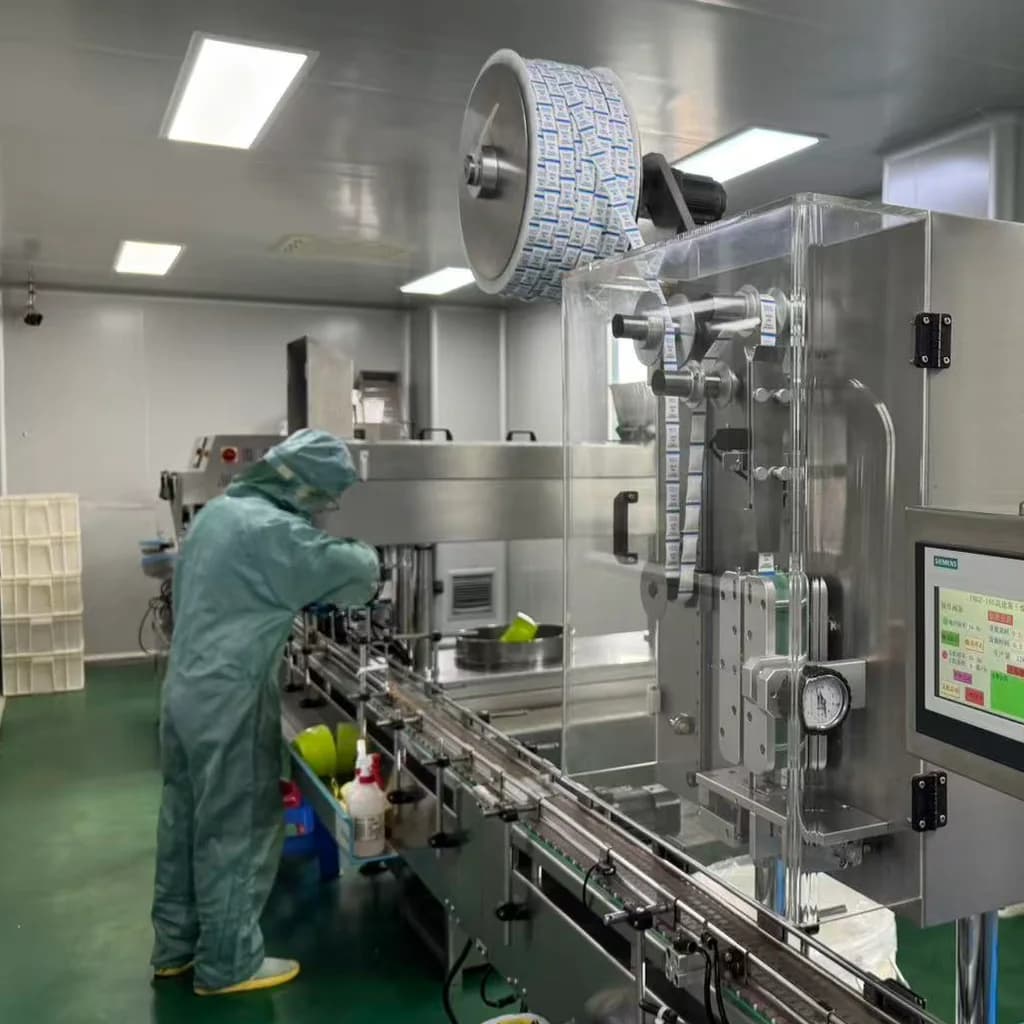
Halal Supplement Manufacturer for Global Brands
EUPHM produces halal-certified capsules, tablets, powders and gummies from a GMP-certified plant in Guangdong, China. MOQ 1,000 units per SKU, sample lead time 7-10 working days, mass production 20-35 working days.
Overview
Sourcing a halal supplement manufacturer means verifying certification, excipients and cross-contamination controls before you place a purchase order. EUPHM holds halal certification alongside GMP, ISO 22000 and HACCP. We run dedicated halal production windows, maintain alcohol-free and porcine-free material lists, and document every batch for import into the EU, UK, US and Middle East. This page covers our halal capabilities, formulation limits and quality systems so procurement teams can audit us against their own requirements.

- Halal certification
- Valid, audited annually by a recognised certifier
- MOQ
- 1,000 units per SKU; lower for pilot runs
- Sample lead time
- 7-10 working days
- Mass production
- 20-35 working days after sample approval
- Dosage forms
- Capsules, tablets, powders, gummies, softgels
- Quality systems
- GMP, ISO 9001, ISO 22000, HACCP, NSF/ANSI 455-2, halal, FDA-registered
Halal manufacturing capability
Our Guangdong plant runs four production lines for solid dosage forms and two for gummies. Halal products are scheduled in dedicated windows after full line clearance. We keep separate scoops, bins and sieving screens for halal runs, and we document the cleaning record for each changeover. Annual halal production capacity exceeds 180 million units. For brands launching in the Middle East, we can supply certificates of analysis and halal conformity letters per batch.
We produce capsules, tablets, powders and gummies under halal conditions. Capsule shells are HPMC or beef gelatin from halal-certified slaughterhouses. We do not run porcine gelatin, alcohol-based coatings or carmine on halal lines. If your formula requires a colour or coating, we propose halal-compliant alternatives during formulation review. Pilot runs start at 1,000 units for stability and sensory testing.
Formulation and ingredient compliance
Every raw material for a halal SKU is screened against our prohibited substances list. This covers ethanol, porcine derivatives, carmine, shellac, magnesium stearate from non-halal sources and gelatin from non-halal animals. We request halal certificates from each supplier and keep them on file for audit. Where a material has no halal-certified source, we reformulate with an approved substitute. Common swaps include vegetable magnesium stearate and silicon dioxide.
Our formulation team works with your existing recipe or develops one from scratch. We test 3-5 prototype iterations before locking the formula. For halal gummies, we use beef gelatin or pectin. For softgels, we use bovine gelatin from halal-certified supply or starch-based shells. Taste masking, flow agents and disintegrants are all reviewed for halal status. Stability testing runs at 25°C/60% RH and 40°C/75% RH for 3-6 months.
Quality, documentation and export
Halal certification sits inside our broader quality system. We hold GMP, ISO 22000 and HACCP. Incoming materials are quarantined until identity testing and halal certificate verification are complete. Production runs have in-process checks every 30 minutes for weight, hardness and disintegration. Finished batches are tested for microbiological limits, heavy metals and potency. We retain samples for 24 months. Batch records, halal certificates and certificates of analysis are issued with each shipment.
For export, we prepare documentation for EU, UK, US and Middle East customs. This includes commercial invoice, packing list, certificate of origin, halal certificate, free sale certificate and COA. We ship FOB Shenzhen or Yantian, or CIF to your port. Air freight is available for urgent launches. Typical sea freight to Jebel Ali is 12-18 days; to Rotterdam 28-35 days. We can palletise to your warehouse spec.
Quality Control and Batch Documentation
Every batch produced under our halal supplement manufacturing programme is sampled at three points: incoming raw materials, in-process blend or granulate, and finished goods. Identity testing by FTIR or HPLC confirms each active, while potency assays verify label claim within 95.0 to 105.0 percent for vitamins and 90.0 to 110.0 percent for herbal extracts. Microbial testing covers total aerobic count, yeast and mould, E. coli, Salmonella and Staphylococcus aureus against USP <2021> or European Pharmacopoeia limits. Heavy metals are screened by ICP-MS for lead, arsenic, cadmium and mercury, with results reported against the strictest of EU, US and Gulf thresholds.
Disintegration and dissolution testing are performed on tablets and capsules to confirm compliance with USP <701> or <711>. For halal softgels, we verify that the shell is made from bovine or fish gelatin sourced from halal-certified suppliers and that no porcine-derived processing aids are present. Each batch has a certificate of analysis (COA) listing test parameters, specifications, methods, results and pass or fail status, signed by the QC manager and the halal compliance officer. COAs are issued in English and can be translated into Arabic or French on request.
Retention samples of every batch are stored for 24 months under controlled conditions at 25 degrees Celsius and 60 percent relative humidity, or at 30 degrees Celsius and 65 percent relative humidity for Zone IVb markets. Stability protocols follow ICH Q1A(R2), with accelerated testing at 40 degrees Celsius and 75 percent relative humidity for six months and real-time data generated for the product shelf life, typically 24 to 36 months. We share stability summaries with brand owners so they can substantiate expiry dates on their labels and satisfy retailer technical audits.
Packaging, Labelling and Retail Readiness
We offer high-density polyethylene bottles from 30 mL to 500 mL with induction seals and child-resistant closures, blister packs in PVC/PVDC or alu-alu formats, stick packs from 2 g to 10 g, and sachets from 3 g to 30 g. Gummies are packed in PET jars or stand-up pouches with resealable zippers. All primary packaging materials are food-grade and supplied with migration test reports where required. We can print lot numbers and expiry dates by inkjet or laser on bottles, cartons and blisters, and we apply tamper-evident bands on request.
For US-bound products, labels must include a supplement facts panel, serving size, list of dietary ingredients with quantities, other ingredients, allergen statements, and the manufacturer or distributor address. We check that halal claims are supported by a current certificate and that no alcohol or porcine-derived excipients appear in the ingredient list. For EU and UK markets, we align labels with Regulation (EU) No 1169/2011 and retain the halal logo only where the certifier permits its use. We do not print organic or non-GMO logos unless the relevant certification is in place.
Cartons are specified in B-flute or E-flute corrugated board with a maximum weight of 15 kg for manual handling. Pallets are 1,200 by 800 mm or 1,200 by 1,000 mm, stretch-wrapped and strapped, with a maximum height of 1,800 mm including the pallet. We can apply Amazon FNSKU labels, polybag the units and print retail-ready carton markings. For retail compliance, we provide dielines, artwork proofs and barcode verification reports to GS1 standards before mass production begins.
MOQ, Lead Times and Delivery
Sample requests are acknowledged within two working days. Stock formulas are dispatched in seven to ten working days, while custom halal formulations requiring flavour or colour matching take 12 to 15 working days. Sample costs are quoted per SKU and credited against the first mass production order when the order exceeds 10,000 units. We provide a sample approval form that records the approved specification, packaging and label version so that mass production matches the signed-off sample exactly.
Mass production runs 20 to 35 working days after sample approval and receipt of a 30 percent deposit. This window covers raw material release, blending, encapsulation or tableting, packaging and QC testing. If a batch requires third-party halal verification before release, add five to seven working days. We update buyers weekly with production status and share in-process photographs on request.
Air freight is typically used for samples and urgent orders up to 500 kg, with transit times of three to seven days to major hubs. Sea freight is cost-effective for full containers and takes 25 to 40 days depending on destination port. We quote EXW, FOB Shenzhen or Hong Kong, and DDP for selected markets. Shipping documents include commercial invoice, packing list, COA, MSDS, free-sale certificate and, where applicable, phytosanitary certificate and halal certificate for the batch.
Packaging and Format Choices
Halal capsules
HPMC or halal beef gelatin shells. Two-piece and vegetarian options. Fill weights 150-800 mg. Suitable for herbal extracts, amino acids and probiotics.
Halal tablets
Direct compression or wet granulation. Coated or uncoated. We use halal-approved binders and lubricants. Tablet weights 200-1,500 mg.
Halal powders
Instant drink mixes, protein blends and stick packs. No alcohol-based carriers. Flavours and sweeteners screened for halal status.
Halal gummies
Beef gelatin or pectin bases. No porcine gelatin. Natural colours and flavours. 2-5 g per piece. Packed in bottles or sachets.
How We Work
- 01
Send your brief
Share target formula, dosage form, pack size and destination market. We confirm halal feasibility within 2 working days.
- 02
Quotation
You receive unit price, MOQ, tooling costs and lead times. Halal certification and documentation fees are itemised separately.
- 03
Samples
We produce 3-5 prototype iterations. Sample lead time is 7-10 working days. You approve taste, appearance and halal documentation.
- 04
Halal material sourcing
We order halal-certified raw materials and verify supplier certificates. Long-lead items are flagged before production starts.
- 05
Mass production
Production runs in 20-35 working days after sample approval. In-process checks every 30 minutes. Batch records kept for 24 months.
- 06
QC and shipping
Finished goods tested, halal certificate and COA issued. We ship FOB or CIF with full export documentation.
Why EUPHM
Verified halal supply chain
Every raw material has a halal certificate on file. We reject non-compliant lots before they enter the warehouse.
Dedicated halal production
Halal runs are scheduled after full line clearance. Cleaning records and changeover logs are available for audit.
Export-ready documentation
Halal certificate, COA, free sale certificate and certificate of origin prepared for EU, UK, US and Middle East customs.
Questions buyers ask.
Is your halal certification recognised in the Middle East?+
Our halal certification is issued by a recognised certifier accepted in GCC markets including UAE, Saudi Arabia and Kuwait. We provide a halal conformity letter per batch. For specific country requirements, share your import regulations and we confirm acceptance before production.
What is the MOQ for halal supplements?+
Standard MOQ is 1,000 units per SKU for retail bottling. Pilot runs start lower, from 1,000 units, for stability and sensory testing. MOQ depends on capsule size, tablet weight and packaging format.
Do you use porcine gelatin or alcohol in halal products?+
No. We do not run porcine gelatin, ethanol-based coatings or carmine on halal lines. Capsule shells are HPMC or halal beef gelatin. Gummies use beef gelatin or pectin. All excipients are screened against our prohibited substances list.
How long does halal sample and production take?+
Sample lead time is 7-10 working days for 3-5 prototype iterations. Mass production takes 20-35 working days after sample approval. Halal material sourcing may add 5-10 days if a certified ingredient is not in stock.
Can you provide halal certificates for each batch?+
Yes. Each shipment includes a batch-specific halal certificate, certificate of analysis and full batch record. We retain samples and documentation for 24 months. Additional copies can be legalised or attested if your market requires it.
Can you supply halal-certified excipients such as magnesium stearate and gelatin?+
Yes. We maintain a list of halal-certified excipients including magnesium stearate, stearic acid, silicon dioxide and bovine or fish gelatin. Each excipient supplier provides a halal certificate and a statement confirming no porcine-derived content. We verify certificates at receipt and keep them on file for batch traceability. If a customer specifies a particular excipient brand, we check its halal status before use.
Do you provide a halal certificate for each production batch or only for the facility?+
We provide both. The facility holds a current halal certificate issued by a recognised certifier, renewed annually. For each batch, we issue a batch-specific halal certificate or declaration confirming that the batch was produced under halal conditions, with the batch number and production date. This document is accepted by importers in the Middle East, Southeast Asia and Europe. Additional legalisation or embassy attestation can be arranged on request.
What is the shelf life of halal supplements produced at your factory?+
Shelf life depends on dosage form and packaging. Capsules and tablets typically carry 24 to 36 months when stored below 25 degrees Celsius and 60 percent relative humidity. Gummies generally carry 18 to 24 months. Softgels carry 24 months. We support these claims with real-time stability data and provide a stability summary with the COA. We can also run accelerated stability studies for new formulations before you commit to a shelf-life claim.
Have a product in mind?
Send us the brief and we will come back with a formulation direction, indicative price and a realistic lead time — usually within one working day.