Best Supplement Manufacturers in Japan: What Buyers Need to Know
Japan's supplement market is valued at over $12 billion. Finding the right manufacturing partner means balancing quality certifications, MOQs, and lead times. This guide covers what to evaluate before you commit.
Overview
Japan has over 300 GMP-certified supplement manufacturers, from small batch specialists to large-scale contract plants. Most operate under J-GMP or NSF certifications, with MOQs ranging from 1,000 to 10,000 units. Lead times average 25-40 working days for mass production. Whether you need capsules, tablets, powders, or gummies, understanding the local landscape helps you shortlist the best supplement manufacturers in Japan for your product line.
| MOQ range | 1,000 units per SKU (retail bottling); lower for pilot runs |
|---|---|
| Sample lead time | 7-10 working days |
| Mass production lead time | 20-35 working days |
| Key certifications | GMP, ISO 9001, ISO 22000, HACCP, NSF/ANSI 455-2, halal, FDA-registered |
| Fill weights | Capsules 300-800 mg; tablets 500-1,200 mg; powders 5-30 g per serving |
| Line capacity | Up to 2 million units per month across solid dosage forms |
Manufacturing Capability and Scale
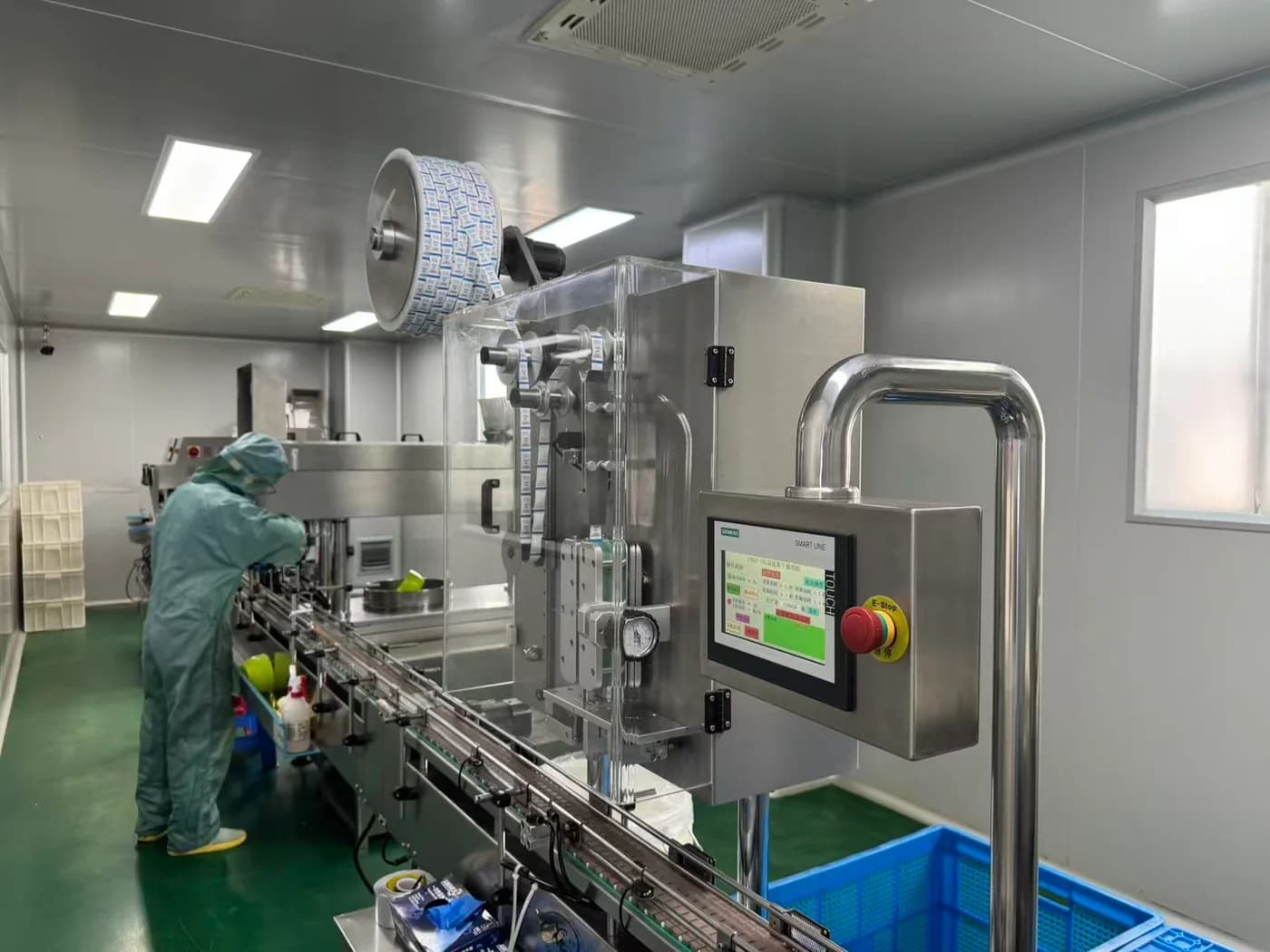
Japanese contract manufacturers typically run capsule, tablet, and powder lines with capacities from 500,000 to 5 million units monthly. Many specialise in small-batch production for domestic brands, but larger plants handle export orders. For pilot runs, MOQs can drop to 1,000 units, though per-unit costs rise. Mass production for retail bottling usually starts at 1,000 units per SKU. Expect 20-35 working days for full production after formula approval and raw material sourcing.
Automation levels vary. High-volume plants use rotary tablet presses and automatic capsule fillers, achieving 50,000-200,000 units per shift. Smaller facilities may still rely on semi-automatic equipment, which affects consistency and lead times. If you need coated tablets or sustained-release capsules, confirm the plant has fluid-bed coating and enteric coating capabilities. Not all Japanese manufacturers offer these in-house; some outsource, adding 5-10 days to your timeline.
Formulation and Ingredient Sourcing
Japan's supplement regulations allow a wide range of ingredients, but the positive list for approved additives is stricter than in the US or EU. Common actives include vitamins, minerals, amino acids, herbal extracts, and probiotics. For probiotics, strain identity and CFU counts at end of shelf life matter. Many Japanese manufacturers source locally produced excipients like microcrystalline cellulose and magnesium stearate, but imported raw materials may be needed for speciality botanicals.
If your formula includes novel ingredients or proprietary blends, ask for a pre-formulation feasibility study. This typically takes 5-7 working days and costs $500-$1,500. It confirms compatibility, flowability, and stability. For vegan claims, verify the supply chain: organic certification in Japan follows JAS standards, and vegan capsules (HPMC) are available but may add 10-15% to unit cost. Halal certifications are offered by some plants, often through third-party auditors.
Quality Compliance and Export Logistics
Japanese manufacturers operate under J-GMP, which is aligned with WHO GMP but not identical to US FDA or EU GMP. For export to the US, your contract manufacturer should be FDA-registered and follow 21 CFR Part 111. EU buyers need compliance with EC Directive 2002/46/EC. Ask for certificates: GMP, ISO 22000, HACCP, and where relevant, halal, or. A valid certificate is not enough; request the audit scope and expiry date.
Logistics from Japan to the US takes 10-14 days by air and 25-35 days by sea. To the EU, add 3-5 days. For the Middle East, sea freight averages 20-30 days. Customs clearance requires a certificate of analysis (CoA) per batch, plus a free sale certificate if you sell in the EU. Some Japanese plants provide these at no extra cost; others charge $200-$500 per document. Factor these into your landed cost.
Quality Control and Batch Documentation at Japanese Supplement Manufacturers
At a typical Japanese supplement manufacturer, every incoming raw material batch is quarantined until identity testing by FTIR or HPLC confirms the certificate of analysis from the supplier. For botanical extracts, identity is further verified by marker compound assay and TLC fingerprinting. Potency testing on the finished blend occurs after blending but before encapsulation, so out-of-spec material can be adjusted without losing an entire production run. Microbial testing covers total aerobic count, yeast and mould, E. coli, Salmonella and Staphylococcus aureus, with results available within 5 to 7 days.
Heavy metals testing for lead, arsenic, cadmium and mercury is performed on both raw materials and finished goods using ICP-MS, with limits aligned to Japanese and export-market pharmacopoeial standards. Disintegration testing follows the Japanese Pharmacopoeia method for tablets and capsules, typically requiring complete disintegration within 30 minutes for immediate-release forms. Each batch has a retained sample of at least twice the quantity needed for full testing, stored under controlled temperature and humidity for the shelf life plus 12 months.
The certificate of analysis issued with each batch lists batch number, manufacturing date, expiry date, appearance, identity, assay result, microbial results, heavy metals results and disintegration time. Stability protocols normally include accelerated conditions at 40°C and 75% relative humidity for 6 months, plus real-time data at 25°C and 60% relative humidity for the declared shelf life. Buyers should request the stability summary and the retention sample policy in writing before placing a bulk order.
Packaging, Labelling and Retail Readiness
Japanese supplement manufacturers offer high-density polyethylene bottles from 60 cc to 500 cc with induction seals and child-resistant closures, blister packs in PVC/PVDC or alu-alu formats, stick packs from 3 g to 10 g and sachets for powder blends. Bottle labelling can include up to six panels, with lot number and expiry date applied by inkjet or laser coding at line speed. Cartons are typically printed with ITF-14 barcodes and can be configured for Amazon FNSKU labels applied under the manufacturer's Amazon compliance programme.
For US-bound products, the label must carry the FDA dietary supplement facts panel, ingredient list in descending order of weight, allergen declaration, net quantity and the standard domestic address line. Japanese manufacturers can print English-only labels or bilingual Japanese-English labels, but the brand owner remains responsible for final claim substantiation. Shelf-life wording such as Best Before end date is printed in the format YYYY/MM/DD, and the lot code is normally a 6 to 8 character alphanumeric string traceable to the batch record.
Carton specifications usually include a maximum weight of 15 kg per carton, with dimensions configured to a standard 1200 x 1000 mm pallet. Pallets are stretch-wrapped and corner-boarded for sea freight, with a maximum height of 1.8 m including the pallet. For retail compliance, manufacturers can apply GS1 barcodes, provide high-resolution dielines and supply artwork proofs within 3 to 5 working days. Buyers should confirm whether the manufacturer holds the label artwork approval record, as this is often requested during retailer audits.
MOQ, Lead Times and Delivery from Japanese Supplement Manufacturers
Sample timelines at Japanese supplement manufacturers typically run 7 to 10 working days for a stock formula and 15 to 20 working days for a custom formulation requiring flavour or colour matching. The sample request should specify dosage form, fill weight, capsule or tablet size, packaging format and target label claims, so the sample matches the intended commercial product. Sample costs are usually credited against the first bulk order, but buyers should confirm this in the quotation.
Mass production lead times range from 20 to 35 working days after artwork approval and receipt of deposit, depending on whether the manufacturer needs to order printed cartons or custom blister film. Air freight to Europe or North America takes 5 to 8 days door-to-door, while sea freight takes 25 to 40 days port-to-port. Incoterms commonly offered are EXW, FOB Yokohama or Kobe, and DDP for buyers who want the manufacturer to handle import clearance and duty.
Documentation provided with each shipment includes the certificate of analysis, safety data sheet where required, free-sale certificate, and phytosanitary certificate for botanical ingredients subject to plant health rules. The commercial invoice and packing list must match the lot numbers on the cartons. Buyers should confirm in the supply agreement which party is responsible for import registration in the destination market, as this varies by country and is not part of the manufacturer's standard scope.
Options for Your Format
Capsule production
Hard-shell capsules in sizes 0-3, fill weights 300-800 mg. Options include gelatin, HPMC (vegan), and enteric-coated for delayed release. MOQ 1,000 units.
Tablet compression
Round, oval, or custom shapes. Weights 500-1,200 mg. Coating available: film, sugar, enteric. Production speed up to 200,000 tablets per shift.
Powder blending
Dry blending for stick packs, jars, or sachets. Serving sizes 5-30 g. Ideal for protein, greens, and electrolyte formulas. MOQ 2,000 units for pilot.
Gummy manufacturing
Pectin or gelatin bases. 2-5 g per gummy. Vegan and sugar-free options. Lead time 25-35 days. MOQ 5,000 units due to setup costs.
From Spec to Shipment
- 01
Request certificates
GMP, ISO 9001, ISO 22000, HACCP, NSF/ANSI 455-2 and halal certification; FDA facility registration for US-bound shipments.
- 02
Check MOQ flexibility
Standard MOQ is 1,000 units. For pilot runs, some plants accept 1,000 units at higher per-unit cost. Confirm before requesting a quote.
- 03
Review lead times
Samples take 7-10 working days. Mass production 20-35 working days after formula approval. Add 5-10 days for coated or sustained-release formats.
- 04
Validate ingredient sourcing
Ask for country of origin for each active and excipient. For organic, halal, claims, request supply chain documentation and third-party certificates.
- 05
Request a sample batch
Order a pilot batch of 500–1,000 units. Test stability, dissolution, and sensory attributes. Budget $1,500-$4,000 including shipping.
- 06
Negotiate payment terms
Typical terms: 50% deposit, 50% before shipment. For repeat orders, negotiate 30% deposit. Confirm currency and Incoterms (FOB, CIF, DDP).
Why EUPHM
GMP and ISO certified
GMP, ISO 9001, ISO 22000, HACCP, NSF/ANSI 455-2 and halal certification; FDA facility registration for US-bound shipments.
Low MOQ for pilot runs
Start with 1,000 units for pilot batches. Scale to 1,000 units for retail bottling. No minimum on raw material orders for feasibility studies.
Fast turnaround
Samples in 7-10 working days. Mass production in 20-35 working days. Dedicated project manager for orders above 10,000 units.
Questions buyers ask.
What is the typical MOQ for supplement manufacturing in Japan?+
Most Japanese contract manufacturers set MOQs between 1,000 and 5,000 units per SKU for retail-ready bottles. For pilot runs, some plants accept 1,000 units, though unit costs increase by 20-40%. EUPHM works from 1,000 units and standard MOQ of 1,000 units.
How long does it take to manufacture supplements in Japan?+
Sample development takes 7-10 working days. Mass production runs 20-35 working days after formula approval and raw material procurement. Add 5-10 days for coated tablets, sustained-release capsules, or custom packaging. Shipping to the US adds 10-14 days by air.
Are Japanese supplement manufacturers FDA-approved?+
No manufacturer is FDA-approved. The FDA does not approve supplement facilities. However, many Japanese plants are FDA-registered, meaning they comply with 21 CFR Part 111 for US export. Always ask for the facility's FDA registration number and verify it in the FDA database.
What certifications should I look for in a Japanese supplement manufacturer?+
At minimum: GMP, ISO 22000, and HACCP. For specific markets, add halal, or vegan certification. For EU export, confirm compliance with EC Directive 2002/46/EC. Request certificates with expiry dates and audit scope, not just logos.
Can I get a sample before placing a bulk order?+
Yes. Most manufacturers provide samples in 7-10 working days. Expect to pay for samples and shipping, typically $200-$500 for a small batch. EUPHM offers pilot batches of 500–1,000 units for stability and sensory testing before mass production.
Can Japanese supplement manufacturers produce organic-certified products?+
Some can, but organic certification is held per facility and per product scope. A manufacturer may hold JAS organic certification for powder blending but not for encapsulation, or may be certified for EU organic but not. Buyers should request the scope certificate and confirm that the specific dosage form and ingredient list are covered. Organic claims require full traceability from certified raw material suppliers, and the manufacturer must provide transaction certificates for each organic input.
What is the process for changing a formula after the first production run?+
Formula changes after the first run usually require a new pilot batch and revised stability testing if the change affects potency, disintegration or shelf life. Minor changes such as colour or flavour may only need a label update and a new artwork approval. Manufacturers typically charge a reformulation fee and a new sample fee, and the lead time restarts from the sample approval date. Buyers should confirm the change-control procedure and any minimum order quantity for reformulated batches in the supply agreement.
How are supplement manufacturers in Japan audited for GMP compliance?+
Japanese supplement manufacturers are audited against J-GMP, ISO 22000 or NSF/ANSI 173, depending on the certification held. Audits are conducted by the certification body, not by the government, and the audit report is available to buyers under a confidentiality agreement. Buyers can also request a site audit, which is normally arranged within 30 days and may be charged. The audit covers batch records, laboratory controls, sanitation, equipment calibration and complaint handling.
Have a product in mind?
Send us the brief and we will come back with a formulation direction, indicative price and a realistic lead time — usually within one working day.