Best Supplement Manufacturers in Singapore: How to Choose
Singapore brands often contract overseas because local capacity is small and MOQs are high. This guide covers what to compare, what it costs, and how to run a pilot before committing to retail volumes.
Overview
Singapore has a compact contract manufacturing sector, with several GMP-certified plants serving regional brands. Capacity is finite: most local lines run 2,000 to 10,000 units per batch, and many quote MOQs of 5,000 units or more per SKU. For founders scaling past pilot stage, the practical comparison set includes Singapore, Malaysia, and established export manufacturers in China such as EUPHM, where MOQs start at 1,000 units and sample lead times run 7-10 working days.
- MOQ (retail bottling)
- 1,000 units per SKU; lower for pilot runs
- Sample lead time
- 7-10 working days
- Mass production
- 20-35 working days after PO and artwork approval
- Certifications
- GMP, ISO 9001, ISO 22000, HACCP, NSF/ANSI 455-2, halal, FDA-registered
- Dosage forms
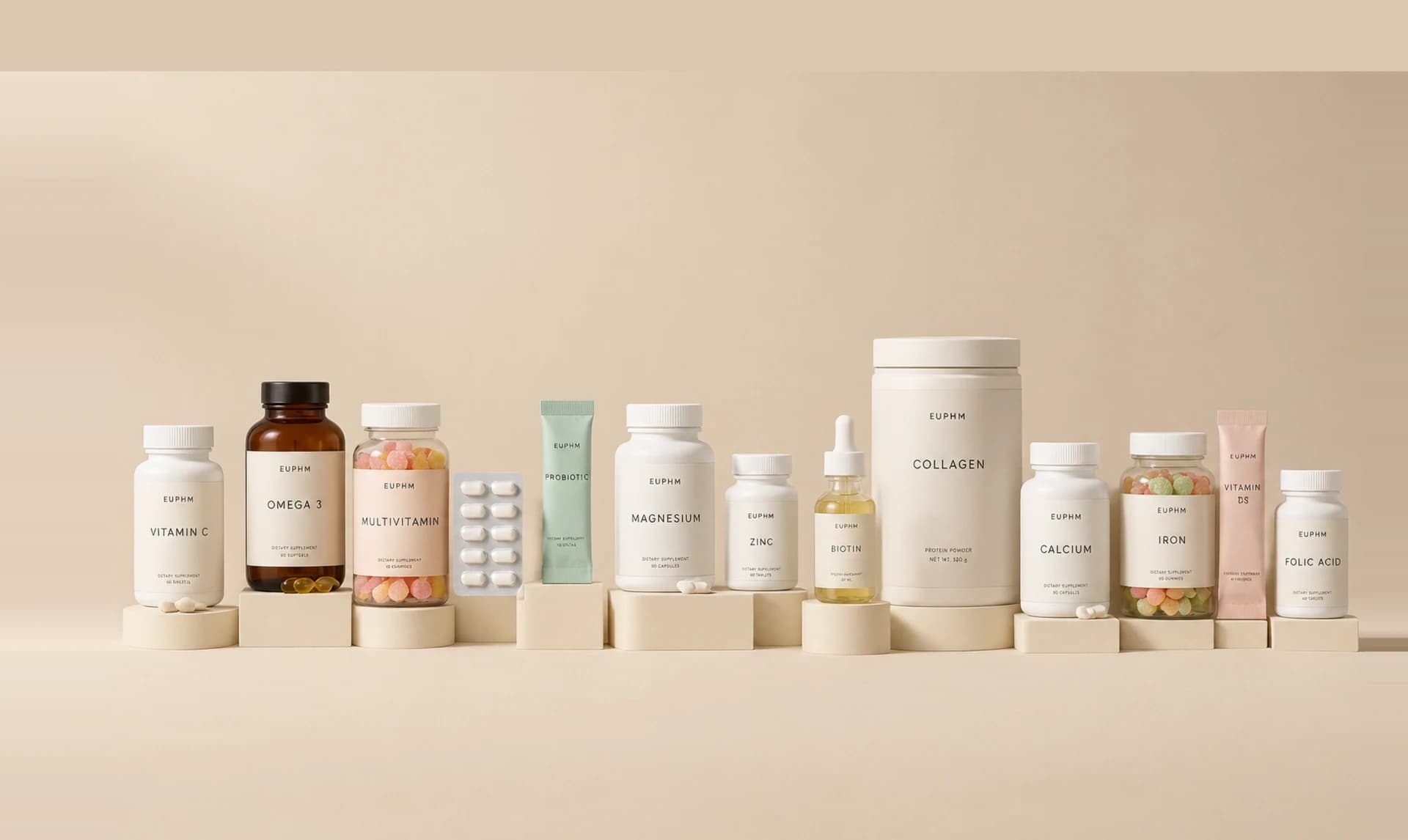
- Capsules, tablets, softgels, powders, gummies, liquids
- Packaging
- Bottles, pouches, sachets, stick packs, blister packs
Manufacturing Capability and Line Capacity
A Singapore-based contract manufacturer typically runs capsule and tablet lines with batch sizes from 2,000 to 10,000 units. That suits launch volumes but constrains scale-ups: once a SKU passes 20,000 units per month, scheduling pressure and tooling changeover time become real limits. Ask any supplier for monthly line capacity per dosage form, not just batch size, and confirm whether they run dedicated lines for nutraceuticals or share equipment with pharmaceutical products.
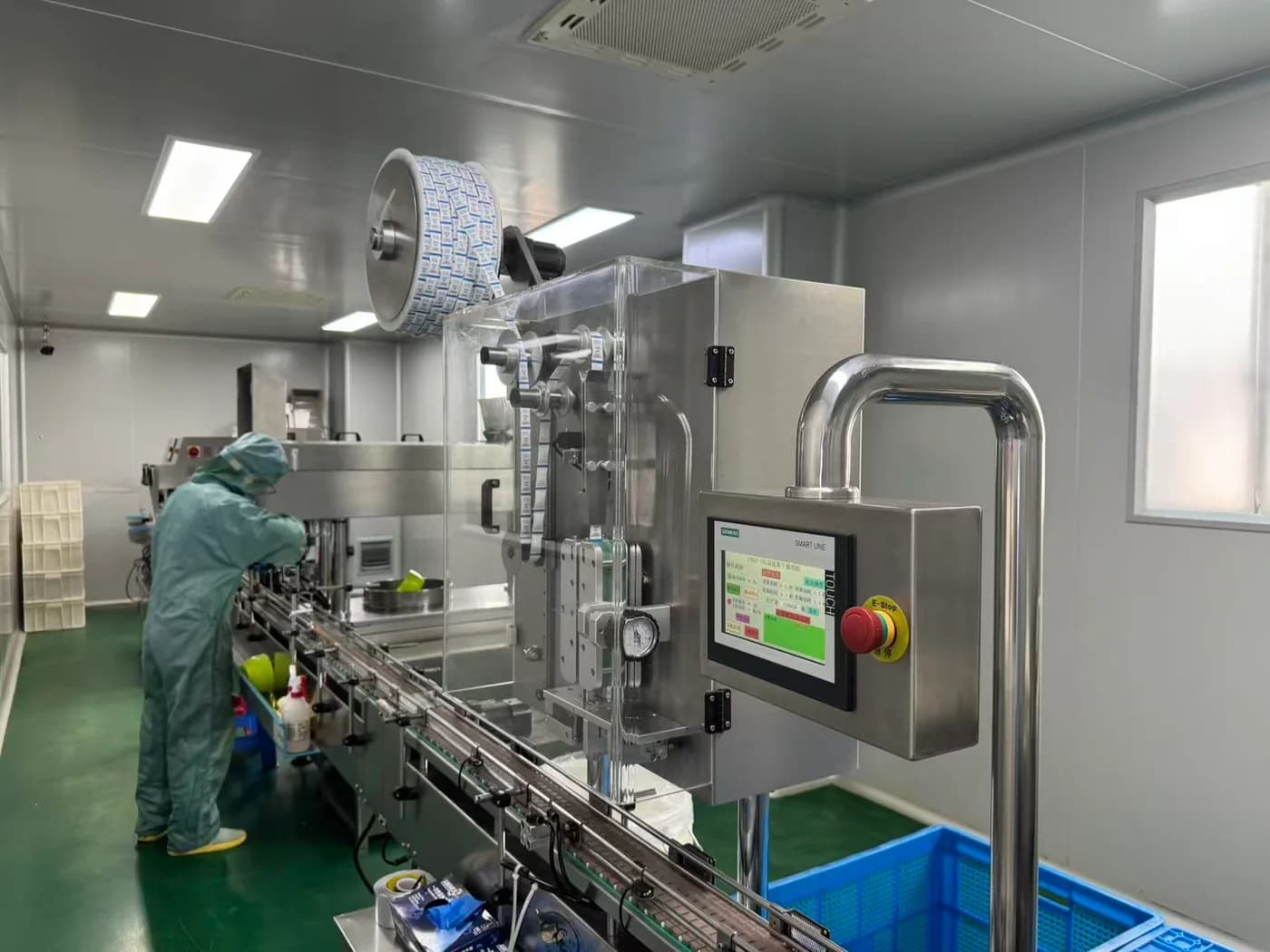
For brands selling into the US, EU, UK, or Middle East, export documentation matters as much as line speed. Confirm the facility holds GMP and ISO 22000, and that it can issue a certificate of analysis per batch, a free sale certificate, and halal certification where the market requires it. EUPHM runs capsule, tablet, softgel, powder, and gummy lines from a GMP-certified plant in Guangdong, with MOQs from 1,000 units per SKU.
Formulation, Ingredients, and Dosage Forms
Formulation flexibility separates a good partner from a broker. If your product needs a proprietary blend, delayed-release coating, or a sugar-free gummy base, the manufacturer should have in-house R&D and a stability programme, not just a catalogue of stock formulas. Ask for a formulation brief with excipient list, overage percentages for actives, and a shelf-life claim backed by accelerated stability data at 40°C/75% RH for 3 to 6 months.
Ingredient sourcing is the second question. Confirm whether actives are standardised to a marker compound, what the country of origin is, and whether the supplier holds a signed specification and allergen statement per raw material. For vegan, organic, or halal claims, the ingredient certificate must match the claim on the label. These details decide whether a Singapore brand can legally sell the finished product in the EU or the Gulf.
Quality Systems, Compliance, and Logistics
Quality is documented, not asserted. A credible manufacturer will share its GMP certificate, ISO 22000 scope, HACCP plan summary, and a sample certificate of analysis showing assay, microbial limits, heavy metals, and disintegration time. If the facility is FDA-registered, that registration should be verifiable. Note that FDA registration is not FDA approval, and no supplement manufacturer can claim approval for a finished product.
Logistics from Singapore or China to the US, EU, and Middle East runs on standard lanes. Air freight from Guangdong to Singapore takes 2-4 days; sea freight to Rotterdam or Jebel Ali runs 18-30 days depending on routing. Plan production 20-35 working days after artwork approval, then add freight and customs clearance. Singapore brands selling regionally can often consolidate shipments through a single 3PL hub to reduce landed cost per unit.
Quality Control and Batch Documentation at Singapore Supplement Manufacturers
At a GMP-certified supplement manufacturer in Singapore, every batch is tested against a written specification before release. Identity testing confirms the raw material is the correct botanical or compound, typically by HPLC or FTIR. Potency assays verify that actives fall within 95-105% of label claim. Microbial testing covers total aerobic count, yeast and mould, E. coli and Salmonella, with limits set to the destination market's pharmacopoeial standard. Heavy metals are screened by ICP-MS for lead, arsenic, cadmium and mercury, and disintegration testing confirms capsules or tablets break down within 30 minutes for hard capsules and 60 minutes for tablets.
Testing happens at three points: incoming raw materials, in-process checks on weight variation and hardness, and finished-product release. A Certificate of Analysis (COA) is issued per batch and should list the test parameter, specification range, result and pass or fail status, plus the method used and the analyst's sign-off. Buyers should ask whether the COA is generated in-house or by a third-party laboratory, as third-party COAs carry more weight with retailers and import authorities.
Retention samples are held for the duration of the product's shelf life plus 12 months, typically at 25°C and 60% relative humidity for general supplements, or 30°C and 65% relative humidity for Zone IVb markets such as Singapore and Malaysia. Stability protocols usually test at 0, 3, 6, 12, 18 and 24 months, with accelerated testing at 40°C and 75% relative humidity for six months to support a two-year shelf life claim. Ask the manufacturer for the stability summary before you commit to an expiry date on pack.
Batch records should be traceable from raw material lot number through to finished carton. A well-run Singapore supplement manufacturer will provide a batch manufacturing record (BMR) and batch packaging record (BPR) on request, and will hold these for at least five years. If a buyer plans to sell on Amazon or into a pharmacy chain, the ability to produce a complete batch file quickly is often the difference between a smooth listing and a delayed launch.
Packaging, Labelling and Retail Readiness
Packaging format drives both cost and retail positioning. Bottles in 60, 90 and 120 count are standard for capsules and tablets, with induction seals and child-resistant closures for the US market. Blister packs suit pharmacy and travel retail, while stick packs and sachets work for powders and single-serve liquids. Gummies are usually packed in PET jars with a desiccant canister. Carton specifications should be agreed early: typical export cartons are 5-ply or double-wall corrugated, holding 12 to 24 retail units, with a maximum gross weight of 15 kg for manual handling.
For the US market, the FDA dietary supplement label must carry a Supplement Facts panel with serving size, amount per serving and % Daily Value where established, a complete ingredient list including proprietary blend totals, and allergen declarations. The principal display panel needs the net quantity of contents in both metric and US customary units. Lot number and expiry date must be printed or embossed, not applied as a sticker, and should be legible on the base or side of the bottle. Singapore labels fall under the Health Sciences Authority and require English labelling with product name, ingredient list, dosage and manufacturer details.
Retail compliance extends beyond the label. Amazon requires an FNSKU barcode on each unit, typically applied as a printed label or direct print on the carton, plus a poly bag with a suffocation warning for loose items. Pharmacy chains in Singapore and Malaysia often ask for a GS1 barcode on the retail unit and a carton barcode on the shipper. Ask your manufacturer whether they can print variable data such as lot, expiry and FNSKU in-line, as this avoids a separate labelling step and reduces the risk of mismatched codes.
Pallet configuration should be agreed before production. Standard export pallets are 1200 x 1000 mm or 1200 x 800 mm, stretch-wrapped and corner-boarded, with a maximum height of 1.8 m to fit most containers. If you are shipping to a fulfilment centre, confirm whether the pallet must be heat-treated and ISPM 15 stamped. A Singapore supplement manufacturer used to export will normally handle these details, but the buyer should still request a packaging specification sheet and a dieline for approval before the print run begins.
MOQ, Lead Times and Delivery from Singapore Supplement Manufacturers
Sample development typically takes 7-10 working days from receipt of a brief and target dosage form. This covers formula costing, a small pilot batch and a stability check on the prototype. If the formula contains a novel ingredient or a controlled substance, add two to three weeks for regulatory review. Buyers should expect to pay for samples and courier costs, which are usually credited against the first production order.
Mass production runs 20-35 working days after purchase order and artwork approval, depending on dosage form and packaging complexity. Capsules and tablets are at the faster end; gummies and liquids need longer because of cooling, curing or filling steps. Chinese export manufacturers such as EUPHM quote MOQs from 1,000 units per SKU, which is lower than the 5,000-unit minimum common among Singapore plants, making them a practical option for brands testing a new SKU before committing to larger volumes.
Shipping terms should be agreed in writing. EXW means the buyer collects from the factory; FOB covers delivery to the named port; DDP means the manufacturer delivers to your door with duties paid. Air freight from Singapore or South China to the US or EU takes 5-8 days and suits launch quantities; sea freight takes 25-35 days and is economic above roughly 500 kg. For Singapore-to-Singapore deliveries, local trucking is usually 1-3 working days.
Documentation provided with each shipment should include the COA, a material safety data sheet (MSDS) where relevant, a free-sale certificate, and a phytosanitary certificate for botanical ingredients where the destination country requires it. Commercial invoice, packing list and bill of lading complete the set. Buyers importing into the EU should also confirm whether a health certificate is needed for their product category. Request soft copies of all documents before the container leaves the factory so customs clearance is not held up.
Formats and Packaging Options
Local Singapore contract manufacturing
Short lead times and easy site visits, but higher per-unit cost and MOQs often above 5,000 units per SKU. Best for pilot and small-batch launches.
Malaysia-based manufacturing
Lower cost than Singapore with GMP facilities and halal certification strength. Suitable for regional ASEAN distribution and Muslim-majority markets.
China export manufacturing
Lower unit cost at scale, broad dosage-form range, and export documentation experience. MOQs from 1,000 units. Freight adds 2-4 days by air to Singapore.
Private label stock formulas
Fastest route to market with existing formulas and packaging. Limited differentiation, but useful for testing a category before investing in custom R&D.
How a Project Runs
- 01
Define the product brief
Write dosage form, actives, target dose, serving size, packaging format, and target markets. This brief determines which manufacturers can even quote.
- 02
Shortlist three to five suppliers
Check GMP, ISO 22000, and market-specific certifications. Request a sample certificate of analysis and a client reference in your category.
- 03
Request samples and quotes
Ask for a sample in your chosen dosage form and a quote with MOQ, unit cost, tooling, and lead time. Sample lead time is typically 7-10 working days.
- 04
Run a pilot batch
Produce 1,000 units before committing to retail volume. Test stability, packaging integrity, and label compliance in your target market.
- 05
Approve artwork and specifications
Lock the label, ingredient list, allergen statement, and certificate of analysis template. Artwork approval starts the production clock.
- 06
Scale to mass production
Mass production runs 20-35 working days after PO and artwork sign-off. Plan freight and customs clearance on top of that window.
Why EUPHM
Lower MOQ for pilot runs
Starting at 1,000 units per SKU lets brands validate demand before committing to 10,000-unit batches or expensive tooling.
Export-ready documentation
Certificates of analysis, free sale certificates, and halal documents support registration in the US, EU, UK, and Middle East.
Broad dosage-form range
Capsules, tablets, softgels, powders, gummies, and liquids from one supplier reduces the number of vendors a brand has to manage.
Questions buyers ask.
What is the MOQ for supplement manufacturing in Singapore?+
Local Singapore manufacturers typically quote 5,000 units per SKU or more. Overseas suppliers serving Singapore brands often start at 1,000 units, with lower thresholds for pilot runs. Always confirm whether the MOQ applies per SKU, per flavour, or per packaging size.
How long does sample development take?+
A standard sample in an existing dosage form takes 7-10 working days after the formulation brief is agreed. Custom formulations with new actives or a novel delivery format can take 3-4 weeks, since stability and compatibility testing are needed first.
How long is mass production after I approve the artwork?+
Plan 20-35 working days from purchase order and artwork approval to finished goods. This covers raw material procurement, blending, encapsulation or compression, coating, packaging, and quality release. Add freight time separately.
Do I need FDA approval to sell supplements in the US?+
No. The FDA does not approve dietary supplements or their manufacturers. What matters is that the facility is FDA-registered and follows GMP under 21 CFR Part 111, and that the finished product carries compliant labelling and a certificate of analysis per batch.
Which certifications should a supplement manufacturer hold?+
At minimum, GMP and ISO 22000, with HACCP for food safety management. If you sell into Muslim-majority markets, halal certification is essential, organic, and vegan certifications depend on your label claims and target retailers.
Can a Singapore supplement manufacturer produce a batch smaller than the stated MOQ?+
Some will, but expect a surcharge of 20-40% per unit and longer scheduling, as small runs disrupt line changeovers. Pilot batches of 500–1,000 units are sometimes possible for capsules and tablets. If your launch volume is below 1,000 units, compare quotes from Malaysian and Chinese export manufacturers, where MOQs are often lower and pilot runs are routine.
What is the difference between a COA and a free-sale certificate?+
A Certificate of Analysis reports the test results for a specific batch, including identity, potency, microbials and heavy metals. A free-sale certificate is a manufacturer's declaration that the product is legally manufactured and sold in the country of origin, used by importers to support registration. Both are normally issued per shipment, and neither replaces the other.
How should I handle product registration if I sell supplements in Singapore and also export?+
Singapore's Health Sciences Authority does not require pre-market registration for most supplements, but labelling and claims must comply with the Medicines Act. For export, each destination sets its own rules: the US requires FDA facility registration and prior notice, the EU requires a food business notification, and ASEAN countries vary. Ask your manufacturer for a regulatory checklist per market before artwork is finalised.
Have a product in mind?
Send us the brief and we will come back with a formulation direction, indicative price and a realistic lead time — usually within one working day.