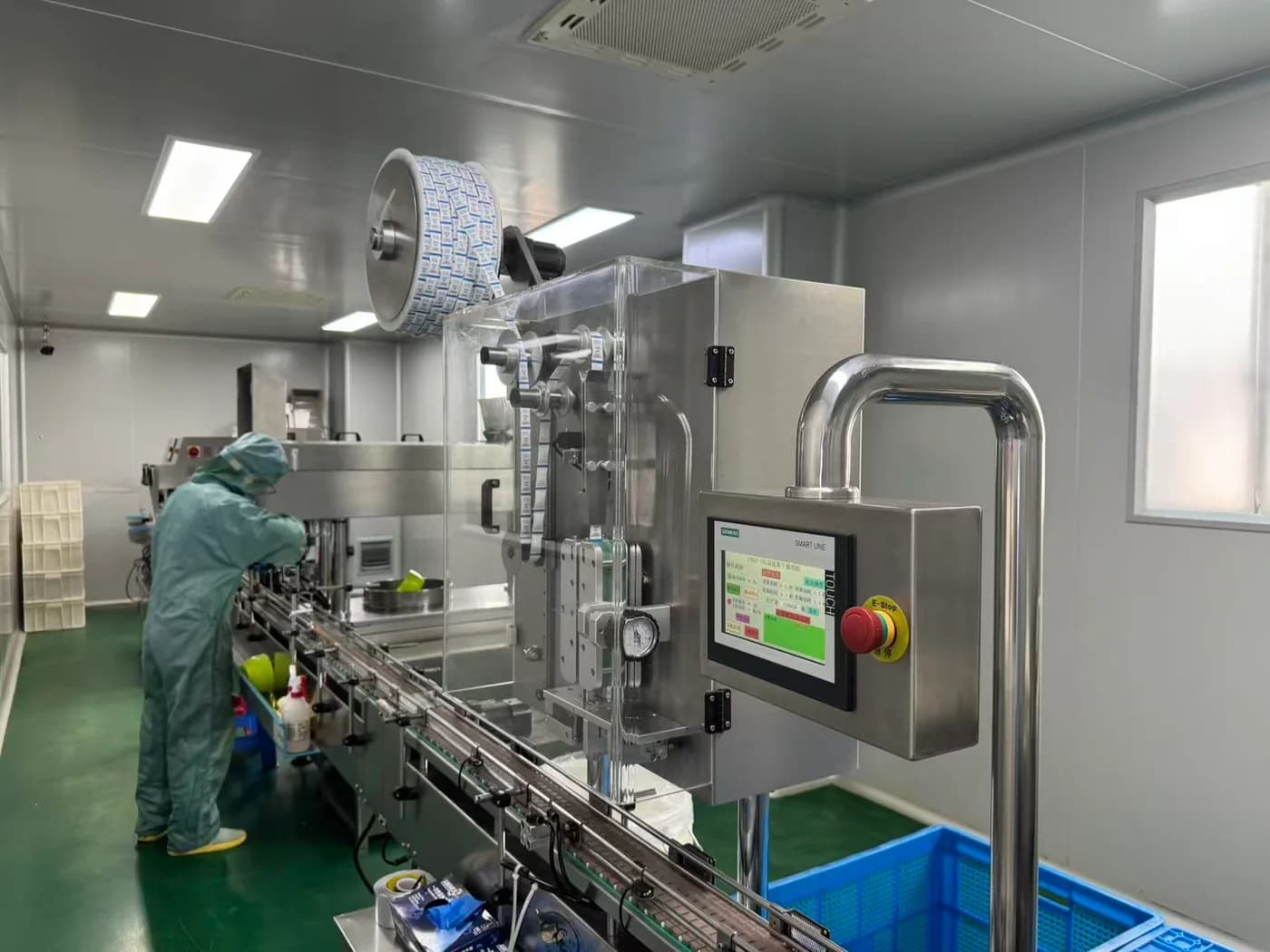
Best Supplement Manufacturers in Dubai for Growing Brands
Dubai brands need a contract manufacturer that understands halal compliance, fast sampling and retail-ready bottling. Compare local and offshore options, then see how EUPHM supports UAE launches with GMP-certified production.
Overview
Finding the best supplement manufacturers in Dubai usually means weighing local fill-and-finish capacity against offshore plants with lower MOQs and broader certifications. Dubai has strong logistics and free-zone advantages, but many brands still produce in Guangdong or Europe for cost, scale and formulation depth. The right partner depends on your SKU count, target channels and compliance needs. This page covers what to check before signing, from halal and GMP to fill weights and lead times.
- MOQ
- 1,000 units per SKU for retail bottling; lower for pilot runs
- Sample lead time
- 7–10 working days
- Mass production
- 20–35 working days after sample approval
- Certifications
- GMP, ISO 9001, ISO 22000, HACCP, NSF/ANSI 455-2, halal, FDA-registered
- Fill weights
- Capsules 300–1,200 mg; tablets 500–1,500 mg; powders 100 g–2 kg
- Line capacity
- Bottling lines up to 60,000 units per day across multiple SKUs
Manufacturing capability in Dubai and offshore
Dubai-based manufacturers typically handle blending, encapsulation and bottling for regional distribution. They suit brands that need short shipping times to GCC markets and frequent small batches. However, local capacity for specialised formats such as effervescents, softgels or organic-certified powders can be limited. Many Dubai brands therefore use a hybrid model: local finishing for speed, offshore production for scale.
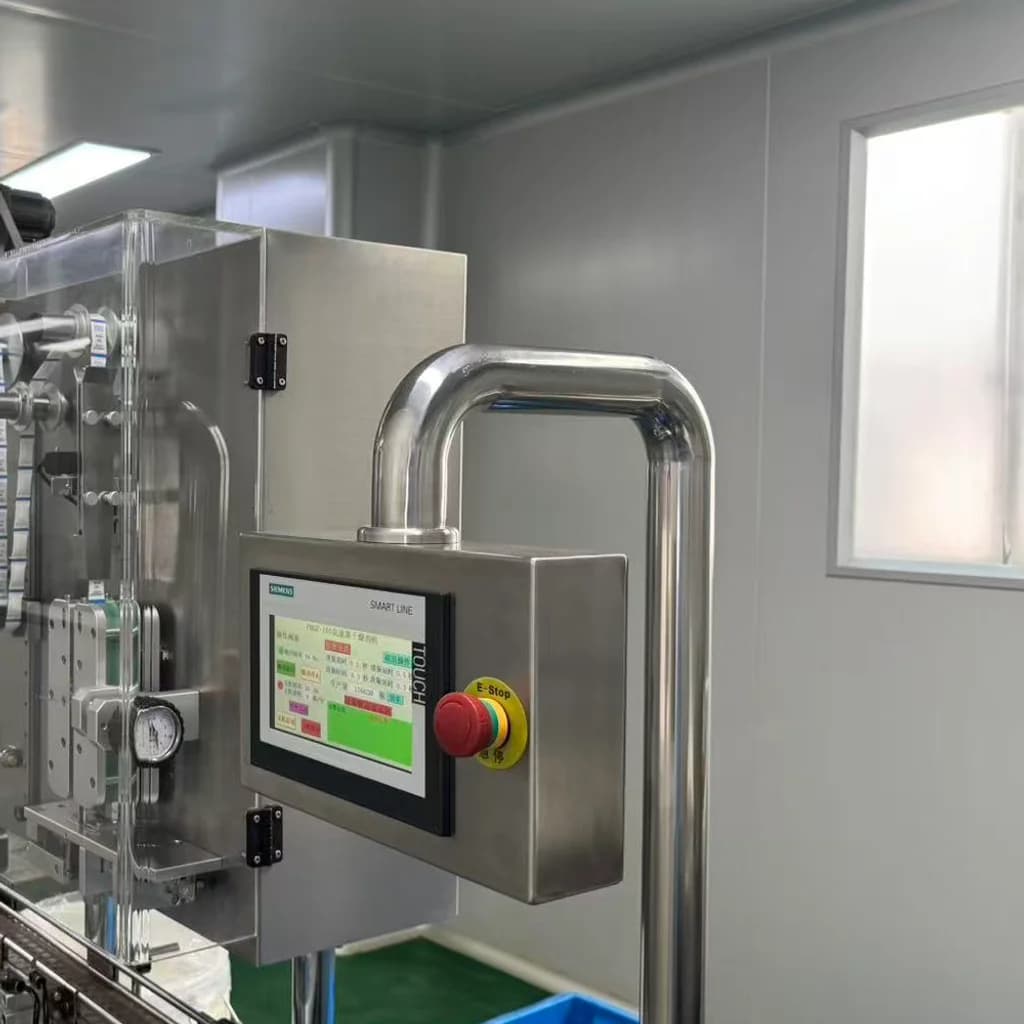
When comparing the best supplement manufacturers in Dubai, ask about line capacity per shift, changeover time between SKUs and whether they can run multiple fill weights on the same line. A plant that bottles 60,000 units per day can absorb a 5,000-unit pilot without disrupting larger runs. Confirm whether they hold stock of your preferred bottle, cap and label format or if tooling adds 4–6 weeks.
Formulation and ingredient sourcing
Dubai buyers often need halal-certified actives, clean-label excipients and dosages that match EU or US label claims. Request a full ingredient breakdown with country of origin, allergen statement and overage percentages. For botanical extracts, ask for standardisation details: for example, 10:1 or 4:1 ratios, or marker compounds such as 95% curcuminoids or 5% withanolides. These details affect both efficacy and import clearance.
If you are launching in the UAE, check whether your manufacturer can source organic-certified raw materials and maintain chain-of-custody documents. Organic claims require certified suppliers and segregated production. Vegan capsules (HPMC) and halal gelatin capsules are both available, but lead times differ. For pilot runs under 1,000 units, expect higher per-unit ingredient costs because minimum order quantities from raw material suppliers still apply.
Quality, Compliance and Logistics
The UAE requires supplement products to be registered with local authorities such as Dubai Municipality or the Ministry of Health, depending on the emirate and product type. Your manufacturer should provide a certificate of analysis (CoA) per batch, a GMP certificate and a halal certificate recognised by UAE authorities. ISO 22000 and HACCP documentation supports your registration file. FDA-registered facility status is useful for US-bound products but is not a substitute for UAE registration.
Logistics from Guangdong to Dubai typically takes 12–18 days by sea to Jebel Ali, or 3–5 days by air. Plan for customs clearance, which can add 2–4 days if documents are complete. Work with a manufacturer that provides commercial invoice, packing list, CoA, halal certificate and certificate of origin in one pack. For reorders, keep 6–8 weeks of stock to cover production and shipping variability.
Quality control and batch documentation at Dubai supplement manufacturers
Every batch produced at a Dubai supplement manufacturer or an offshore plant supplying the UAE should be tested against a written specification before release. Incoming raw materials are checked for identity by FTIR or HPLC, and potency is confirmed against the certificate of analysis from the ingredient supplier. Finished products are tested for microbial limits (total plate count, yeast and mould, E. coli, Salmonella), heavy metals (lead, arsenic, cadmium, mercury) and disintegration time for tablets and capsules. Testing typically occurs at three points: raw material receipt, during production (in-process checks on fill weight and hardness) and on the finished batch.
A complete certificate of analysis (COA) for each batch should list the product name, batch number, manufacturing date, expiry date, tests performed, specifications, results and the analyst's signature. It should also reference the method used, such as USP <2021> for microbial limits or USP <730> for disintegration. For UAE imports, the COA is often requested by Dubai Municipality or the Ministry of Climate Change and Environment during product registration. Brands should confirm that the COA is issued per batch, not per product, and that it matches the actual batch shipped.
Retention samples are kept for at least one year beyond the expiry date, or two years for products with a shelf life under 24 months. These samples are stored under label conditions and used to investigate any stability or quality complaints. A stability protocol should include accelerated testing at 40°C and 75% relative humidity for six months, plus real-time testing at 25°C and 60% relative humidity for the duration of the shelf life. For halal-certified products, the manufacturer should also provide a halal certificate for each ingredient of animal origin, such as gelatin capsules.
Packaging, Labelling and Retail Readiness
Dubai supplement manufacturers and their offshore partners offer several packaging formats: high-density polyethylene (HDPE) bottles from 60 cc to 500 cc, blister packs for tablets and capsules, stick packs for powders, and sachets for single-serve doses. Bottles can be supplied with induction seals, child-resistant closures and desiccant sachets. For retail in the UAE, Arabic and English labelling is mandatory, and the label must include the product name, list of ingredients, net quantity, batch number, expiry date, storage conditions, and the name and address of the manufacturer or importer. If the product is sold as a dietary supplement in the US, the label must also carry the FDA disclaimer and a Supplement Facts panel.
Lot and expiry coding are applied by inkjet or laser on the bottle, carton and shipper. The coding must remain legible for the product's shelf life, so manufacturers should test adhesion on the actual substrate. Cartons are typically printed with the product name, batch number, expiry date, quantity, gross weight and country of origin. Pallet specifications should be agreed in advance: standard Euro pallets (1200 x 800 mm) or US pallets (1200 x 1000 mm), with stretch wrapping and corner boards. For Amazon FBA, the manufacturer can apply FNSKU labels and poly-bag the units, but the brand owner must provide the label file and confirm the exact placement.
Retail readiness also covers artwork approval and pre-press checks. The manufacturer should provide a dieline and a proof for each SKU, and the brand owner should confirm that all claims are compliant with UAE regulations, which prohibit disease claims and require substantiation for structure-function claims. For organic products, the logo can only be used if the final product is certified by a USDA-accredited certifier, and the certificate must be available for customs. Similar rules apply to vegan and halal logos. Brands should request a digital copy of the final artwork and a physical proof before mass production.
MOQ, lead times and delivery from Dubai supplement manufacturers and offshore plants
Sample lead time for a Dubai supplement manufacturer or an offshore plant is typically 7 to 10 working days after receipt of the formula and packaging specifications. This includes sourcing raw materials if they are not in stock, producing a small pilot batch, and sending the sample by courier. For complex formulations or new packaging, allow 15 working days. The sample should be accompanied by a draft COA and a label proof. Once the sample is approved in writing, mass production starts. Production lead time is 20 to 35 working days for standard capsules and tablets, and up to 45 working days for powders or products requiring custom packaging.
Shipping from Guangdong to Dubai by sea takes about 18 to 25 days port to port, plus customs clearance and inland delivery. Air freight takes 5 to 8 days door to door but costs significantly more per kilogram. For urgent launches, a partial air shipment of 200 to 500 units can bridge the gap while the sea shipment is in transit. The choice of Incoterm affects cost and risk: EXW means the buyer collects from the factory, FOB means the manufacturer delivers to the port and loads the container, and DDP means the manufacturer handles everything including UAE customs duties and delivery to the warehouse. Most brands new to importing choose DDP for the first order to avoid customs surprises.
Documents provided with each shipment include the commercial invoice, packing list, bill of lading or air waybill, certificate of origin, COA for each batch, material safety data sheet (MSDS) for any hazardous ingredients, and a free-sale certificate if required by the UAE authorities. For plant-based products, a phytosanitary certificate may be needed for certain botanical ingredients. The manufacturer should also provide a halal certificate for the product and a statement of allergen status. Brands should keep digital copies of all documents for at least five years, as Dubai Municipality may request them during market surveillance.
Options for Your Format
Local Dubai contract manufacturing
Short lead times and easy communication. Best for small batches, fast replenishment and GCC-specific labelling. Limited formulation depth for novel formats.
Offshore GMP production
Lower MOQs and broader certifications. Suits brands scaling beyond the GCC. Add 12–18 days sea freight to Dubai. Sample lead time 7–10 days.
Private label stock formulas
Choose from existing formulations, apply your label. Fastest route to market. MOQ 1,000 units. Limited customisation of dosages or actives.
Custom formulation and pilot runs
Develop a unique SKU with your dosages and claims. Pilot runs below 1,000 units available. Mass production 20–35 working days after approval.
How a Project Runs
- 01
Request certifications and CoA
GMP, ISO 9001, ISO 22000, HACCP, NSF/ANSI 455-2 and halal certification; FDA facility registration for US-bound shipments.
- 02
Order samples
Request 2–3 sample units per SKU. Sample lead time is typically 7–10 working days. Evaluate taste, smell, capsule integrity and label accuracy before committing.
- 03
Confirm MOQ and pricing
Get written MOQ per SKU, per fill weight and per packaging format. Clarify whether tooling, label design or bottle moulds carry extra setup fees.
- 04
Review lead times
Mass production runs 20–35 working days after sample approval. Add shipping and customs. For Dubai, plan 12–18 days sea freight from South China.
- 05
Audit quality systems
Request a site audit or a recent third-party audit report. Check batch record retention, deviation handling and stability testing protocols.
- 06
Place a pilot order
Start with a pilot run below full MOQ to test market response. Use feedback to refine the formulation before scaling to 5,000+ units.
Why EUPHM
Halal and GMP certified
GMP, ISO 9001, ISO 22000, HACCP, NSF/ANSI 455-2 and halal certification; FDA facility registration for US-bound shipments.
Low MOQ for pilot runs
Start with 1,000 units per SKU for retail bottling. Lower thresholds available for pilot runs to test the Dubai market before scaling.
Full documentation pack
Each batch ships with CoA, halal certificate, certificate of origin and commercial invoice. One pack simplifies customs clearance at Jebel Ali.
Questions buyers ask.
What is the MOQ for supplement manufacturing in Dubai or from offshore plants?+
Local Dubai manufacturers may accept 1,000 units for simple capsule fills. Offshore GMP plants typically require 1,000 units per SKU for retail bottling, with lower thresholds for pilot runs. Always confirm whether the MOQ applies per SKU, per fill weight or per label.
How long does sample and mass production take?+
Sample lead time is 7–10 working days after formula and packaging approval. Mass production runs 20–35 working days after sample sign-off. Add 12–18 days sea freight from Guangdong to Dubai, or 3–5 days by air, plus customs clearance.
Do I need halal certification for supplements sold in the UAE?+
Yes, halal certification is expected for most supplement products sold in the UAE. Your manufacturer should provide a halal certificate recognised by UAE authorities. Check that the certificate covers the specific production line and ingredients used for your SKU.
Can I use a Dubai manufacturer for vegan supplements?+
Some Dubai facilities handle vegan production, but capacity is limited. Offshore plants with and vegan certifications may offer more flexibility. Confirm segregated production, chain-of-custody documents and raw material certificates before committing to a claim.
What documents are needed to import supplements into the UAE?+
You typically need a commercial invoice, packing list, certificate of analysis, halal certificate, certificate of origin and GMP certificate. Product registration with Dubai Municipality or the Ministry of Health may also be required. Work with a manufacturer that provides a complete documentation pack per batch.
What is the difference between a Dubai supplement manufacturer and an offshore plant for my brand?+
A Dubai supplement manufacturer offers local fill-and-finish, faster response for small orders and easy access to free-zone logistics, but may have higher MOQs and fewer certifications. An offshore plant, such as in Guangdong, typically offers lower MOQs, broader certifications (GMP, ISO 22000, halal, organic) and lower unit costs, but requires longer shipping times and import documentation. The right choice depends on your volume, budget and need for local support.
Can I get a sample before placing a bulk order for supplement manufacturing in Dubai?+
Yes. Most manufacturers provide samples after receiving your formula and packaging specifications. Sample lead time is 7 to 10 working days, and a sample fee may apply, which is often credited against the bulk order. The sample should include a draft COA and label proof. Request a sample that is produced on the same equipment as mass production to ensure it represents the final product.
How do I ensure my supplement labels comply with UAE and US regulations?+
For the UAE, labels must be in Arabic and English and include the product name, ingredients, net quantity, batch number, expiry date, storage conditions and manufacturer or importer details. Disease claims are prohibited. For the US, if you sell as a dietary supplement, the label needs a Supplement Facts panel and the FDA disclaimer. Ask your manufacturer for a dieline and proof, and have the final artwork reviewed by a regulatory consultant before printing.
Have a product in mind?
Send us the brief and we will come back with a formulation direction, indicative price and a realistic lead time — usually within one working day.