Drop Manufacturer for Dietary Supplements
EUPHM produces liquid drops in 15 ml, 30 ml and 50 ml bottles with calibrated droppers. Pilot runs start at 1,000 units. Retail MOQ is 1,000 units per SKU. Samples ship in 7 to 10 working days.
Overview
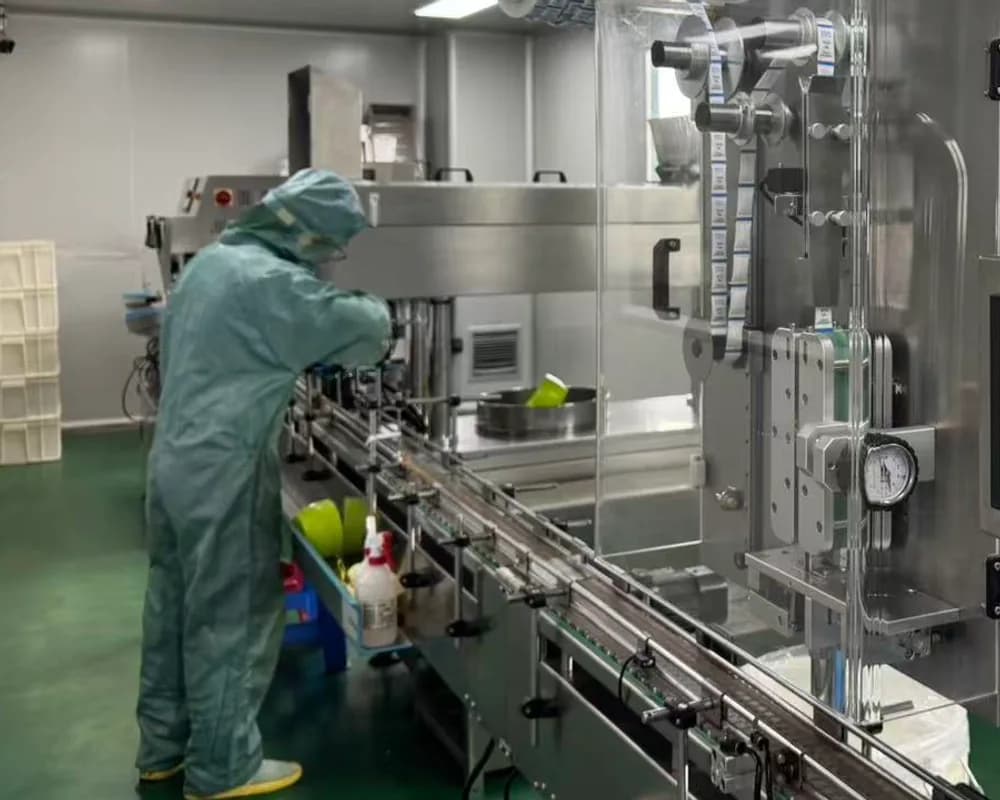
Drops suit vitamins, minerals, botanicals and liposomal formats where a small dose volume is preferred. As a contract manufacturer, EUPHM handles formulation, filling, capping, labelling and packing under one roof in Guangdong. The plant runs GMP, ISO 22000 and HACCP systems, with halal certification available on request. This page covers capacity, formulation options, quality controls and the production timeline so procurement teams can compare us against other drop suppliers. For the full dosage-form range, see /products.
| MOQ | 1,000 units per SKU for retail; 1,000 units for pilot runs |
|---|---|
| Fill volumes | 15 ml, 30 ml, 50 ml; custom sizes from 10 ml to 100 ml |
| Sample lead time | 7-10 working days |
| Mass production | 20-35 working days after sample approval |
| Line capacity | Up to 120,000 bottles per day across two filling lines |
| Certifications | GMP, ISO 9001, ISO 22000, HACCP, NSF/ANSI 455-2, halal, FDA-registered |
Filling and Packaging Capability
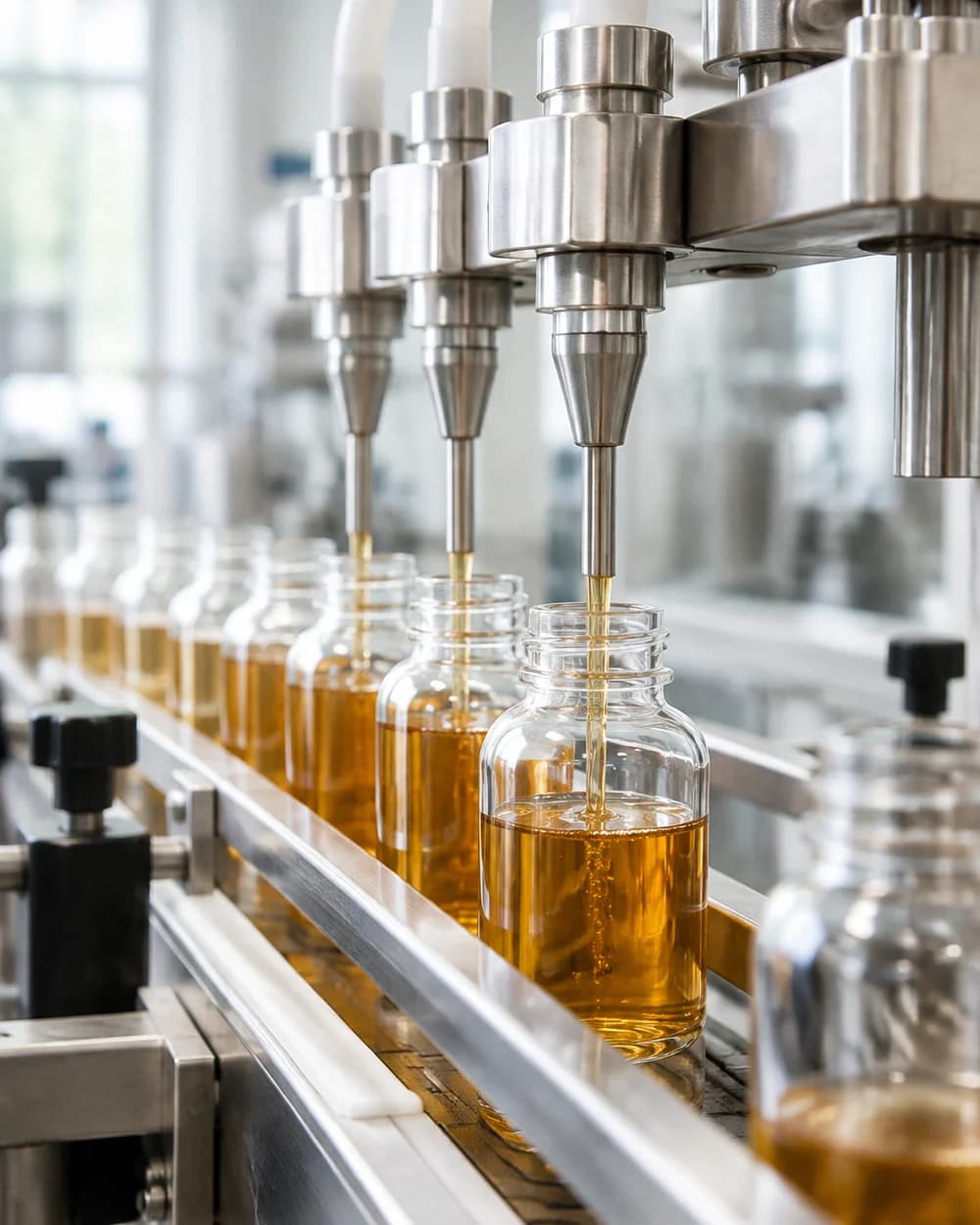
Two automated filling lines handle 10 ml to 100 ml bottles at 60 to 120 bottles per minute, depending on viscosity. Each line runs an inline checkweigher and torque tester. Typical monthly output is 2.4 to 3 million bottles when both lines run at capacity. Changeover between SKUs takes 4 to 6 hours, including a full clean-down and line clearance. This matters when a brand needs several flavours or strengths in one production window.
Primary packaging options include amber and clear glass, PET, and HDPE. Droppers are calibrated at 0.5 ml, 1.0 ml or custom marks. Tamper-evident bands, child-resistant closures and induction seals are all available. Secondary packing covers folding cartons, shrink sleeves and display trays. Bottles can be labelled with batch number, expiry date and country of origin in up to four languages. Cartonning is manual and semi-automatic, which suits runs from 1,000 to 50,000 units per SKU.
Formulation and Ingredient Handling
Drops are water-based, oil-based, glycerin-based or alcohol-based. Water-based systems suit B vitamins, vitamin C and mineral salts. Oil systems suit vitamins A, D, E, K and omega blends. Glycerin works well for herbal extracts and children's products where alcohol is not wanted. Liposomal formats are available for vitamin C and curcumin, though they carry a higher unit cost and a 500 kg minimum batch for the liposomal intermediate.
Flavouring and preservation are decided at sample stage. Natural flavours, stevia, monk fruit and citric acid adjust taste without adding sugar. Preservative systems can be potassium sorbate and sodium benzoate, or a preservative-free route using a pH below 3.8 and hot-fill at 85 degrees Celsius. Stability testing runs at 25 and 40 degrees Celsius for 3 and 6 months. Ingredient certificates of analysis, allergen statements and non-GMO declarations are supplied with each batch. vegan claims are supported by supplier certificates and site audits.
Quality Control and Shipping
Every batch is tested for appearance, pH, viscosity, fill weight, microbial limits and heavy metals. Lead, arsenic, cadmium and mercury are checked against USP and EU limits. Micro testing covers total plate count, yeast and mould, E. coli, Salmonella and Staphylococcus aureus. Retain samples are kept for shelf life plus 12 months. Batch records, deviation reports and certificates of analysis are issued before release. The facility is FDA-registered and audited annually against GMP and ISO 22000.
Shipping terms are FOB Shenzhen or Hong Kong, with EXW and CIF available. Standard carton counts are 48 to 100 bottles, depending on size. Air freight takes 5 to 8 days door to door; sea freight takes 22 to 35 days to US and EU ports. Documents supplied include commercial invoice, packing list, certificate of origin, MSDS for liquids and, where required, halal certificates. Orders above 20,000 units can be split into two shipments to reduce upfront inventory.
Quality Control and Batch Documentation
Every drop batch is tested against a written specification before release. Incoming raw materials are sampled at 100% of containers for identity by FTIR or HPLC, and each active is assayed for potency. During production, in-process checks cover fill weight at the start, middle and end of each run, with a tolerance of ±2% on the target volume. Microbiological testing for total aerobic count, yeast and mould, E. coli and Salmonella is performed on the finished bulk and again on filled bottles from the first and last hour of the line.
Heavy metals are tested per batch using ICP-MS for lead, arsenic, cadmium and mercury, with results compared to the limits in USP <232> or the destination market's requirements. For drops, preservative efficacy testing follows USP <51> or the equivalent when a multi-dose format is used. Disintegration testing is not applicable to liquid drops, but clarity, pH and specific gravity are recorded for every batch. All analytical methods are documented in the batch record and retained for at least five years.
A certificate of analysis (COA) is issued for each batch and includes the product name, batch number, manufacture and expiry dates, tests performed, specifications, results and the signature of the QC manager. Retention samples of every batch are stored at 25°C/60% RH and 30°C/65% RH for the full shelf life plus 12 months. Stability protocols follow ICH Q1A(R2) with real-time data at 0, 3, 6, 12, 24 and 36 months, and accelerated data at 40°C/75% RH for six months.
Batch records are retained for five years and are available for customer review during audits. Deviations and out-of-specification results are investigated under a written CAPA procedure, and no batch is released without a completed review by quality assurance. This documentation package supports regulatory submissions in the EU, UK, US and Southeast Asia.
Packaging, Labelling and Retail Readiness
Drops are filled into amber or clear glass bottles, PET bottles or single-use sachets. Standard bottle sizes are 15 ml, 30 ml and 50 ml with dropper caps, tamper-evident rings and child-resistant closures where required. For stick packs and sachets, fill volumes range from 2 ml to 10 ml, with stick width from 20 mm to 30 mm. Blister packs are not used for liquids, but we can supply a carton with a blister-style insert for retail display. Label options include paper, PP and metallised stock with matt or gloss finish.
Labels are designed to meet FDA dietary supplement labelling requirements for the US market, including the Supplement Facts panel, serving size, amount per serving, percent daily value where applicable, and the statement 'These statements have not been evaluated by the Food and Drug Administration.' For EU and UK markets, labels follow the relevant food supplement regulations with vitamin and mineral reference intakes. Lot and expiry coding is applied by inkjet or laser at the filling line, with a minimum character height of 1.5 mm and a format that includes the batch number, manufacture date and best-before date.
Cartons are specified with a minimum board grade of 300 gsm and are printed with the lot code and expiry date on the outer case. Standard carton dimensions are 40 x 30 x 25 cm, holding 48 bottles of 30 ml or 24 bottles of 50 ml. Pallets are 120 x 100 cm, stretch-wrapped and corner-protected, with a maximum load height of 1.8 m. For Amazon FBA, we apply FNSKU labels and poly-bag the bottles where required, and we can print and apply retail-ready carton labels with the product title, ASIN and expiration date.
Retail compliance support includes artwork review against the destination market's labelling rules, barcode verification to GS1 standards, and a pre-shipment check that the label content matches the approved artwork. We do not provide legal advice, but we flag any claim or ingredient name that may require substantiation or registration in the target country.
MOQ, Lead Times and Delivery
The minimum order quantity for custom drop formulations is 1,000 units per SKU for retail packaging, with a pilot run option of 1,000 units. Samples are produced in 7 to 10 working days after formulation and packaging specifications are approved. Sample costs are quoted per project and are typically credited against the first production order. Mass production runs 20 to 35 working days after sample approval, depending on bottle and label availability and whether the formula requires stability testing before release.
Shipping is arranged by air or sea. Air freight from Guangdong to Europe or North America takes 5 to 8 days door to door, while sea freight takes 25 to 35 days to major ports. We quote EXW, FOB Shenzhen or Hong Kong, and DDP for select destinations. For DDP, we handle customs clearance and duties, and the buyer receives the goods at the named place. We do not ship to markets where the product format is not permitted without prior written confirmation from the buyer.
Documents provided with each shipment include the commercial invoice, packing list, certificate of analysis for each batch, material safety data sheet (MSDS) where applicable, and a free-sale certificate issued by the relevant authority on request. For plant-based ingredients, a phytosanitary certificate can be arranged if the destination country requires it. Certificates of origin are available for preferential tariff treatment under applicable trade agreements.
Payment terms are 30% deposit with the balance against the bill of lading, or a letter of credit for orders above USD 50,000. We recommend booking sea freight at least 14 days before the production completion date to avoid port congestion surcharges. All lead times are estimates and are confirmed in the proforma invoice.
Formats and Packaging Options
Water-based drops
Best for B vitamins, vitamin C and mineral salts. Clear or lightly coloured. pH adjusted to 3.0 to 4.5 for stability. Compatible with most dropper closures.
Oil-based drops
Suited to fat-soluble vitamins A, D, E and K, plus omega and CBD-free botanical oils. MCT and sunflower carriers available. Slightly higher fill weight per bottle.
Glycerin-based drops
Alcohol-free option for herbal extracts and family products. Sweet taste, low viscosity. Typical glycerin content 40 to 70 percent. Works well with natural flavours.
Liposomal drops
For vitamin C and curcumin where enhanced absorption is the claim. Higher unit cost and 500 kg minimum on the liposomal intermediate. Requires 6-month stability data.
From Spec to Shipment
- 01
Brief and quote
Send formula, fill volume, bottle type and target quantity. A costing sheet follows within 2 working days, including MOQ and tooling if needed.
- 02
Sample production
Samples made in 7 to 10 working days. Two rounds of revision are included. Client approves taste, colour, fill weight and label artwork.
- 03
Order confirmation
Purchase order, 30 percent deposit and signed artwork release. Raw materials are ordered and booked against the production calendar.
- 04
Mass production
Filling, capping, labelling and cartonning run over 20 to 35 working days. In-process checks occur every 30 minutes on fill weight and torque.
- 05
QC and release
Finished goods tested for microbial, heavy metal and fill weight. Batch record and certificate of analysis issued. Retain samples held for shelf life plus 12 months.
- 06
Shipping and documents
FOB, EXW or CIF terms. Air freight 5 to 8 days, sea freight 22 to 35 days. Full export document pack provided, including MSDS and certificates of origin.
Why EUPHM
Low pilot-run MOQ
Start at 1,000 units to test a market before committing to 1,000 units for retail. Same line and same QC for both run sizes.
Certified for export
GMP, ISO 9001, ISO 22000, HACCP, NSF/ANSI 455-2 and halal certification; FDA facility registration for US-bound shipments.
One site, fewer handoffs
Formulation, filling, labelling and packing run in one Guangdong facility. No third-party co-packer between sample approval and shipment.
Questions buyers ask.
What is the MOQ for custom drop formulations?+
Retail bottling starts at 1,000 units per SKU. Pilot runs start at 1,000 units for the same formulation and packaging. Below 1,000 units, we can quote lab-scale samples only, not full production, because line clean-down and QC costs do not scale down.
How long do samples take, and what do they cost?+
Samples ship in 7 to 10 working days after formula and packaging details are confirmed. Sample cost is quoted per project and depends on raw materials and bottle type. Two revision rounds are included. Sample fees are credited against the first mass production order above 1,000 units.
Can you produce preservative-free drops?+
Yes, with a pH below 3.8 and a hot-fill at 85 degrees Celsius, or with a sterile filtration route for some water-based formulas. Preservative-free formulas need 6-month real-time stability data before we release a production batch, so add 4 to 6 weeks to the timeline.
Which certifications apply to drop production?+
The facility holds GMP, ISO 22000 and HACCP. Halal certification is available for lines running those orders. Organic and claims are supported when ingredients carry valid certificates and the batch is run under the organic programme. Vegan claims are supported by supplier declarations.
What are the payment and shipping terms?+
Standard terms are 30 percent deposit on order confirmation and 70 percent before shipment. FOB Shenzhen or Hong Kong is standard; EXW and CIF are available. Air freight takes 5 to 8 days door to door. Sea freight takes 22 to 35 days to US and EU ports. Orders above 20,000 units can be split into two shipments.
Can you supply drops in a preservative-free format, and what testing is required?+
Yes, we can produce preservative-free drops using a low-water-activity base or a self-preserving system. For multi-dose bottles, we run preservative efficacy testing per USP <51> or the equivalent to confirm the formulation resists microbial growth over the shelf life. Single-use sachets do not require preservative efficacy testing but are tested for seal integrity and sterility where applicable. We will advise on the appropriate format based on your target market and use case.
What is the shelf life of your drop products, and how is it supported?+
Shelf life is typically 24 months for unopened bottles, supported by real-time stability data at 25°C/60% RH and accelerated data at 40°C/75% RH for six months. We assign the expiry date based on the stability protocol agreed at the sample stage. For new formulations, we can provide preliminary 3-month accelerated data before production, with ongoing real-time data supplied as it becomes available. Shelf life after opening depends on the preservative system and is stated on the label.
Do you provide labels and packaging sourced locally, or can we supply our own?+
We can source bottles, caps, droppers and labels locally in Guangdong, which is usually faster and more cost-effective for small to medium volumes. If you prefer to supply your own packaging, we accept customer-supplied components subject to an incoming inspection for dimensions, material and print quality. We will provide a packaging specification sheet and a dieline for labels before production. Customer-supplied packaging must arrive at least 10 working days before the scheduled production date.
Other versions built in this dosage form.
- Liquid Manufacturer
- Syrup Manufacturer
- Liquid Shots Manufacturer
- Liquid Drops Manufacturer
- Single-Dose Liquid Manufacturer
- Liquid Emulsion Manufacturer
- Liquid Suspension Manufacturer
- Liquid Tonic Manufacturer
- Baby Drop Manufacturer
- Kids Drop Manufacturer
- Sugar-Free Drop Manufacturer
- Vitamin D3 Drop Manufacturer
- Vitamin B12 Liquid Manufacturer
- Omega-3 Liquid Manufacturer
- Fish Oil Liquid Manufacturer
- Algae Oil Liquid Manufacturer
- Cod Liver Oil Liquid Manufacturer
- MCT Oil Liquid Manufacturer
- Collagen Liquid Manufacturer
- Hyaluronic Acid Liquid Manufacturer
- Melatonin Liquid Manufacturer
- Zinc Liquid Manufacturer
- Iron Liquid Manufacturer
- Elderberry Liquid Manufacturer
- Apple Cider Vinegar Liquid Manufacturer
- Electrolytes Liquid Manufacturer
- Glutathione Liquid Manufacturer
- NAD+ Liquid Manufacturer
- Sea Moss Liquid Manufacturer
- Ginseng Liquid Manufacturer
- Propolis Liquid Manufacturer
- Propolis Drop Manufacturer
- Royal Jelly Liquid Manufacturer
- Taurine Liquid Manufacturer
- Sleep Support Liquid Manufacturer
- Energy shot Manufacturer
- Detox Liquid Manufacturer
Have a product in mind?
Send us the brief and we will come back with a formulation direction, indicative price and a realistic lead time — usually within one working day.