Glutathione Liquid Manufacturer for Private Label Brands
EUPHM fills glutathione liquids in 15-60 ml bottles, sachets and dropper formats. MOQ from 1,000 units per SKU. Samples in 7-10 working days.
Overview
Glutathione is a tripeptide that oxidises quickly in water. A liquid format needs pH control, chelation and light-protected packaging to hold its label claim through shelf life. EUPHM runs glutathione liquids on dedicated stainless lines, with nitrogen purging and cold-fill options. This page covers fill formats, actives, certifications and lead times for brands sourcing a glutathione liquid manufacturer.
| MOQ | 1,000 units per SKU for retail bottling; 500–1,000 units for pilot runs |
|---|---|
| Fill formats | 15 ml, 30 ml, 50 ml, 60 ml bottles; 10-30 ml sachets; 30 ml dropper |
| Glutathione forms | Reduced L-glutathione, S-acetyl L-glutathione, liposomal encapsulated |
| Dosage per unit | 50 mg to 1,000 mg per serve, label-claim matched |
| Sample lead time | 7-10 working days |
| Mass production | 20-35 working days after artwork and PO sign-off |
Liquid filling capability and line capacity
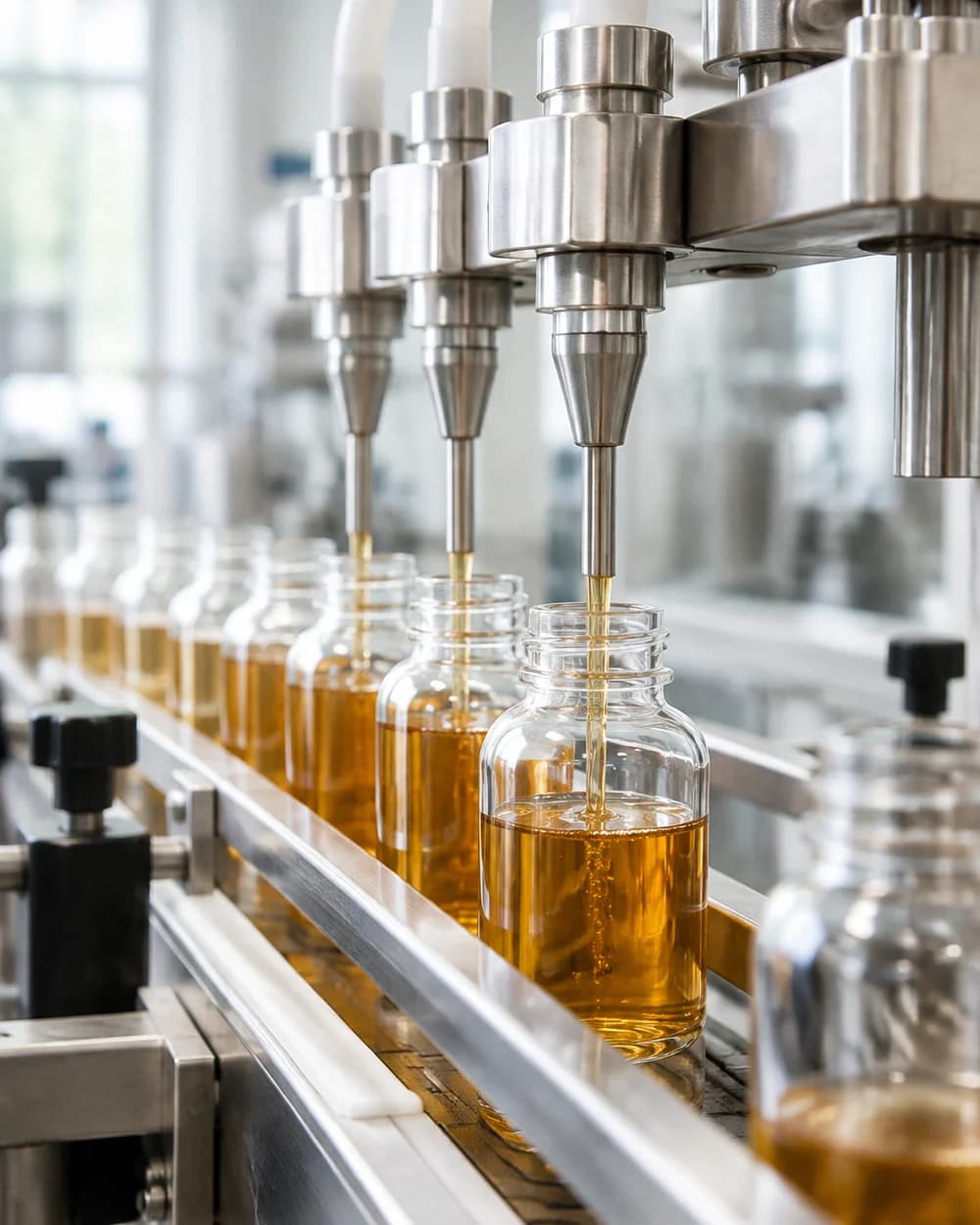
EUPHM operates four liquid filling lines. Two handle bottles from 15 ml to 60 ml at 6,000-9,000 units per hour. One runs stick sachets at 8,000-12,000 units per hour. One is a small-batch line for pilot runs from 500 units. Glutathione liquids are filled under nitrogen blanket to limit oxidation during filling.
Bottles can be amber PET, amber glass or opaque HDPE. Dropper assemblies, child-resistant caps, induction seals and shrink bands are all available. Secondary packaging includes cartons, display boxes and shipper cases. We hold stock moulds for 30 ml and 50 ml bottles, so no tooling cost applies for those formats.
Formulating glutathione for stability and taste
Reduced L-glutathione degrades in neutral or alkaline water. We target pH 3.0-4.5 with food-grade citric acid or phosphoric acid, and add EDTA at 0.01-0.05% where regulations allow. For liposomal formats, we use sunflower or soy phospholipids at 50-200 mg per 5 ml serve, processed to a mean particle size below 200 nm.
Taste is the main complaint in glutathione liquids. We mask the sulphur note with berry, citrus, mango or mixed-fruit systems, and can use stevia, monk fruit or sucralose. Preservatives are typically potassium sorbate and sodium benzoate at 0.05-0.1%. If you want a preservative-free version, we can fill at pH below 3.5 with a hot-fill and hold step.
Quality control, certifications and export paperwork
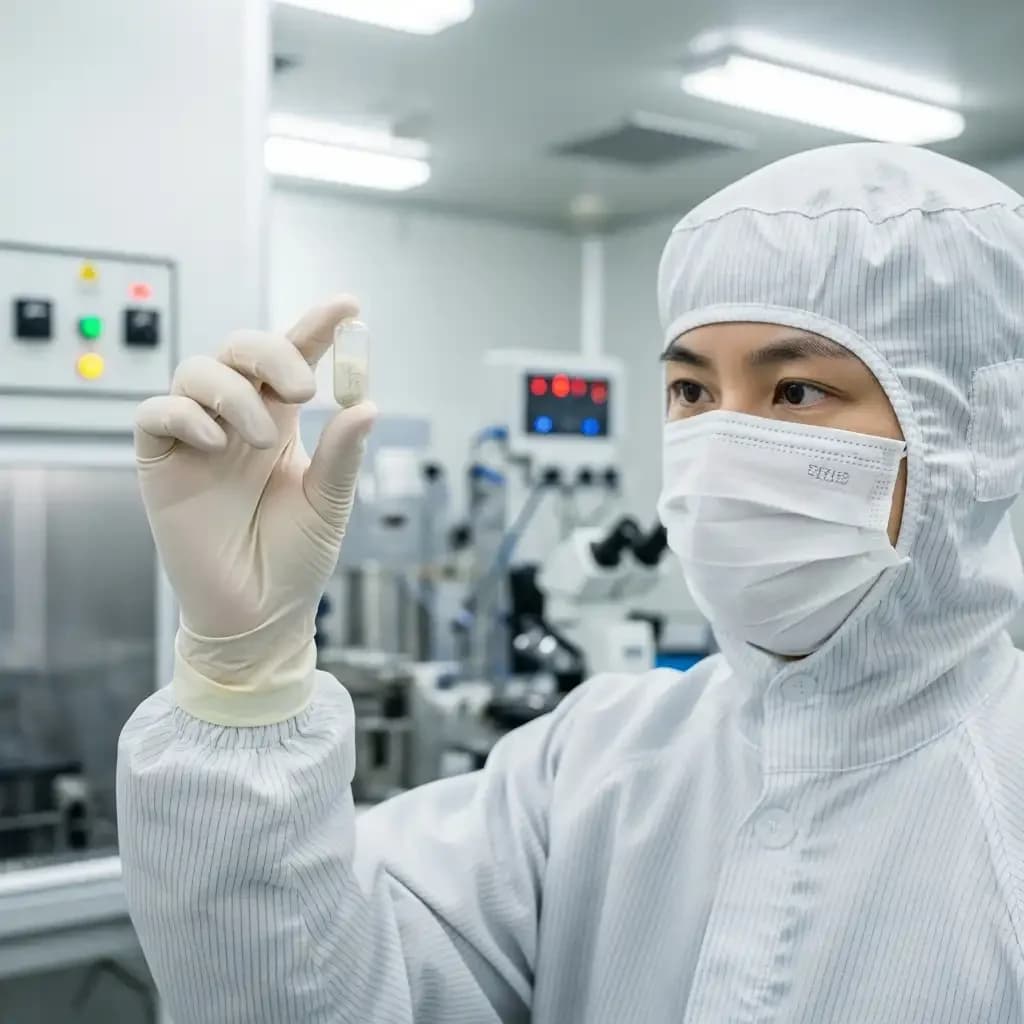
EUPHM is a GMP-certified facility, also holding ISO 22000 and HACCP. For halal and vegan claims, we source glutathione and excipients from suppliers with current certificates and can produce the liquid under a segregated run. Every batch is tested for assay, pH, microbial limits, heavy metals and fill weight.
We release a certificate of analysis per batch and retain samples for shelf life plus 6 months. Accelerated stability at 40°C/75% RH runs for 3 months, with real-time data at 25°C/60% RH and 30°C/65% RH. Export documents for the US, EU, UK and Middle East include commercial invoice, packing list, certificate of origin, health certificate and, where needed, halal certificates.
Quality Control and Batch Documentation
Every glutathione liquid batch is tested against a written specification before release. Identity is confirmed by HPLC against a certified reference standard, and potency is assayed to ensure the label claim is met at release with an overage agreed for shelf life. Microbial testing covers total aerobic count, yeast and mould, and specified pathogens such as E. coli and Salmonella. Heavy metals are screened by ICP-MS for lead, arsenic, cadmium and mercury. For liquid formats, we also test pH, appearance, and where relevant, viscosity and density. Tests are performed on raw materials, bulk solution before filling, and finished units from the fill line.
The certificate of analysis (COA) issued with each batch lists the product name, batch number, manufacturing date, expiry date, and the specification for each test. It reports the result, the method used, and the acceptance criteria. A signed release statement confirms the batch meets specification. COAs are available in PDF and can be issued per pallet or per shipment. For brands requiring third-party verification, we can arrange testing at an accredited external laboratory at additional cost and lead time.
Retention samples are held for every batch for the duration of the shelf life plus six months. Samples are stored under the labelled conditions and are available for re-test if a customer query arises. Stability protocol follows ICH climatic zone guidelines for the target market. Accelerated testing at 40°C and 75% relative humidity for six months is standard, with real-time testing at 25°C and 60% relative humidity running in parallel. For glutathione liquids, we monitor potency, pH, colour and microbial status at 0, 1, 3 and 6 months. Results are compiled into a stability report that supports the expiry date on the label.
Microbial testing is performed on the bulk solution and on finished units. For liquid fills, we also test the water used in formulation to pharmacopoeial or drinking-water standards as agreed. Environmental monitoring of the filling area is conducted on a scheduled basis, with settle plates and swabs. Batch records include line clearance checks, fill weight verification at start, middle and end of run, and a reconciliation of bulk solution used against units filled. These records are retained for five years and are available for audit by arrangement.
Packaging, Labelling and Retail Readiness
Glutathione liquids are filled into bottles, dropper bottles, sachets or stick packs. Bottle options include 15 ml, 30 ml, 50 ml and 60 ml in PET or glass, with tamper-evident closures and induction seals. Dropper bottles are available in 30 ml with graduated pipettes. Sachets range from 10 ml to 30 ml in foil laminate with a tear notch. Stick packs are available in 10 ml and 15 ml formats. For light-sensitive glutathione, we recommend amber PET or glass, or an opaque foil sachet, with nitrogen flushing as standard.
Labels are printed to your artwork and applied on line. We check the label against your approved proof for FDA dietary supplement labelling elements: statement of identity, net quantity, supplement facts panel, ingredient list, allergen statement where applicable, and the manufacturer or distributor address. Lot number and expiry date are inkjet coded on the bottle and the carton. We can apply a best-by date in DD/MM/YYYY or MM/YYYY format as required by the destination market. For Amazon sellers, we can print and apply FNSKU labels and poly-bag units with a suffocation warning where required.
Cartons are specified to protect the product during transit. Standard export carton is 5-ply corrugated with a minimum burst strength of 1,200 kPa. Bottles are separated by dividers or shrink-wrapped trays. Carton dimensions and weight are confirmed at artwork stage to optimise pallet configuration. Standard pallet is 1,200 x 1,000 mm or 1,200 x 800 mm, stretch-wrapped and strapped. We provide a packing list with carton dimensions, net and gross weight, and pallet count. For retail compliance, we can print GS1 barcodes and apply price stickers if required by the retailer.
Retail-ready packaging can include a display-ready case or a shelf-ready tray with a perforated front. These are quoted separately and require a minimum order quantity per SKU. We do not print claims that are not supported by the formulation or that breach the destination market's rules. All artwork is reviewed by our regulatory team before printing, and we provide a written confirmation that the label content matches the approved formula. Changes to artwork after approval may incur plate or digital print set-up charges and add three to five working days to the schedule.
MOQ, Lead Times and Delivery
The minimum order quantity for glutathione liquid is 1,000 units per SKU for retail bottling. Pilot runs of 500 to 1,000 units are available for brands testing the market, with a pilot-run surcharge and a requirement to use standard bottle and closure options. Samples are produced in 7 to 10 working days after formula and packaging confirmation. Sample costs are credited against the first mass production order. Artwork approval is required before production scheduling, and we provide a dieline and label template at sample stage to speed this up.
Mass production runs 20 to 35 working days after artwork and purchase order sign-off. This window includes raw material release, bulk compounding, filling, labelling, QC testing and packing. Delays in artwork approval, label printing or payment of the deposit will shift the dispatch date. We provide a production schedule at order confirmation and a weekly progress update. For repeat orders with unchanged artwork and formula, the lead time is typically 20 to 25 working days. Peak season from August to October may add five working days, so we recommend booking capacity early.
Shipping is by air or sea. Air freight from Guangdong to Europe or North America takes 5 to 8 days door to door, and is suitable for pilot runs or urgent replenishment. Sea freight to Europe takes 30 to 40 days port to port, and to the US West Coast 14 to 20 days. We ship under EXW, FOB Shenzhen or Hong Kong, or DDP to your warehouse. DDP includes customs clearance and duties, and requires a valid importer of record. We provide a commercial invoice, packing list, and bill of lading or airway bill for every shipment.
Documents provided with each shipment include the certificate of analysis, material safety data sheet (MSDS) for the finished product, and a free-sale certificate where required by the destination country. For markets requiring a phytosanitary certificate or a certificate of origin, we can arrange these on request. We do not provide halal certificates unless the specific product and line are certified; please confirm at enquiry stage. All documents are issued in English, and we can provide legalisation or consular attestation at additional cost and lead time.
Configurations to Compare
30 ml dropper bottle
Sublingual format, 50-500 mg glutathione per ml. Amber glass with glass dropper. Popular in the US and UK for direct-to-consumer brands.
50 ml shot bottle
Single-serve or 2-3 day format. 500-1,000 mg per bottle. Amber PET with induction seal. Common in EU pharmacy and Middle East retail.
10-30 ml stick sachet
Portable single serve. 100-600 mg per sachet. Nitrogen-flushed foil laminate. Suits subscription and travel packs.
Liposomal liquid
Phospholipid-encapsulated glutathione at 50-200 mg per 5 ml. Opaque bottle, cold-fill. Higher cost per unit, stronger stability profile.
How a Project Runs
- 01
Brief and quote
Send target dose, fill size, flavour, claims and destination market. We return a quote with MOQ, unit cost and lead time within 2 working days.
- 02
Sample development
We formulate and fill 2-3 sample variants. You receive them in 7-10 working days, with a spec sheet and preliminary stability data.
- 03
Sample approval
You test taste, mouthfeel and label claims. We adjust pH, sweetener or flavour as needed. One round of revision is included.
- 04
Artwork and compliance
We check your label against destination rules for the US, EU, UK or GCC. This covers ingredient names, allergen statements and claim wording.
- 05
Mass production
After PO and artwork sign-off, production runs in 20-35 working days. You receive batch records, COA and fill-weight data.
- 06
Release and shipping
We arrange FOB, CIF or DDP. Air freight takes 5-10 days; sea freight 20-35 days. Export documents are issued with the shipment.
Why EUPHM
Stability-first formulation
pH control, chelation and nitrogen purging protect the glutathione assay through shelf life. Accelerated and real-time stability data supplied.
Low MOQ for pilot runs
Start from 500 units to test a market, then scale to 1,000+ units per SKU for retail bottling without changing the formula or line.
Export-ready documentation
COA, health certificate, certificate of origin, halal papers are prepared for US, EU, UK and Middle East shipments.
Questions buyers ask.
What is the MOQ for glutathione liquid?+
MOQ is 1,000 units per SKU for retail bottling. For pilot runs we can go down to 500–1,000 units, though unit cost is higher. MOQ applies per fill size, flavour and packaging format, so a 30 ml dropper and a 50 ml shot are counted separately.
How do you keep glutathione stable in liquid?+
We formulate at pH 3.0-4.5, add a chelating agent where allowed, and fill under nitrogen to reduce dissolved oxygen. Bottles are amber or opaque to block light. Accelerated stability at 40°C/75% RH runs for 3 months to support a 24-month shelf life claim.
Can you make a liposomal glutathione liquid?+
Yes. We use sunflower or soy phospholipids at 50-200 mg per 5 ml serve, processed to a mean particle size below 200 nm. Liposomal formats cost more per unit and need opaque packaging, but they can carry a higher dose per millilitre and often taste less sulphuric.
Which certifications apply to your glutathione liquids?+
The facility holds GMP, ISO 22000 and HACCP. For halal and vegan claims, we source certified raw materials and run the batch under segregation. Certificates are issued per batch and included with export documents for the US, EU, UK and Middle East.
What are sample and production lead times?+
Samples ship in 7-10 working days after brief and formula confirmation. Mass production takes 20-35 working days after PO and artwork sign-off. Air freight adds 5-10 days; sea freight adds 20-35 days depending on destination port.
Can you provide a stability report for the glutathione liquid before I place a bulk order?+
Yes. We can provide an accelerated stability report for the formula and packaging combination at sample stage. This covers six months at 40°C and 75% relative humidity, with potency, pH and microbial results. Real-time data is generated on an ongoing basis and is available for existing customers. If your formula or packaging differs from our standard, a new stability study is required, which adds four to six weeks before mass production.
What label artwork files do you need and who is responsible for regulatory compliance?+
We need a print-ready PDF or AI file at 300 dpi with bleed and dieline. You are responsible for the label content complying with your destination market's regulations. Our regulatory team reviews the artwork for obvious errors and confirms that the claims match the approved formula, but we do not provide legal sign-off for your market. We recommend a local regulatory consultant for FDA or EU compliance. Artwork changes after approval may incur set-up charges.
How do you handle customs clearance and duties for DDP shipments?+
For DDP shipments, we use a freight forwarder with a valid importer of record in the destination country. The DDP price includes freight, customs clearance and duties. We require your company name, address and tax ID for the commercial invoice. DDP is available to most major markets, but some countries restrict DDP for dietary supplements. We will confirm at quotation stage. For FOB or EXW, you nominate the forwarder and are responsible for clearance and duties.
Have a product in mind?
Send us the brief and we will come back with a formulation direction, indicative price and a realistic lead time — usually within one working day.