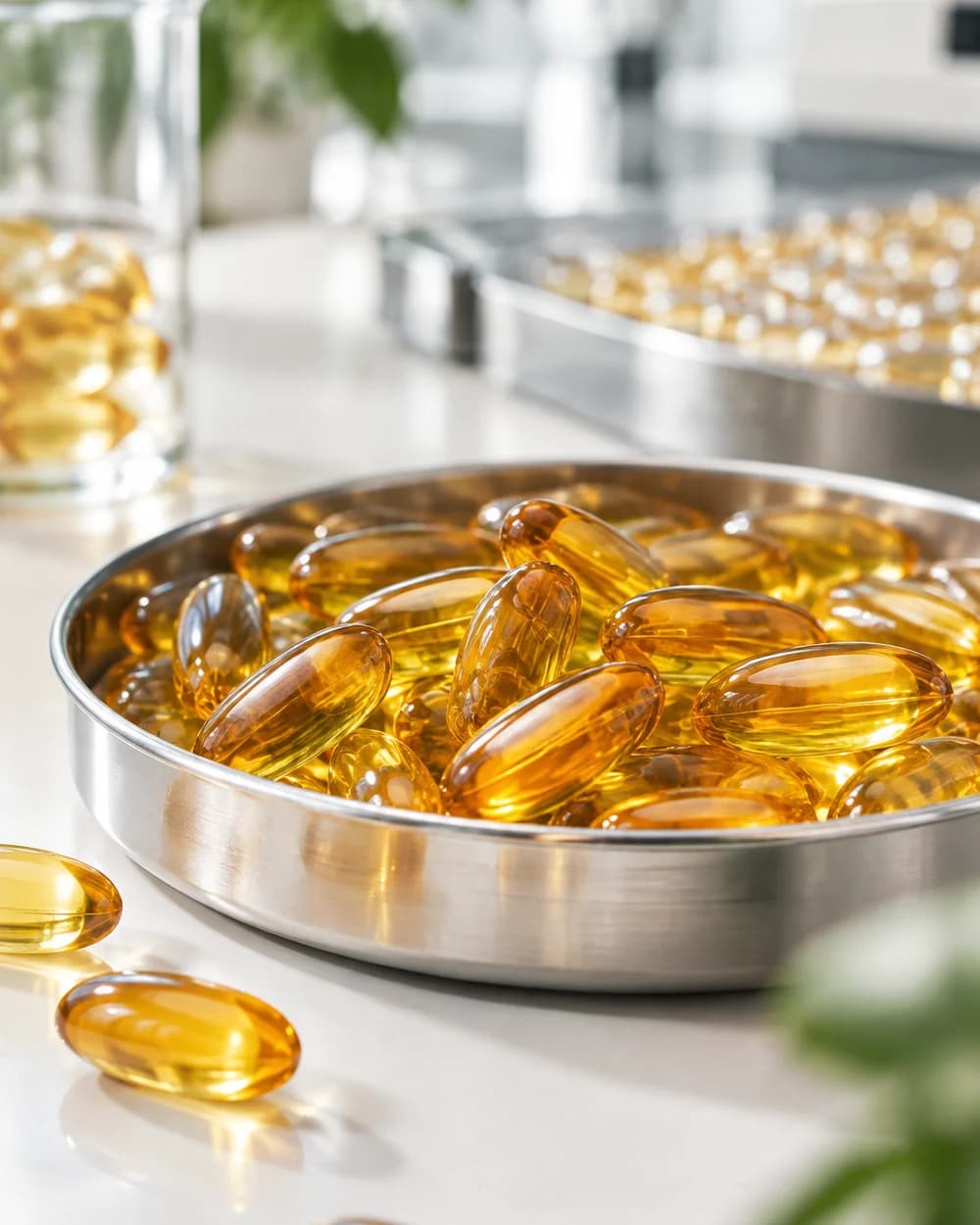
Softgel Manufacturer for Dietary Supplements
EUPHM is a GMP-certified softgel manufacturer in Guangdong, China. We produce fish oil, CoQ10, vitamin D3, and custom formulations in 500 mg to 1,500 mg fill weights. MOQ from 1,000 units per SKU. Pilot runs available.
Overview
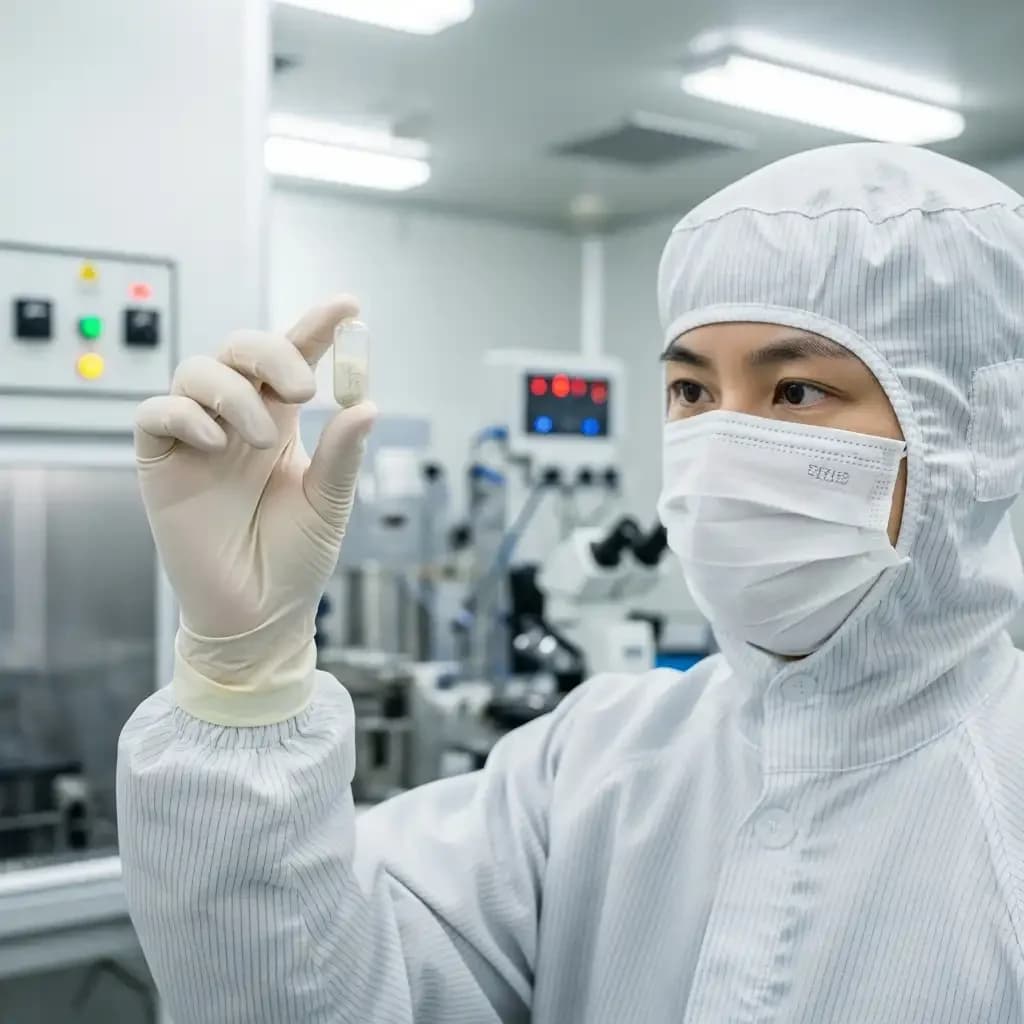
Sourcing softgels means matching a fill weight, shell composition, and dosage form to your label claim. EUPHM runs a dedicated softgel line with rotary die encapsulation, inline shell drying, and 100% weight sorting. We handle R&D, pilot batches, stability testing, and commercial production under one roof. Brands in the US, EU, UK, and Middle East use us for consistent fill weights, halal shells, and documentation that clears customs.
| Fill weight range | 500 mg – 1,500 mg per softgel |
|---|---|
| MOQ (retail bottling) | 1,000 units per SKU |
| Pilot run MOQ | 1,000 units per SKU |
| Sample lead time | 7–10 working days |
| Mass production lead time | 20–35 working days |
| Certifications | GMP, ISO 9001, ISO 22000, HACCP, NSF/ANSI 455-2, halal, FDA-registered |
Softgel Production Capacity and Equipment
Our softgel line uses rotary die encapsulation with a 24-inch die roll. Line capacity reaches 1.2 million softgels per shift. We run gelatin and non-gelatin shells, including fish gelatin, starch, and carrageenan. Shell drying tunnels control temperature and humidity to 20–25°C and 20–30% RH. That prevents sticking and gives a uniform seam. Inline weight sorting rejects any softgel outside ±3% of target fill weight.
We produce oblong, oval, round, and custom shapes. Enteric coating is available for delayed release. For probiotics and sensitive actives, we use a cold-fill process that keeps the fill matrix below 30°C. Changeover between SKUs takes 4–6 hours, which keeps small runs practical. Every batch is traceable from raw material lot to finished bottle.
Formulation and Ingredient Options
Softgels carry oils, pastes, and suspensions. Common fills include fish oil, krill oil, MCT oil, CoQ10, vitamin D3, vitamin E, and carotenoids. We test every incoming oil for peroxide value, free fatty acids, and heavy metals. For suspensions, we mill actives to a D90 under 50 microns to prevent settling. Antioxidants such as mixed tocopherols protect oxidation-sensitive fills.
Shell formulation matters for dietary and religious claims. We offer bovine gelatin, porcine gelatin, fish gelatin, and vegan starch shells. Halal certificates apply to specific shell and fill combinations. Organic certification is available when all ingredients hold organic status. We also produce sugar-free and titanium dioxide-free shells for EU and UK markets.
Quality Control and Compliance Documentation
Our facility is GMP-certified and FDA-registered. We hold ISO 22000 and HACCP certifications. Each batch goes through identity testing, assay, microbial limits, and disintegration testing. We retain samples for 24 months. Certificates of analysis list fill weight, shell weight, and total softgel weight. Third-party lab testing is available on request.
Export documentation covers health certificates, certificates of origin, and halal certificates. We provide stability data at 25°C/60% RH and 40°C/75% RH for 24 months. For US clients, we supply FDA prior notice and facility registration details. For EU clients, we provide compliance statements for novel food and contaminants. Label review support is included at no extra cost.
Batch Testing, COAs and Retention Samples
Every softgel batch is tested against a written specification before release. Incoming raw materials are sampled for identity by FTIR and assay by HPLC or GC. During encapsulation, we monitor shell thickness, seam integrity, and fill weight every 30 minutes; the target fill weight is held to ±5%. After drying, each lot is tested for microbials (total aerobic count, yeast and mould, E. coli, Salmonella), heavy metals (lead, cadmium, arsenic, mercury), and disintegration. Potency testing is performed on the finished softgel, not just the bulk fill, to confirm the label claim survives the encapsulation process.
A Certificate of Analysis (COA) is issued for each batch and includes the product name, lot number, manufacturing date, expiry date, tests performed, specification limits, and results. Where a customer requires it, we include the method reference (e.g., USP <2021> for microbial limits, USP <711> for disintegration). Retention samples of every lot are kept for the full shelf life plus six months, stored under labelled conditions. Stability protocols follow ICH Q1A(R2) guidelines: 25°C/60% RH for long-term and 40°C/75% RH for accelerated, with testing at 0, 3, 6, 9, 12, 18, and 24 months. We provide stability data summaries for your regulatory filings.
For softgel-specific quality, we also check shell integrity after accelerated stability, as gelatin shells can cross-link under high humidity. We monitor bloom strength of the gelatin and, for vegan softgels, the hydroxypropyl methylcellulose (HPMC) grade. If a batch fails any specification, it is placed on hold, investigated, and either reworked or rejected. We do not release product without a signed QA release. Documentation is provided in English; translations can be arranged on request.
Softgel Packaging, Labelling and Retail Readiness
We offer primary packaging in HDPE bottles (30, 60, 90, 120, 180, 250 counts), blister packs (PVC/PVDC or alu-alu for moisture-sensitive fills), and single-serve sachets or stick packs. Bottles can be induction-sealed and include a desiccant canister or silica gel sachet. For blisters, we use forming and lidding films that meet USP <671> moisture permeation requirements. We can also pack softgels into bulk drums for repackaging at your facility. Secondary packaging includes retail cartons with your artwork, lot and expiry coding via inkjet or laser, and tamper-evident seals.
For the US market, we structure labels to include the FDA-required dietary supplement facts panel: serving size, amount per serving, % Daily Value where applicable, other ingredients, and the mandatory disclaimer. We also handle allergen statements, storage instructions, and country of origin marking. For EU and UK, labels are prepared according to local nutrition and health claims regulations, and we can include the address of the responsible person. We do not provide legal review of claims; that remains the brand owner's responsibility.
Lot and expiry coding follows your format: Julian date, production date plus shelf life, or a specific expiry date. We maintain a coding record for traceability. Cartons are specified with dimensions, board grade (e.g., 350 gsm), and print method. Palletisation follows standard 1200×1000 mm or 1200×800 mm pallets, with stretch wrapping and edge protectors. For Amazon FBA, we can apply FNSKU labels and poly-bag units if required, and we provide carton weight and dimension data for your shipping plan. Retail compliance for large chains often requires a GS1 barcode on the carton; we can print and verify it.
Softgel MOQ, Lead Times and Delivery Terms
Sampling starts with a 7–10 working day turnaround from receipt of your formula and shell requirements. We provide up to 500 g of bulk softgels or 100 finished bottles for your evaluation. Pilot runs have a minimum of 1,000 units per SKU and take 15–20 working days, including stability set-up. Mass production runs 20–35 working days after artwork approval and receipt of deposit. These timelines assume raw materials are in stock; specialty oils or actives may add 2–3 weeks. We confirm lead times in writing before order confirmation.
We ship worldwide from Guangdong. For small orders or urgent launches, air freight (3–7 days to US/EU) is available; sea freight (25–40 days depending on port) is more economical for pallet quantities. We work with your nominated forwarder or can arrange door-to-door delivery. Incoterms offered are EXW, FOB (Shenzhen or Hong Kong), and DDP for select destinations. DDP includes customs clearance and duty, but we recommend confirming the landed cost with your broker.
Documentation provided with each shipment includes the commercial invoice, packing list, bill of lading or airway bill, Certificate of Analysis, Material Safety Data Sheet (MSDS) for the finished product, and a free-sale certificate where required. For plant-based ingredients, we can supply phytosanitary certificates if the destination country requires them. Halal certificates are available for the relevant shell and fill combinations. We do not provide certificates of origin unless requested; these can be arranged through the local chamber of commerce.
Why oils belong in a softgel — and what it cannot hold
A softgel is a sealed, single-unit package for liquids: fish and algal omega-3, vitamin D, CoQ10, lutein, CBD-type oils. Because the fill is already liquid, there is no dissolution step to fail, oxidation is limited by the shell, and the dose is tamper-evident. Typical fill volume is 200–1,200 mg, which covers most oil-based actives in one or two pieces.
It cannot hold water. Water-soluble actives have to be milled into a suspension paste with an oil carrier, which limits how high you can dose and can cause settling during the run. Vegetarian softgels (starch or alginate shell) exist but cost more and have a narrower processing window than gelatin, and any softgel with a fish or bovine shell will not carry a vegan claim no matter what the fill is.
Softgel control: seams, drying and oxidation
The encapsulation machine forms the shell at 55–60 °C and seals it on a rotating die; seam quality is the whole game, so we run a leak test and a visual seam check on a fixed interval and reject the run if the fill weight drifts beyond ±3%. Freshly made softgels go through a drying tunnel for 12–24 hours, then a tumble dry, until the shell loses the right amount of water — over-dry and it cracks in the bottle, under-dry and the pieces stick together.
For oils, the chemistry matters as much as the machine. Peroxide value and anisidine value are checked on incoming oil and again on the finished fill, because a softgel that has already oxidised will fail taste and shelf-life complaints long before it fails an assay. Enteric coating, if you need it, is a second pass with its own adhesion and disintegration checks.
Packaging and Format Choices
Gelatin shells
Bovine, porcine, or fish gelatin. Standard for oil-based fills. Halal certificates available per batch.
Vegan starch shells
Non-gelatin shells for plant-based claims. Suitable for EU and UK retail. Fill weights from 500 mg to 1,200 mg.
Enteric-coated softgels
Delayed release for probiotics and sensitive actives. Coating resists stomach acid. Lead time adds 5–7 days.
Custom fill blends
Combine oils, vitamins, and herbal extracts in one softgel. R&D support included. Pilot runs from 1,000 units.
Production in Six Steps
- 01
Brief and quote
Send your formula, fill weight, shell type, and target quantity. We reply with a quote and timeline within 2 working days.
- 02
Sample development
We produce a pilot batch and ship samples in 7–10 working days. You approve fill weight, colour, and shell feel.
- 03
Stability testing
We run accelerated and real-time stability for 24 months. Results support your shelf-life claim and label.
- 04
Commercial production
Mass production runs in 20–35 working days after sample approval. Line capacity is 1.2 million softgels per shift.
- 05
Quality release
Each batch passes identity, assay, microbial, and disintegration tests. We issue a certificate of analysis before shipping.
- 06
Packaging and dispatch
Bottling, labelling, and cartoning on site. We ship FOB Shenzhen or arrange air freight. Export documents included.
Why EUPHM
Low MOQ for retail
Start at 1,000 units per SKU. Pilot runs from 1,000 units. Test the market before scaling.
Documentation ready
GMP, ISO 9001, ISO 22000, HACCP, NSF/ANSI 455-2 and halal certification; FDA facility registration for US-bound shipments.
Consistent fill weight
Inline weight sorting rejects any softgel outside ±3% of target. Uniform dosage from first to last bottle.
Questions buyers ask.
What is the MOQ for softgel manufacturing?+
MOQ is 1,000 units per SKU for retail bottling. Pilot runs start at 1,000 units. Lower volumes are possible for formula testing, but unit cost is higher. We confirm MOQ after reviewing your fill weight and shell type.
How long does softgel production take?+
Samples ship in 7–10 working days. Mass production takes 20–35 working days after sample approval. Enteric coating adds 5–7 days. Lead times assume raw materials are in stock. We confirm dates in the quote.
Can you make vegan softgels?+
Yes. We use starch and carrageenan shells for vegan claims. Fill weights range from 500 mg to 1,200 mg. Vegan shells suit plant oils, vitamins, and herbal extracts. Certificates for EU and UK retail are available.
Do you provide halal certificates?+
Yes, for specific shell and fill combinations. Halal certificates cover bovine gelatin shells with halal-certified fills. certificates cover fish gelatin or bovine gelatin under rabbinical supervision. We confirm eligibility before production.
What documentation do you supply for export?+
We provide certificates of analysis, health certificates, certificates of origin, and stability data. For US clients, we supply FDA facility registration and prior notice. For EU clients, we provide contaminant and novel food compliance statements. Label review is included.
What is the shelf life of your softgels, and how is it determined?+
Shelf life is typically 24 months from the date of manufacture when stored below 25°C and away from direct sunlight. We assign shelf life based on real-time and accelerated stability data per ICH Q1A(R2). For new formulations, we start with a 24-month claim supported by accelerated data and confirm with ongoing real-time studies. We provide a stability summary and can customise the expiry date to your market requirements.
Can you handle custom shell colours and flavours?+
Yes. We offer a range of shell colours using approved food-grade colorants, including opaque, transparent, and two-tone options. Flavours can be added to the shell or fill, though we recommend testing for compatibility. Custom shapes are possible with a new die; tooling lead time is 3–4 weeks and applies a one-time cost. We provide shell samples for your approval before production.
What is your policy on rejected batches or quality claims?+
If a batch fails to meet the agreed specification, we will investigate and, where the fault is ours, replace the affected units at no cost or issue a credit. Claims must be raised within 30 days of receipt with supporting documentation and retained samples. We maintain a corrective and preventive action (CAPA) system and share investigation reports. Our quality agreement can be tailored to your requirements.
Other versions built in this dosage form.
- Enteric-Coated Softgel Manufacturer
- Vegetarian Softgel Manufacturer
- Halal Softgel Manufacturer
- Mini Softgel Manufacturer
- Liquid-Filled Softgel Manufacturer
- Chewable Softgel Manufacturer
- Gelatin-Free Softgel Manufacturer
- Non-GMO Softgel Manufacturer
- Vegan Softgel Manufacturer
- Vitamin D3 Softgel Manufacturer
- Vitamin K2 Softgel Manufacturer
- Vitamin E Softgel Manufacturer
- Multivitamin Softgel Manufacturer
- Omega-3 Softgel Manufacturer
- Fish Oil Softgel Manufacturer
- Krill Oil Softgel Manufacturer
- Algae Oil Softgel Manufacturer
- Cod Liver Oil Softgel Manufacturer
- MCT Oil Softgel Manufacturer
- CoQ10 Softgel Manufacturer
- Biotin Softgel Manufacturer
- Lutein Softgel Manufacturer
- Zeaxanthin Softgel Manufacturer
- Astaxanthin Softgel Manufacturer
- Ginger Softgel Manufacturer
- Hair Skin & Nails Softgel Manufacturer
- Prostate Softgel Manufacturer
Have a product in mind?
Send us the brief and we will come back with a formulation direction, indicative price and a realistic lead time — usually within one working day.