Gelatin-Free Softgel Manufacturer for Vegan and Halal Brands
Gelatin-free softgels use plant-derived shells such as modified starch, carrageenan or HPMC. We run these on dedicated lines with MOQ from 1,000 units and sample turnaround in 7–10 working days.
Overview
Gelatin-free softgels solve a specific sourcing problem: brands that need softgel delivery but cannot use bovine or porcine gelatin for vegan, halal or vegetarian positioning. The shell system changes how fill materials behave, so the formulation and drying parameters differ from standard gelatin softgels. As a contract manufacturer in Guangdong, we produce both formats and can advise which shell suits your active ingredients, target fill weight and market claims.
Production capability for plant-based shells
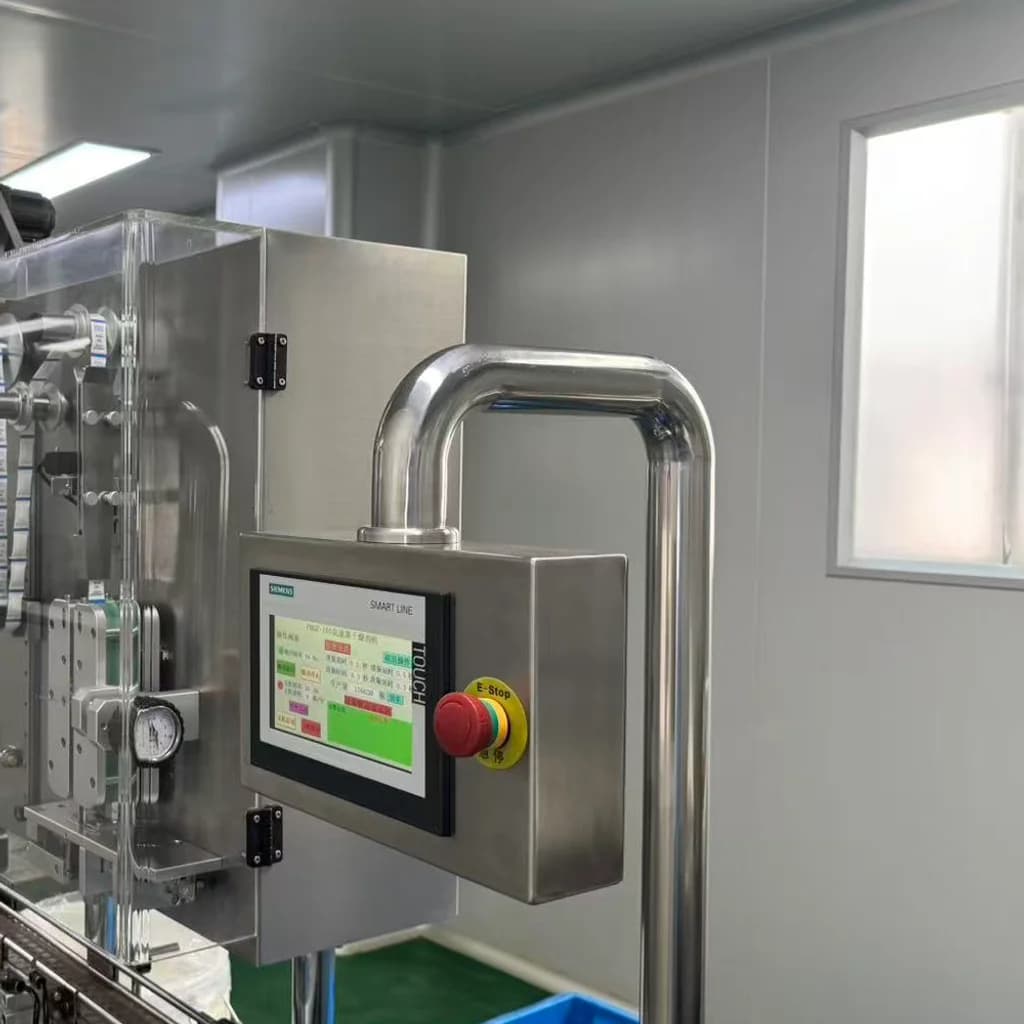
Gelatin-free softgels need tighter control of shell moisture and drying. Our rotary die encapsulation lines run modified starch and carrageenan shells at 150–1,200 mg fill weights, with output of 80,000–120,000 softgels per shift. We keep gelatin and non-gelatin campaigns on separate equipment trains to avoid cross-contact. That matters for halal and vegan claims, where trace gelatin is a recall risk rather than a labelling detail.
For pilot runs, we can start at 1,000 units per SKU so you can test stability and consumer response before committing to a full batch. Scale-up to 5,000–50,000 units follows the same formulation, so no re-validation is needed. Tooling for standard oval and oblong shapes is already on site; custom shapes add 10–15 working days to the sample stage.
Formulation detail: oils, actives and shell compatibility
The shell system determines what you can put inside. Carrageenan and modified starch handle medium-chain triglycerides, fish oil, algal oil, vitamin D3 and CoQ10 well. HPMC is more forgiving with hygroscopic actives and some herbal extracts, but it dries more slowly, which affects cycle time. We test fill-shell compatibility on a 500-softgel pilot batch before any scale-up, checking for shell softening, leakage and fill migration over 4 weeks at 40°C/75% RH.
For halal projects, we source shell ingredients from suppliers with current certificates and keep batch traceability from raw material to finished bottle. Vegan claims require no animal-derived processing aids, so we document the full bill of materials. If your formula needs an enteric or delayed-release profile, we can discuss coating options, though these add cost and lead time.
Quality, compliance and shipping logistics
The facility is GMP-certified and holds ISO 22000 and HACCP. We are FDA-registered for dietary supplement manufacturing, which supports US market entry. Halal and vegan certifications are available per project, subject to ingredient sourcing and audit timing. Every batch ships with a certificate of analysis covering fill weight, shell integrity, microbial limits and heavy metals.
Finished goods leave Guangdong by air or sea. Typical air freight to the US or EU is 5–8 days; sea freight is 18–30 days depending on port. We bottle in 30, 60, 90 and 120 count HDPE or glass, with child-resistant closures where required. Cartons and labels can be printed to your artwork, and we handle lot coding and expiry dating before dispatch.
Quality Control and Batch Documentation
Every gelatin-free softgel batch is tested against a written specification before release. Incoming raw materials are checked for identity by FTIR and for potency where applicable, with microbial limits and heavy metals (lead, cadmium, arsenic, mercury) screened against USP <232>/<2232> or the destination market's limits. Shell components such as modified starch, carrageenan and HPMC are tested for viscosity, moisture and microbial load, because plant-based shells are more sensitive to water content than gelatin.
In-process checks cover fill weight (target ±5%), seam integrity and shell thickness at start-up, middle and end of each shift. Finished softgels are tested for appearance, disintegration (USP <701>; typically 15–30 minutes for plant shells depending on the system), microbials (TPC, yeast and mould, E. coli, Salmonella), and potency or marker-compound assay. Results are recorded on a batch record that links each lot of shell and fill material to the finished lot number.
A certificate of analysis (COA) is issued per batch and includes the product name, lot number, manufacture and expiry dates, specification and test results with methods, plus a statement of conformity. Retention samples of every batch are kept for at least two years beyond expiry under controlled temperature and humidity. Stability protocols follow ICH Q1A(R2) conditions (25°C/60% RH and 40°C/75% RH) with testing at 0, 3, 6, 9, 12, 18 and 24 months, and accelerated data can be provided for initial shelf-life assignment.
For gelatin-free softgels, we also monitor shell brittleness and fill leakage during stability, since plant shells can lose elasticity faster than gelatin under low humidity. If a batch falls outside specification, it is quarantined and an investigation is opened before any disposition decision. Batch records, COAs and stability summaries are available for customer review and for regulatory filings such as FDA notification or health-supplement registration in the destination country.
Packaging, Labelling and Retail Readiness
Gelatin-free softgels can be packed in HDPE bottles (typically 30, 60, 90 or 120 count), blister packs, stick packs or sachets. Bottles use induction-sealed liners and child-resistant or standard closures depending on market requirements. For Amazon and retail, we can apply FNSKU labels, poly-bag the bottle and print the carton markings to your specification. Blister and stick formats are quoted separately because they change the primary packaging line and lead time.
Labels must carry the elements required by 21 CFR 101.36 for US dietary supplements: statement of identity, net quantity of contents, supplement facts panel with serving size and percent daily value, ingredient list, and the name and place of business of the manufacturer, packer or distributor. We print lot number and expiry date by inkjet or laser on the bottle, carton and, where required, the label itself. Expiry is assigned from stability data, not from a fixed default.
Cartons are specified with dimensions, board grade and print method. A typical 60-count bottle carton uses 300–350 gsm board, and master cartons are sized to a standard pallet footprint (1,200 x 1,000 mm or 1,200 x 800 mm). Pallet configuration, stretch-wrap and edge-board requirements are confirmed before production. We can supply dielines and artwork templates, and we check your artwork against the approved label text before printing.
For retail readiness, we verify barcode scannability (UPC/EAN or FNSKU), country-of-origin marking, and any market-specific statements such as allergen or vegan claims. We do not apply a certification logo unless the relevant certificate is in place for that batch. Packaging components are inspected on receipt for print defects, dimensions and seal integrity, and line clearance is documented between SKUs to prevent mix-ups.
MOQ, Lead Times and Delivery
The sample timeline starts with a formulation and shell review, typically 3–5 working days, followed by sample production and dispatch within 7–10 working days of approved specifications. Samples are sent with a draft COA and a specification sheet. If you need a pilot batch before mass production, we quote a pilot quantity below the standard MOQ, usually 1,000–1,000 units depending on fill weight and shell type.
Mass production runs 20–35 working days after sample approval and receipt of packaging components. The window depends on shell type, fill weight, capsule size and whether packaging is bottle, blister or sachet. We confirm a production slot in writing and provide a weekly status update. Delays caused by artwork changes or late packaging components are logged and communicated with a revised ship date.
Shipping is by air or sea. Air freight from Guangdong to the US or EU typically takes 5–8 days door-to-door for small orders; sea freight takes 25–40 days depending on port and service. We quote EXW, FOB (Shenzhen or Hong Kong) and DDP where the destination allows. DDP quotes include duties and clearance but exclude any destination taxes that the buyer is legally required to pay.
Documents provided with each shipment include the commercial invoice, packing list, COA per batch, MSDS where applicable, and a free-sale certificate. For plant-derived materials, a phytosanitary certificate is provided only where the destination authority requires it; it is not issued for every softgel shipment. We can also provide a certificate of origin and, on request, a statement of no genetically modified material and a vegan statement for the shell system.
Manufacturing Options to Compare
Modified starch
Neutral taste, good oxygen barrier. Suits oil-based actives and vegan claims. Fill weights 150–1,000 mg.
Carrageenan
Firm shell with clean release. Works well for vitamin D, CoQ10 and omega-3. Requires tight moisture control.
HPMC
Hypromellose shell for hygroscopic fills and some herbal extracts. Slower drying, so plan longer lead times.
Pectin blends
Plant-derived option for chewable-style softgels or where starch texture is not suitable. Trial batch recommended.
Production in Six Steps
- 01
Send your brief
Share target fill weight, active ingredients, shell preference, market claims and volume. We respond within 1 working day.
- 02
Formulation review
We check fill-shell compatibility and flag any actives that need a different shell system or a coated format.
- 03
Sample production
A 500–1,000 unit pilot batch is produced in 7–10 working days. You receive samples with a preliminary specification.
- 04
Stability and approval
We run accelerated stability for 4 weeks at 40°C/75% RH. You approve the formula and shell before mass production.
- 05
Mass production
Full batch runs in 20–35 working days. In-process checks cover fill weight, shell thickness and seam integrity.
- 06
QC and dispatch
Batch COA, lot coding and artwork application are completed before shipping by air or sea from Guangdong.
Why EUPHM
Vegan and vegetarian claims
No animal-derived shell or processing aids. Supports vegan certification and clean-label positioning in the US and EU.
Halal compliance
Plant-based shells avoid porcine and bovine gelatin. Certificates available for Middle East markets.
Softgel format retained
You keep the swallowing and stability advantages of softgels without reformulating to tablets or capsules.
Questions buyers ask.
What is the MOQ for gelatin-free softgels?+
Standard MOQ is 1,000 units per SKU for retail bottling. Pilot runs can start lower, typically 500–1,000 units, so you can test stability and market response before committing to a full batch. MOQ depends on shell type, fill weight and whether tooling already exists.
Are your gelatin-free softgels halal certified?+
Yes, on a project basis. We source shell ingredients from suppliers with current halal certificates, and we keep gelatin and non-gelatin production on separate equipment. Certification timing depends on ingredient sourcing and audit scheduling, so confirm at the brief stage.
Can you match a formula currently made with gelatin?+
In most cases, yes. The fill material often transfers directly, but the shell system changes drying and sealing parameters. We run a 500-softgel pilot to check compatibility, then adjust shell solids or drying time if needed. Some hygroscopic actives may need an HPMC shell instead of starch.
How long does production take?+
Samples ship in 7–10 working days after formulation review. Mass production takes 20–35 working days after sample approval, depending on batch size, shell type and packaging. Air freight from Guangdong adds 5–8 days; sea freight adds 18–30 days.
What certifications does the facility hold?+
The plant is GMP-certified and holds ISO 22000 and HACCP. It is FDA-registered for dietary supplement manufacturing. Halal and vegan certifications are available depending on the project and ingredient sourcing. Batch certificates of analysis cover fill weight, shell integrity, microbial limits and heavy metals.
Can you produce gelatin-free softgels with enteric or delayed-release properties?+
Enteric performance depends on the shell polymer and coating. Standard plant shells such as HPMC and modified starch can be formulated for delayed release, but the fill and shell must be tested together. We run disintegration testing in simulated gastric and intestinal fluids and provide the results in the COA. If your claim requires a specific release profile, we quote a development batch before mass production.
What is the shelf life of your gelatin-free softgels and how is it supported?+
Shelf life is assigned from stability data for the specific formula and packaging, not a fixed default. Initial shelf life is typically 18–24 months based on accelerated and real-time testing at ICH conditions. We provide a stability summary with the COA, and ongoing stability is monitored at 0, 3, 6, 9, 12, 18 and 24 months. If you change packaging or shell supplier, retesting is required.
Do you provide a free-sale certificate and can you support registration in my market?+
Yes. We issue a free-sale certificate for the finished product, along with COA, MSDS where applicable and a certificate of origin. For registration in markets such as the EU or ASEAN, we can supply the manufacturing licence, GMP certificate and product specification. We do not act as your regulatory agent, but we provide the documents your agent needs and answer technical queries during review.
Other versions built in this dosage form.
- Softgel Manufacturer
- Enteric-Coated Softgel Manufacturer
- Vegetarian Softgel Manufacturer
- Halal Softgel Manufacturer
- Mini Softgel Manufacturer
- Liquid-Filled Softgel Manufacturer
- Chewable Softgel Manufacturer
- Non-GMO Softgel Manufacturer
- Vegan Softgel Manufacturer
- Vitamin D3 Softgel Manufacturer
- Vitamin K2 Softgel Manufacturer
- Vitamin E Softgel Manufacturer
- Multivitamin Softgel Manufacturer
- Omega-3 Softgel Manufacturer
- Fish Oil Softgel Manufacturer
- Krill Oil Softgel Manufacturer
- Algae Oil Softgel Manufacturer
- Cod Liver Oil Softgel Manufacturer
- MCT Oil Softgel Manufacturer
- CoQ10 Softgel Manufacturer
- Biotin Softgel Manufacturer
- Lutein Softgel Manufacturer
- Zeaxanthin Softgel Manufacturer
- Astaxanthin Softgel Manufacturer
- Ginger Softgel Manufacturer
- Hair Skin & Nails Softgel Manufacturer
- Prostate Softgel Manufacturer
Have a product in mind?
Send us the brief and we will come back with a formulation direction, indicative price and a realistic lead time — usually within one working day.