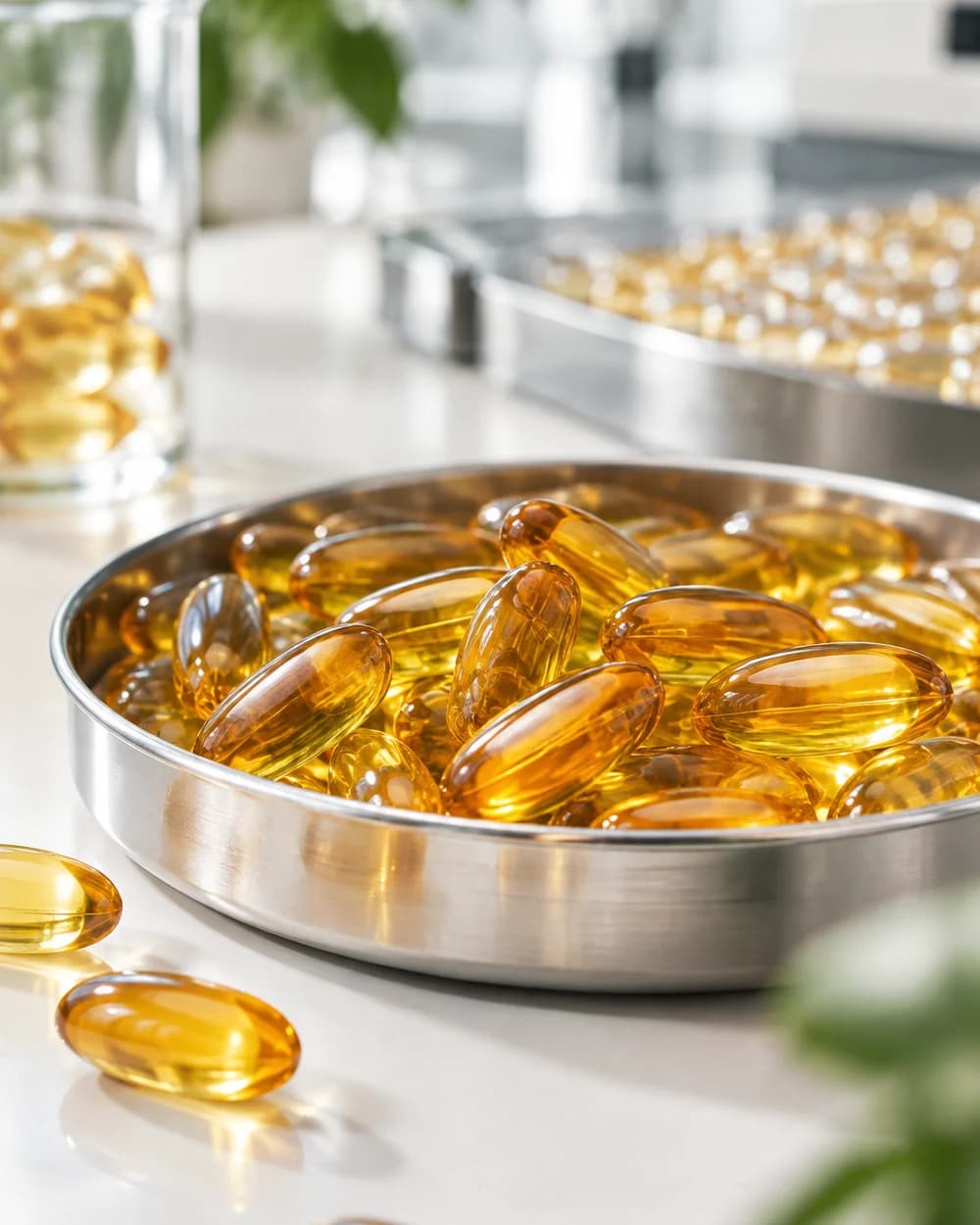
Lutein Softgel Manufacturer for Private Label Eye Health
EUPHM produces lutein softgels in a GMP-certified facility in Guangdong, China. We handle 5–20 mg lutein, with or without zeaxanthin, from pilot runs to full retail bottling.
Overview
Lutein softgels are sensitive to light, heat and oxygen. The carrier oil, antioxidant system and softgel shell all affect shelf life and label claims. This page covers how we formulate, fill and pack lutein softgels for brands in the US, EU, UK and Middle East. It sits inside our wider softgel manufacturing service, so you can compare lutein with other carotenoid and oil-based fillings before you commit to a format.
Softgel Capacity for Lutein Runs
Our softgel lines run oil-based and suspension fillings at 250–1,500 mg per capsule. Lutein esters are dispersed in a carrier oil such as sunflower or safflower, then encapsulated under nitrogen to limit oxidation. We can produce oblong, oval or round shapes, with opaque or clear shells. Typical batch sizes start at 1,000 units per SKU for retail bottling, and we accept smaller pilot runs when you need market samples before a full launch.
For brands already sourcing softgels, the same plant handles fish oil, vitamin D3, CoQ10 and turmeric. That means one supplier, one set of documents and one shipping schedule across several SKUs. Line changeover is planned around your packaging format, so 60-count, 90-count and 120-count bottles can run in the same production window. Lead time for mass production is 20–35 working days after sample approval, depending on shell colour, fill weight and bottle count.
Formulating Lutein and Zeaxanthin
Lutein is usually supplied as an ester, which is more stable than free lutein in oil. We blend it with zeaxanthin at a 5:1 ratio if you want a macular support claim, or run lutein alone for a simpler label. The carrier oil matters: sunflower oil is neutral and widely accepted, while safflower and MCT offer different oxidative profiles. We add mixed tocopherols or rosemary extract as antioxidants, then test peroxide value and lutein content before encapsulation.
Softgel shell formulation is just as important. Gelatin, glycerin and purified water are standard; for vegan or vegetarian brands we use modified starch or carrageenan shells. Shell thickness and plasticiser ratio affect how the softgel behaves in a bottle and in transit. We run accelerated stability at 40°C and 75% RH for 3 months, plus real-time studies, so you have data for shelf-life claims. If your target market needs halal certification, we source lutein and shell materials from approved suppliers.
Quality Control and Export Documentation
Every lutein batch is tested for identity, potency and microbial limits before release. We hold GMP, ISO 22000 and HACCP certifications, and our facility is FDA-registered for dietary supplements. Heavy metals, pesticide residues and solvent residues are tested against EU and US limits. If you sell in the Middle East, we arrange halal certification; for EU organic claims, we work with certified organic lutein and document the chain of custody.
Export paperwork covers certificate of analysis, certificate of free sale, halal certificates where relevant, and MSDS. We ship FOB Shenzhen or Yantian, with air freight for samples and urgent orders. Bottles can be labelled with your artwork or shipped bulk in food-grade drums. For brands comparing softgels with other formats, our softgel manufacturing service covers the same quality system, so you can standardise suppliers without changing your compliance file.
Quality Control and Batch Documentation
Every lutein softgel batch is sampled at three points: incoming raw material, the finished fill mass before encapsulation, and the packed finished goods. Incoming lutein and zeaxanthin esters are tested for identity by HPLC against a reference standard, for assay potency, and for residual solvents where the supplier's specification requires it. Fill mass is checked for homogeneity and antioxidant levels before it reaches the encapsulation line, so a potency shortfall is caught before shells are formed rather than after drying.
Finished softgels are tested for potency, microbial limits, heavy metals (lead, arsenic, cadmium, mercury) and disintegration. Typical release specifications sit at 90 to 110 percent of label claim for lutein, total plate count under 1,000 cfu/g, and disintegration within 30 minutes in purified water at 37 degrees Celsius. Microbial and heavy-metal testing is usually outsourced to an accredited third-party laboratory, with in-house HPLC handling identity and potency. Turnaround on a full release panel is typically 5 to 7 working days.
The certificate of analysis issued with each batch lists batch number, manufacture and expiry dates, fill weight, appearance, potency results per active, microbial results, heavy-metal results, disintegration time and the specification each parameter was measured against. Where a buyer needs a specific marker, such as a declared zeaxanthin-to-lutein ratio, that line is added to the COA template at the sampling plan stage.
Retention samples of every batch are held for the full shelf life plus six months, stored in the same primary packaging supplied to the customer. Accelerated stability runs at 40 degrees Celsius and 75 percent relative humidity over 3 and 6 months support the initial expiry assignment, with real-time data at 25 degrees Celsius and 60 percent relative humidity maintained alongside. For EU and UK launches, the real-time data set is the one that should back the label expiry date.
Packaging, Labelling and Retail Readiness
Lutein softgels ship in HDPE bottles from 30 to 180 count, in blister packs, in single-serve stick packs and in sachets. Bottles are the most common format for eye-health brands selling on Amazon and in pharmacy chains. Blisters suit markets where unit-dose traceability is expected, and sticks are chosen where the softgel is positioned as a daily sachet rather than a counted bottle. Induction seals, child-resistant closures and desiccant options are specified per market.
For US-bound private label lutein softgels, the label must carry a Supplement Facts panel with the lutein and zeaxanthin quantities per serving, the serving size, the percent daily value where one exists, and the full ingredient list in descending order of weight. Allergen statements, the manufacturer or distributor address, and a lot code with a best-by date are required. We print lot and expiry in inkjet or laser on the bottle base or label edge, and the same code appears on the carton and the shipping label for traceability.
Cartons are typically 5-ply corrugated with a maximum gross weight of 15 kg for manual handling, or up to 20 kg where the buyer's warehouse accepts it. Pallets are built to 1,200 by 1,000 mm or 1,200 by 800 mm depending on destination, stretch-wrapped and corner-boarded, with a packing list inside the container. For Amazon FBA, we apply FNSKU labels, poly-bag the bottles where required, and build cartons to the buyer's box limit, usually 22.5 kg for US fulfilment centres.
MOQ, Lead Times and Delivery
Sampling starts with a formulation brief and a target dose. We produce a pilot batch, typically 1,000 to 2,000 softgels, and ship samples within 7 to 10 working days of artwork and specification sign-off. Sample batches are made on the same encapsulation line as production, so fill weight, shell thickness and appearance carry over. If the sample needs a reformulation, a second round adds about 5 working days.
Mass production runs 20 to 35 working days after sample approval, depending on softgel size, whether the shell needs a colour or enteric coating, and the packaging format. Bottling and labelling add 3 to 5 working days to the softgel production window. Orders above 500,000 softgels are scheduled across multiple batches, and the production plan is shared at order confirmation so the buyer can align launch dates with retail listings.
We quote EXW, FOB Shenzhen or Hong Kong, and DDP for buyers who want landed-cost certainty. Air freight suits pilot and launch orders, typically 5 to 8 days door to door, while sea freight runs 25 to 40 days depending on destination port. Each shipment is accompanied by a certificate of analysis, a material safety data sheet, a free-sale certificate, and a phytosanitary certificate where the destination requires one for the carrier oil. Commercial invoice, packing list and bill of lading are issued against the agreed Incoterm.
Options for Your Format
Lutein 5 mg and 10 mg
Low-dose daily eye health softgels for maintenance formulas. Suitable for 60- and 90-count bottles aimed at general wellness shelves.
Lutein 20 mg with zeaxanthin
Higher-strength macular support formula. Common 5:1 lutein-to-zeaxanthin ratio, opaque shell to protect against light degradation.
Vegan and vegetarian shells
Modified starch or carrageenan shells for plant-based labels. Same fill weights and bottle formats as gelatin softgels.
Organic and halal certified
Certified organic lutein and halal-approved shell materials for EU organic and Middle East markets. Documentation included.
From Brief to Batch
- 01
Brief and quote
Send your dose, fill weight, bottle count and target market. We confirm MOQ, lead time and certification needs within 2 working days.
- 02
Sample development
We formulate the fill and shell, then produce samples in 7–10 working days. You receive physical samples and a draft COA.
- 03
Sample approval
You review appearance, smell, label fit and analytical data. We adjust the formula or shell if needed before locking the specification.
- 04
Bulk production
Mass production runs 20–35 working days after approval. In-process checks cover fill weight, shell integrity and seal strength.
- 05
QC and release
Finished batches are tested for lutein potency, microbial limits and heavy metals. We release only after the COA matches specification.
- 06
Pack and ship
Bottling, labelling and cartoning are done in-house. We ship FOB Shenzhen or by air, with full export documentation for your customs broker.
Why EUPHM
Low MOQ for pilots
Start at 1,000 units per SKU for retail bottling. Lower volumes available for market tests before you commit to a full production run.
Stability data included
Accelerated and real-time stability studies support your shelf-life claims. Data packs are ready for regulatory review in the US, EU and UK.
One supplier for softgels
Lutein, fish oil, vitamin D3 and CoQ10 run on the same lines. Consolidate your softgel range without adding another vendor to your audit list.
Questions buyers ask.
What is the MOQ for lutein softgels?+
MOQ is 1,000 units per SKU for retail bottling. If you need market samples or a small first run, we can quote lower pilot volumes. The exact figure depends on fill weight, shell type and bottle count. Share your target dose and pack size for a firm number.
Can you make lutein softgels with zeaxanthin?+
Yes. We blend lutein and zeaxanthin at ratios such as 5:1, which is common for macular support formulas. Both ingredients are tested for potency before encapsulation. If you want lutein alone, we can run that too, with the same shell and carrier oil options.
How long do samples take?+
Sample lead time is 7–10 working days after we confirm the formula and shell. You receive physical samples plus a draft certificate of analysis. If you need custom shell colours or a specific bottle, add a few days for artwork and packaging checks.
Are your lutein softgels suitable for EU and UK markets?+
Yes. We test against EU and UK limits for heavy metals, pesticides and microbials. We provide COA, MSDS and certificate of free sale. For organic claims, we source certified organic lutein and document the chain of custody. Our facility is GMP, ISO 22000 and HACCP certified.
What certifications do you hold?+
The plant holds GMP, ISO 22000 and HACCP. Depending on your market, we arrange halal or vegan certification for the finished product. The facility is FDA-registered for dietary supplements. Certification scope and documents are confirmed at quotation stage.
Can you supply lutein softgels in bulk without retail packaging?+
Yes. Bulk lutein softgels can be supplied in food-grade polyethylene bags inside fibre drums or in bulk cartons, with the same lot code and COA as bottled goods. Bulk supply suits brands that bottle in their own facility or repack for a specific market. Minimum order for bulk is lower than for retail bottling, and we confirm the bag count and drum weight at order stage.
How do you handle label artwork and regulatory review for lutein softgels?+
We review buyer-supplied artwork against the destination market's labelling rules before printing. For the US that means the Supplement Facts format and allergen declarations; for the EU and UK it means the nutrition declaration, the permitted health claims list and the food business operator address. We flag issues in writing and do not print until the buyer signs off the corrected version.
What is the shelf life of your lutein softgels and how is it set?+
Shelf life is normally set at 24 months from manufacture, subject to the stability data generated for that formulation. The expiry date is supported by accelerated data at 40 degrees Celsius and 75 percent relative humidity, plus ongoing real-time data at 25 degrees Celsius and 60 percent relative humidity. Formulations with higher moisture sensitivity or a softgel shell with gelatin alternatives may be assigned a shorter initial date.
Have a product in mind?
Send us the brief and we will come back with a formulation direction, indicative price and a realistic lead time — usually within one working day.