Vitamins Resource Hub: Sourcing, Formulation and Production
Practical guides for brand owners and procurement teams sourcing vitamin supplements. Compare dosage forms, MOQs, lead times and certifications from a GMP-certified contract manufacturer in Guangdong, China.
Overview
This Vitamins Resource Hub collects the reference material buyers ask for most: tablet and capsule fill weights, pilot-run minimums, sample timelines and compliance documents. It sits under our wider /resources library, which covers minerals, probiotics, softgels and packaging. Use these pages to shortlist formats, estimate unit economics and prepare a brief before you request a quote. Every figure reflects standard lines at our Guangdong plant, not best-case marketing numbers.
| MOQ, retail bottling | 1,000 units per SKU |
|---|---|
| MOQ, pilot run | From 500 units, subject to formula |
| Sample lead time | 7–10 working days |
| Mass production | 20–35 working days after approval |
| Certifications | GMP, ISO 9001, ISO 22000, HACCP, NSF/ANSI 455-2, halal, FDA-registered |
| Dosage forms | Tablets, two-piece capsules, softgels, powders, gummies |
Tablet, Capsule and Softgel Capability
Vitamin projects usually land in one of three formats. Two-piece capsules suit oil-free blends and dose ranges from 250 mg to 1,000 mg. Tablets handle higher actives and controlled release, typically 500 mg to 1,500 mg. Softgels carry oil-soluble vitamins such as D3 and K2, with fill weights from 300 mg to 1,200 mg. We run separate lines for each format, so switching between them does not require a full plant changeover.
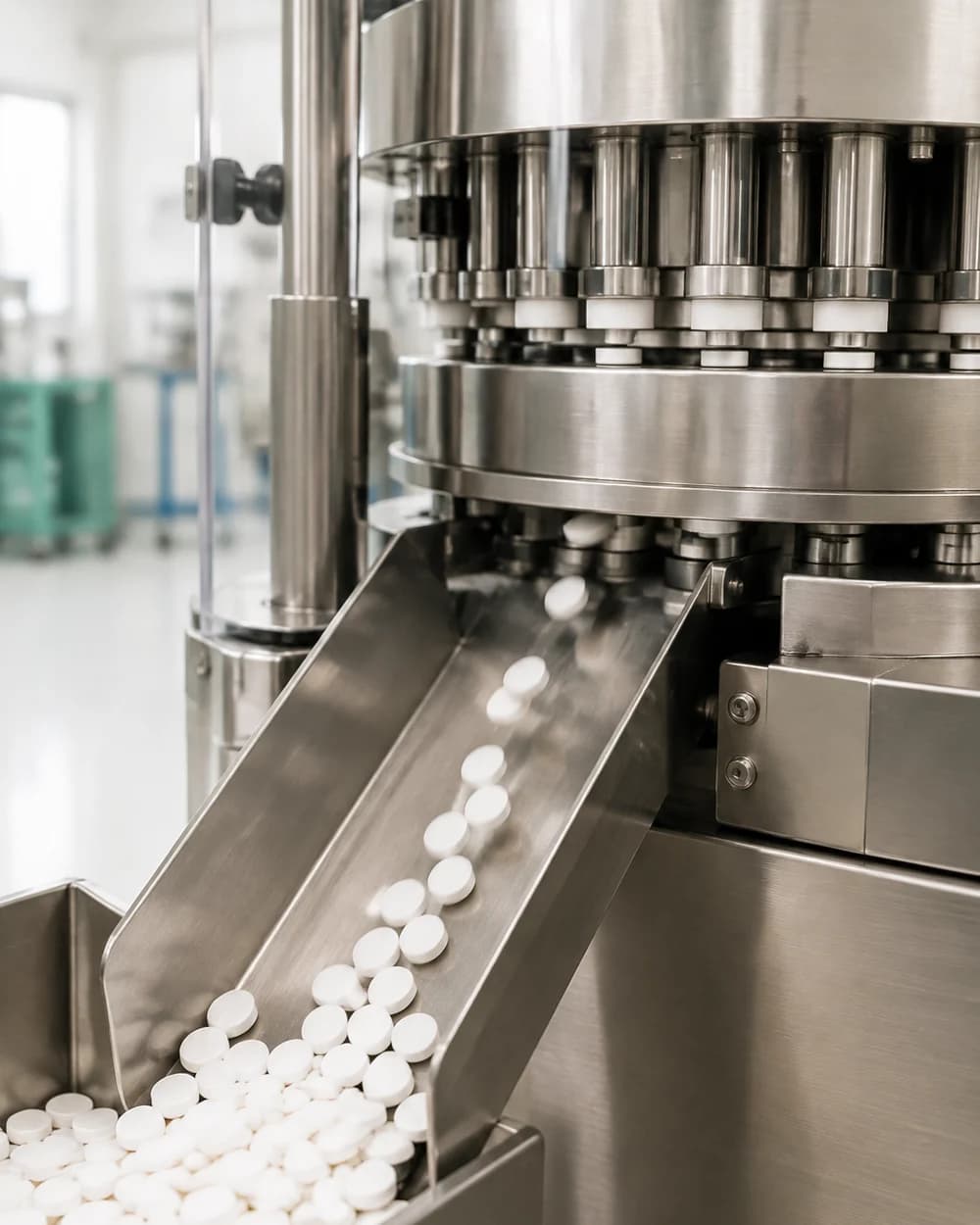
Line capacity matters more than headline speed. A single tablet line can press 200,000 to 400,000 units per shift depending on size and coating. Capsule filling runs 60,000 to 120,000 units per shift. For a 30-day supply at 1,000 bottles, that is one to three production days plus coating, drying and packaging. Pilot runs from 500 units let you test stability and label claims before committing to a full batch.
Formulation and Ingredient Sourcing
Vitamin premixes vary widely in cost and stability. We source USP, BP or EP grade actives where available and confirm assay, particle size and flow before blending. Common inputs include ascorbic acid, cholecalciferol, dl-alpha tocopheryl acetate, retinyl palmitate and a range of B-complex salts. For gummies, pectin and gelatin bases change texture and shelf life, so we run a small trial before scaling.
Overages protect label claims through shelf life. A 24-month vitamin C tablet might carry a 10–20% overage; vitamin D3 in softgels often needs 20–30% because of degradation. We calculate overage from accelerated stability data, not guesswork. Clean-label requests are workable: no titanium dioxide, no synthetic colours, stevia or monk fruit sweetening, and vegan capsules. Each change affects cost and minimum batch size, so we quote both standard and clean-label versions.
Quality, Compliance and Export Logistics
Our facility is GMP-certified and holds ISO 22000 and HACCP. We are FDA-registered for US-bound dietary supplements. halal and vegan certifications are available for relevant formulas; certificate copies go out with the quotation pack. Every batch ships with a certificate of analysis covering identity, assay, micro and heavy metals. Retain samples are kept for the shelf life plus six months.
Export documentation is prepared in-house: commercial invoice, packing list, certificate of origin, health certificate and, where required, halal certificates. We ship FOB Shenzhen or Yantian, with air freight from Hong Kong for pilot runs. Typical sea transit is 18–28 days to US west coast, 25–35 days to EU ports and 12–20 days to Jebel Ali. Cartons are sized for standard pallets; private-label bottles can be shrink-wrapped or boxed.
Quality Control and Batch Documentation
Every vitamin batch is sampled at three points: incoming raw material, in-process blend, and finished goods. Identity testing by FTIR confirms each active, while potency is assayed by HPLC against a validated standard. Microbials (total plate count, yeast and mould, E. coli, Salmonella) are tested on every batch, and heavy metals (lead, arsenic, cadmium, mercury) are screened to EU and US Pharmacopoeia limits. Disintegration testing follows USP <701> for tablets and <711> for capsules, with results logged per lot.
A Certificate of Analysis (COA) is issued for each batch and includes the product name, lot number, manufacturing date, expiry date, tests performed, specification limits, results, and the analyst's signature. Retain samples of every lot are held for 24 months under controlled temperature and humidity, so any post-market query can be traced to the original material. Stability protocols follow ICH Q1A(R2) conditions: 25°C/60% RH for long-term and 40°C/75% RH for accelerated, with assays at 0, 3, 6, 12 and 24 months.
Documentation is compiled before release: batch record, raw-material COAs, in-process checks, finished-product COA, and deviation log if applicable. Buyers receive the COA as a PDF with the shipment, and hard copies can be inserted in the first carton on request. For markets requiring a free-sale certificate or GMP attestation, these are prepared alongside the batch file so the export paperwork is complete before the container leaves Guangdong.
Packaging, Labelling and Retail Readiness
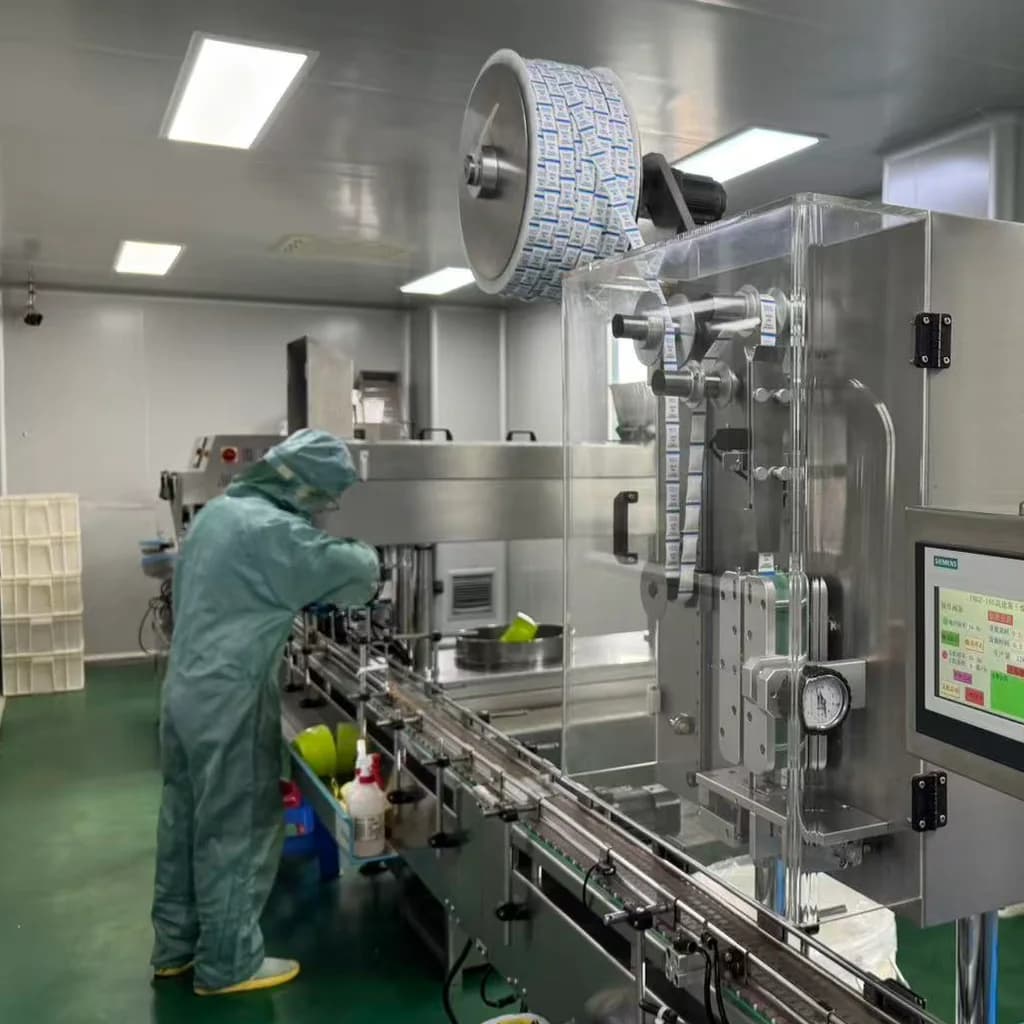
Standard packaging options include HDPE bottles from 60 cc to 500 cc with induction seals and child-resistant closures, blister packs on PVC/PVDC or alu-alu for moisture-sensitive tablets, and stick packs or sachets for powder blends. Bottle labels are applied on a roll-fed line with a placement tolerance of ±1 mm; lot and expiry codes are inkjet-printed on the base or neck, and cartons are marked with the same lot for traceability. Carton specifications are typically 350 gsm kraft with a 5-ply corrugated shipper, and pallets are built to 1,200 × 1,000 mm or 1,200 × 800 mm depending on destination.
For US retail, labels must carry the Supplement Facts panel, serving size, amount per serving, percent daily value, other ingredients, and the mandatory allergen statement. We prepare artwork to the FDA 21 CFR 101.36 layout and can add Amazon FNSKU barcodes, expiration-date formatting (MM/YYYY), and batch codes as required by the retailer. For EU markets, the nutrition declaration and health-claim wording are checked against the EU Register before print, and we flag any claim that would need substantiation.
Retail-ready checks include barcode verification (GS1 or UPC), net-quantity compliance, and a final label proof signed off by the buyer. We do not print claims that are not supported by the formula or that require novel-food approval. If you supply your own dielines or label files, we run a pre-press check for bleed, font size and contrast, and return a marked-up proof within two working days.
MOQ, Lead Times and Delivery
Sampling starts with a brief and a formula review; stock samples ship in 3–5 working days, while custom pilot samples take 7–10 working days after formula approval. Pilot runs start from 500 units, subject to formula and packaging, and retail bottling MOQ is 1,000 units per SKU. Mass production runs 20–35 working days after sample approval and receipt of deposit, with the exact window confirmed once packaging components are in-house.
Air freight is typically 5–8 days door-to-door for urgent launches, while sea freight to Europe or the US takes 28–40 days port-to-port. We quote EXW, FOB Shenzhen or Hong Kong, and DDP for buyers who want a landed-cost figure. DDP quotes include duties and customs clearance but exclude any destination-specific supplement registration fees, which remain the buyer's responsibility.
Each shipment is accompanied by a commercial invoice, packing list, COA, MSDS where applicable, and a free-sale certificate for markets that require one. Phytosanitary certificates are provided only when a botanical ingredient triggers the requirement. Shipping documents are sent electronically within 24 hours of departure, and original documents follow by courier if a letter of credit requires them.
What We Can Build
Tablets and caplets
Compressed, coated or uncoated. Fill weights 500–1,500 mg. Suitable for high-dose C, B-complex and multivitamins with mineral blends.
Two-piece capsules
HPMC or gelatin. 250–1,000 mg fill. Best for oil-free premixes, probiotics and formulas where tablet compression damages actives.
Softgels
Bovine, fish or vegan shell. 300–1,200 mg fill. Standard choice for D3, K2, vitamin E and omega blends requiring oil suspension.
Powders and gummies
Stick packs, jars or pouches for powders; pectin or gelatin gummies in 2–4 g pieces. Useful for children's and adult daily formats.
From Brief to Batch
- 01
Share your brief
Send target actives, dosage form, bottle size and market. We confirm feasibility and flag any ingredient restrictions for your region.
- 02
Receive quote and MOQ
You get unit pricing at 1,000, 5,000 and 10,000 units, plus tooling or plate costs if custom shapes are needed.
- 03
Approve samples
We produce samples in 7–10 working days. You check appearance, taste, fill weight and label fit before sign-off.
- 04
Confirm formula and label
Final specification, overage, packaging and artwork are locked. We order actives and schedule the line.
- 05
Production and QC
Mass production takes 20–35 working days. In-process checks run at blending, compression or filling, coating and packaging.
- 06
Ship and document
Batch COA, retain samples and export papers are issued. Goods move FOB Shenzhen or by air from Hong Kong.
Why EUPHM
Numbers before calls
MOQs, fill weights and lead times are published so you can shortlist without waiting for a sales reply.
One plant, many formats
Tablets, capsules, softgels, powders and gummies run under one quality system, reducing supplier audits.
Export-ready paperwork
COA, health certificate, origin and halal documents are prepared in-house for US, EU, UK and Middle East buyers.
Questions buyers ask.
What is the MOQ for a vitamin supplement?+
Standard retail bottling starts at 1,000 units per SKU. Pilot runs can go lower, from 500 units, but unit cost is higher because setup and QC time is spread over fewer bottles. If you need two bottle sizes, treat them as separate SKUs for MOQ purposes.
How long do vitamin samples take?+
Samples ship in 7–10 working days after we receive your brief and confirm the formula. That covers blending, compression or filling, and basic packaging. If you need custom tablet shapes or a new gummy mould, add 10–15 days for tooling.
Can you make vegan vitamin capsules?+
Yes. We use HPMC capsules for vegan and vegetarian projects and can pair them with vegan vitamin D3 from lichen and vitamin K2 as MK-7. Gelatin capsules remain available for standard formulas. Vegan certification is issued on request and adds roughly 5–10 working days to document preparation.
What certifications does the plant hold?+
The facility is GMP-certified and holds ISO 22000 and HACCP. It is FDA-registered for US-bound dietary supplements. halal and vegan certifications are available depending on the formula and ingredient sources. Certificate copies are included with quotations so your compliance team can review them early.
How do you handle label claims and overages?+
We set overages from accelerated stability data, typically 10–20% for vitamin C and 20–30% for vitamin D3 in softgels, so the label claim holds through shelf life. Claims must comply with your market's rules. We supply assay results and can adjust the formula if your regulatory team needs a different target.
Do you provide stability data for vitamin products before launch?+
Yes. We run accelerated stability at 40°C/75% RH for three months and long-term at 25°C/60% RH for up to 24 months. Assays are taken at 0, 3, 6, 12 and 24 months, covering potency, moisture, disintegration and microbials. You receive an interim report at the three-month accelerated point before mass production, and the full protocol is available for review during the sample stage.
Can you match a label claim to the assay result, and what overage do you use?+
We set the formula target so the finished product meets the label claim at expiry, not just at release. Overage is calculated from the stability loss curve for each active, typically 5–15% for sensitive vitamins such as B12 and folate. The COA reports both the release assay and the projected end-of-shelf-life value, and the overage is disclosed in the batch record.
What packaging formats are available for vitamin powders and gummies?+
Powders are filled into stick packs, sachets or HDPE jars with desiccant, with fill weights from 5 g to 500 g. Gummies are packed in PET or HDPE bottles with induction seals, or in blister packs for sample sizes. We can also supply cartons with a display-ready design for retail shelves, subject to a minimum of 1,000 units per SKU.
Have a product in mind?
Send us the brief and we will come back with a formulation direction, indicative price and a realistic lead time — usually within one working day.