Gummies·8 min read
Kids Vitamin Gummies Guide for Brand Owners
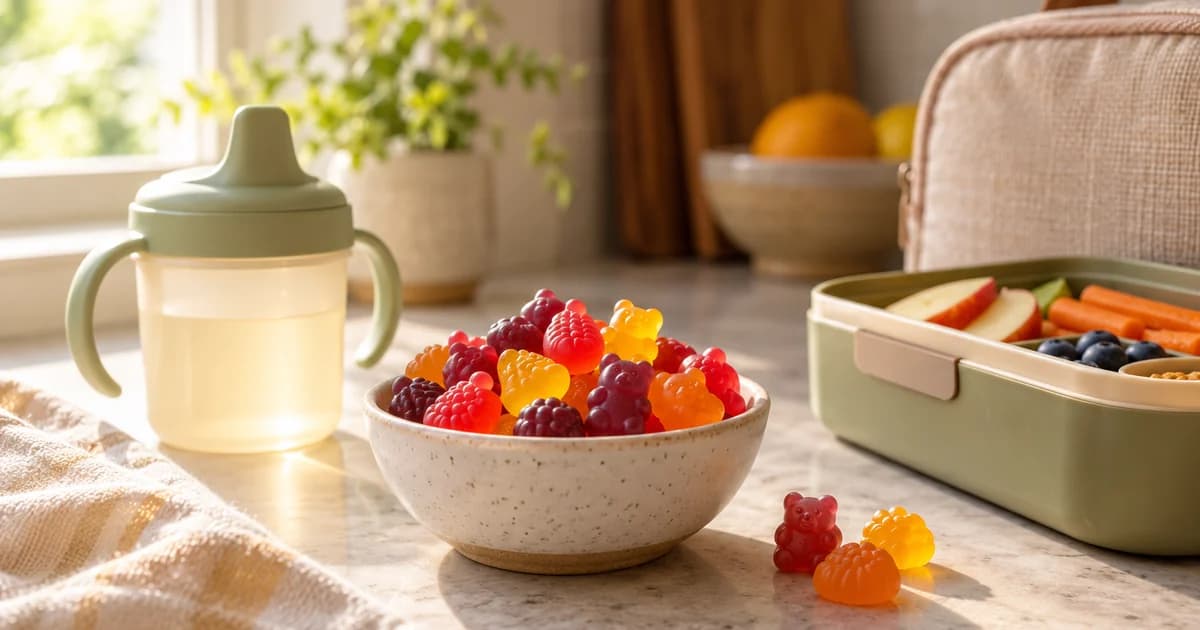
A practical guide to sourcing kids vitamin gummies: fill weights, actives, pectin versus gelatin bases, MOQs from 1,000 units, and 20–35 working day production windows. Built for…
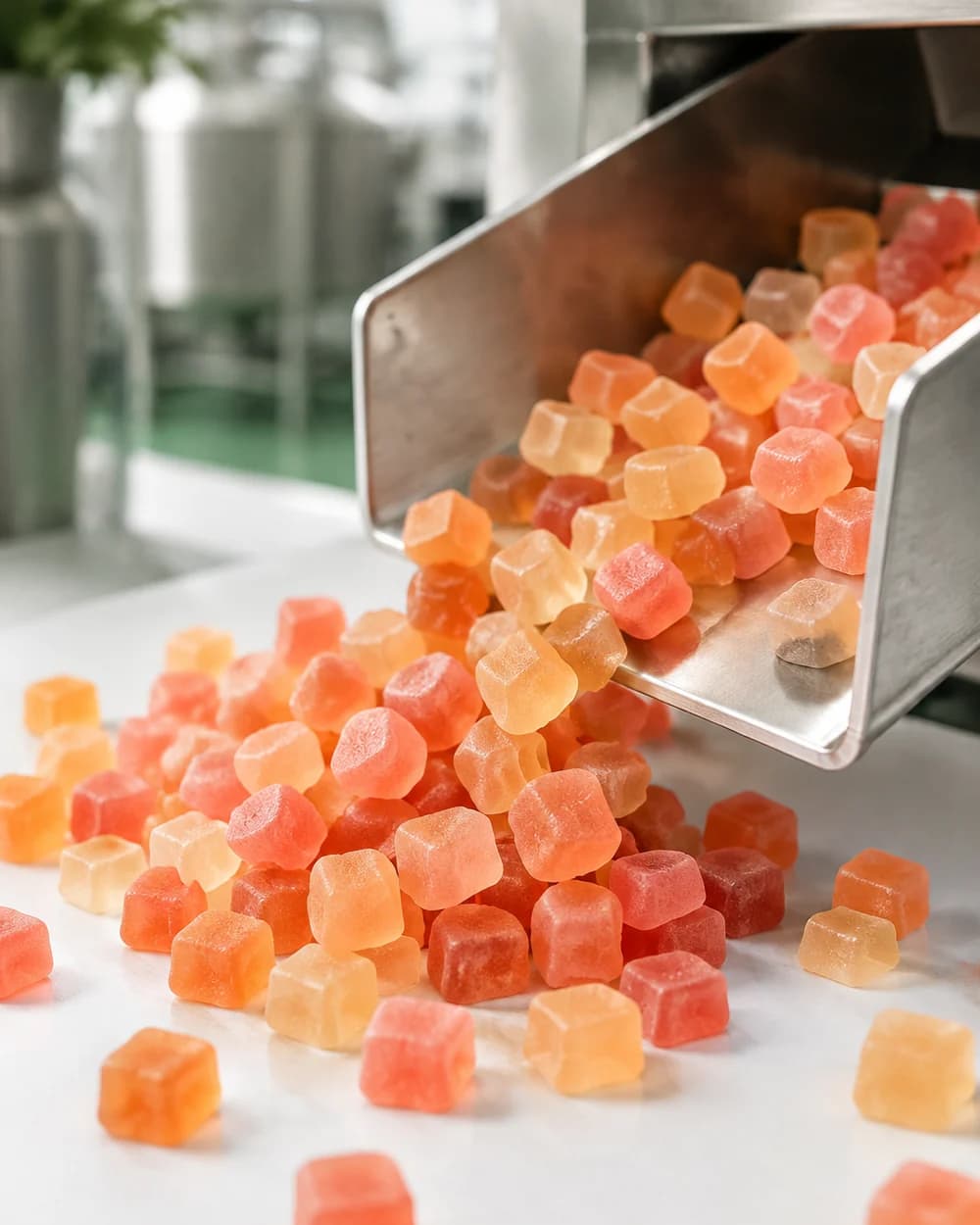
A practical library for brand owners sourcing gummy supplements. Specifications, MOQs, lead times and compliance notes drawn from active production lines in Guangdong, China.
This hub collects the working details buyers ask for before placing a gummy order: base types, active loading limits, fill weights, sample timelines and certification scope. Each guide reflects parameters from a GMP-certified plant running pectin, gelatin, vegan and sugar-free formats. Use it to compare suppliers, brief your formulator or pressure-test a quotation. Parent topic: /resources.
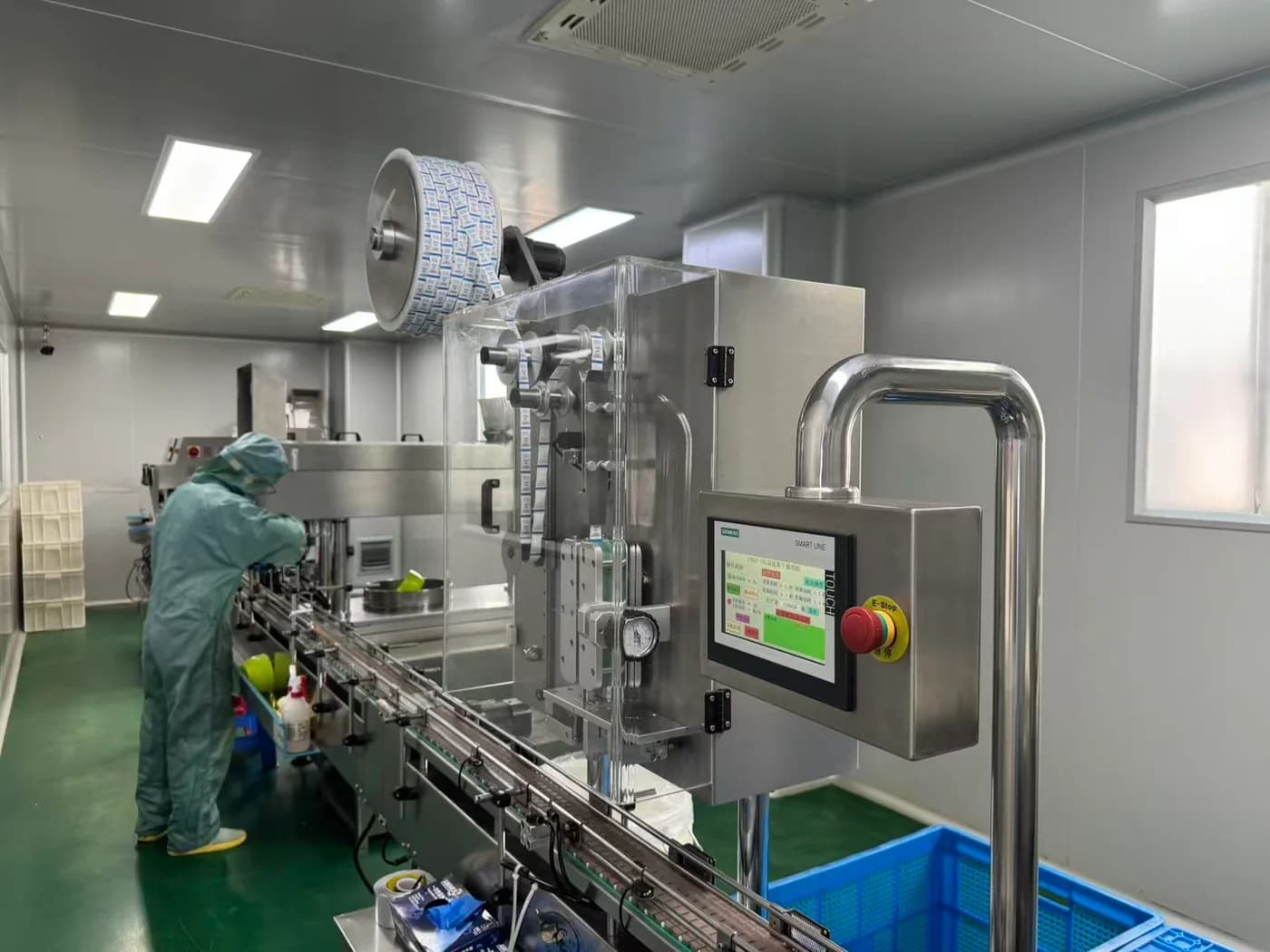
Gummy lines differ from capsule and tablet lines in ways that affect your timeline and cost. A starch mogul or depositing line runs at 800–1,200 kg per shift, depending on gummy size and base. Changeover between SKUs takes 4–8 hours for cleaning and mould swaps. That is why MOQ sits at 1,000 units for retail bottling: below that, setup time dominates the unit cost. Pilot runs of 500–1,000 units are possible on separate small-batch equipment.
Curing is the hidden variable. Pectin gummies need 24–48 hours in a drying room at 20–25% relative humidity before they reach target texture and water activity. Gelatin sets faster, often 12–24 hours. If a supplier quotes 10 working days for mass production, ask where curing fits. Realistic mass production from approved sample is 20–35 working days, plus 7–10 working days for the sample itself.
Base choice drives texture, vegan status and stability. Pectin is plant-based, holds up in warm climates and suits vegan claims. Gelatin gives a springier chew and is cheaper, but is not vegetarian. Modified starch and agar blends sit between the two. Sugar-free versions typically use maltitol, sorbitol or allulose; allulose browns less and tastes closer to sucrose but costs more. Each base changes the active loading ceiling.
Active loading is where most briefs fail. Vitamins and minerals usually cap at 10–15% of gummy weight before taste or texture breaks. Omega-3, probiotics and herbal extracts often need microencapsulation or a separate coating step. A 3 g gummy realistically carries 300–450 mg of active blend. If your label needs 1,000 mg of a bitter extract, expect two gummies per serving or a coated format. Flavour and colour systems must be declared per market.
Every batch should ship with a Certificate of Analysis covering assay, microbials, heavy metals, water activity and appearance. Water activity below 0.65 is the practical target for shelf stability at 24 months. Allergen controls matter: gelatin, soy lecithin and some colourants are common carriers. If you need halal or the gelatin source and the line cleaning record both fall under review. Organic and claims require certified ingredient inputs and a segregated run.
For export, plan documents early. FDA-registered facility status supports US entry but is not an approval. EU buyers need a food business operator and may request EFSA-relevant additive checks. Middle East shipments often need halal certificates legalised by the destination embassy. Air freight moves 200–400 kg economically; sea freight suits full pallets at 20–35 days transit. Book labels and bottles before production starts to avoid a finished-goods hold.
Every gummy batch is tested against a written specification before release. Identity testing confirms the active ingredient by HPLC or UV-Vis, potency is assayed to ±5% of label claim, and microbial limits follow USP <2021> or <2022> as applicable. Heavy metals (lead, cadmium, arsenic, mercury) are screened by ICP-MS, and disintegration is checked in purified water at 37°C to ensure the gummy breaks down within 30 minutes. Tests run on raw materials, in-process syrup and finished gummies.
A Certificate of Analysis (COA) accompanies each lot and lists the product name, lot number, manufacture and expiry dates, test parameters, specification limits, results and the analyst's signature. Retention samples from every batch are held for 24 months at controlled room temperature. Stability follows a real-time protocol at 25°C/60% RH and 30°C/65% RH, with accelerated conditions at 40°C/75% RH for three months. Assay, microbial and organoleptic checks are performed at 0, 3, 6, 12, 18 and 24 months.
Deviations are documented in a batch record that traces every ingredient from receipt to finished carton. If a result falls outside specification, the batch is quarantined and an out-of-specification investigation is opened. Buyers can request the COA, batch record summary and stability data before shipment. For gummy supplements, the plant also retains a reference sample of the packaging components to verify label and artwork compliance.
Water activity and pH are monitored on every gummy production run because they affect texture and microbial stability. The target water activity is below 0.65, and pH is adjusted to 3.2–3.8 for pectin-based formulas. These in-process checks are recorded every 30 minutes and reviewed by quality assurance before the batch is released to packaging.
Gummy supplements are packed in HDPE bottles (60, 90, 120 or 180 count) with induction seals and child-resistant caps where required, or in blister packs, stick packs and single-serve sachets. Bottle dimensions and label panel sizes are confirmed at artwork stage. Cartons are printed with lot number, expiry date and, for the US, the supplement facts panel, allergen statement and 'Keep out of reach of children' warning. The plant provides dieline templates and supports FDA dietary-supplement label review.
Lot and expiry coding are applied by inkjet or laser on the bottle, carton and shipper. Expiry is set at 24 months from manufacture unless stability data supports a shorter or longer date. Cartons are packed in corrugated shippers with a maximum gross weight of 15 kg, and pallets are configured to 1,200 x 1,000 mm or 1,200 x 800 mm with a maximum height of 1.8 m. Pallet labels include GTIN, lot, quantity and handling symbols.
For Amazon and retail compliance, the plant can apply FNSKU labels, poly-bag and suffocation warnings, and carton labelling that meets retailer routing guides. It does not provide Amazon Seller Central account services, but it supplies high-resolution artwork files and barcode verification reports. Buyers should confirm marketplace-specific requirements, such as expiration date formatting and unit count, before packaging is ordered.
Retail-ready packaging includes a check for legibility of the lot code, correct National Drug Code (where applicable) and alignment of the supplement facts panel. The plant offers a packaging approval step with a physical or digital proof. Any change to bottle, cap or label requires a new approval and may affect the lead time by 5–7 working days.
Sampling for gummy supplements starts with a brief and a target formula. The plant provides a quotation within 2 working days, and samples are typically ready in 7–10 working days after receipt of the signed sample request and any custom flavour or colour approval. Sample costs are credited against the first production order. The sample includes a draft COA and a packaging mock-up if requested.
Mass production begins after sample approval and receipt of the deposit. The standard production window is 20–35 working days for retail bottling, depending on the number of SKUs, flavour changes and packaging complexity. Pilot runs of 1,000 units can be scheduled in 15–20 working days. Line capacity is up to 1.2 million gummies per day, but scheduling is confirmed at order acceptance.
Shipping is arranged by air or sea. Air freight typically takes 5–10 days door to door and is suitable for samples and urgent orders; sea freight takes 25–40 days port to port. The plant supports EXW, FOB and DDP terms. Documents provided include COA, MSDS, free-sale certificate and, where relevant, phytosanitary certificate and certificate of origin. The buyer is responsible for import clearance unless DDP is agreed.
For repeat orders, the lead time can be reduced to 15–25 working days if the formula, packaging and artwork are unchanged. The plant recommends booking production capacity 6–8 weeks ahead during peak season (August to November). Payment terms are typically 30% deposit with the balance against the bill of lading, subject to credit approval.
Vegan, heat-stable and suitable for warm-climate shipping. Curing takes 24–48 hours. Common for fruit and multivitamin lines.
Springy chew, lower cost, fast set. Not vegetarian. Halal versions require certified gelatin and segregated runs.
Maltitol, sorbitol or allulose bases. Allulose performs closest to sugar but raises ingredient cost by 15–30%.
Sour sanding, oil coating or a second layer to mask bitter actives. Adds one production step and 2–4 days.
Send target actives, serving size, base preference, claims and market. Include label artwork if available.
Receive MOQ, unit cost, fill weight and lead time. Confirm certification needs such as halal or organic.
Samples ship in 7–10 working days. Assess taste, texture, colour and analytical targets before signing off.
Confirm bottle, cap, label and carton specs. Packaging should arrive before production begins.
Mass production takes 20–35 working days. Curing, coating and QC add time for pectin and coated formats.
Batch COA issued, release confirmed, then air or sea freight booked with export documents.
MOQs, fill weights and lead times reflect active lines, not generic estimates. Useful for budgeting and supplier comparison.
Certification scope and document needs for the US, EU, UK and Middle East are flagged per topic, including halal and organic.
Active loading limits and base trade-offs are stated plainly, so briefs avoid unworkable claims before sampling.
Retail bottling runs start at 1,000 units per SKU. Pilot runs of 500–1,000 units are possible on small-batch equipment, though unit cost is higher because setup and cleaning are spread over fewer units.
Sample lead time is 7–10 working days from approved brief and flavour direction. Complex actives, coatings or custom moulds can add 3–5 days. Samples ship with a preliminary specification sheet.
A 3 g gummy typically carries 300–450 mg of active blend, around 10–15% of weight. Bitter or high-dose ingredients may need microencapsulation, coating or two gummies per serving to meet the label claim.
Pectin and starch bases are vegan by default. Halal require certified gelatin and a segregated production run. Organic and claims need certified ingredient inputs. Certification scope is confirmed per order.
The plant holds GMP, ISO 22000 and HACCP. halal and vegan certifications are available depending on the base and ingredient list. The facility is FDA-registered for US export documentation.
Yes. A batch-specific COA is issued for every production lot and includes identity, potency, microbial limits, heavy metals and disintegration results. The COA is available before shipment and is also attached to the shipping documents. Retention samples are kept for 24 months, so a re-test can be arranged if a buyer needs verification after delivery.
The plant offers HDPE bottles, blister packs, stick packs and single-serve sachets. Bottle sizes range from 60 to 180 count, with induction seals and child-resistant caps where required. Cartons and shippers are printed to retail specifications, and the plant can apply Amazon FNSKU labels. Custom packaging requires a dieline review and a physical or digital proof before production.
Standard terms are 30% deposit with the balance against the bill of lading, subject to credit approval. The plant supports EXW, FOB and DDP. Air freight takes 5–10 days door to door, and sea freight takes 25–40 days port to port. Documents provided include COA, MSDS, free-sale certificate and, where relevant, phytosanitary certificate and certificate of origin.
A practical guide to sourcing kids vitamin gummies: fill weights, actives, pectin versus gelatin bases, MOQs from 1,000 units, and 20–35 working day production windows. Built for…

Melatonin gummies are a fast-moving sleep supplement format, but they are harder to make than capsules. This guide covers realistic MOQs, fill weights, pectin versus gelatin bases…
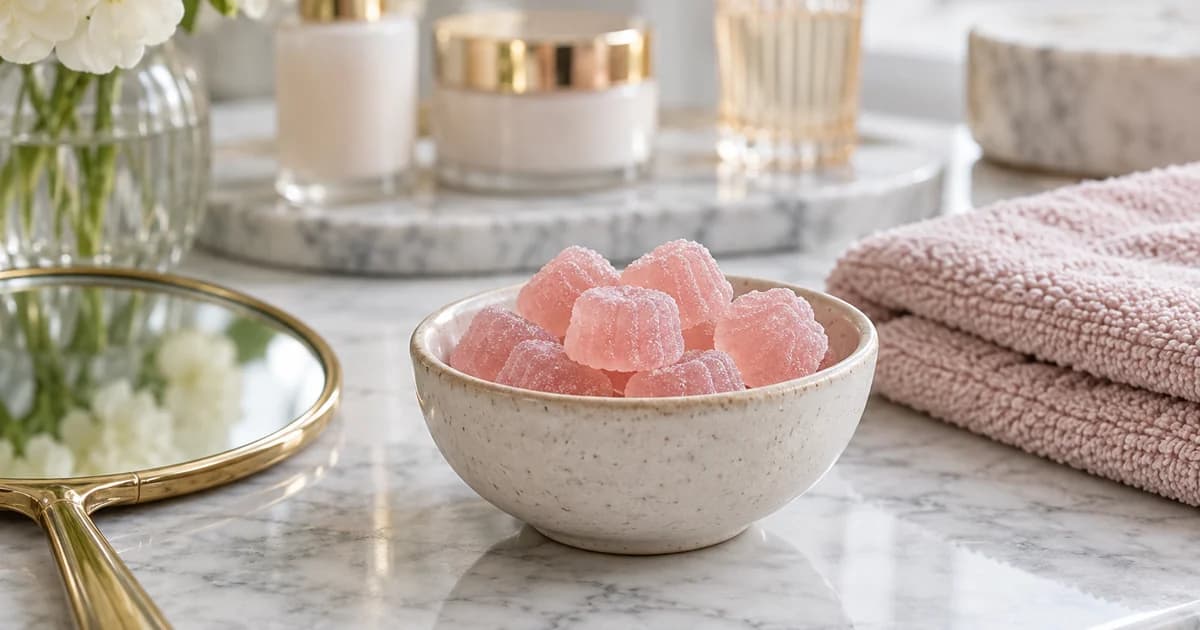
Collagen gummies are the fastest-growing delivery format in beauty-from-within. Retail buyers and brand owners now ask for 5g collagen per serving, halal certification, and…
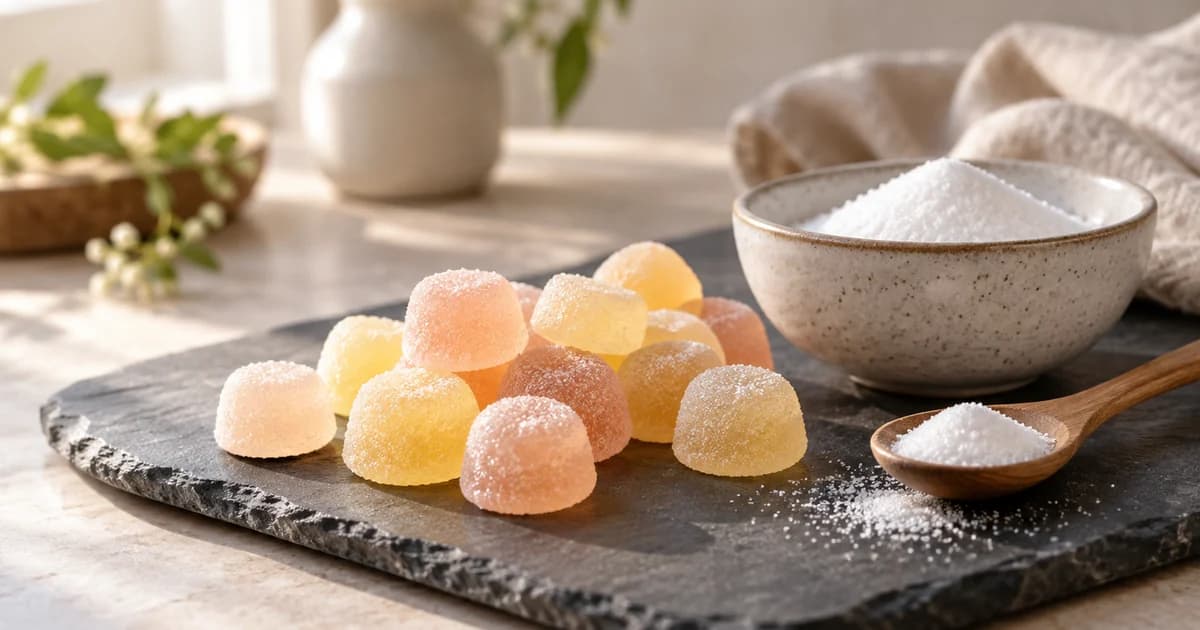
Sugar-free gummies are the fastest-growing supplement format in the US and EU, but they are harder to make than sugar-based ones. This guide covers polyol selection, gelling agents…
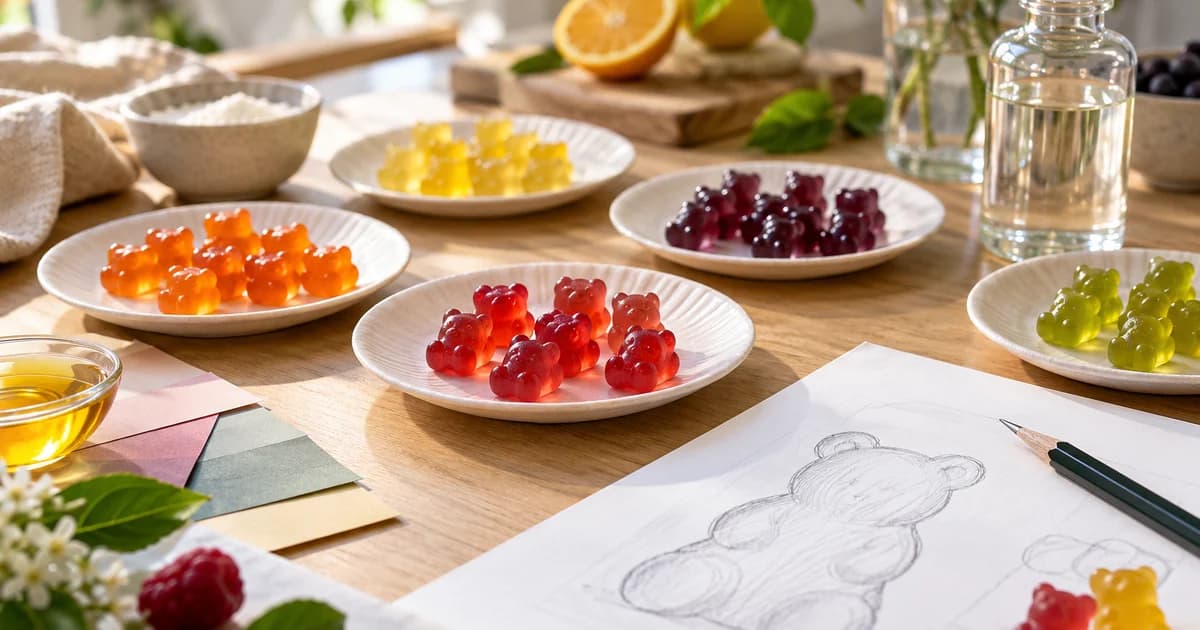
Designing a custom gummy starts with four decisions: base, actives, flavour, and format. Get those right and a 1,000-unit run is straightforward. Get them wrong and you pay for…
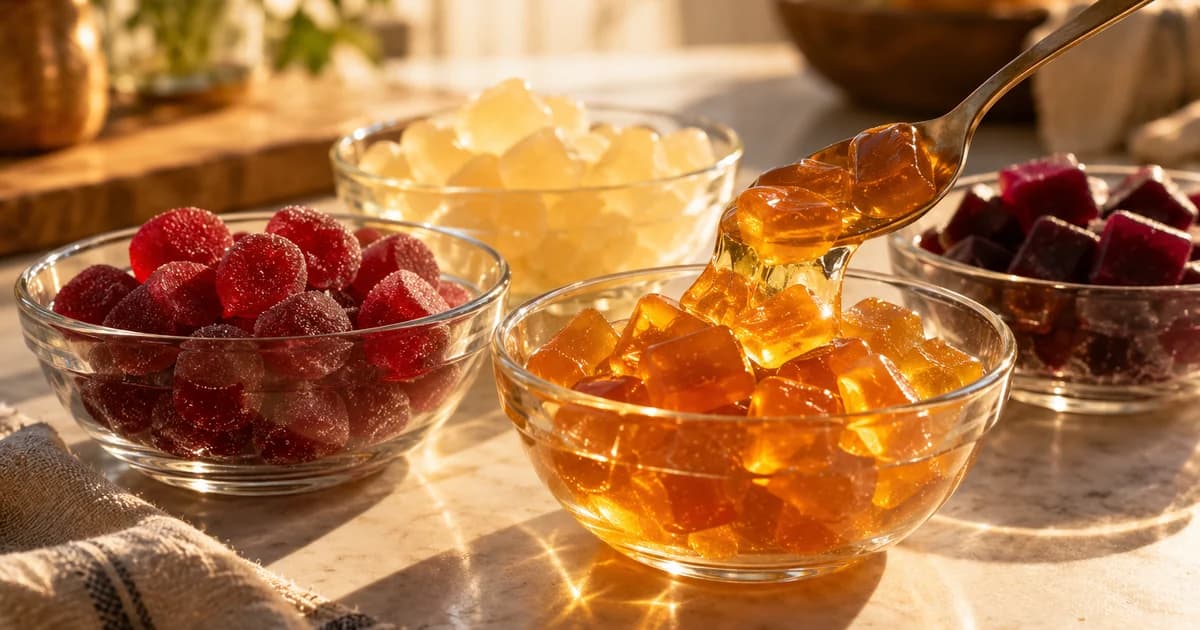
Choosing the right base determines texture, stability, and production speed. This guide compares pectin, gelatin, starch, and agar bases for commercial gummy manufacturing, with…
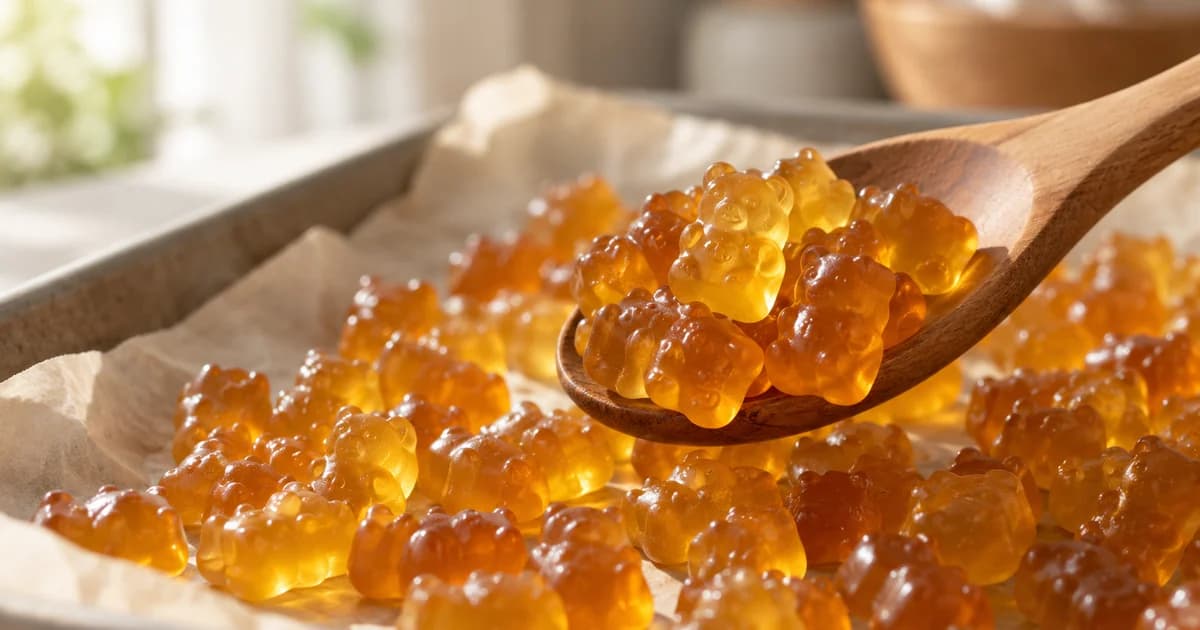
Gummy manufacturing turns a sugar-and-hydrocolloid syrup into a stable, shelf-ready dose. The process has six repeatable stages: batch preparation, cooking, depositing, curing…
Send us the brief and we will come back with a formulation direction, indicative price and a realistic lead time — usually within one working day.