
Melatonin Gummies Guide for Brand Owners and Procurement Teams
Melatonin gummies are a fast-moving sleep supplement format, but they are harder to make than capsules. This guide covers realistic MOQs, fill weights, pectin versus gelatin bases, dosing, stability and the compliance documents buyers should request before placing a purchase order.
Overview
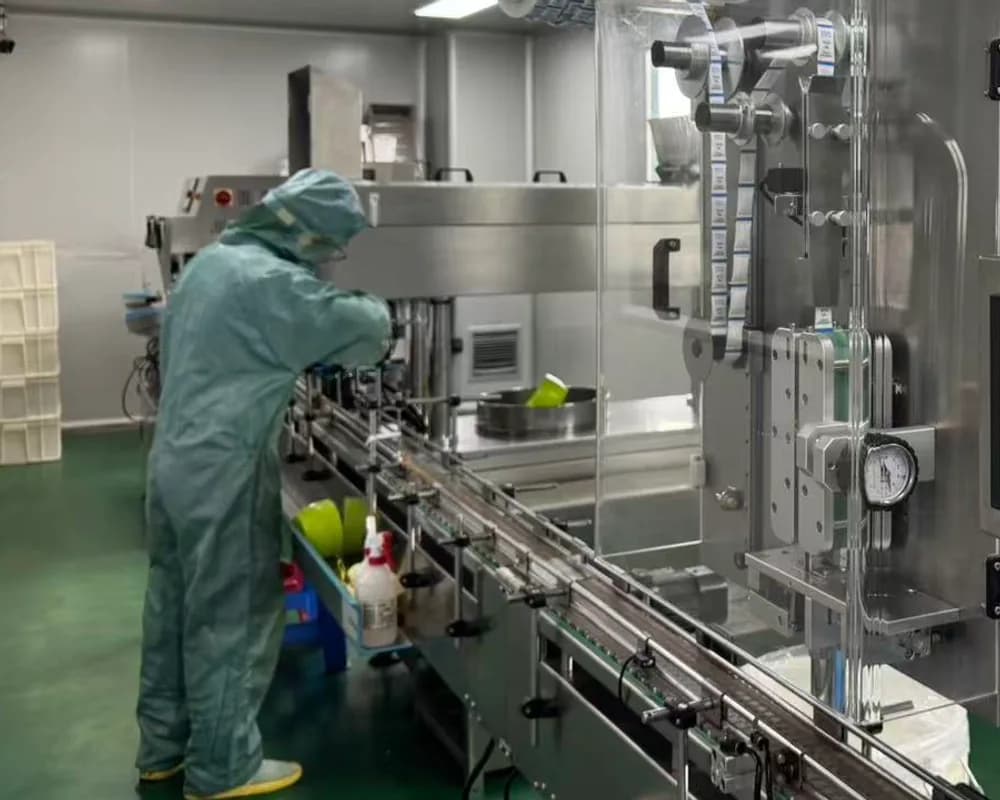
This resource sits inside our broader /resources/gummies library and focuses on the melatonin category specifically. It is written for founders, brand managers and procurement staff sourcing a contract manufacturer in China or comparing quotes across suppliers. You will find practical parameters for pilot runs and retail bottling, the ingredient and process choices that affect taste and shelf life, and the certificates that matter for US, EU, UK and Middle East retail. All figures reflect a GMP-certified plant in Guangdong producing pectin and gelatin gummies on dedicated lines.
- MOQ (retail bottling)
- 1,000 units per SKU
- MOQ (pilot run)
- From 1,000 units, subject to flavour and bottle
- Sample lead time
- 7–10 working days
- Mass production
- 20–35 working days after sample approval
- Typical fill weight
- 2.5 g–4.0 g per gummy
- Certifications
- GMP, ISO 9001, ISO 22000, HACCP, NSF/ANSI 455-2, halal, FDA-registered
Line Capability and Realistic MOQs
Melatonin gummies run on the same depositing lines as other pectin and gelatin formats, but the low active dose means weight control matters more than for a high-dose vitamin. A 3 mg melatonin gummy at 3.0 g fill weight carries the active at roughly 0.1% of the piece, so the premix must be diluted in stages and verified by assay before depositing. EUPHM runs dedicated lines with inline weight checks, typically holding piece weight within ±3% across a batch.
For retail bottling, plan on 1,000 units per SKU as the practical minimum. That covers one flavour, one bottle size and one label version. Pilot runs from 1,000 units are possible when you accept a standard bottle and an existing flavour base, which is how most brands test a melatonin SKU before committing to a full launch. Line capacity sits at 1.5–2 tonnes of finished gummies per day, so a 5,000-unit order is a short run rather than a full shift.
Formulation Choices That Drive Taste and Stability
The base decides texture, melt behaviour and label claims. Pectin gummies are vegan, hold up better in warm warehouses and give a softer bite; gelatin gummies give a firmer chew closer to a traditional wine gum. For melatonin, pectin is the more common choice in the US and EU because it avoids animal-derived ingredients and travels well in summer. Typical fill weights run 2.5 g to 4.0 g, with 3.0 g a good balance between dosing accuracy and cost per unit.
Dose range is usually 1 mg, 3 mg, 5 mg or 10 mg per gummy. Above 5 mg, the active starts to contribute a bitter note, so masking matters. Common approaches are a fruit flavour pair such as mixed berry and blackcurrant, a light acid system (citric and malic), and a natural colour from fruit or vegetable concentrate. Sugar-free versions use maltitol or allulose with a sugar alcohol blend, which changes both mouthfeel and the moisture migration profile over 18–24 months.
Quality, Testing and Cross-Border Logistics
Every batch should ship with a certificate of analysis covering assay, uniformity, microbiological limits and heavy metals. For melatonin, assay and content uniformity are the two results buyers should read first, because a low-dose active is where blending errors show up. EUPHM operates a GMP-certified, FDA-registered facility with ISO 22000 and HACCP systems, and can provide halal, vegan or documentation where the formula and supply chain support the claim.
On logistics, gummies are heavier and bulkier than capsules, so freight is calculated on volume as much as weight. A 60-count bottle at 3.0 g per gummy holds 180 g of product plus packaging. Air freight suits pilot runs; sea freight suits 5,000-unit orders and above. Stability data should cover 24 months at 25°C/60% RH, with an accelerated arm at 40°C/75% RH for 6 months. Ask for the packaging compatibility report if you plan a PET or HDPE bottle with an induction seal.
Quality Control and Batch Documentation
Every melatonin gummy batch is tested at three stages: incoming raw materials, in-process gel and finished product. Melatonin identity and potency are confirmed by HPLC against a certified reference standard, with a specification of 95.0–105.0% of label claim. Microbial testing covers total aerobic count, yeast and mould, E. coli, Salmonella and Staphylococcus aureus. Heavy metals (lead, arsenic, cadmium, mercury) are screened against USP <2232> or EU 2023/915 limits. Disintegration testing follows USP <2040> for gelatin and pectin matrices, with a typical target of complete disintegration within 30 minutes at 37°C.
A Certificate of Analysis (COA) is issued per batch and includes lot number, production date, expiry date, tests performed, specifications, results and the analyst's signature. Buyers receive a draft COA before shipment and a signed original with the commercial documents. Retention samples of each batch are held for 24 months under controlled conditions (25°C/60% RH and 30°C/65% RH) to support shelf-life claims and any post-market queries. Stability protocols typically cover 0, 3, 6, 12, 18 and 24 months for real-time studies, with accelerated data at 40°C/75% RH for three months to flag early formulation issues.
Disintegration and potency are re-checked at the end of the declared shelf life to confirm the gummy still meets label claim and dissolves acceptably. If your market requires it, we can add a dissolution profile or a sugar-free specific test. All records, including batch manufacturing records, packaging records and deviation reports, are retained for five years and are available for audit by appointment. This documentation package is what retail quality teams in the US, EU and UK usually request before listing a new SKU.
Packaging, Labelling and Retail Readiness
Primary packaging options include HDPE bottles (60, 90, 120 or 150 count), blister packs, stick packs and single-serve sachets. Bottles are supplied with induction seals, child-resistant closures where required and desiccant sachets. For US retail, the label must carry a Supplement Facts panel with the melatonin quantity per serving, other ingredients, allergen statements and the DSHEA disclaimer. EU and UK labels require nutrition declaration, net quantity, best-before date, batch code, storage conditions and the name and address of the food business operator. We prepare print-ready artwork for your approval and can handle FDA facility registration and prior notice where needed.
Lot and expiry coding is applied by inkjet or laser on the bottle base, label or carton, in the format you specify. Cartons are typically 12, 24 or 48 bottles, with dimensions and gross weight confirmed on the packaging specification. Pallet configurations are built to your retailer's requirements, for example 48 cartons per pallet, 1.2 m x 1.0 m footprint, stretch-wrapped and corner-boarded. For Amazon FBA, we can apply FNSKU labels, poly-bag units and provide box content information in the format your seller account requires. Retail compliance checks cover barcode verification (GS1), country of origin marking and, for the EU, the responsible person address.
If you sell into the Middle East, halal marking and Arabic labelling can be added. For vegan claims, the pectin base and a vegan certificate are supplied. We do not print claims that are not supported by the batch record or the formulation sheet. Artwork approval usually takes two to three rounds and adds five to seven working days to the schedule. Packaging materials are ordered against your approved specification, so changes after PO confirmation may affect lead time and cost.
MOQ, Lead Times and Delivery
The sample timeline starts with a formulation brief and flavour selection. We provide a quotation within two working days, then produce samples in seven to ten working days. Sample costs are credited against the first mass-production order. Once you approve the sample and artwork, mass production runs 20 to 35 working days depending on flavour, bottle type and whether the line is already scheduled. Peak season (August to November) can extend this by one to two weeks, so plan purchase orders accordingly.
Shipping options are air freight (5–10 days door to door) and sea freight (25–40 days port to port, depending on destination). For small pilot runs, air is usually more economical; for full pallets, sea freight reduces unit cost. We quote EXW, FOB Shenzhen or Hong Kong, and DDP for most major markets. DDP includes customs clearance and duties, which simplifies budgeting for new brands. Incoterms are stated on the proforma invoice and confirmed before production.
Documents provided with each shipment include the commercial invoice, packing list, bill of lading or air waybill, Certificate of Analysis, Material Safety Data Sheet (MSDS), free-sale certificate and, where relevant, phytosanitary certificate for plant-derived ingredients. Certificates of origin can be arranged on request. For EU and UK imports, we supply the necessary food safety declarations and can support your importer's due diligence. All documents are issued in English; translation for other markets is available at cost.
Configurations to Compare
Pectin vegan base
Plant-based, no gelatin, softer chew. Best for US and EU retail where vegan claims and warm-weather shipping are priorities.
Gelatin chew base
Firmer texture and a more traditional confectionery bite. Suits markets where a classic gummy mouthfeel outsells vegan positioning.
Sugar-free blend
Maltitol or allulose with a sugar alcohol system. Lower sugar per serving, but expect a different mouthfeel and a higher raw material cost.
Combination sleep formula
Melatonin with L-theanine, chamomile or magnesium. Adds label interest, but each extra active needs its own assay and stability check.
How a Project Runs
- 01
Brief and quote
Send dose, fill weight, flavour direction, bottle size and target market. You get a costed quote and a formulation note within 2–3 working days.
- 02
Sample production
Samples are made on the same line as production. Allow 7–10 working days for melatonin gummies plus flavour and colour matching.
- 03
Sample approval
You review taste, texture, appearance and the draft label. One revision round is standard before sign-off.
- 04
Order and deposit
Production slot is booked on deposit. Raw materials are released against your approved specification and supplier list.
- 05
Production and QC
Mass production runs 20–35 working days. In-process checks cover piece weight, assay and microbiological limits before release.
- 06
Pack and ship
Bottling, labelling, batch coding and cartoning. We provide the COA and shipping documents for air or sea freight.
Why EUPHM
Low-dose accuracy
Staged premix dilution and inline weight checks keep 1–5 mg actives uniform across the batch, which is where low-dose gummies usually fail.
Certificates for four regions
GMP, ISO 9001, ISO 22000, HACCP, NSF/ANSI 455-2 and halal certification; FDA facility registration for US-bound shipments.
Pilot-to-scale path
Start at 1,000 units to test a flavour, then scale to 1,000 units per SKU without changing line or formula base.
Questions buyers ask.
What is the MOQ for melatonin gummies?+
For retail bottling, expect 1,000 units per SKU. That covers one flavour, one bottle size and one label. Pilot runs from 1,000 units are possible if you accept a standard bottle and an existing flavour base. Below that, setup and cleaning time makes the run uneconomic for most buyers.
How long do samples and mass production take?+
Samples take 7–10 working days for melatonin gummies, including flavour and colour matching. Mass production runs 20–35 working days after you approve the sample and pay the deposit. Add time for label printing if you supply artwork late, and for third-party testing if your market requires it.
Pectin or gelatin for a melatonin gummy?+
Pectin is vegan, ships better in warm weather and gives a softer bite, which suits US and EU retail. Gelatin gives a firmer, more traditional chew and is often cheaper per unit. The choice affects texture, melt point and your label claims, so decide before sampling rather than after.
What dose per gummy is realistic?+
1 mg, 3 mg, 5 mg and 10 mg per gummy are all produced. At 5 mg and above, the active contributes a bitter note, so a fruit flavour pair and a light acid system are used to mask it. Content uniformity is the key test at these low doses, so ask for assay results on the COA.
Which certificates should I request?+
Ask for GMP, ISO 22000 and HACCP as baseline. Add halal if your market requires it, and vegan or only if the formula and supply chain support the claim. Every batch should ship with a certificate of analysis covering assay, uniformity, microbiological limits and heavy metals.
Can you supply melatonin gummies with a specific dosage per gummy, such as 1 mg or 5 mg?+
Yes. Typical dosages range from 1 mg to 5 mg per gummy, with 3 mg and 5 mg being the most common for retail. We confirm the dosage during formulation and verify it by HPLC on every batch. Higher doses may require a larger gummy or a different base to maintain taste and stability. We do not recommend exceeding 5 mg per gummy without a stability study, as melatonin can affect texture and shelf life.
What is the shelf life of your melatonin gummies and how is it determined?+
Shelf life is typically 18 to 24 months from the date of production, based on real-time stability data at 25°C/60% RH and accelerated conditions at 40°C/75% RH. We test potency, microbials, disintegration and appearance at defined intervals. The declared shelf life on your label is supported by the batch-specific stability protocol. If you need a longer shelf life, we can discuss formulation adjustments, but we do not declare a shelf life beyond the tested period.
Do you provide labels and packaging, or do I need to supply my own?+
We can source bottles, closures, cartons and labels according to your approved specification, or work with packaging you supply. For new brands, we recommend using our standard bottle moulds to avoid tooling costs. Labels are printed to your artwork and applied on our lines. We verify barcodes and label content against your market's requirements before production. If you supply packaging, we need samples for line trials and will confirm compatibility before the production run.
Xu Wei writes the manufacturing, quality and regulatory guides on EUPHM. He works directly with the plant's production and QA teams to document how each dosage form is made, tested and released, so every claim on the site can be traced back to a batch record or a certificate on file.
More guides in this category.
See all →
Kids Vitamin Gummies Guide for Brand Owners
A practical guide to sourcing kids vitamin gummies: fill weights, actives, pectin versus gelatin bases, MOQs from 1,000 units, and 20–35 working day production windows. Built for founders and procurement teams placing a first or repeat order.
Read the guide →
Collagen Gummies Market Trends: What Buyers Need to Know
Collagen gummies are the fastest-growing delivery format in beauty-from-within. Retail buyers and brand owners now ask for 5g collagen per serving, halal certification, and clean-label pectin bases. This page covers demand data, formulation choices, and contract manufacturing parameters.
Read the guide →
Sugar-Free Gummy Formulation Guide for Supplement Brands
Sugar-free gummies are the fastest-growing supplement format in the US and EU, but they are harder to make than sugar-based ones. This guide covers polyol selection, gelling agents, moisture control and realistic production parameters.
Read the guide →Have a product in mind?
Send us the brief and we will come back with a formulation direction, indicative price and a realistic lead time — usually within one working day.