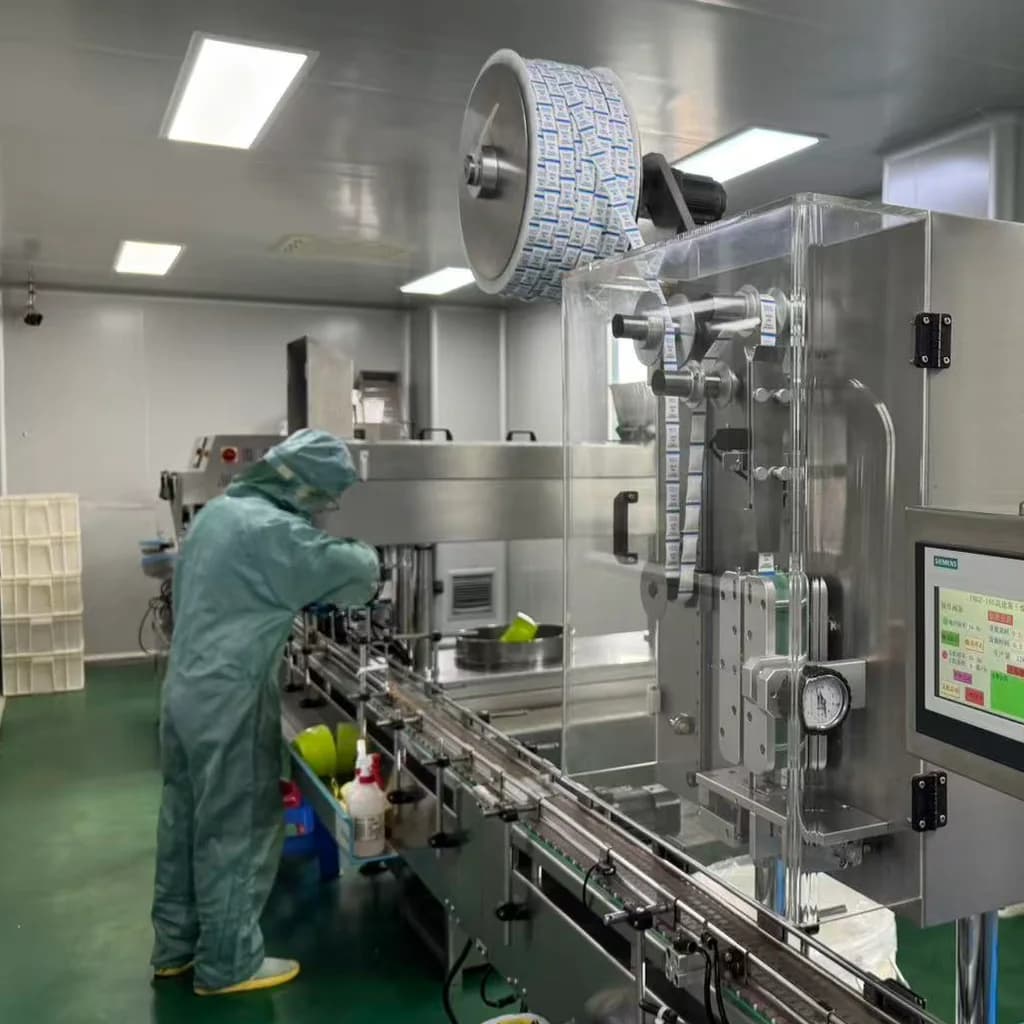
Small Batch Supplement Manufacturer for Growing Brands
Launch or test a new SKU without committing to 50,000 units. EUPHM runs small batch supplement production from 1,000 units per SKU, with pilot runs below that for market validation. GMP-certified facility in Guangdong, China.
Overview
Most contract manufacturers push high minimums that lock up cash and warehouse space. For a new brand or a line extension, that risk is hard to justify. This page covers how small batch supplement manufacturing works at our plant: realistic MOQs, tooling and changeover, ingredient sourcing at low volumes, and the quality checks that still apply. Whether you need 1,000 bottles or a 500-unit pilot, the process stays the same.
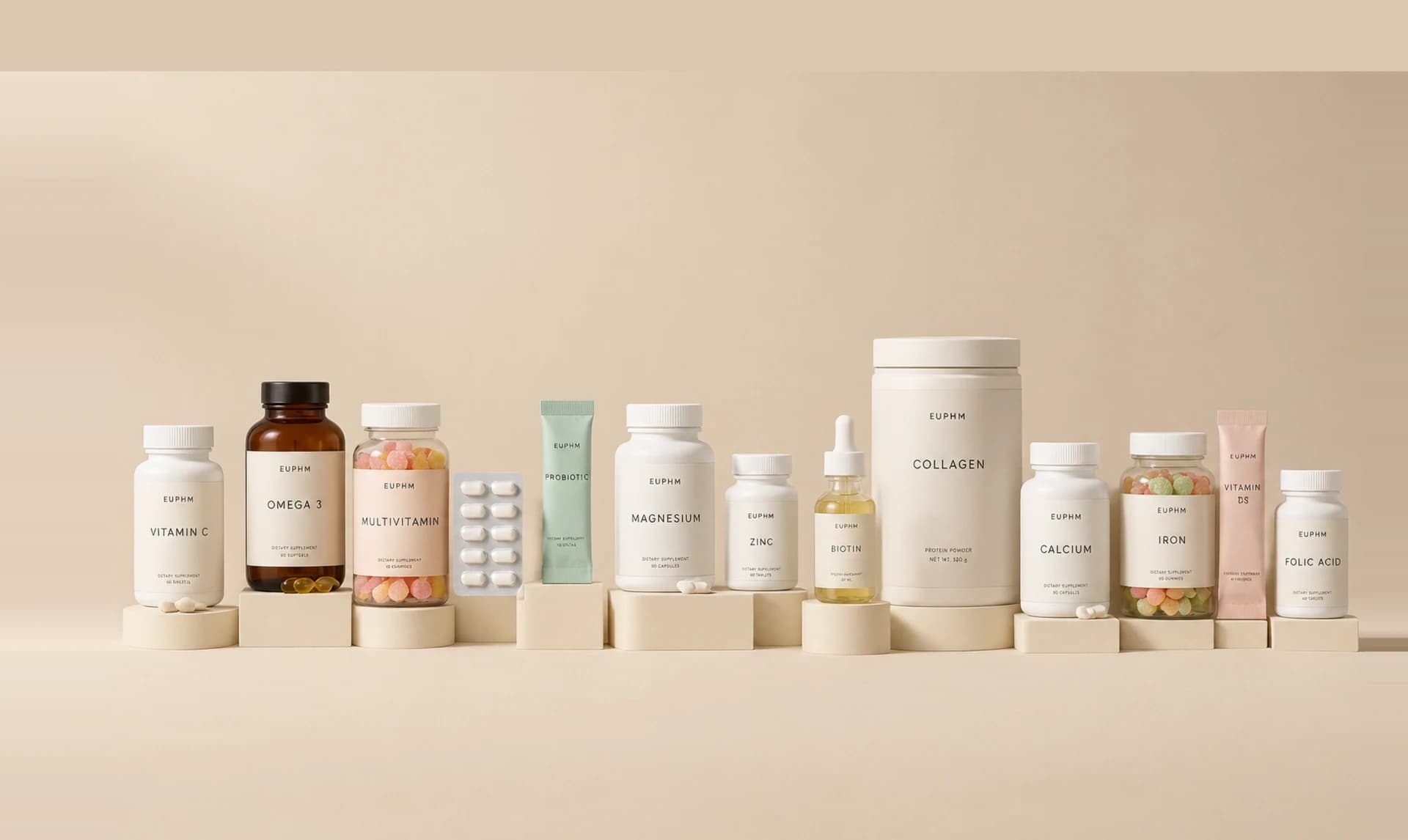
- Minimum order quantity
- 1,000 units per SKU for retail bottling; lower for pilot runs
- Sample lead time
- 7-10 working days
- Mass production lead time
- 20-35 working days after sample approval
- Fill weights
- Capsules 0.5-1.2 g; tablets 0.5-1.5 g; powders 5-30 g per serving; liquids 15-60 mL
- Certifications
- GMP, ISO 9001, ISO 22000, HACCP, NSF/ANSI 455-2, halal, FDA-registered
- Line capacity
- Up to 500,000 capsules or 300,000 tablets per shift; small batch slots reserved weekly
Small Batch Capability Without Compromising Quality
Small batch runs use the same GMP-certified equipment as large orders. Capsule filling, tablet compression, powder blending and liquid filling all run on lines that handle 1,000 to 500,000 units. The difference is scheduling: we reserve weekly slots for small batches so they do not wait behind million-unit contracts. Changeover between SKUs takes 2-4 hours, including full cleaning and line clearance. That means a 1,000-unit run is economically viable, not a favour.
Tooling is the main cost driver at low volumes. If your capsule size or tablet shape matches existing tooling, there is no tooling fee. Custom tablet shapes or unusual bottle sizes may add a one-time charge of USD 300-1,200 and 5-10 days. For pilot runs under 1,000 units, we can often use stock bottles and labels to keep setup minimal. You get the same batch record, the same QC release, and the same certificate of analysis as a full-scale order.
Formulation and Ingredient Sourcing at Low Volumes
Ingredient minimums from suppliers are often the hidden barrier. A raw material supplier may require 25 kg of a specialty botanical, enough for 50,000 capsules. We hold over 200 active ingredients in stock at small-batch quantities, from vitamin D3 and magnesium glycinate to ashwagandha extract and probiotics. If your formula needs a custom ingredient, we can source 1-5 kg from our qualified supplier network, though lead time may extend by 10-15 days.
Formulation support is included for small batch projects. Our team checks ingredient compatibility, flowability for encapsulation, and taste masking for powders. We can adjust excipients to fit your target fill weight without changing the active dose. For liquids, we test pH and preservative efficacy at bench scale before committing to a 1,000-unit run. You receive a formulation sheet and a pilot sample before production starts.
Quality and Compliance for Small Batches
Every batch, regardless of size, goes through the same quality gates. Incoming ingredients are tested for identity, potency and heavy metals. During production, we check weight variation every 30 minutes, plus disintegration and hardness for tablets. Finished goods are tested for microbial safety, label claim and stability. You receive a certificate of analysis with actual results, not just a pass/fail statement. Documentation includes batch records, MSDS and allergen statements.
Certifications apply to small batches too. Our facility is GMP-certified, ISO 22000 and HACCP compliant. If you need halal or vegan certification, we produce those runs on dedicated or cleaned lines with the required documentation. FDA-registered facility status is maintained for US-bound products. For EU and UK clients, we provide compliance files for novel food and health claims review. Middle East clients typically require halal certificates, which we arrange per batch.
Quality Control and Batch Documentation
Every small batch at our plant is tested against a written specification before release. Incoming raw materials are sampled at 100% of containers for identity by FTIR or HPLC, and a composite sample is tested for potency, microbials (total aerobic count, yeast and mould, E. coli, Salmonella), heavy metals (lead, arsenic, cadmium, mercury) and, where relevant, residual solvents. In-process checks cover weight variation every 30 minutes, hardness for tablets and capsule fill weight. Finished batches are tested for potency, disintegration and microbials before packaging. No batch is released without a signed certificate of analysis.
The COA we issue lists the product name, batch number, manufacturing date, expiry date, specification limits and measured results for each test, plus the method used. It is signed by the QC manager and references the retained sample. We keep retention samples from every batch for the full shelf life plus six months, stored under labelled conditions. Stability testing follows a standard protocol: 0, 3, 6, 12, 18 and 24 months at 25°C/60% RH and 30°C/65% RH, with accelerated conditions at 40°C/75% RH for three months. For small batches under 5,000 units, the stability programme can be shared across three consecutive batches of the same formula to keep the cost proportionate.
Documentation for a small batch includes the batch manufacturing record, the batch packaging record, line clearance records, environmental monitoring for the filling room and deviation reports if any parameter fell outside range. These are retained for five years. If you need a technical data sheet or a specification sheet for your retailer, we prepare it from the same batch record. The QC file is available for review during a factory audit, and we can provide redacted copies of the testing methods on request.
Packaging, Labelling and Retail Readiness
Small batches can run in high-density polyethylene bottles from 30 mL to 500 mL, with induction seals and child-resistant or standard caps. Blister packs are available in PVC/PVDC or alu-alu for 10 to 30 units per card. Stick packs run from 5 g to 30 g, and sachets from 2 g to 10 g. For liquids, we fill 15 mL to 60 mL in PET or glass with dropper or pump closures. Minimum packaging quantities follow the component supplier MOQ, so for a 1,000-unit batch we can often use stock bottles and print labels digitally, which avoids a custom bottle tooling cost of around USD 3,000 to 8,000.
Labels are checked against the US FDA dietary supplement labelling requirements: statement of identity, net quantity of contents, supplement facts panel with serving size and percent daily value, ingredient list in descending order of predominance, and the name and place of business of the manufacturer or distributor. We also add allergen statements where applicable, storage conditions, and the recommended use. Lot number and expiry date are inkjet coded on the bottle and the carton, with a format agreed in the artwork approval. We do not print health claims that are not supported by your formulation documentation.
Cartons are specified to your retail or e-commerce requirement. A standard shipping carton holds 12, 24 or 48 bottles, with dimensions and gross weight confirmed at artwork stage. Pallet configuration is typically 48 cartons per layer and 4 to 6 layers high, stretch-wrapped and labelled with pallet ID. For Amazon FNSKU and retail compliance, we can apply the FNSKU label over the barcode, print the carton in the retail-ready format, and provide the carton dimensions and weight in the format your freight forwarder needs. We do not apply retail security tags, but we can leave space for them.
MOQ, Lead Times and Delivery
The sample timeline starts with a formulation brief and a target dosage form. We send a quotation within three working days, then produce a sample batch of 100 to 500 units in 7 to 10 working days after the formula and packaging are agreed. Sample cost is quoted separately and is credited against the first production order above 1,000 units. If the sample needs a revision, one round of adjustment is included at no extra formulation fee; further rounds are quoted per change.
Production for a small batch runs 20 to 35 working days after sample approval and receipt of the deposit. This window covers raw material release, blending, encapsulation or tableting, packaging and QC release. If you need a faster slot, we reserve small batch capacity weekly and can confirm a 15-working-day window for stock formulas and stock packaging, subject to raw material availability. We do not promise a date until the purchase order and artwork approval are both in place.
Delivery terms are EXW, FOB Shenzhen or Hong Kong, or DDP to your warehouse. Air freight is typically 5 to 8 days door to door for 100 to 500 kg, while sea freight is 25 to 40 days depending on destination port. For a 1,000-unit batch of 60-capsule bottles, the shipped volume is usually 1.5 to 2.5 cubic metres and 300 to 500 kg gross. Documents provided with each shipment are the commercial invoice, packing list, COA per batch, MSDS where the product contains a hazardous ingredient, free-sale certificate and, for plant-based ingredients, a phytosanitary certificate where the destination country requires it.
Manufacturing Options to Compare
Pilot run
500-2,999 units for market testing. Stock bottles and labels allowed. 7-10 day samples, 15-20 day production. Ideal for crowdfunding or first SKU.
Standard small batch
1,000 units per SKU. Custom label and bottle options. Full documentation. 20-35 day production after sample approval.
Multi-sku batch
Combine 2-4 SKUs in one production window. Each SKU can be 1,000 units. Saves changeover time and freight.
Private label
Choose from 50+ stock formulas in capsules, tablets, powders or liquids. MOQ 1,000 units. Custom label only. Fastest route to market.
How We Work
- 01
Inquiry and quote
Send your formula or choose a stock formula. We confirm MOQ, fill weight, packaging and lead time within 1-2 working days.
- 02
Sample request
We produce a bench sample or pilot batch. Sample lead time is 7-10 working days. You approve taste, appearance and label.
- 03
Order and deposit
Sign the order confirmation and pay 30-50% deposit. We book your production slot and order raw materials.
- 04
Production
Mass production runs 20-35 working days after sample approval. You receive weekly updates and photos of the line.
- 05
QC and release
Finished goods are tested for potency, microbials and label claim. Certificate of analysis issued. Balance payment due before shipment.
- 06
Shipping
We ship by air, sea or courier. Provide your freight forwarder or use ours. Documents include commercial invoice, packing list and COA.
Why EUPHM
Lower cash risk
Test a new formula with 1,000 units instead of 30,000. Free up capital for marketing and customer acquisition.
Faster iteration
Change flavour, dosage or packaging between small runs. Learn what sells before scaling to 50,000 units.
Full compliance
GMP, ISO 9001, ISO 22000, HACCP, NSF/ANSI 455-2 and halal certification; FDA facility registration for US-bound shipments.
Questions buyers ask.
What is the minimum order quantity for small batch supplements?+
For retail bottling, MOQ is 1,000 units per SKU. For pilot runs, we can go as low as 500 units with stock bottles and labels. Below 1,000 units, tooling and setup costs are spread over fewer units, so per-unit price is higher. We quote both options so you can compare.
Can I get a sample before committing to 1,000 units?+
Yes. Sample lead time is 7-10 working days. Samples are usually made at bench scale or on a pilot line. You pay a sample fee, which is credited toward the mass production order if you proceed. Samples include a formulation sheet and label mock-up.
How long does small batch production take?+
After sample approval, mass production takes 20-35 working days. This includes raw material ordering, production, QC testing and packing. If ingredients are in stock and packaging is ready, we can sometimes finish in 20 working days. Add 5-10 days for custom tooling or specialty ingredients.
Do small batches get the same certifications?+
Yes. The facility is GMP-certified, ISO 22000 and HACCP compliant. halal and vegan certifications are available on request, produced on dedicated or cleaned lines. FDA-registered facility status applies to all US-bound production. Certificates are issued per batch.
What packaging options work for small batches?+
For 1,000 units, you can use custom bottles, labels and cartons. For pilots under 1,000 units, stock bottles and digitally printed labels keep costs low. Fill weights range from 0.5 g capsules to 30 g powder servings. We can also pack in pouches, stick packs or liquid bottles.
Can you produce a small batch under our own brand label without a custom bottle?+
Yes. For batches from 1,000 units we can use stock HDPE bottles and digitally printed labels, which avoids bottle tooling. You approve the label artwork and we print in-house. This keeps the packaging cost close to the stock component price and shortens the lead time by two to three weeks compared with a custom mould.
What is the shelf life you assign to a small batch, and can it be extended?+
Shelf life is assigned from the stability protocol for the formula and dosage form, typically 24 months for capsules and tablets and 18 to 24 months for liquids. A small batch receives the same assigned shelf life as a large batch of the same formula. Extension beyond the initial assignment requires real-time stability data at the 12-month and 24-month points.
How do you handle a small batch that fails a QC test?+
A failed batch is placed on hold, a deviation report is opened and the cause is investigated before any rework. If the failure is a minor weight variation, rework may be approved with a new batch number. If potency or microbials fail, the batch is rejected and not shipped. You receive the deviation report and the disposition in writing.
Have a product in mind?
Send us the brief and we will come back with a formulation direction, indicative price and a realistic lead time — usually within one working day.