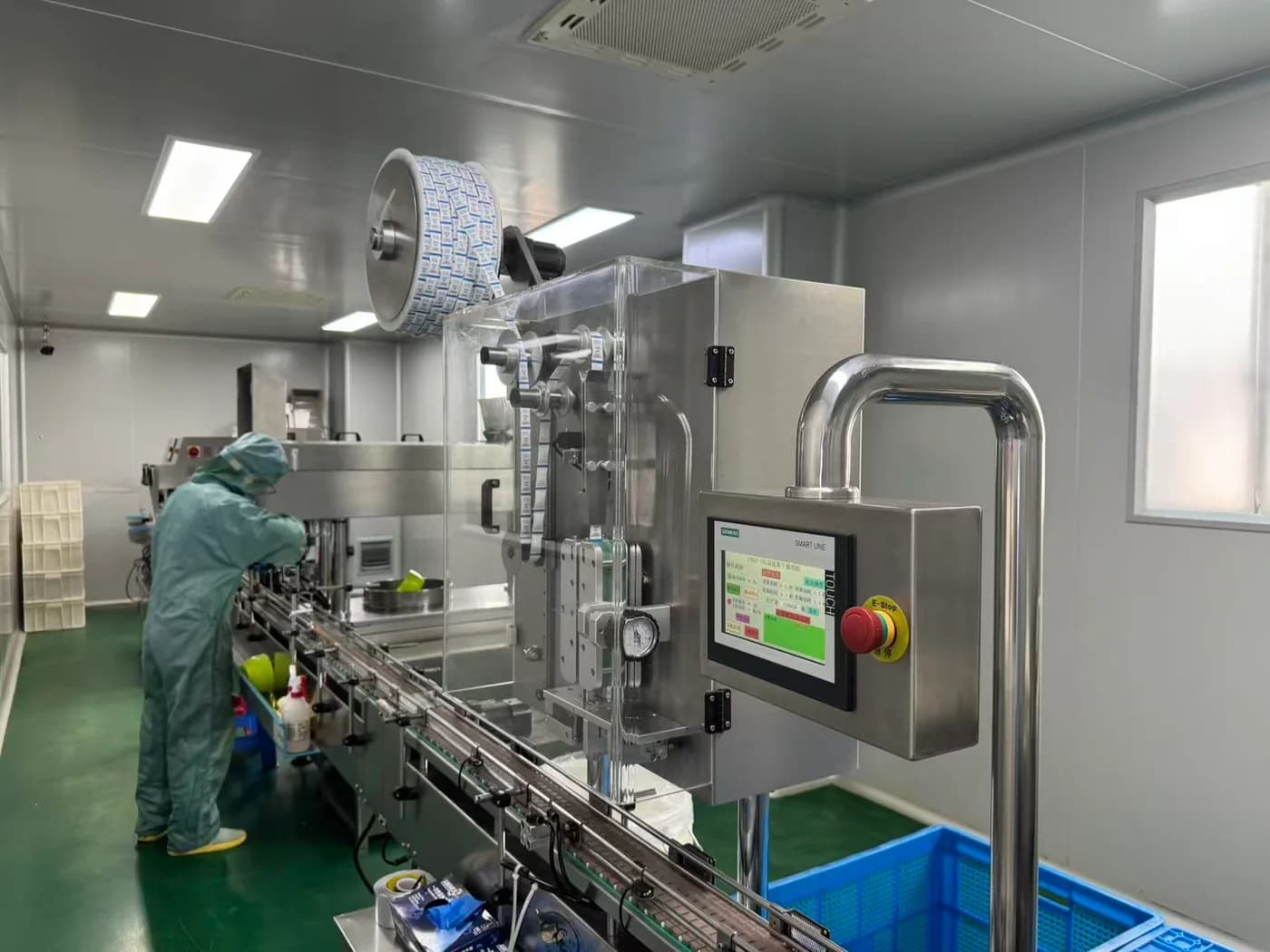
Best Supplement Manufacturers in Germany: A Buyer's Guide
German contract manufacturers are known for strict quality systems and reliable lead times. This guide covers MOQs, certifications, formulation support and how to compare suppliers before you request samples.
Overview
Germany has one of Europe's densest supplement manufacturing clusters, with strong GMP enforcement and well-developed supply chains for vitamins, minerals, botanicals and probiotics. For brand owners, the main trade-offs are minimum order quantities, tooling costs and lead times. This page sets out realistic parameters for retail bottling, pilot runs and private-label projects, and explains when a German supplier is the right fit versus sourcing from an EU-adjacent GMP facility such as EUPHM in Guangdong.
Manufacturing Capability and Line Capacity
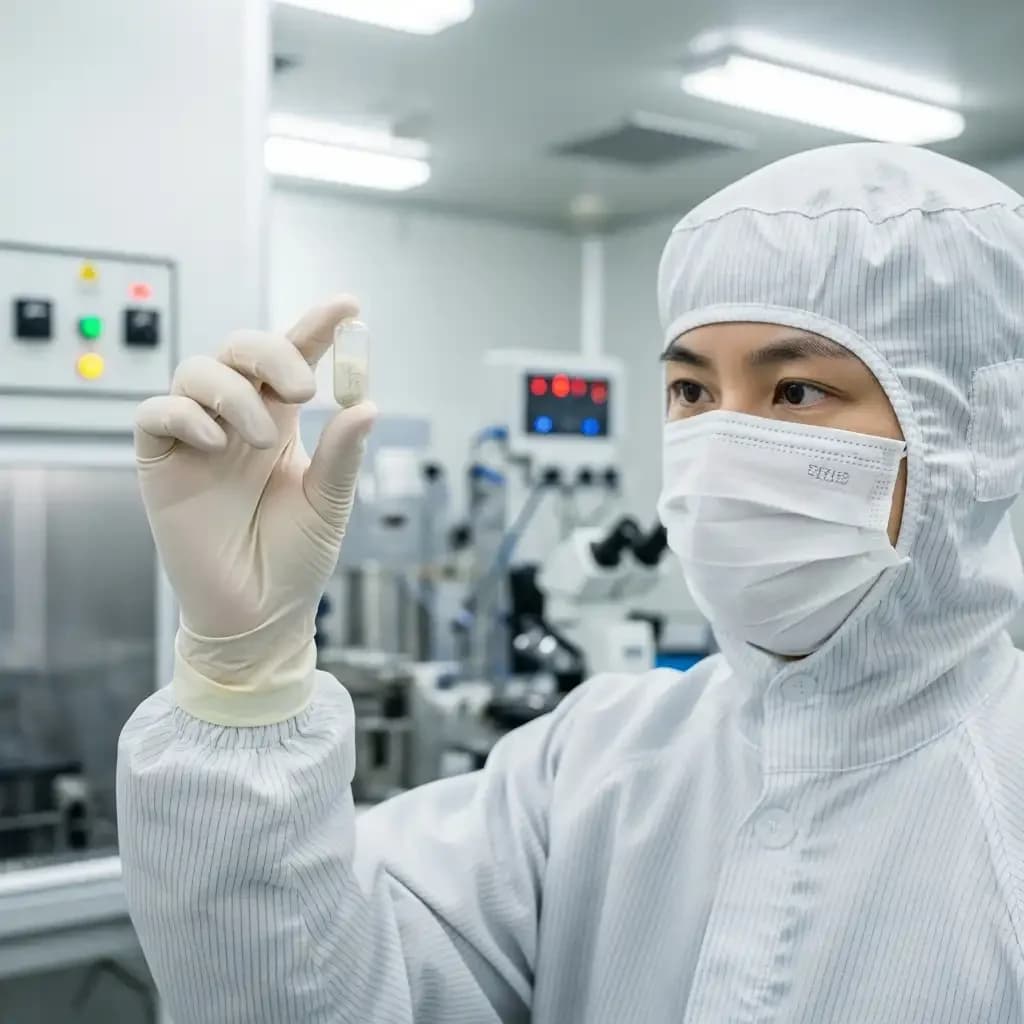
German contract manufacturers typically run encapsulation, tablet compression, powder blending and liquid filling lines. A mid-sized plant can produce 40–80 million capsules per month across two shifts, with changeover times of 4–8 hours between SKUs. Bottling lines handle 30–120 count HDPE and PET containers, with induction sealing and child-resistant closures standard for the EU and US markets.
For brands scaling from pilot to retail, capacity matters more than headline output. Ask for the line's actual run rate on your dosage form, not the plant total. A 5,000-unit pilot can usually be scheduled within 2–3 weeks of artwork approval, while a 50,000-unit retail order may need a 6–8 week slot. Confirm whether your chosen supplier outsources coating, blending or packaging, as each handover adds 3–5 days.
Formulation and Ingredient Sourcing
Germany has strong access to EU-sourced actives: vitamin D3 from lanolin, magnesium citrate, zinc bisglycinate, curcumin extracts standardised to 95% curcuminoids, and probiotic blends with documented CFU counts at end of shelf life. Formulators should specify overage percentages, typically 5–20% for sensitive vitamins, so the label claim holds through a 24-month expiry.
Ingredient documentation is where German suppliers differentiate. Expect full traceability from raw material lot to finished batch, allergen statements, non-GMO declarations and heavy-metal test results per lot. For botanical extracts, ask for the extraction solvent and ratio. For probiotics, request strain-level identification and a stability study at 25°C/60% RH. These details affect both regulatory filings and your ability to defend label claims.
Quality Systems, Compliance and Logistics
A German GMP certificate is a baseline, not a differentiator. Look for ISO 22000 or FSSC 22000, HACCP plans, and a documented deviation and CAPA process. For exports to the US, the facility must be FDA-registered and able to provide a prior notice filing. For the Middle East, halal certification from a recognised body is often required; for Israel certification.
Logistics from Germany to the US typically run 12–18 days by air and 28–35 days by sea, plus customs clearance. Duties and VAT depend on Incoterms; DDP is common for first orders. For brands selling into the EU, a German manufacturer simplifies labelling under EU 1169/2011 and avoids import VAT on finished goods. If your primary market is the US or Middle East, compare total landed cost, not just unit price.
Quality Control and Batch Documentation at German Supplement Manufacturers
Incoming raw materials at German contract manufacturers are sampled against a written specification before release to production. Identity is confirmed by FTIR or HPLC, and potency is assayed for actives such as vitamins, minerals and botanical markers. Microbial testing covers total aerobic count, yeast and mould, E. coli and Salmonella, with heavy metals (lead, cadmium, arsenic, mercury) screened by ICP-MS. Each incoming lot receives a unique internal number, and the supplier's own COA is filed alongside the internal result.
In-process checks run at defined intervals during encapsulation and tableting: fill weight every 15 to 30 minutes, hardness and thickness hourly, and disintegration testing on each batch. Finished-product testing then confirms potency, uniformity of content, microbial limits and, where relevant, dissolution. A batch is not released until the quality unit signs off the complete dossier. Retention samples are kept for the shelf life plus 12 months, stored under labelled conditions.
The certificate of analysis issued with each batch typically lists the product name, batch number, manufacture and expiry dates, tests performed, specification limits, results and the signature of the QC manager. Stability protocols follow ICH Q1A conditions: 25°C/60% RH for long-term and 40°C/75% RH for accelerated, tested at 0, 3, 6, 9, 12, 18 and 24 months. Brand owners should request the stability summary for the exact formula, not a generic platform, before committing to a shelf-life claim.
Documentation packages from German manufacturers usually include the batch record summary, COA, specification sheet and, on request, a declaration of no genetically modified material and an allergen statement. For exports to the US, the same dossier supports a dietary supplement label review. Auditors should verify that retention samples and stability data are held at the manufacturing site rather than only at a third-party lab.
Packaging, Labelling and Retail Readiness
German manufacturers commonly run high-density polyethylene bottles from 60 cc to 500 cc, with induction seals, child-resistant closures and desiccant options. Blister lines handle PVC/PVDC and alu-alu formats for moisture-sensitive tablets. Stick packs and sachets are filled on vertical form-fill-seal equipment at 40 to 120 packs per minute, with fill weights from 2 g to 30 g. Tooling for a new bottle size typically costs EUR 3,000 to 8,000 and adds 10 to 15 working days to the schedule.
For US-bound products, the label must carry a Supplement Facts panel with serving size, quantitative amounts per serving, percent daily values where established, and a list of other ingredients in descending order. The principal display panel needs the statement of identity and net quantity. Lot codes and expiry dates are applied by inkjet or laser, with a recommended format of LYYDDD for the lot and MM/YYYY for expiry, and must remain legible for the product's shelf life.
Carton specifications are usually agreed in writing: corrugated B-flute or E-flute, print in one or two colours, and a maximum carton weight of 15 kg for manual handling. Pallet configurations follow EUR 1 (1200 x 800 mm) or industrial 1200 x 1000 mm, with 1,000 to 1,200 bottles per pallet depending on size. Amazon sellers should confirm that the manufacturer can apply FNSKU labels and poly-bag units to the FBA prep standard, or budget for a separate prep centre.
Retail readiness also covers artwork proofing, barcode verification to GS1 standards and a final pre-production sample signed by both parties. German suppliers generally require camera-ready artwork at least 15 working days before the planned production start. Changes to label copy after proof approval usually trigger a new proof cycle and can delay the batch by a week.
MOQ, Lead Times and Delivery from Supplement Manufacturers in Germany
A typical project starts with a formulation brief and a quotation within 5 to 7 working days. Samples are produced in 7 to 10 working days for standard capsules and tablets, or 15 to 20 working days where a new tool or custom blend is required. Sample costs range from EUR 150 to 600 and are often credited against the first order. Analytical testing of the sample adds 5 to 7 working days if a full COA is requested.
Mass production occupies 20 to 35 working days after artwork approval and raw material release, with larger or multi-SKU orders extending to 45 working days. Air freight from Germany to the US East Coast takes 3 to 5 days door to door at roughly USD 6 to 12 per kg for 100 to 500 kg shipments. Sea freight to the US takes 18 to 28 days port to port, and to Asia 30 to 40 days, at USD 1.5 to 3 per kg for full containers.
Incoterms should be fixed in the supply agreement. EXW leaves all export clearance and main carriage to the buyer; FOB transfers risk at the named port; DDP places import duty and customs clearance on the seller and is common for Amazon FBA sellers who want a landed-cost price. German manufacturers usually quote EXW or FOB, and DDP is available through their freight partners at an added margin.
The document set provided with each shipment normally includes the commercial invoice, packing list, COA per batch, safety data sheet where required, and a free-sale certificate for markets that request it. Phytosanitary certificates apply only to botanical raw materials, not to finished capsules. Buyers importing into the EU should confirm the product notification status, and US buyers should confirm that the manufacturer can supply the label file in a format accepted by their customs broker.
Configurations to Compare
Private label, stock formula
Choose from a catalogue of existing formulas. Lowest MOQ at 1,000 units, fastest to market, but limited differentiation. Suitable for Amazon and marketplace launches.
Custom formulation
Develop a proprietary blend with your actives and dosages. Requires 2–4 weeks for R&D and stability checks. MOQ typically 5,000 units per SKU.
Pilot run, small batch
1,000 units for market testing or clinical samples. Higher per-unit cost, but validates packaging and label compliance before scale-up.
Full turnkey, DDP
Includes sourcing, manufacturing, bottling, labelling and delivery to your warehouse. Best for brands without a logistics partner in the EU.
Production in Six Steps
- 01
Request the GMP certificate
Check the issuing authority, scope and expiry date. A certificate covering capsules does not automatically cover tablets or powders.
- 02
Ask for three client references
Request references in your dosage form and target market. Ask about deviation handling, not just on-time delivery rates.
- 03
Confirm MOQ and tooling
Clarify whether MOQ applies per SKU or per order, and whether bottle, cap or label tooling is included or billed separately.
- 04
Order a sample batch
Expect 7–10 working days for a sample. Evaluate taste, flowability, capsule integrity and label accuracy before committing.
- 05
Review the quality agreement
Define specifications, test methods, retest dates and who owns the stability programme. This protects both parties.
- 06
Plan the first production slot
Book 20–35 working days for mass production after artwork approval. Add 2–3 weeks for raw material lead times on specialty actives.
Why EUPHM
Regulatory proximity
German suppliers understand EU 1169/2011 labelling and EFSA health claim rules. This reduces rework and rejected shipments into the EU.
Shorter EU lead times
Road and rail freight within the EU takes 2–5 days. For replenishment cycles, this beats sea freight from Asia by 3–4 weeks.
Cost trade-off
German unit costs run 20–40% above comparable Asian GMP facilities. For price-sensitive US and Middle East brands, a Guangdong-based partner such as EUPHM can improve landed margin.
Questions buyers ask.
What is the typical MOQ for a German supplement manufacturer?+
For retail bottling, expect 1,000 units per SKU. Pilot runs can go as low as 1,000 units, but per-unit costs rise 30–60%. Some suppliers waive the MOQ if you use their stock formula and standard bottle.
How long does sample and mass production take?+
Samples usually ship in 7–10 working days after formula confirmation. Mass production runs 20–35 working days after artwork and PO approval. Add 2–3 weeks if specialty actives or custom tooling are required.
Which certifications should I verify?+
At minimum, GMP, ISO 22000 and HACCP. For US exports, confirm FDA registration. For Middle East and Israel, ask for halal certificates. For organic claims, request EU organic or certification.
Can a German manufacturer handle US label compliance?+
Yes, but confirm they have a US regulatory reviewer. US labels need Supplement Facts panels, allergen declarations and FDA-compliant structure-function claims. Some German suppliers outsource this review, which adds 5–10 days.
Is it cheaper to manufacture in Germany or Asia?+
German manufacturing costs 20–40% more per unit for comparable dosage forms. However, shorter EU freight, lower inventory carrying costs and simpler customs can offset the gap for EU-focused brands. For US and Middle East brands, Asian GMP facilities often deliver a lower landed cost.
Can a German supplement manufacturer produce a formula that is already owned by another brand?+
No. Most German contract manufacturers will not replicate an existing commercial formula without written authorisation from the brand owner, and many require a representation and indemnity clause. If you are reformulating, expect the manufacturer to ask for the previous supplier's specification and to run its own analytical profile. Exclusive formulas are usually protected by a confidentiality agreement and, in some cases, a tooling or development fee that is credited against future orders.
What is the usual payment structure for a private-label order in Germany?+
A common structure is 30 to 50 percent deposit on order confirmation, with the balance due before shipment or against a copy of the bill of lading. New customers without a trading history may be asked for full prepayment on the first order. Established accounts sometimes obtain 30-day net terms after three completed orders. Tooling and artwork costs are usually invoiced separately and paid upfront, and are non-refundable once production of the tool has started.
How do German manufacturers handle allergen and cross-contamination controls?+
Facilities producing allergens such as soy, milk or gluten run a documented allergen changeover with validated cleaning and, where needed, dedicated equipment. The label must carry the appropriate allergen statement, and the manufacturer should supply a cross-contamination risk assessment for the specific line. Buyers with a strict allergen-free claim should confirm whether the line is dedicated or shared, and request the cleaning validation record for the previous product run before approving the batch.
Have a product in mind?
Send us the brief and we will come back with a formulation direction, indicative price and a realistic lead time — usually within one working day.