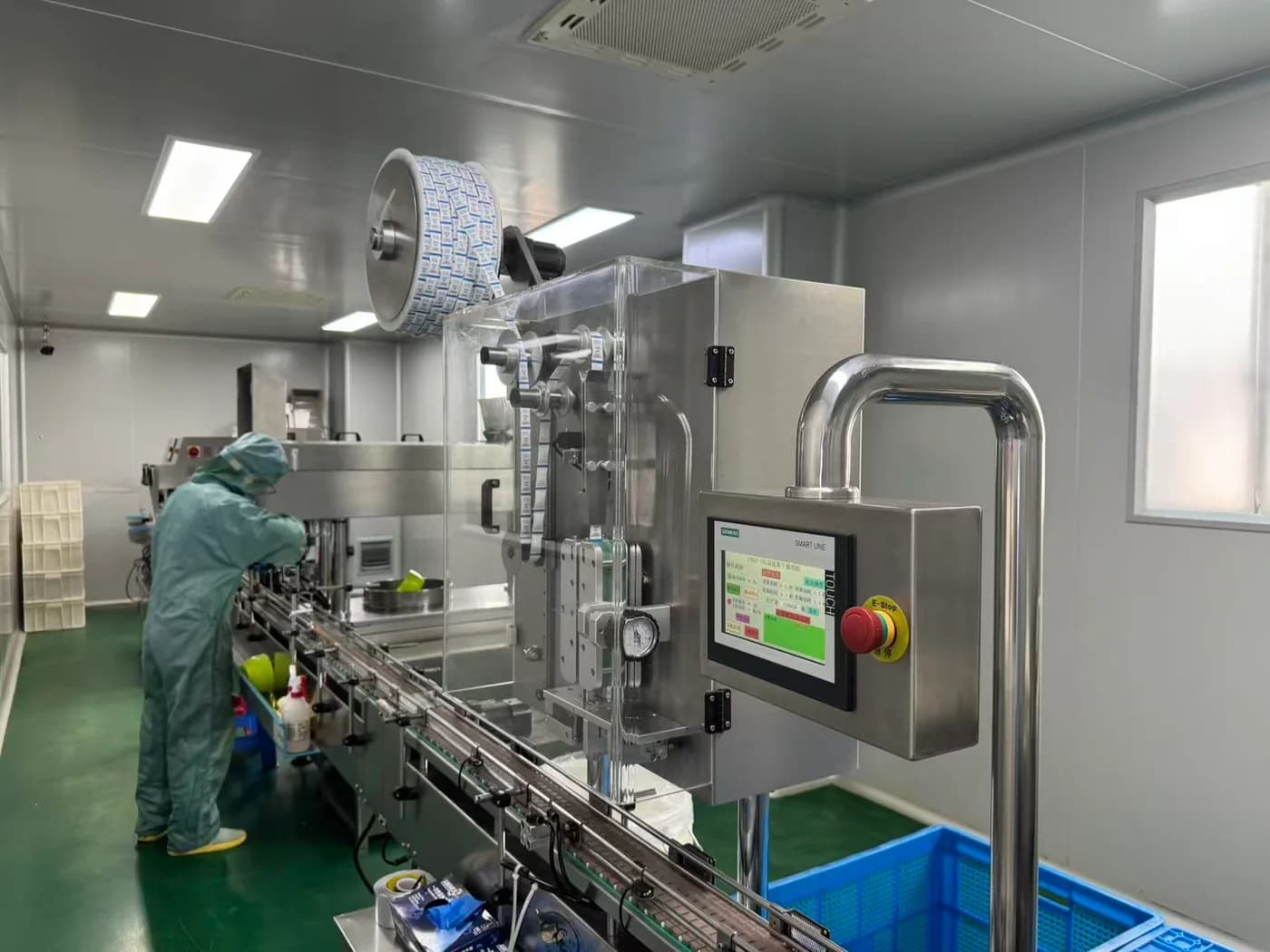
Best Supplement Manufacturers in Mumbai: A Buyer's Guide
Mumbai is a hub for supplement manufacturing in India, but finding a GMP-certified partner with the right capacity, certifications, and export experience is critical. This guide covers what to evaluate and how EUPHM supports brands sourcing from India.
Overview
Mumbai and the surrounding Maharashtra region host hundreds of nutraceutical manufacturers, from small ayurvedic units to large export-oriented plants. For brand owners in the US, EU, UK, and Middle East, the challenge is separating facilities that can meet international compliance from those that cannot. This page outlines key selection criteria and highlights EUPHM's capabilities as a GMP-certified contract manufacturer with MOQ from 1,000 units and 20–35 day production lead times.
Manufacturing Capability in Mumbai
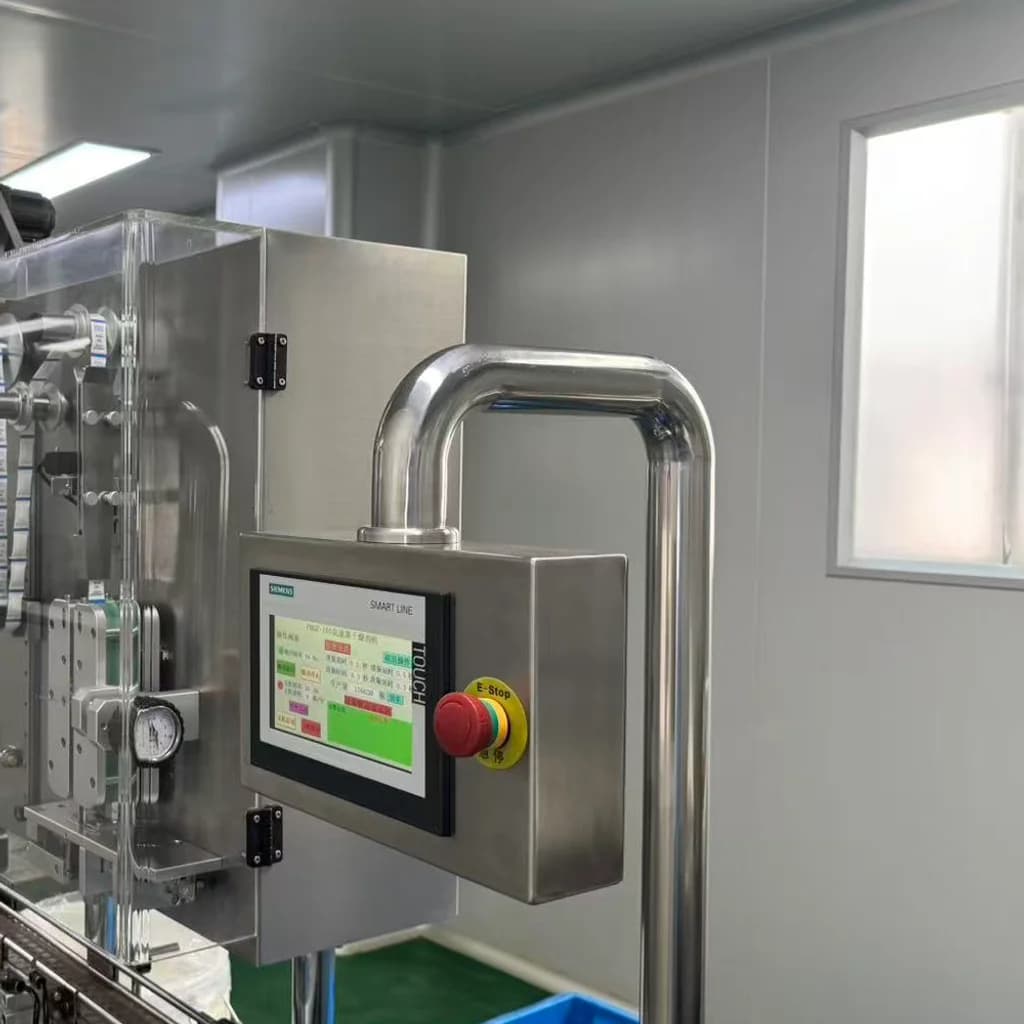
Mumbai's supplement manufacturing sector ranges from small-scale blenders to fully automated facilities. Key capability indicators include granulation, encapsulation, tableting, and coating lines. Look for plants that can handle multiple dosage forms under one roof: capsules, tablets, softgels, and powders. Capacity matters—a facility producing under 500,000 units per month may struggle with scale-up. EUPHM operates lines capable of 2 million units monthly, with in-house tooling for custom shapes and sizes.
Logistics also differentiate Mumbai-based manufacturers. Proximity to JNPT port and Chhatrapati Shivaji International Airport reduces export lead times. For buyers in the Middle East, sea freight from Mumbai to Jebel Ali takes 4–6 days; to Europe, 18–22 days. Confirm that your manufacturer has experience with export documentation, including certificates of origin, health certificates, and halal certifications if required.
Formulation and Ingredient Sourcing
Mumbai manufacturers often specialise in ayurvedic and herbal ingredients, but global brands need consistent access to vitamins, minerals, amino acids, and specialty compounds. Ask about ingredient sourcing: are actives purchased from DSM, BASF, or equivalent? Are botanical extracts standardised to specific marker compounds? For example, ashwagandha extract should be standardised to 2.5–5% withanolides. Inconsistent raw materials lead to batch failures and rework.
Formulation support varies widely. Some Mumbai contract manufacturers only produce your formula; others offer R&D to optimise bioavailability, taste, or shelf life. EUPHM provides formulation assistance, including vegan capsule options, delayed-release coatings, and flavour masking for powders. Stability testing is conducted at 25°C/60% RH and 40°C/75% RH to support 24-month shelf life claims.
Quality and Compliance for Export
For US, EU, UK, and Middle East markets, compliance is non-negotiable. A Mumbai manufacturer should hold GMP certification from a recognised body, plus ISO 22000 or HACCP for food safety. If you sell in the Middle East, halal certification is essential; for Israel. Organic claims require USDA or EU organic certification. EUPHM holds GMP, ISO 22000, HACCP, halal certification, and operates an FDA-registered facility.
Documentation is equally important. Request certificates of analysis for every batch, allergen statements, and heavy metal testing reports. For EU markets, confirm compliance with EC 1881/2006 for contaminants. For the US, ensure the facility follows 21 CFR Part 111. A manufacturer that cannot provide these documents quickly is a risk. EUPHM supplies full documentation packages with each shipment, including COA, MSDS, and stability data.
Quality Control and Batch Documentation at Mumbai-Linked Supplement Manufacturers
Every batch released from a supplement manufacturing programme in Mumbai is built around a batch manufacturing record and a batch packaging record that trace raw material lot numbers through to finished cartons. Identity testing of incoming actives is performed by FTIR or HPLC against a retained reference standard, and potency is assayed on the finished blend rather than only on the raw material. Microbial testing covers total aerobic count, yeast and mould, E. coli, Salmonella and Staphylococcus aureus, with specifications typically set at under 1,000 cfu/g for total aerobes in capsules.
Heavy metal screening uses ICP-MS for lead, arsenic, cadmium and mercury, and results are reported against the limits in USP <2232> or the relevant EU or Gulf standard. Disintegration testing follows USP <701> for capsules and tablets, with typical acceptance at under 30 minutes in purified water at 37 degrees Celsius, and hardness and friability are recorded for compressed tablets. Where a softgel or coated tablet is specified, dissolution profiling at a single time point is added on request.
The certificate of analysis issued per batch states product name, batch number, manufacturing date, expiry date, tests performed, specification limits, results and the release signature of the quality unit. A typical COA runs to two pages and includes the raw material lot mapping. Retention samples of at least two finished retail units per batch are held for the full shelf life plus twelve months, and stability is run on the pilot batch at 25 degrees Celsius and 60 per cent relative humidity with a 40 degrees Celsius and 75 per cent relative humidity accelerated arm, tested at zero, three, six, twelve, twenty-four and thirty-six months.
Microbial and heavy metal testing is normally completed before packaging begins, so a failed result does not consume primary packaging. If a batch falls outside specification, it is placed on hold, an out-of-specification investigation is opened, and the buyer is notified in writing within five working days with a root cause summary and a disposition decision covering rework, re-test or destruction.
Packaging, Labelling and Retail Readiness
Primary packaging options include high-density polyethylene bottles from 60 cc to 500 cc with induction seals and child-resistant or standard closures, blister packs in PVC or alu-alu for moisture-sensitive tablets, and stick packs or sachets from 3 g to 30 g for powders. Bottle filling is monitored by checkweighers, and fill weight tolerances are held to plus or minus 3 per cent for capsules and tablets. Desiccant and cotton are added according to the stability data rather than by default, since cotton is no longer accepted by some retailers.
For US-bound dietary supplements, the label must carry the statement of identity, net quantity of contents, a supplement facts panel with serving size and per-serving amounts, other ingredients in descending order of predominance, and a domestic address or phone number for the distributor. Allergen declarations follow the Food Allergen Labelling and Consumer Protection Act, and the FDA disclaimer is required where structure-function claims appear. EU labels need the nutrition declaration per 100 g and per serving, the food business operator address, and a best-before date.
Lot and expiry coding is applied by inkjet or laser on the base of the bottle and on the carton, in a format agreed at artwork approval, and the same code appears on the shipper label to allow warehouse-level traceability. Cartons are specified with a defined board grade, usually 300 to 350 gsm, and pallets are built to a stated footprint, commonly 1,200 by 1,000 mm or 1,200 by 800 mm, with a maximum height of 1,800 mm including the pallet and stretch wrap.
For Amazon sellers, artwork can be set up to accept FNSKU labels applied over the barcode, or the FNSKU can be printed directly into the label at no extra cost when the order exceeds 10,000 units. Retailer-specific requirements such as a carton GS1-128 label, a packing list per carton and a maximum carton weight of 15 kg for manual handling are confirmed at the specification stage rather than after production.
MOQ, Lead Times and Delivery from Mumbai Supplement Manufacturers
The sample process begins with a formulation brief and a target dosage form. Prototype samples are produced in 7 to 10 working days for standard capsules and tablets, and 12 to 15 working days where a new flavour system, a coated tablet or a custom softgel shell is required. Samples are supplied with a draft specification sheet and a preliminary COA, and the buyer is expected to confirm the specification in writing before a purchase order is raised, since artwork and formulation changes after that point restart the timeline.
Mass production occupies 20 to 35 working days from receipt of deposit and approved artwork, with the shorter end applying to single-SKU capsule orders and the longer end to multi-SKU orders involving blisters or powders. Line capacity of up to 2 million units per month means a 50,000-unit order does not queue behind larger accounts, but capacity is allocated on a rolling four-week schedule, so a firm production slot is confirmed only when the deposit clears.
Air freight to Europe or North America takes 5 to 8 days door to door and suits orders below roughly 300 kg or launch quantities where the stock-out risk outweighs the cost. Sea freight takes 28 to 38 days to a US west coast port and 30 to 40 days to northern Europe, and is economic above about 500 kg. Shipments are quoted EXW, FOB Shenzhen or Hong Kong, or DDP to a named warehouse, with DDP pricing including duty and clearance and therefore requiring an accurate HS code and ingredient breakdown at quotation stage.
The export document pack contains the commercial invoice, packing list, bill of lading or airway bill, certificate of analysis per batch, material safety data sheet where the product is classified, a free-sale certificate, and a certificate of origin. Phytosanitary certificates apply only to botanical raw materials where the destination authority requires them, and halal certificates are issued per production run rather than per shipment, so the certificate number must be matched to the batch on the COA.
Options for Your Format
Retail bottling
Stock or custom bottles from 60 cc to 500 cc, with induction seals, child-resistant caps, and labelling. MOQ 1,000 units per SKU.
Bulk powder and capsules
Unbranded bulk supply for further processing or repackaging. Ideal for pilot runs and private label test batches. MOQ from 1,000 units.
Custom formulation
R&D support to develop new SKUs, including bioavailability enhancement, flavour systems, and vegan or organic options. Lead time 7–10 days for samples.
Private label turnkey
End-to-end service from formula to finished, labelled bottles ready for retail. Includes artwork review, regulatory checks, and export documentation.
How a Project Runs
- 01
Inquiry and brief
Share your formula, target dosage form, and packaging requirements. EUPHM responds within 1 working day with feasibility and pricing.
- 02
Sample development
Receive samples in 7–10 working days. Test for taste, appearance, and dissolution. Request adjustments if needed.
- 03
Quotation and MOQ
Confirm pricing based on 1,000 unit MOQ. Pilot runs from 1,000 units available for market testing.
- 04
Purchase order
Issue PO with 50% deposit. Production slot is reserved. Lead time 20–35 working days from deposit.
- 05
Production and QC
Manufacturing under GMP. In-process checks and finished product testing. COA provided before shipment.
- 06
Shipping and delivery
EUPHM arranges export from Mumbai or Guangdong. Air freight 3–7 days; sea freight 4–22 days depending on destination.
Why EUPHM
Export-ready certifications
GMP, ISO 9001, ISO 22000, HACCP, NSF/ANSI 455-2 and halal certification; FDA facility registration for US-bound shipments.
Low MOQ for testing
Start with 1,000 units for pilot runs. Scale to 1,000 units for retail bottling. No need to commit to large volumes upfront.
Fast turnaround
Samples in 7–10 working days. Mass production in 20–35 working days. Reliable timelines for launch planning.
Questions buyers ask.
What is the MOQ for supplement manufacturing in Mumbai?+
MOQ varies by manufacturer. EUPHM offers MOQ from 1,000 units for pilot runs and 1,000 units for retail bottling per SKU. This is lower than many large Indian contract manufacturers, which often require 10,000 units or more.
How long does production take?+
Sample lead time is 7–10 working days. Mass production takes 20–35 working days after deposit and artwork approval. Shipping from Mumbai adds 4–22 days depending on destination and freight mode.
Are Mumbai manufacturers GMP-certified?+
Many are, but certification bodies vary. Look for GMP from recognised auditors, plus ISO 22000 or HACCP. EUPHM holds GMP, ISO 22000, HACCP, halal certification, and operates an FDA-registered facility.
Can I get custom formulations?+
Yes. EUPHM provides formulation R&D, including vegan capsules, delayed-release coatings, and flavour masking. Stability testing supports 24-month shelf life. Samples are provided for approval before mass production.
What documentation is provided for export?+
EUPHM supplies certificates of analysis, MSDS, allergen statements, heavy metal testing, and stability data. For EU, we confirm EC 1881/2006 compliance; for US, 21 CFR Part 111. Halal certificates are available.
Can you manufacture a supplement that is already sold by another brand, using my own label?+
Yes, where the formulation is not protected by an active patent or an exclusive supply agreement. You provide the label or the ingredient list and per-serving amounts, and the formulation is matched against available raw materials. If a proprietary blend is undisclosed, the exact ratios cannot be replicated, so a comparable formulation is proposed and confirmed in writing before sampling.
What happens if my batch fails a specification test after production?+
The batch is placed on hold and an out-of-specification investigation is opened. The buyer receives written notification within five working days, including the failing test, the root cause assessment and a disposition proposal. Options are rework where technically valid, re-test on a fresh sample, or destruction with a certificate. No failed batch is shipped, and the cost allocation depends on whether the cause sits with the raw material supplier or the process.
Do you handle registration or notification paperwork for the destination market?+
The factory supplies the technical file content needed for notification, including the specification, COA, label artwork, GMP certificate and free-sale certificate. Actual submission is normally handled by an in-market regulatory agent, since notifications such as the EU food supplement notification or a national registration in the Gulf are filed by a locally established entity. The factory can recommend agents but does not act as the notifier.
Have a product in mind?
Send us the brief and we will come back with a formulation direction, indicative price and a realistic lead time — usually within one working day.