Best Supplement Manufacturers in UAE: A Buyer's Guide
Sourcing supplements in the UAE means balancing local demand with global supply. This guide covers what to look for in a manufacturing partner, from certifications to MOQs, and how to compare options.
Overview
The UAE supplement market is projected to reach $1.2 billion by 2027, driven by fitness trends and government health initiatives. Brands need manufacturers that understand Gulf regulations, halal requirements, and fast turnaround. While local UAE manufacturers exist, many brands also look to established exporters in Asia for cost efficiency and scale. This page explains key criteria and how to evaluate partners.
| Minimum order quantity | 1,000 units per SKU for retail bottling; lower for pilot runs |
|---|---|
| Sample lead time | 7–10 working days |
| Mass production lead time | 20–35 working days after sample approval |
| Certifications | GMP, ISO 9001, ISO 22000, HACCP, NSF/ANSI 455-2, halal, FDA-registered |
| Fill weight range | Capsules 300–1,200 mg; tablets 500–1,500 mg; powders 5–30 g |
| Line capacity | Up to 2 million capsules and 1.5 million tablets per day |
Manufacturing Capability and Scale
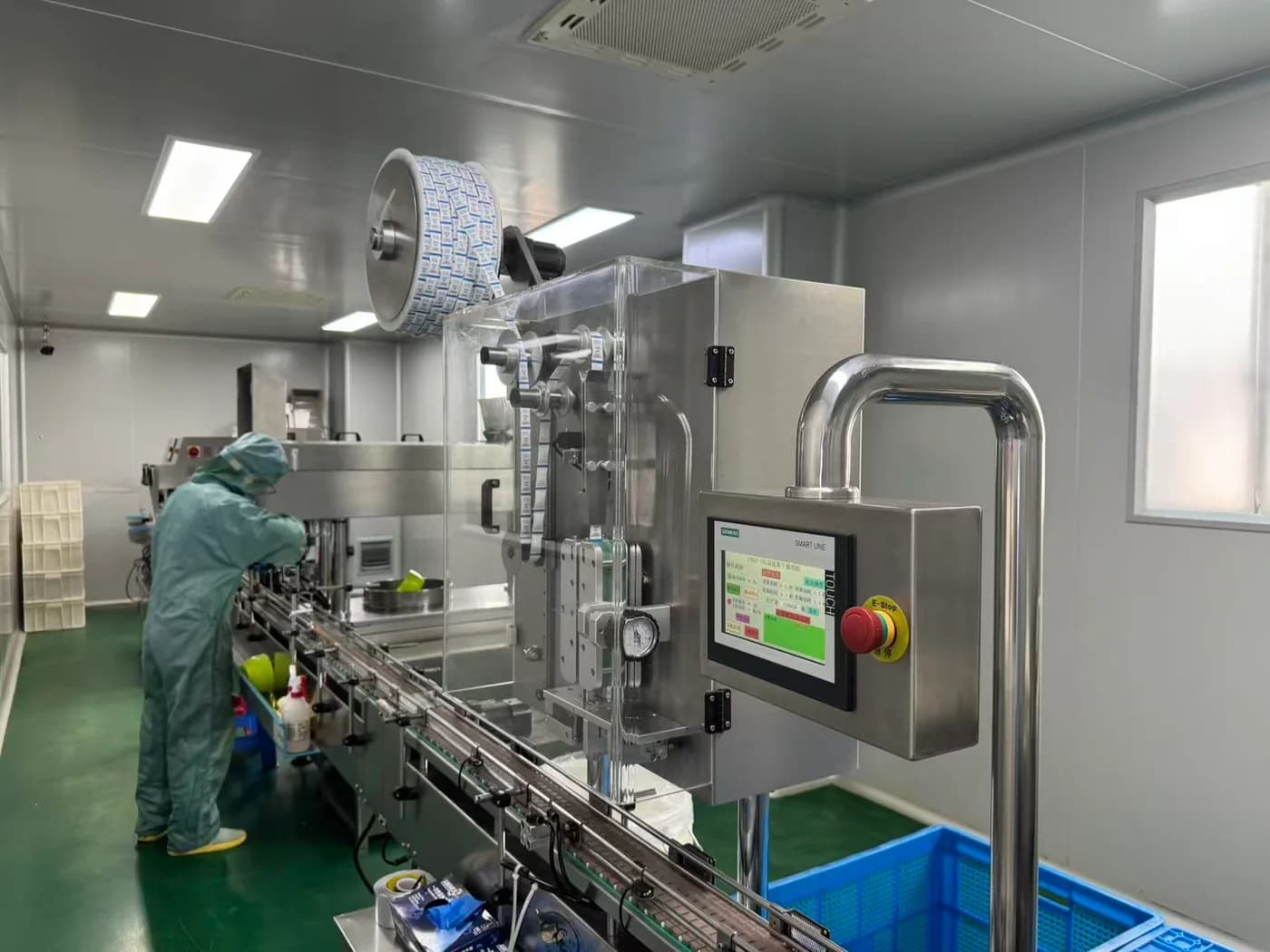
A manufacturer's capacity determines whether it can meet your launch timelines and seasonal demand spikes. Look for facilities with dedicated lines for capsules, tablets, and powders. For example, a mid-sized plant may run 2 million capsules daily across two shifts. Ask about equipment: automatic encapsulation machines, high-speed tablet presses, and fluid bed dryers. Also check if they handle small pilot runs (500–1,000 units) before scaling to full production.
EUPHM operates a 12,000 sqm GMP-certified facility in Guangdong, China, with separate rooms for blending, encapsulation, and packaging. The plant runs 20 production lines and holds inventory of common excipients. For UAE orders, production typically starts within 5 days of PO and sample approval. Shipping to Jebel Ali port takes 18–22 days by sea, or 5–7 days by air.
Formulation and Ingredient Sourcing
UAE regulations require pre-market approval for supplements from the Ministry of Health and Prevention (MOHAP). This means your manufacturer must provide full ingredient documentation, including certificates of analysis (CoA) and safety data sheets. Key ingredients like vitamin D3, omega-3, and collagen are widely available, but novel ingredients may need extra testing. Confirm that the manufacturer sources from reputable suppliers with traceability.
For halal-certified products, every ingredient and processing aid must be halal-approved. This includes gelatin capsules (use bovine halal or HPMC) and lubricants. EUPHM maintains halal certifications and can supply vegan options. Formulation support includes stability studies, flavour masking for powders, and custom blends. Typical development time for a new formula is 10–15 days, including a pilot batch.
Quality Assurance and Logistics to UAE
Quality failures can lead to recalls and customs delays. A robust QA system includes raw material testing, in-process checks, and finished product testing for potency, heavy metals, and microbials. Third-party lab reports should be available for each batch. For UAE, MOHAP may request specific tests like salmonella and E. coli for certain products. Ensure the manufacturer follows HACCP and ISO 22000.
Logistics to the UAE require proper documentation: commercial invoice, packing list, certificate of origin, and halal certificate if applicable. Some manufacturers offer DDP (delivered duty paid) terms to Jebel Ali or Dubai International Airport. EUPHM provides export documentation and can coordinate with freight forwarders. Lead times for mass production are 20–35 working days, plus 5–7 days for air freight or 18–22 days for sea freight.
Quality Control and Batch Documentation
Every batch produced for the UAE market is tested at three stages: incoming raw materials, in-process samples, and finished goods. Identity testing uses FTIR and HPLC against reference standards. Potency assays confirm the active ingredient falls within 95–105% of label claim. Microbial testing covers total aerobic count, yeast and mould, E. coli, Salmonella, and Staphylococcus aureus, with limits set to UAE.S GSO standards. Heavy metals (lead, arsenic, cadmium, mercury) are tested by ICP-MS, and disintegration testing follows USP <701> for tablets and capsules. These tests are performed in-house and, for high-risk ingredients, verified by a third-party ISO 17025 laboratory.
A certificate of analysis (COA) is issued for each batch and includes the product name, batch number, manufacturing date, expiry date, tests performed with specifications and results, and the signature of the quality control manager. COAs are provided in English and can be formatted to meet UAE municipality or Dubai Municipality requirements. Retention samples of each batch are kept for the full shelf life plus six months, stored under controlled conditions. Stability studies follow ICH Q1A(R2) guidelines, with accelerated testing at 40°C/75% RH for six months and real-time testing at 25°C/60% RH and 30°C/65% RH to support a 24-month shelf life claim.
For UAE buyers, documentation also includes a free-sale certificate, GMP certificate, and halal certificate where applicable. These are typically required for product registration with the Ministry of Health and Prevention (MOHAP) or local municipalities. The manufacturer should provide a technical file with formulation details, raw material specifications, and a manufacturing flow chart. If the product contains novel ingredients or claims, additional substantiation may be needed. All records are retained for at least five years and are available for audit.
Packaging, Labelling and Retail Readiness
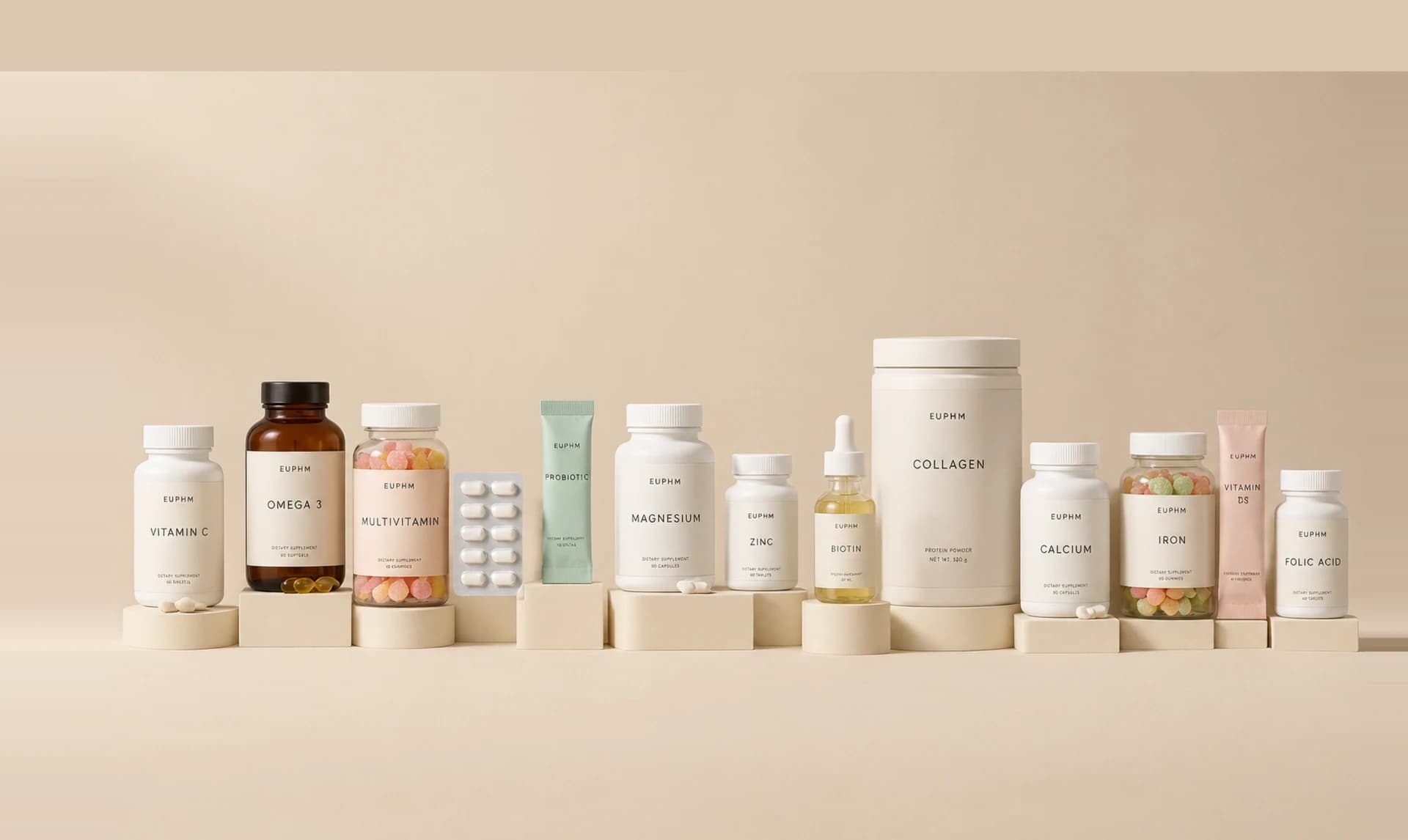
Packaging options include high-density polyethylene (HDPE) bottles with induction seals, blister packs with aluminium foil, stick packs, and sachets. Bottle sizes range from 30 cc to 500 cc, with child-resistant closures available. Blister packs can be produced in PVC/PVDC or alu-alu formats for moisture-sensitive products. Stick packs and sachets are suitable for powder blends and single-serve doses. All primary packaging materials are food-grade and comply with EU and US FDA requirements. Labels can be printed in up to eight colours and include lot number and expiry date via inkjet or laser coding.
For the UAE market, labels must include the product name, net quantity, list of ingredients, allergen information, storage conditions, and the manufacturer's name and address. If the product is sold in the UAE, Arabic labelling is mandatory for retail. The manufacturer can provide bilingual Arabic/English labels. For exports to the US, labels must follow FDA dietary supplement labelling requirements, including the Supplement Facts panel, and for the EU, the Nutrition and Health Claims Regulation applies. The manufacturer assists with label design and can provide dielines and artwork templates.
Cartons are typically made from corrugated board with a bursting strength of at least 200 psi. Pallet specifications follow standard 1200 x 1000 mm or 1200 x 800 mm footprints, with stretch-wrapping and edge protectors. For Amazon FBA, the manufacturer can apply FNSKU labels and poly-bagging according to Amazon's requirements. Retail-ready packaging such as shelf-ready trays can be provided on request. All packaging is designed to withstand the high temperatures and humidity during sea freight to the Gulf.
MOQ, Lead Times and Delivery
The minimum order quantity (MOQ) for retail bottling is typically 1,000 units per SKU, though lower quantities may be possible for pilot runs at a higher unit cost. Sample lead time is 7 to 10 working days after receipt of formulation and packaging specifications. Mass production takes 20 to 35 working days after sample approval, depending on the complexity of the product and packaging. For repeat orders, lead time can be reduced to 15 to 25 working days.
Shipping to the UAE can be by air or sea. Air freight takes 3 to 7 days from Hong Kong to Dubai or Abu Dhabi, while sea freight takes 18 to 25 days to Jebel Ali Port. The manufacturer provides a full set of shipping documents, including commercial invoice, packing list, bill of lading, certificate of origin, COA, MSDS, and free-sale certificate. Phytosanitary certificates are provided for herbal ingredients where required. Incoterms offered include EXW, FOB, and DDP. DDP is popular with UAE buyers as it simplifies customs clearance and delivery to the warehouse.
For DDP shipments, the manufacturer handles customs duties and clearance, with delivery typically within 30 to 40 days door-to-door. Air freight is recommended for urgent orders or small volumes, while sea freight is more cost-effective for full container loads. The manufacturer can also arrange warehousing in Dubai for fast replenishment. Payment terms are usually 30% deposit with the balance against copy of bill of lading, though this can be negotiated for long-term partners.
Manufacturing Options to Compare
Private label
Use existing formulas with your branding. MOQ 1,000 units per SKU. Ideal for fast market entry with minimal development cost and 20–25 day production.
Custom formulation
Develop a unique blend from scratch. Includes stability testing and pilot batch. MOQ 5,000 units. Lead time 30–35 days after formula approval.
Contract manufacturing
Full-service production from raw materials to finished bottles. Includes packaging, labelling, and regulatory support for UAE registration.
Pilot runs
Small batches of 500–1,000 units for market testing or clinical trials. Sample lead time 7–10 days. Scales to full production once validated.
How We Work
- 01
Inquiry and quote
Share your product specs, target quantity, and destination. Receive a detailed quote within 2 working days, including MOQ and lead time.
- 02
Sample approval
Request samples of similar products or a custom pilot batch. Samples ship in 7–10 working days. Approve formula, packaging, and label.
- 03
Order confirmation
Sign proforma invoice and pay 30% deposit. Production slot is reserved. Balance due before shipment.
- 04
Production
Mass production takes 20–35 working days. Receive weekly updates and batch records. QA testing occurs at multiple stages.
- 05
Quality check
Final inspection and third-party lab testing. Certificates of analysis and halal certificates prepared for UAE customs.
- 06
Shipping to UAE
Choose air (5–7 days) or sea (18–22 days) to Jebel Ali or Dubai. Full export documentation provided. Track shipment until delivery.
Why EUPHM
Certified for gulf markets
GMP, ISO 9001, ISO 22000, HACCP, NSF/ANSI 455-2 and halal certification; FDA facility registration for US-bound shipments.
Flexible moqs
Start with 1,000 units per SKU for retail bottling. Pilot runs as low as 500 units for market testing.
Reliable lead times
Samples in 7–10 days. Mass production in 20–35 working days. Sea freight to UAE in 18–22 days.
Questions buyers ask.
What is the minimum order quantity for supplement manufacturing in the UAE?+
Most manufacturers require 1,000 units per SKU for retail bottling. Some offer lower MOQs for pilot runs, typically 500–1,000 units. EUPHM's standard MOQ is 1,000 units, but pilot runs start at 500 units.
How long does it take to manufacture and ship supplements to the UAE?+
Sample lead time is 7–10 working days. Mass production takes 20–35 working days after sample approval. Air freight to Dubai is 5–7 days; sea freight to Jebel Ali is 18–22 days. Total timeline from PO to delivery: 35–60 days.
Do I need halal certification for supplements sold in the UAE?+
Yes, halal certification is required for most supplement products in the UAE. This covers ingredients, processing aids, and capsules. Choose a manufacturer with halal-certified facilities and documentation. EUPHM holds halal certification and provides certificates for each batch.
What certifications should a UAE supplement manufacturer have?+
Look for GMP, ISO 22000, and HACCP as baseline. For UAE specifically, halal certification is essential. Additional certifications like organic, or vegan may be needed depending on your product claims. Always request copies of certificates and verify expiry dates.
Can I use a Chinese manufacturer for supplements sold in the UAE?+
Yes, many UAE brands source from Chinese manufacturers for cost efficiency and scale. The key is ensuring the manufacturer meets UAE regulatory requirements, including halal certification and MOHAP registration support. EUPHM exports to the Middle East and provides full documentation.
What is the shelf life of supplements manufactured for the UAE market?+
Shelf life is typically 24 months from the date of manufacture when stored in a cool, dry place away from direct sunlight. This is supported by stability studies under ICH guidelines. The expiry date is printed on each unit and carton. For products with probiotics or delicate ingredients, shelf life may be 18 months. The manufacturer provides a shelf life declaration and can adjust the formulation to meet your target shelf life.
Can you provide Arabic-labelled packaging for UAE retail?+
Yes, we provide bilingual Arabic and English labels that comply with UAE.S GSO labelling requirements. This includes product name, ingredients, net content, storage instructions, and manufacturer details. We can also include halal certification marks and country of origin. Artwork proofs are provided for your approval before printing. Arabic translation is handled by our in-house team or a certified translation partner.
What are the payment terms for orders from UAE buyers?+
Standard payment terms are 30% deposit upon order confirmation, with the remaining 70% due against a copy of the bill of lading. For first orders, we may require a higher deposit or a letter of credit. For repeat orders from established customers, we can offer 30-day net terms after negotiation. All payments are in US dollars or euros via bank transfer. We also accept letters of credit at sight for large orders.
Have a product in mind?
Send us the brief and we will come back with a formulation direction, indicative price and a realistic lead time — usually within one working day.