Best Supplement Manufacturers in London: A Buyer's Guide
London brands sourcing a contract manufacturer face a crowded field. This guide covers what to compare — MOQ, lead times, certifications, unit economics — and how EUPHM supports UK launches from pilot to retail scale.
Overview
London is Europe's densest supplement market, with brands competing on formulation, provenance and price. Most labels are made by contract manufacturers, not in-house. Choosing the right partner affects your margin, launch date and compliance risk. Below we set out the practical criteria UK buyers use, and where a Guangdong-based GMP facility fits alongside domestic options. For the wider UK picture, see our parent guide at /best-supplement-manufacturers/uk.
| Minimum order quantity | 1,000 units per SKU; lower for pilot runs |
|---|---|
| Sample lead time | 7–10 working days |
| Mass production | 20–35 working days after approval |
| Certifications | GMP, ISO 9001, ISO 22000, HACCP, NSF/ANSI 455-2, halal, FDA-registered |
| Fill weights | Capsules 300–1,200 mg; tablets 250–1,500 mg; powders 5–500 g |
| Packaging formats | HDPE bottles, PET jars, sachets, stick packs, blister packs |
Manufacturing Capability and Capacity
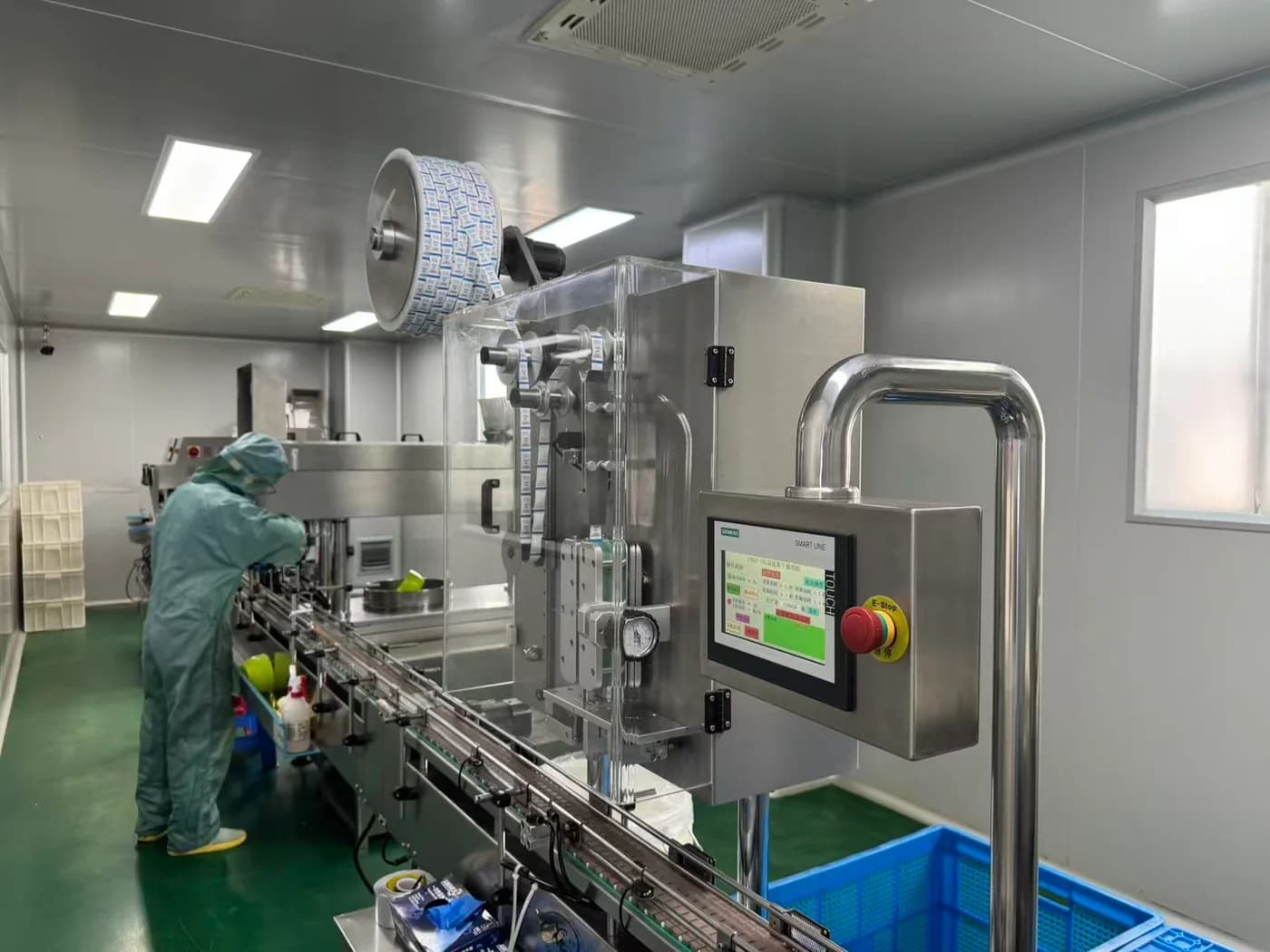
London brands typically start with one or two SKUs and scale once a listing proves itself. A manufacturer that can run 1,000-unit batches without re-tooling keeps your first order viable. EUPHM runs capsule, tablet, powder and gummy lines with changeover under four hours, so a 5,000-unit pilot and a 50,000-unit reorder use the same process parameters.
Ask any supplier for line capacity per shift, not just annual output. A plant quoting 500 million units a year may still schedule your 10,000-unit run three months out. Confirm batch size ranges, whether low-MOQ runs share equipment, and how cleaning validation between allergens is documented. These details separate a responsive partner from a brochure.
Formulation, Ingredients and Dosage Forms
UK formulations increasingly call for clean-label actives: vitamin D3, magnesium glycinate, ashwagandha KSM-66, creatine monohydrate, collagen peptides. Each behaves differently in a capsule or tablet. Magnesium glycinate at 500 mg fill needs a larger shell; creatine at 5 g suits powder or stick packs, not a two-piece capsule. Getting the dose and the format aligned early avoids reformulation later.
Ingredient sourcing also drives cost and claims. Organic certification requires documented chain of custody from farm to finished lot. Halal status depends on excipients — magnesium stearate, gelatin capsules, glycerol — not just the active. If your London retail buyer asks for vegan capsules, confirm the shell source before you commit to artwork.
Quality, Compliance and UK Logistics
A GMP-certified facility with ISO 22000 and HACCP gives you the documentation UK retailers and the MHRA expect: batch records, certificates of analysis, stability data, allergen statements. EUPHM operates an FDA-registered facility, which matters if you also sell into the US. halal and vegan certifications are available per SKU, not held blanket across the plant.
From Guangdong, sea freight to Felixstowe or Southampton runs 28–35 days; air freight 5–8 days for launch stock. Add 20–35 working days production and 7–10 days for samples. A realistic London launch timeline is 10–14 weeks from brief to first delivery. Budget for import VAT and duty, and confirm who holds the UK Responsible Person role under cosmetic and supplement rules.
Quality Control and Batch Documentation
Every batch produced for a London supplement brand is tested against a written specification before release. Identity is confirmed by HPLC or FTIR for each active ingredient, and potency is assayed to a tolerance of ±5% of label claim. Microbial testing covers total aerobic count, yeast and mould, E. coli, Salmonella and Staphylococcus aureus, with limits set to British Pharmacopoeia and EU Pharmacopoeia monographs. Heavy metals (lead, arsenic, cadmium, mercury) are screened by ICP-MS, and disintegration testing follows USP <2040> for capsules and tablets.
Testing happens at three points: incoming raw materials, in-process blends, and finished goods. Raw material COAs from suppliers are verified against in-house testing, and any ingredient without a valid specification is quarantined. In-process checks confirm blend uniformity and fill weight, with samples taken every 30 minutes during encapsulation. Finished goods are held in quarantine until the full panel is complete, typically 5 to 7 working days for standard assays and 10 to 14 days where stability or allergen testing is required.
The certificate of analysis (COA) issued with each batch states the product name, batch number, manufacturing date, expiry date, and the specification and result for every test performed. It also names the testing laboratory and the responsible QC signatory. Retention samples of every batch are kept for the full shelf life plus 12 months, stored under labelled conditions at 25°C/60% RH and 30°C/65% RH. Stability protocols follow ICH Q1A(R2), with accelerated testing at 40°C/75% RH for six months and real-time data generated for the declared shelf life.
For London brands selling into UK retail, batch documentation must be retrievable within 24 hours of a customer or Trading Standards request. We provide COAs in PDF and a batch register that links each lot to its raw material lots, packaging lots and distribution records. Where a brand needs a specific allergen statement or a declaration for novel foods, the QC file is reviewed by a regulatory affairs contact before release. This documentation trail is what separates a contract manufacturer from a broker, and it is the first thing a serious London buyer should ask to see.
Packaging, Labelling and Retail Readiness
Packaging formats are chosen to suit the sales channel. HDPE bottles with induction seals and child-resistant closures are standard for capsules and tablets in 60, 90, 120 and 180 counts. PET jars suit powders from 100 g to 500 g, while stick packs and sachets are used for single-serve powders and liquid shots. Blister packs are available for pharmacy-style presentation, with alu-alu options for moisture-sensitive actives. We hold tooling for standard bottle sizes, so a London brand can launch without a custom mould, and custom shapes are possible from 10,000 units per SKU.
Labels are printed to the artwork supplied by the brand, and we check every file against the regulatory requirements for the destination market. For UK retail, the label must carry the product name, list of ingredients with quantities, allergen declarations, net quantity, dosage instructions, storage conditions, batch number, best-before date, and the name and address of the food business operator. Where a brand also sells into the EU, we apply Regulation (EU) No 1169/2011. For US-bound stock, the label follows FDA 21 CFR 101.36 dietary supplement labelling, including the Supplement Facts panel, and we do not mix UK and US artwork on the same production run.
Lot and expiry coding is applied inline during filling. Inkjet coding gives a batch number and best-before date on the base or side panel, and we retain a coded sample from the start, middle and end of each run to confirm legibility. Cartons are specified to a standard 5-ply corrugated board with a maximum gross weight of 15 kg, and pallets are built to 1,200 mm × 1,000 mm or 1,200 mm × 800 mm depending on the destination. Shrink-wrap and edge protectors are standard for sea freight, and pallet labels carry SSCC codes for warehouse receipt.
For Amazon and other e-commerce channels, we can apply FNSKU labels and poly-bag units to Amazon's prep requirements, including suffocation warnings and transparency of the unit label. Retail-ready packaging for UK multiples is available with a shelf-ready tray and a display-ready carton, subject to a minimum of 5,000 units per SKU. We do not print claims on pack without the brand's written approval, and we flag any claim that would require substantiation under UK advertising rules. Packaging is where compliance failures are most visible, so the artwork approval step is treated as a formal gate before production.
MOQ, Lead Times and Delivery
The sample process starts with a brief and a target formula. We return a quotation within 3 working days and, once a formula is agreed, produce a sample in 7 to 10 working days. Sample costs are credited against the first mass-production order. The sample is sent by courier, typically 3 to 5 working days to London, and includes a draft COA and a packaging mock-up so the brand can check label fit and fill weight before committing to a production slot.
Mass production runs 20 to 35 working days after written approval of the sample, artwork and purchase order. Standard capsules and tablets sit at the lower end; powders, stick packs and custom packaging sit at the upper end. Minimum order quantity is 1,000 units per SKU for standard formats, with smaller pilot runs quoted case by case at a higher unit cost. Production slots are booked on receipt of deposit, and we confirm the slot in writing so a London launch date can be planned against a fixed date rather than an estimate.
Delivery terms are agreed per order. EXW is available from our Guangdong facility, FOB Shenzhen or Hong Kong is standard for sea freight, and DDP is offered to a London delivery address for brands that want a landed cost. Air freight takes 5 to 8 days door to door and suits launches and replenishment; sea freight takes 28 to 35 days to Felixstowe or Southampton and suits full-container orders. We provide a packing list, commercial invoice, COA, MSDS where relevant, and a free-sale certificate for UK customs. Phytosanitary certificates are provided for botanical ingredients where the destination requires them.
For London supplement manufacturers and brand owners comparing options, the practical difference is in the documents and the dates. We issue a proforma invoice with the production window and shipping schedule before deposit, and we confirm the vessel or flight booking within 48 hours of goods being ready. Where a brand needs to split a shipment across air and sea, we can do so from the same batch, with a single COA covering both consignments. Payment terms are 30% deposit and 70% before shipment, with irrevocable LC available for orders above USD 50,000.
What We Can Build
Private label stock formulas
Choose from 200+ existing formulas, apply your label. Lowest MOQ at 1,000 units and fastest route to market, typically 20–25 working days.
Custom formulation
Brief our formulators with target actives and dosage. Development adds 10–15 working days; MOQ 5,000 units per SKU to cover tooling and stability testing.
Pilot and sample runs
Runs below 1,000 units for market testing. Higher per-unit cost but validates demand before you commit to a full retail batch.
Full turnkey packaging
Bottles, labels, cartons and shrink wrap handled in-house. Reduces supplier count and keeps lead time to 20–35 working days.
Production in Six Steps
- 01
Brief and quote
Send target actives, dosage form, fill weight and pack size. We return pricing, MOQ and lead time within 2 working days.
- 02
Sample production
Samples made in 7–10 working days. You approve taste, texture, capsule size and label proof before mass production.
- 03
Contract and deposit
Sign the manufacturing agreement and pay the deposit. Raw materials are ordered against your approved specification.
- 04
Mass production
Production runs 20–35 working days. In-process checks cover weight, hardness, disintegration and fill accuracy.
- 05
QC and release
Finished lots tested for potency, microbiology and heavy metals. Certificates of analysis issued per batch before dispatch.
- 06
Shipping to the UK
Sea freight 28–35 days or air freight 5–8 days. We handle export documents; your UK agent clears customs.
Why EUPHM
Lower unit cost at scale
Guangdong manufacturing typically lands 20–35% below Western European contract pricing at equal specification, once freight and duty are included.
Certification coverage
GMP, ISO 9001, ISO 22000, HACCP, NSF/ANSI 455-2 and halal certification; FDA facility registration for US-bound shipments.
Pilot-to-scale flexibility
Start below 1,000 units, scale to 50,000 on the same line. No reformulation or re-validation between volumes.
Questions buyers ask.
What is the minimum order for a London supplement brand?+
Retail bottling starts at 1,000 units per SKU. Pilot runs below 1,000 units are available at higher per-unit cost, useful for testing a listing before a full batch.
How long does it take from brief to delivery in London?+
Samples take 7–10 working days. Mass production runs 20–35 working days. Sea freight to a UK port adds 28–35 days; air freight 5–8 days. A realistic total is 10–14 weeks.
Are the certifications valid for UK retail?+
GMP, ISO 22000 and HACCP are internationally recognised. halal and vegan certificates are issued per SKU. UK retailers may also ask for a UK Responsible Person and batch-specific certificates of analysis.
Can you match a formula I already sell?+
Yes. Send the current label and specification. We reverse-engineer the formula, match fill weight and dosage form, and produce a sample for your approval before mass production.
What are the payment and shipping terms?+
Typically 30–50% deposit on order, balance before dispatch. We handle export documentation and palletisation. You appoint a UK freight forwarder for customs clearance and final delivery.
Can you provide a free-sale certificate for UK customs?+
Yes. A free-sale certificate is issued for each product and states that the goods are manufactured in a GMP-certified facility and are freely sold in the country of origin. It is provided as a PDF with the commercial invoice and packing list. Where UK customs or a retailer asks for additional documentation, we can supply a manufacturer's declaration and a copy of the relevant GMP certificate.
How do you handle label artwork changes after a production run has started?+
Artwork is frozen at the approval gate, which is the point at which the purchase order is confirmed. Changes after that point require a written variation and may incur a reprint cost for labels already produced. We hold approved artwork on file for 24 months, so repeat orders can be placed without resubmission, and we send a proof for sign-off before each new print run.
What is the shelf life of your standard capsule and powder products?+
Standard capsules and tablets carry a 24-month shelf life from the date of manufacture when stored below 25°C in the original sealed container. Powders carry 18 to 24 months depending on the actives and the packaging format. The declared shelf life is supported by real-time stability data, and the best-before date is printed on pack at the time of filling, not applied later.
Have a product in mind?
Send us the brief and we will come back with a formulation direction, indicative price and a realistic lead time — usually within one working day.