Best Supplement Manufacturers in Miami: A Sourcing Reality Check
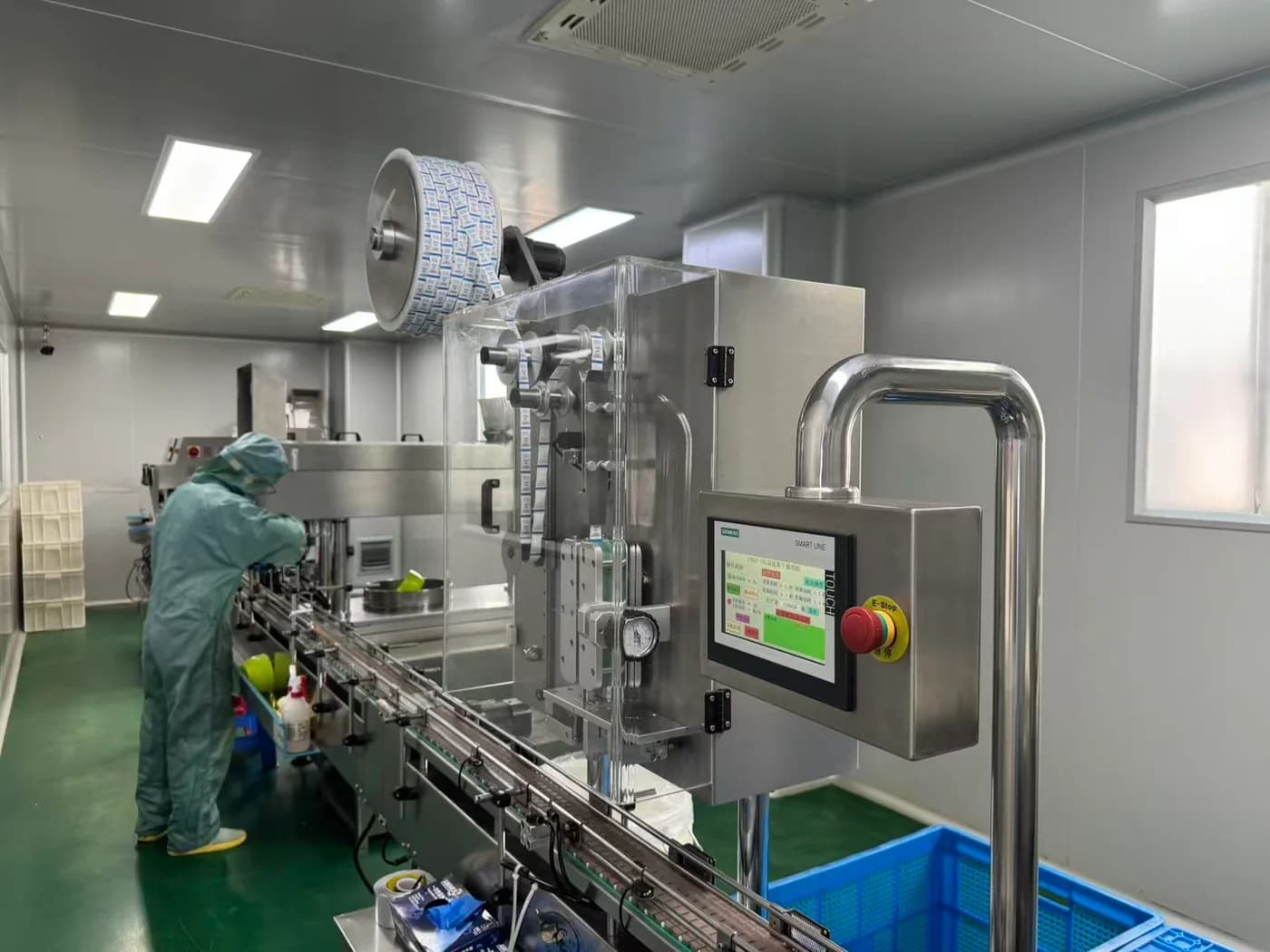
Miami brands often need a manufacturing partner that can handle US retail compliance, halal lines, and fast pilot runs. EUPHM runs a GMP-certified plant in Guangdong with MOQ 1,000 units and 20-35 day mass production.
Overview
Searching for the best supplement manufacturers in Miami usually returns local co-packers and brokers. But many Miami-based brands, especially those selling into Latin America, the Caribbean, and the Middle East, source from Asia for better unit economics and flexible certifications. This page explains what to compare, what a realistic quote looks like, and how a GMP-certified contract manufacturer in Guangdong fits into a Miami supply chain.
- MOQ (retail bottling)
- 1,000 units per SKU; lower for pilot runs
- Sample lead time
- 7-10 working days
- Mass production
- 20-35 working days after sample approval
- Certifications
- GMP, ISO 9001, ISO 22000, HACCP, NSF/ANSI 455-2, halal, FDA-registered
- Fill weights
- Capsules 0.3-1.2 g; tablets 0.5-1.5 g; powders 5-30 g per serving
- Line capacity
- Up to 2 million capsules or 1.5 million tablets per day
Why Miami Brands Look Beyond Local Co-Packers
Miami has a dense cluster of supplement distributors and freight forwarders, but few large-scale GMP contract manufacturers. Local co-packers often cap runs at 500–1,000 units and charge 20-40% more per unit than an offshore plant. For a brand shipping 10,000 units per month, that gap compounds quickly. A Guangdong-based manufacturer with a 2 million capsule daily line can absorb volume spikes without retooling delays.
Miami also acts as a gateway to Latin America. Labels need Spanish and Portuguese, and certifications like halal matter for re-export to the Middle East. A manufacturer that already holds those certifications reduces your compliance workload. The trade-off is freight: ocean transit from Yantian or Shekou to PortMiami runs 28-35 days, so plan inventory buffers of 45-60 days.
Formulation and Ingredient Sourcing Details
Most Miami supplement brands start with capsules, tablets, or powder blends. Capsule fill weights range from 0.3 g to 1.2 g; tablets from 0.5 g to 1.5 g. For sports nutrition or hydration powders, single-serve sticks run 5-30 g. EUPHM keeps a library of 200+ stock formulas, so you can skip R&D if you need a fast launch. Custom formulations take 10-15 working days for a bench sample.
Ingredient sourcing is where cost and quality diverge. US-branded raw materials cost 15-30% more than Chinese or Indian equivalents. If your label claims 'US-sourced vitamin D3' or 'organic ashwagandha', expect a higher unit price and longer lead time. For halal claims, every excipient, capsule shell, and lubricant must be certified. Vegan capsules (HPMC) add roughly 8-12% to capsule cost versus gelatin.
Quality, Compliance, and Shipping to Miami
A GMP-certified facility is the baseline. EUPHM holds GMP, ISO 22000, and HACCP. For or EU organic claims, the plant maintains separate organic-certified lines. FDA registration is required for any US-bound supplement, but that is a facility registration, not an approval. Your Miami import broker will need a prior notice for each shipment and a certificate of analysis per lot.
Shipping from Guangdong to Miami: ocean freight (LCL or FCL) takes 28-35 days door-to-door with customs clearance. Air freight takes 5-8 days but costs 4-6 times more. For a 5,000-unit order, ocean is standard. Miami customs brokers typically clear supplement shipments in 1-3 days if the label and CoA are correct. Label errors are the most common cause of delays, so pre-shipment label review is worth the extra 2-3 days.
Quality Control and Batch Documentation at a Guangdong Supplement Manufacturer Serving Miami
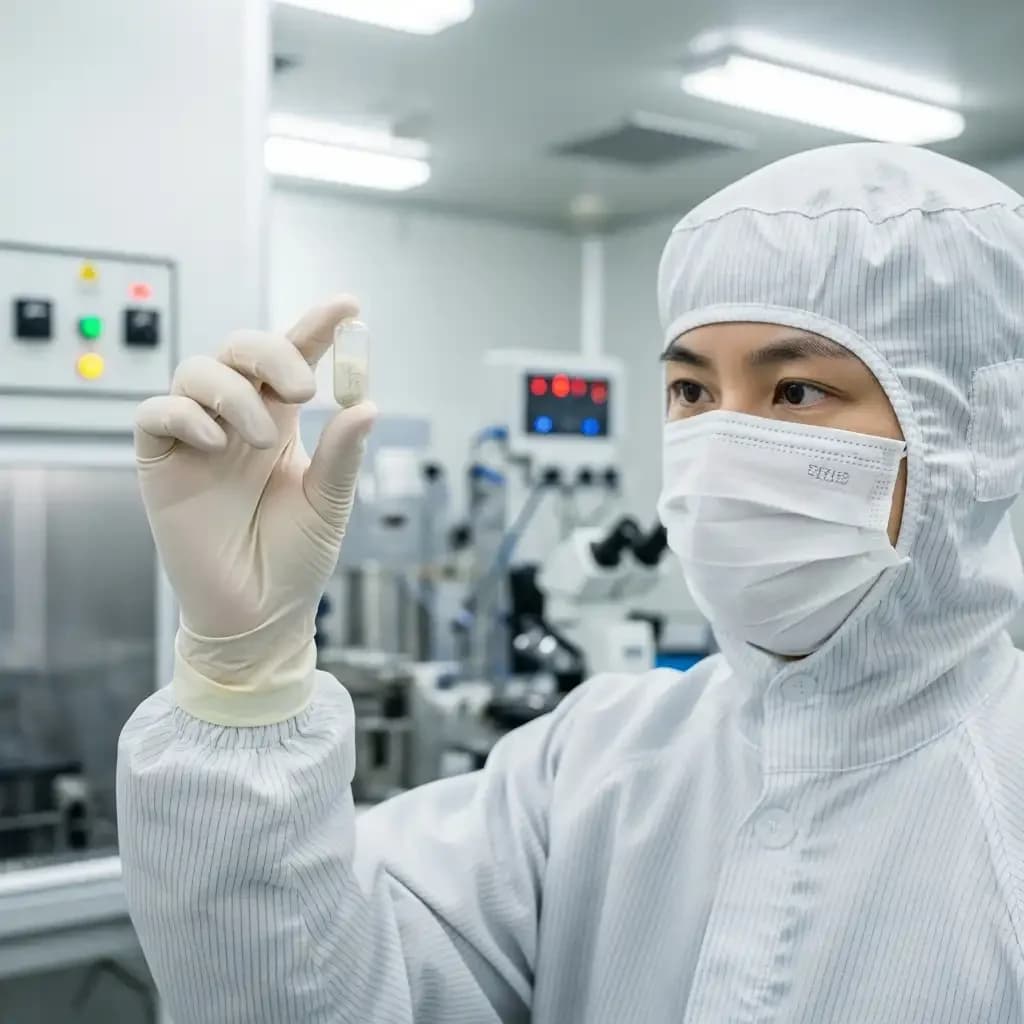
Incoming raw materials are sampled against the approved specification before release to production. Identity is confirmed by FTIR or HPLC, and each lot is screened for assay potency, microbial limits (total plate count, yeast and mould, E. coli, Salmonella), heavy metals (lead, arsenic, cadmium, mercury) and, where relevant, residual solvents. Finished capsules and tablets are tested for weight variation, hardness, disintegration and final potency. Testing is performed in-house and, for regulated markets, duplicated at a third-party ISO 17025 laboratory.
A certificate of analysis for each batch lists the product name, lot number, manufacture and expiry dates, tests performed, specification limits and measured results, plus the analyst and QA sign-off. Moisture, pH and colour are added for powders. Where a Miami brand re-exports to Latin America or the Caribbean, the COA can be issued in English and Spanish. Retention samples of every lot are held for at least two years beyond expiry under controlled temperature and humidity, so a query raised after delivery can be checked against the original material.
Stability follows a defined protocol: accelerated conditions at 40°C and 75% relative humidity for three and six months, with real-time data at 25°C and 60% relative humidity for the shelf life claimed on the label. Disintegration and microbial tests are repeated at each interval. If a formula includes probiotics or sensitive oils, the protocol adds water activity and potency checks at 0, 1, 3 and 6 months. Results are compiled into a stability report that the brand can keep on file for retail or customs review.
Packaging, Labelling and Retail Readiness
Bottles are available in HDPE or PET from 60 cc to 500 cc with induction seals, child-resistant closures and desiccant where needed. Blisters suit tablets and two-piece capsules; stick packs and sachets suit powders and single-serve formats. Labels can be printed in up to eight colours, with variable-data lot and expiry coding applied inline. Cartons are specified in B-flute or E-flute with a printed shipping mark, and pallets are built to 1,200 by 1,000 mm or 1,200 by 800 mm depending on the destination warehouse.
For US retail, the label carries the statement of identity, net quantity, supplement facts panel, other ingredients, directions, and the manufacturer or distributor address. Allergen declarations follow FALCPA, and the domestic address on the label must be the responsible party, which may be the Miami brand rather than the factory. The factory supplies print-ready artwork templates and checks the supplement facts panel against the formula before plates are made. Lot and expiry codes are printed on the base of the bottle, the carton and the shipper.
Amazon sellers receive FNSKU labels applied over the barcode, poly-bagged units where required, and cartons that meet the marketplace's weight and dimension limits. Retail compliance for club stores or pharmacy chains may require a specific case pack, a display-ready carton, or a GS1 barcode with the correct company prefix. The factory can hold packaging components in stock for repeat orders, which shortens the next production run, but artwork changes should be finalised before the purchase order to avoid plate and label reprints.
MOQ, Lead Times and Delivery from a Supplement Manufacturer Shipping to Miami
A pilot run typically starts at 1,000 to 1,000 units per SKU, while retail bottling runs at 1,000 units. Samples are produced in 7 to 10 working days after artwork and formula approval, and mass production takes 20 to 35 working days after sample sign-off. Delays usually come from label approval, ingredient arrivals or a change to the supplement facts panel, so a realistic plan allows two weeks for artwork review before the production slot is confirmed.
Shipping to Miami is by air or sea. Air freight from Shenzhen or Hong Kong to Miami International takes 5 to 8 days door to door for smaller runs, while sea freight to PortMiami takes 30 to 40 days including customs clearance. Incoterms can be EXW, FOB Shenzhen or DDP Miami. Under DDP the factory arranges freight, duties and delivery, which suits a brand without a customs broker; under FOB the Miami buyer controls the forwarder and the import bond. A typical shipment includes the commercial invoice, packing list, bill of lading or air waybill, COA, MSDS for any liquid or powder, and a free-sale certificate.
Where a product contains botanical material, a phytosanitary certificate may be requested by the importer or the destination country. The factory provides the FDA facility registration number and prior notice information for US imports, and can supply a halal certificate where the line is certified. For re-export to Latin America, a certificate of origin and a Spanish-language label review are commonly added. Buyers should confirm the Incoterm and document list in the purchase order, because document gaps at PortMiami are the most common cause of a held shipment.
Configurations to Compare
Stock formula private label
Choose from 200+ existing formulas. MOQ 1,000 units. Sample in 7-10 days. Fastest route to market for Amazon or retail launch.
Custom formulation
Bench sample in 10-15 days. Includes ingredient sourcing, flavour matching, and label claim review. MOQ 5,000 units per SKU.
Pilot run
1,000-2,000 units for market testing. Higher per-unit cost, but validates packaging and demand before a full production run.
Full-service export
Includes halal, or organic certification documents, CoA per lot, and freight booking to PortMiami or Miami International Airport.
From Spec to Shipment
- 01
Request a quote
Send your formula, target fill weight, packaging type, and monthly volume. You get a unit price and lead time within 2 working days.
- 02
Approve samples
Samples ship in 7-10 working days. Test the product, check the label, and confirm the capsule or tablet appearance before mass production.
- 03
Confirm certifications
State which claims you need: halal, organic, vegan, or non-GMO. The plant confirms which lines can run your batch.
- 04
Place the order
MOQ 1,000 units per SKU for retail bottling. Deposit is typically 30-50% upfront, balance before shipment.
- 05
Production and QC
Mass production runs 20-35 working days. In-process checks cover weight variation, hardness, disintegration, and microbial limits.
- 06
Ship to Miami
Ocean freight 28-35 days to PortMiami. Air freight 5-8 days. Documents include CoA, commercial invoice, packing list, and prior notice.
Why EUPHM
Lower unit cost at scale
A 2 million capsule daily line reduces per-unit cost by 20-40% compared to small Miami co-packers, especially above 10,000 units.
Certifications for re-export
halal and vegan certifications support sales into the Middle East, Latin America, and EU markets without reformulation.
Predictable lead times
Samples in 7-10 days, mass production in 20-35 days. Ocean transit to Miami adds 28-35 days, so total cycle is 55-70 days.
Questions buyers ask.
What is the MOQ for a supplement manufacturer shipping to Miami?+
For retail bottling, MOQ is 1,000 units per SKU. Pilot runs can go as low as 1,000 units, but the per-unit cost is higher. If you need multiple SKUs, each SKU carries its own MOQ. Consolidating two or three SKUs into one production window can reduce setup fees.
How long does production and shipping to Miami take?+
Sample lead time is 7-10 working days. Mass production is 20-35 working days after sample approval. Ocean freight from Guangdong to PortMiami takes 28-35 days door-to-door. Air freight takes 5-8 days. Total cycle time from purchase order to Miami warehouse is typically 55-70 days by ocean.
Do I need FDA approval to import supplements from China?+
No. The FDA does not approve dietary supplements or manufacturing facilities. The facility must be FDA-registered, and each shipment needs a prior notice and a certificate of analysis. Your Miami customs broker handles the entry. Label claims must comply with FDA 21 CFR 101. EUPHM is an FDA-registered facility.
Can the manufacturer handle halal certification for Miami re-export?+
Yes. Halal certifications are available for capsules, tablets, and powders. Every excipient, capsule shell, and processing aid must be certified. Expect 3-5 extra working days for certification documentation. This is common for Miami brands re-exporting to the Middle East or selling in markets with large Muslim or Jewish populations.
What is the cost difference between a Miami co-packer and a Guangdong manufacturer?+
For a 5,000-unit run of a standard capsule, a Miami co-packer might quote $2.50-$4.00 per unit. A Guangdong GMP plant typically quotes $0.80-$1.80 per unit, plus freight and duties. At 10,000 units, the savings often exceed 40%. The trade-off is a 55-70 day total lead time and a 1,000 unit MOQ.
Can you provide a certificate of analysis before shipment, and what does it include?+
Yes. A batch-specific COA is issued before shipment and includes the product name, lot number, manufacture and expiry dates, tests performed, specification limits, measured results and QA sign-off. Typical tests are identity, potency, microbial limits, heavy metals and disintegration. Where the destination market requires it, a third-party ISO 17025 report is added. The COA can be issued in English and Spanish for Miami brands re-exporting to Latin America.
How do you handle label artwork and FDA supplement facts panel review?+
The factory supplies print-ready templates and checks the supplement facts panel against the approved formula before plates are made. The label must carry the statement of identity, net quantity, supplement facts, other ingredients, directions, allergen declarations and the responsible party address, which can be the Miami brand. Artwork is approved in writing before printing, and lot and expiry coding is applied inline during filling.
What Incoterms and shipping documents do you offer for Miami deliveries?+
EXW, FOB Shenzhen and DDP Miami are available. FOB suits buyers with their own customs broker and import bond, while DDP covers freight, duties and delivery to the Miami address. Documents include the commercial invoice, packing list, bill of lading or air waybill, COA, MSDS and free-sale certificate, with a phytosanitary certificate or certificate of origin added where the product or destination requires it.
Have a product in mind?
Send us the brief and we will come back with a formulation direction, indicative price and a realistic lead time — usually within one working day.