How to Find a Supplement Manufacturer for Your Brand
Finding the right supplement manufacturer means matching MOQ, certifications, and lead times to your launch plan. This guide compares contract manufacturers by capability, compliance, and cost so you can shortlist with confidence.
Overview
Sourcing a supplement manufacturing partner is not a single search. You are comparing facilities on minimum order quantities, fill weights, certifications, and production capacity. A retail-ready bottling line may quote 1,000 units per SKU, while pilot runs can start lower. Lead times range from 7 to 10 working days for samples and 20 to 35 working days for mass production. This page breaks down the criteria that separate a reliable contract manufacturer from a costly mistake.
Capability: what a plant can actually produce
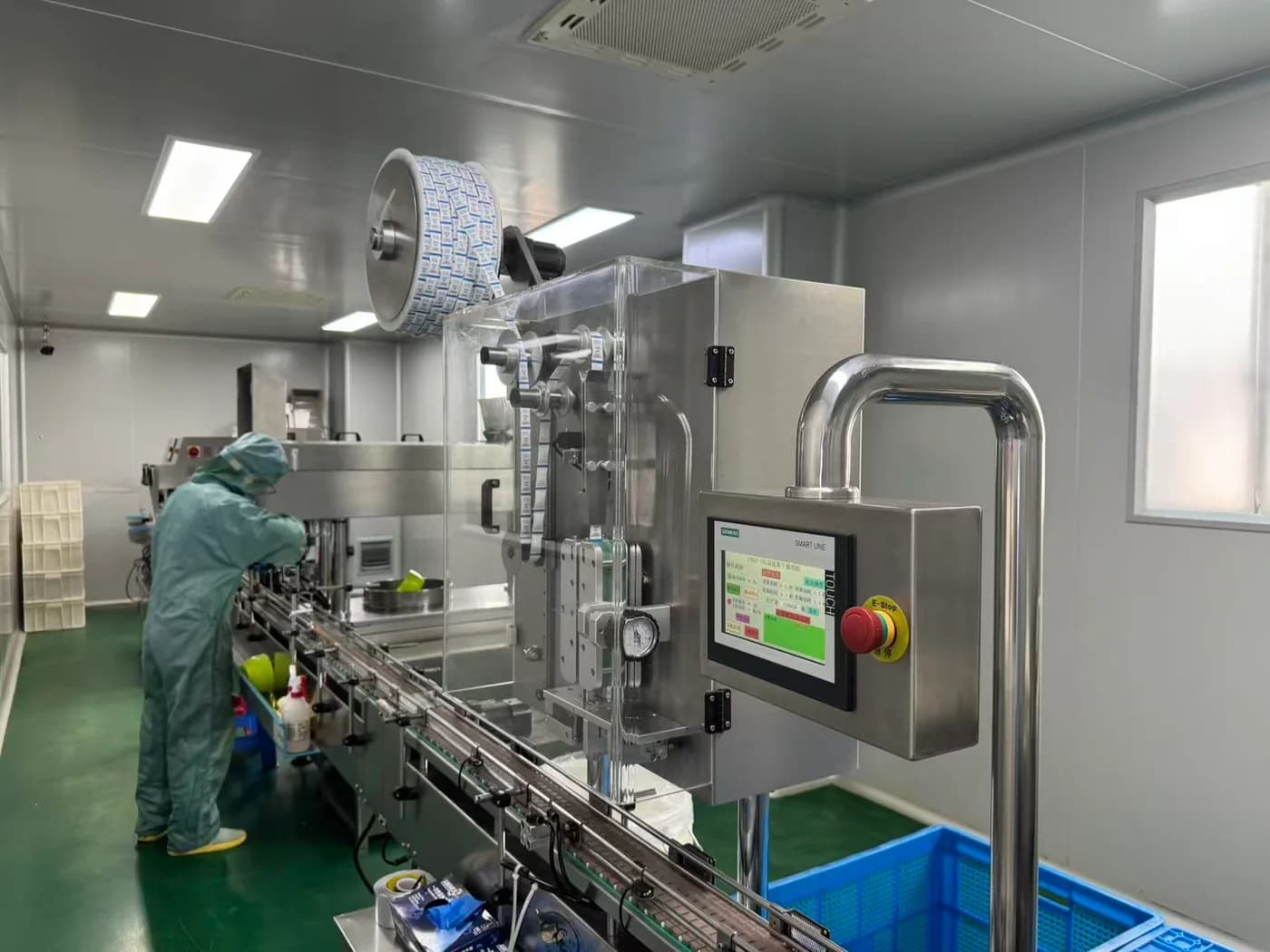
Start with dosage forms. A contract manufacturer that runs capsule filling, tablet compression, and powder blending in-house can keep your unit cost lower and your timeline tighter. Ask for fill weight ranges: capsules from 300 mg to 1,000 mg, tablets from 500 mg to 1,500 mg, and powders from 100 g to 5,000 g. If your product needs a specific capsule size or a coated tablet, confirm the line supports it before requesting a quote.
Capacity matters when you scale. A plant that runs two shifts and outputs up to 2 million capsules per day can handle a 50,000-unit order without pushing your lead time past 35 working days. Ask how many bottling lines are dedicated to retail packaging and whether they handle induction sealing, child-resistant caps, and label application. These details decide whether your first production run ships on time or sits in a queue.
Formulation and ingredient sourcing details
Your formula is the product. A manufacturer should tell you which ingredients are stock and which are custom. For stock ingredients, ask for a certificate of analysis (COA) and a specification sheet. For custom blends, confirm whether the plant can source the raw material, test it, and hold it under quarantine until release. Ingredient lead times vary: common vitamins and minerals arrive in 5–10 days, while botanical extracts or branded ingredients can take 15–30 days.
Check the allergen and diet profile. If you sell in the EU or UK, your label must declare allergens. If you target the Middle East, halal certification is often required. If you sell organic, the facility needs USDA organic or EU organic certification. A manufacturer that already holds these certifications avoids a second audit. Ask for the certificate numbers and expiration dates before you place a deposit.
Quality, compliance, and logistics checks
Compliance is not a logo on a website. Ask for the facility’s GMP certificate, ISO 22000 certificate, and HACCP plan summary. If the plant is FDA-registered, that is a registration, not an approval. Confirm the registration number and the last inspection date. For EU customers, check whether the manufacturer follows EU GMP Annex 1 or equivalent. These documents protect your brand if a customs agent or retailer asks for proof.
Logistics decide your landed cost. Ask for the port of departure, typical freight terms, and whether the manufacturer handles export documentation. A plant in Guangdong can ship from Yantian or Shekou to Los Angeles in 14–18 days, or to Rotterdam in 22–28 days. Request a packing list and a commercial invoice template before production starts. A manufacturer that provides these upfront saves you weeks of back-and-forth with your freight forwarder.
Quality control and batch documentation when qualifying a supplement manufacturer
A contract manufacturer's quality system should be verifiable before you place a purchase order. Ask for the testing scope on every batch: identity (FTIR or HPLC against a reference standard), potency (assay of the active marker), microbial limits (total aerobic count, yeast and mould, E. coli, Salmonella), heavy metals (lead, arsenic, cadmium, mercury by ICP-MS), and disintegration or dissolution where relevant. Confirm whether these are run in-house or at an external ISO 17025 laboratory, and request a sample certificate of analysis for a product similar to yours.
Timing matters as much as scope. Incoming raw materials should be quarantined and tested before release to production, with identity confirmed on receipt. Finished-product testing typically occurs after packaging, with results released before shipment. Batch records should link raw material lot numbers to the finished lot, record fill weights and machine settings, and carry operator and QA sign-offs. Ask how deviations and out-of-specification results are handled, and whether you will be notified before a batch ships.
A certificate of analysis for each batch should list the product name, lot number, manufacture and expiry dates, the tests performed, specification limits, results, and the method used. It should be signed and dated by a qualified person. Retention samples are normally kept for the shelf life plus 12 months, stored under label conditions. Stability protocols commonly run at 25°C/60% RH and 40°C/75% RH for accelerated data, with time points at 0, 3, 6, 12, 18 and 24 months depending on the claimed shelf life.
When comparing supplement manufacturers, request a redacted batch record and a recent COA rather than a generic brochure. Check that the COA lot number matches the batch record and that the expiry date is consistent with the stability data. If a manufacturer cannot produce these documents on request, treat that as a signal about documentation discipline, not as a paperwork delay.
Packaging, labelling and retail readiness with your supplement manufacturer
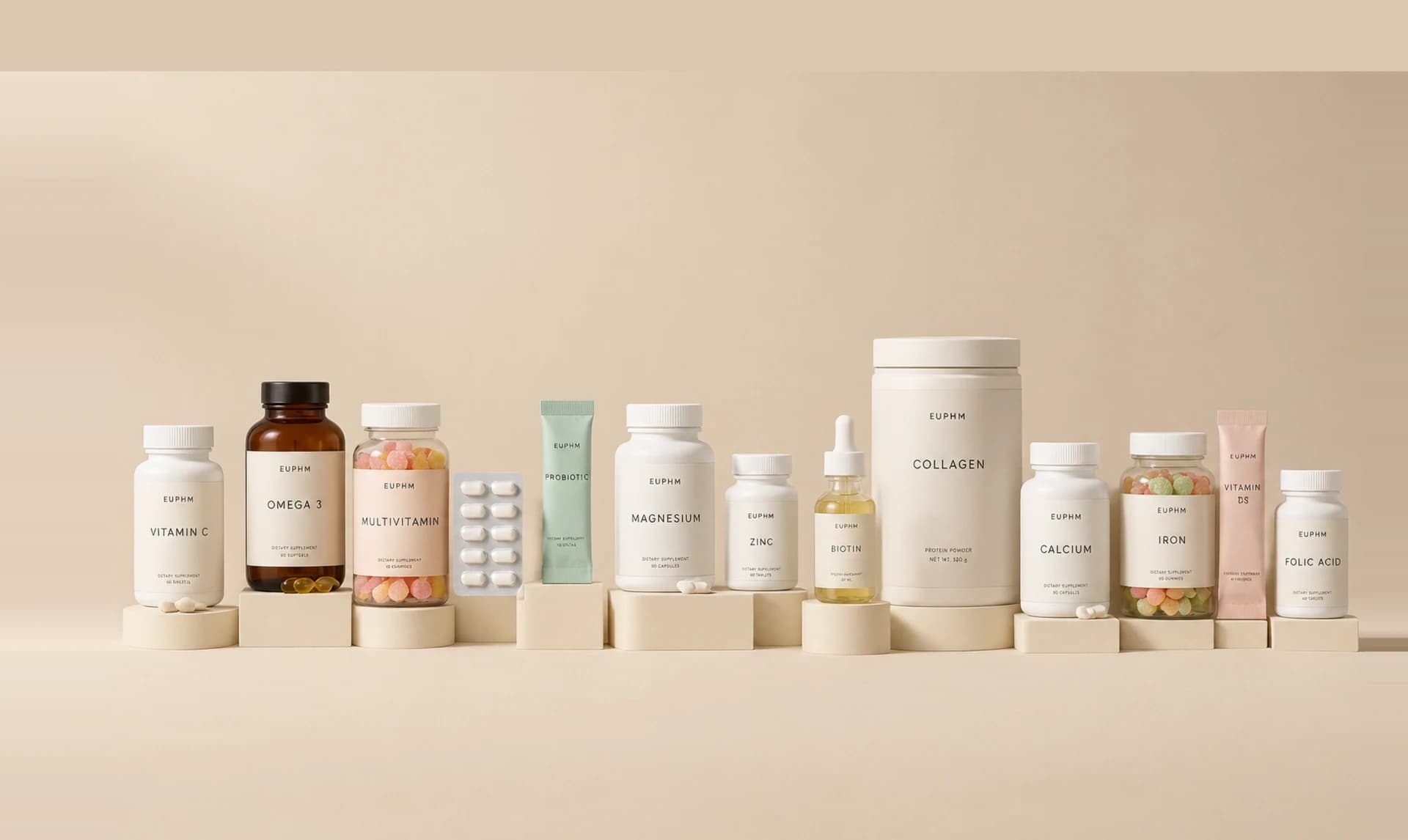
Packaging format drives cost and MOQ as much as the formula. Common options are HDPE bottles with induction seals and child-resistant closures, blisters for unit-dose tablets and capsules, stick packs for powders, and sachets for single-serve mixes. Bottle sizes typically range from 60 to 300 cc, with fill counts from 30 to 180 capsules. Stick packs usually run 5 to 30 g, and sachets 2 to 10 g. Confirm whether the manufacturer supplies stock bottles or requires you to source custom tooling, and who owns that tooling.
For the US market, the dietary supplement label must carry a statement of identity, net quantity of contents, a Supplement Facts panel with serving size and percent daily value where established, an ingredient list using the names in the panel, and a domestic address or phone number for the responsible firm. Allergen declarations and warnings are required where applicable. Lot code and best-by date must be printed or embossed on the primary package and, for retail, on the carton. Ask how coding is applied and whether it is legible after shrink-wrap.
Carton and pallet specifications should be agreed in writing. A typical export carton holds 12 to 48 bottles, with dimensions and gross weight stated per SKU. Pallet configurations are usually 48 x 40 in or 1200 x 1000 mm, with stretch-wrap and edge boards. If you sell on Amazon, the manufacturer can apply FNSKU labels and poly-bag units to FBA requirements, but you remain responsible for the listing and compliance documents. Confirm whether the factory handles retail-specific labelling or only bulk cartons.
Retail readiness also means artwork control. Provide print-ready files with correct dielines, and ask for a pre-production proof before the run. Check that the Supplement Facts panel matches the formula actually produced, since a last-minute formula change can invalidate printed labels. Agree who bears the cost of label reprints caused by artwork errors, and build a label approval step into the production schedule so it does not compress the lead time.
MOQ, lead times and delivery when you choose a supplement manufacturer
The sample timeline usually runs 7 to 10 working days after formula and packaging are agreed, and it includes making a pilot batch, filling samples, and issuing a preliminary COA. Courier transit is additional, typically 3 to 7 days by express. Sample costs are often credited against the first mass-production order, but confirm this in writing. If your formula needs new tooling or a custom capsule size, add 10 to 15 working days before sampling can start.
Mass production normally takes 20 to 35 working days after sample approval and receipt of deposit, depending on component availability and line scheduling. Printed cartons and custom bottles can add 10 to 20 working days if they are not in stock. Plan for a pre-shipment inspection or a third-party audit if your order value justifies it. Air freight takes 5 to 10 days door to door and suits pilot or launch volumes; sea freight takes 25 to 40 days port to port and is cost-effective above roughly 500 kg or 2 pallets.
Incoterms determine where your responsibility starts. EXW leaves everything to you from the factory gate. FOB covers export clearance and loading at the named Chinese port. DDP means the manufacturer or its forwarder delivers to your door with duties paid, which is convenient but usually carries a margin. Ask for a written quotation stating the Incoterm, port, validity period, and what is excluded, such as destination customs inspection or storage.
Standard shipping documents include the commercial invoice, packing list, bill of lading or air waybill, certificate of analysis, and a free-sale certificate where your market requires one. A material safety data sheet is provided for powders and certain extracts. Phytosanitary certificates apply only to plant-based raw materials where the destination requires them, not to every supplement. Confirm the document set before booking, because missing paperwork at destination can add weeks and demurrage.
Options for Your Format
Full-service contract manufacturer
Handles formulation, sourcing, production, and packaging. Best for brands that want one partner and a single lead time. Expect MOQ 1,000 units per SKU and 20–35 working days for mass production.
Private label manufacturer
Offers a catalogue of ready formulas you brand as your own. Lower MOQ and faster sampling, often 7–10 working days. Less flexibility on custom dosages or novel ingredients.
Specialty ingredient supplier
Focuses on one category, such as probiotics or botanicals. Deep expertise but may not offer bottling or retail packaging. You coordinate a second vendor for finishing.
Broker or sourcing agent
Matches you with a factory and manages communication. Useful if you lack import experience, but adds a margin and can obscure quality checks. Always visit the actual plant.
How We Work
- 01
Define your product brief
Write the dosage form, fill weight, servings per container, and target certification. A clear brief gets you accurate quotes instead of vague ranges.
- 02
Request sample lead times
Ask how long samples take. A reliable plant returns samples in 7–10 working days. Longer than 15 days signals a capacity problem.
- 03
Verify certifications
GMP, ISO 9001, ISO 22000, HACCP, NSF/ANSI 455-2 and halal certification; FDA facility registration for US-bound shipments.
- 04
Confirm MOQ and pricing
Get a written quote with MOQ, unit price at 5,000 and 20,000 units, and tooling or setup fees. Compare landed cost, not ex-works price.
- 05
Audit the quality system
Ask for a sample COA, a finished product specification, and a stability test protocol. If the plant cannot provide these, move on.
- 06
Place a pilot run
Start with a small batch before a full order. A pilot run tests communication, packaging, and lead time. Budget 20–35 working days for production after sample approval.
Why EUPHM
Predictable lead times
A plant with dedicated bottling lines and two shifts keeps mass production at 20–35 working days. You can plan launches and reorders without guessing.
Certification coverage
GMP, ISO 9001, ISO 22000, HACCP, NSF/ANSI 455-2 and halal certification; FDA facility registration for US-bound shipments.
Lower total cost
In-house capsule, tablet, and powder production removes subcontractor margins. MOQ 1,000 units per SKU keeps your first run affordable.
Questions buyers ask.
What is the minimum order for a supplement manufacturer?+
For retail bottling, expect 1,000 units per SKU. Pilot runs can start lower, often 500–1,000 units, but the unit price is higher. If you need multiple SKUs, ask whether the MOQ applies per SKU or per order. Some plants combine SKUs to reach a total volume threshold.
How long does it take to manufacture supplements?+
Samples take 7–10 working days. After you approve the sample and pay the deposit, mass production runs 20–35 working days. Add 14–28 days for ocean freight depending on the destination. Air freight cuts transit to 3–7 days but raises cost.
Do I need a GMP-certified manufacturer?+
Yes, if you sell in the US, EU, UK, or Middle East. GMP certification confirms the facility follows documented processes for hygiene, testing, and record-keeping. Ask for the certificate and check the expiration date. ISO 22000 and HACCP add food safety coverage that retailers often request.
Can a manufacturer help with formulation?+
Many full-service contract manufacturers employ formulators who can adjust dosages, suggest alternative ingredients, and run stability tests. This service usually costs extra and may require a minimum order. If you already have a formula, ask the plant to sign a non-disclosure agreement before sharing it.
What certifications should I look for?+
Start with GMP, ISO 22000, and HACCP. If you sell organic, ask for or EU organic. For the Middle East, request halal. For request. For vegan claims, ask for a vegan certificate. Each certificate should list the facility name and an expiration date you can verify.
Can a supplement manufacturer produce a small pilot batch before a full order?+
Many contract manufacturers offer pilot runs below the standard retail MOQ, often 500 to 1,000 units, to validate formula, taste and packaging. Pilot pricing per unit is higher because setup and cleaning costs are spread over fewer units. Ask whether the pilot batch uses the same equipment and process as mass production, and whether the pilot COA will be representative. Confirm the pilot lead time separately, as it may be shorter than the 20 to 35 working day production window.
Who is responsible for label compliance in the destination market?+
The brand owner is legally responsible for label compliance in the market where the product is sold. A manufacturer can format a Supplement Facts panel and apply your artwork, but it does not carry the regulatory liability for claims, ingredient naming or warnings. For the US, the FDA does not pre-approve labels. For the EU, notified claims and nutrition labelling rules apply. Budget for a regulatory review of the final artwork before printing, not after.
What shipping terms should a first-time buyer request from a supplement manufacturer?+
For a first order, FOB is usually the clearest option because it defines the port, the export clearance responsibility and the point where risk transfers. EXW gives you less control over export documentation. DDP is convenient but can obscure the freight cost and the importer of record. Ask for quotations under two Incoterms so you can compare, and confirm who is named as importer and who pays destination duties and taxes.
Have a product in mind?
Send us the brief and we will come back with a formulation direction, indicative price and a realistic lead time — usually within one working day.