Top Supplement Companies: How to Compare and Choose
Finding the right manufacturing partner means comparing MOQ, lead times, certifications and formulation support. This guide breaks down what separates top supplement companies so you can shortlist with confidence.
Overview
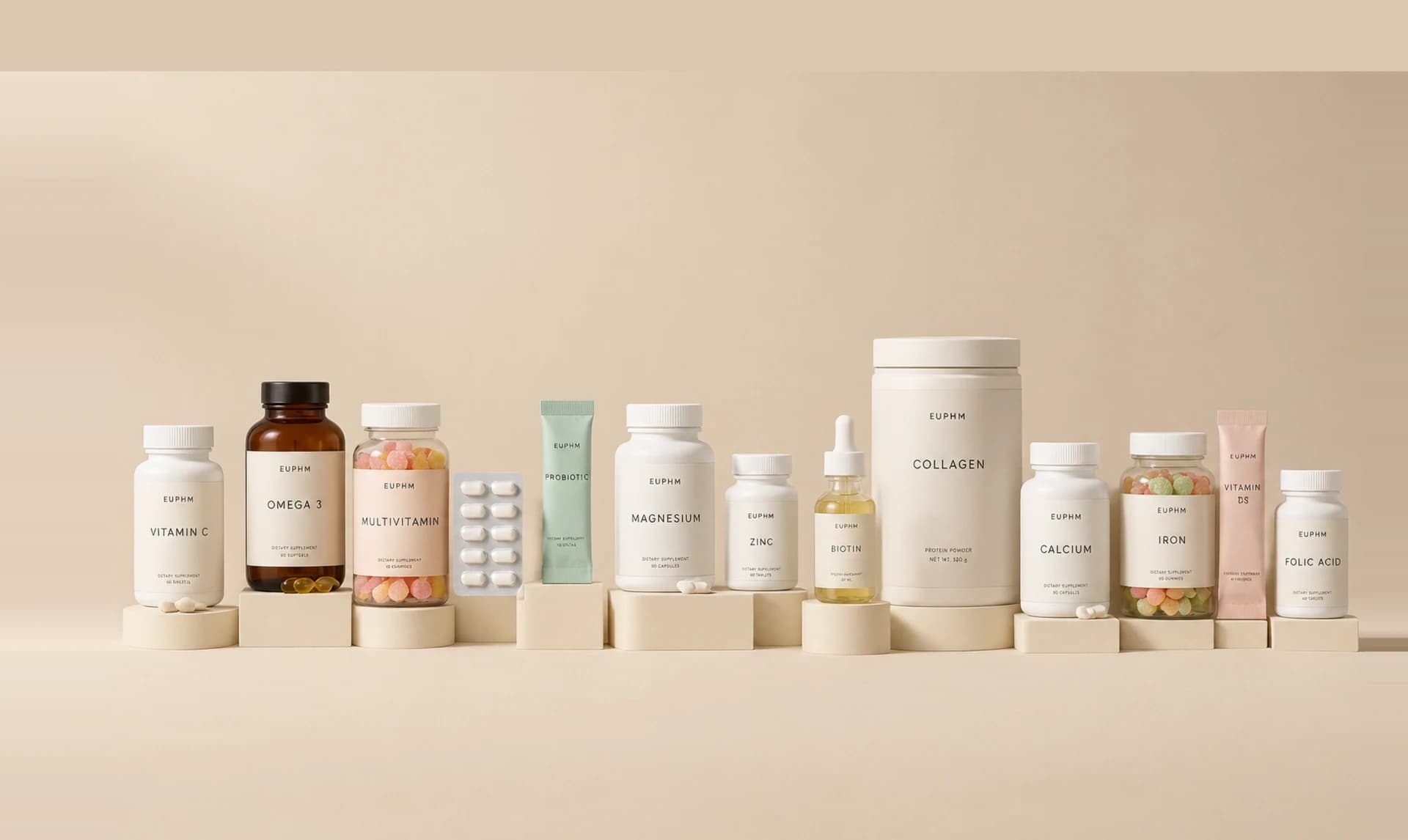
The supplement manufacturing market spans hundreds of contract manufacturers, from single-line operators to full-service plants. For brand owners and procurement managers, the differences that matter are concrete: minimum order quantities, sample turnaround, production capacity, and certification coverage. This comparison page outlines the criteria buyers use when evaluating top supplement companies, and shows where a GMP-certified partner like EUPHM fits into that landscape.
| MOQ (retail bottling) | 1,000 units per SKU |
|---|---|
| MOQ (pilot runs) | Lower volumes available on request |
| Sample lead time | 7–10 working days |
| Mass production | 20–35 working days |
| Certifications | GMP, ISO 9001, ISO 22000, HACCP, NSF/ANSI 455-2, halal, FDA-registered |
| Line capacity | Tablets, capsules, powders, softgels, gummies |
Manufacturing Capability and Capacity
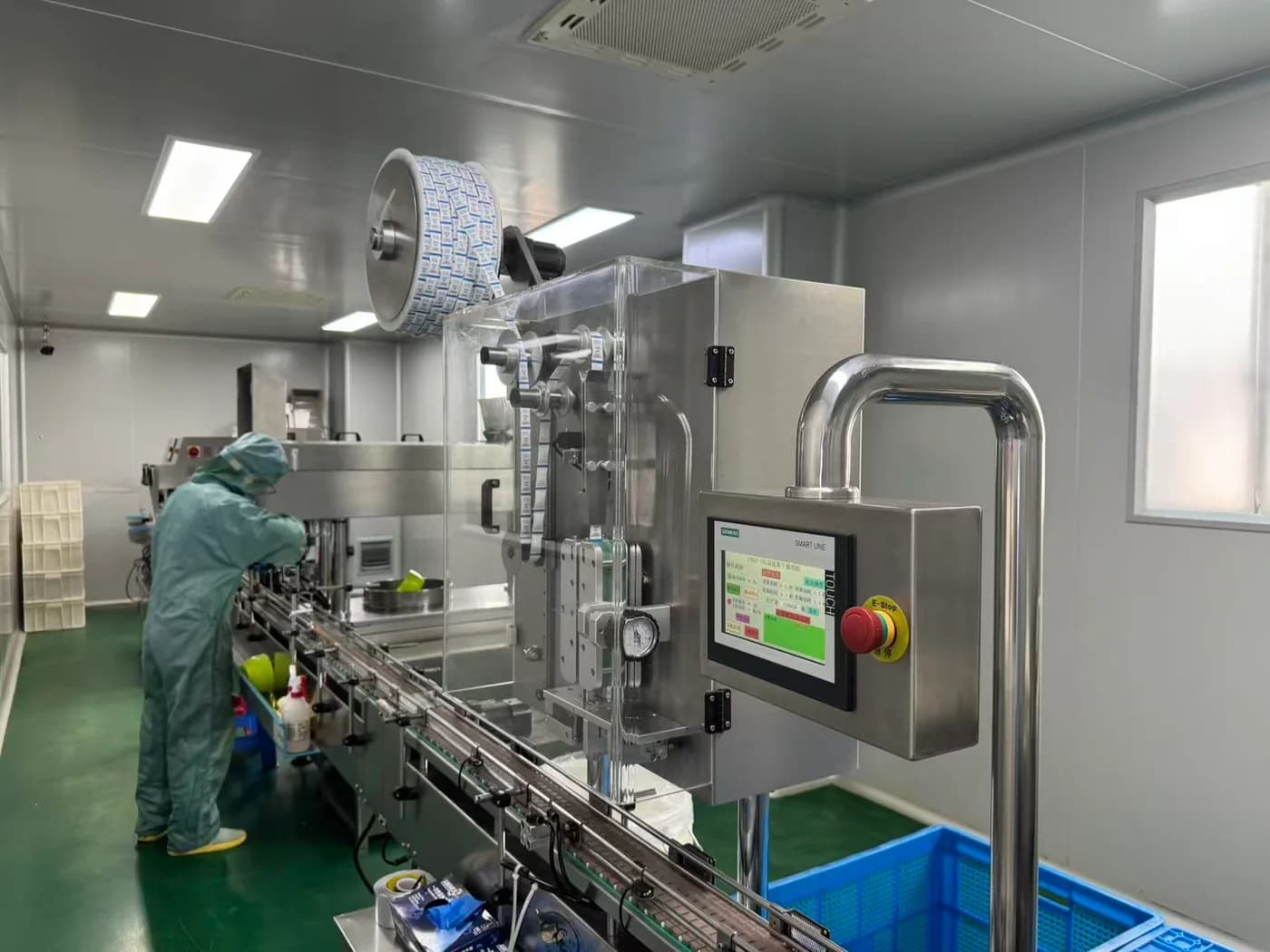
Top supplement companies differ most in what they can actually produce and at what scale. A plant running a single capsule line will struggle with a brand that needs tablets, powders and gummies across multiple SKUs. Look for a manufacturer with dedicated lines for each dosage form, plus in-house blending and coating. Ask for monthly output figures per line and check whether capacity is reserved for existing clients or open to new accounts. A plant that runs 20–30 million units monthly across five formats can absorb growth without pushing your lead time from 20 days to 40.
Equipment age and automation matter less than changeover discipline. A manufacturer that schedules frequent small-batch runs will have faster changeovers and less downtime between products. If your launch plan includes three flavours of a powder and two capsule strengths, confirm the plant can run them without cross-contamination risk. EUPHM operates separate suites for solid dosage and powder blending, which keeps allergen and flavour changeovers clean and predictable.
Formulation, Ingredients and Dosage Forms
The best supplement companies employ in-house formulators who can adjust a formula for stability, taste and cost without waiting on a third party. Ask whether they provide excipient compatibility testing, accelerated stability data, and bioavailability checks for actives like curcumin or CoQ10. For gummies, confirm they can work with pectin and gelatin bases and have a depositing line that holds +/-2% weight variance. For capsules, ask about vegetarian HPMC options and enteric coating capability. These details determine whether your product matches the label claim at the end of shelf life.
Ingredient sourcing is the other half. A manufacturer with established supplier relationships can secure consistent botanical extracts, marine oils and probiotic strains. Request certificates of analysis for each raw material and ask about their supplier qualification process. If your formula includes branded ingredients, confirm the manufacturer has experience with those specific inputs. Formulation support should include a pilot batch before full production, so you can review taste, texture and dissolution before committing to a 5,000-unit run.
Quality Systems, Certifications and Logistics
Certifications are a baseline, not a differentiator. GMP, ISO 22000 and HACCP are expected. What separates top supplement companies is how they document and audit those systems. Ask for your last three audit reports, not just the certificate. Check whether the plant runs an internal QC lab with HPLC, GC and microbiological testing, or outsources everything. In-house testing shortens release times and gives you direct access to raw data. For halal or organic claims, verify the certifying body and the scope of certification, because a site-level certificate may not cover every ingredient you plan to use.
Logistics often decides the timeline. A manufacturer shipping from Guangdong to Los Angeles or Rotterdam needs to handle export documentation, batch-specific COAs and customs-ready labelling. Ask about their standard incoterms, whether they consolidate LCL shipments, and how they handle stability samples during transit. For Middle East buyers, confirm halal certification is recognised in the destination market. A partner that manages these steps reduces the risk of a container sitting at port while your launch date slips.
Quality Control and Batch Documentation at Top Supplement Companies
Every batch produced at a GMP-certified plant follows a documented testing sequence rather than a single end-of-line check. Raw materials are tested on receipt for identity by FTIR or HPLC, and a supplier COA is verified against an in-house specification before release to production. In-process checks cover weight variation, hardness for tablets, fill weight for capsules, and seal integrity for sachets, typically at start-up, every 30 minutes during the run, and at close. Finished goods are then sampled from the bulk or the filled bottles, depending on the dosage form.
Finished-product testing covers identity and potency of each active marker, microbial limits (total aerobic count, yeast and mould, E. coli and Salmonella absence), heavy metals by ICP-MS (lead, arsenic, cadmium, mercury), and disintegration or dissolution where the dosage form requires it. Moisture content and pH are added for powders and liquids. Each result is recorded against the batch number and reviewed by a qualified person before the batch is released. A certificate of analysis issued with the shipment lists the test, specification, method and result for every parameter.
Retention samples are held for the shelf life stated on the label plus 12 months, stored under labelled conditions at the plant. A stability protocol typically runs accelerated conditions at 40 degrees Celsius and 75 percent relative humidity for three and six months, with real-time data at 25 degrees Celsius and 60 percent relative humidity for the full shelf life. Brand owners can request the accelerated data at the sampling stage and the real-time report at the twelve-month mark.
Batch records, deviation reports and testing data are retained for at least two years beyond expiry. If a retail customer or a notified body asks for traceability, the plant can reconstruct which raw material lots, which operators and which equipment were involved in a specific bottle. For buyers comparing top supplement companies, the willingness to share a redacted batch record during the audit is a more reliable signal than a certificate alone.
Packaging, Labelling and Retail Readiness
Packaging options depend on the dosage form and the sales channel. Capsules and tablets normally go into HDPE bottles from 60cc to 250cc with induction seals, desiccant and child-resistant or standard caps, or into PVC/PVDC blisters and aluminium-aluminium blisters for pharmacy channels. Powders suit jars, tubs or stick packs, and sachets from 3g to 30g are common for single-serve formats. Softgels and gummies are usually bottled. Secondary packaging can include folding cartons, shrink sleeves and display-ready cases.
Labels for the US market must carry the statement of identity, net quantity of contents, the Supplement Facts panel with serving size and percent daily value, other ingredients in descending order of predominance, and the name and place of business of the distributor. Allergen declarations, the 'keep out of reach of children' statement and storage conditions are also required. EU labels need the nutrition declaration per 100g and per serving, allergen highlighting and a food business operator address within the EU. Claims wording is checked against the target market before artwork sign-off.
Lot coding and expiry marking are applied at filling, either by inkjet or laser, and the format is agreed at artwork stage: lot number, best-before date and, where required, the country of origin. Cartons are specified with dimensions, board grade and print method, and pallets are built to a stated pattern, usually 1,200 by 1,000mm or 1,200 by 800mm, with a maximum height of 1.8m and stretch wrap plus corner boards for sea freight.
For Amazon sellers, the FNSKU barcode is applied as a label over the carton or as a printed element on the retail unit, and the plant can match the label placement rules for FBA overboxing. Retail chains often ask for GS1 barcodes at the case and pallet level, and some require a pre-shipment inspection by a third party. Confirming these requirements before the print run avoids rework on packaging that has already been produced.
MOQ, Lead Times and Delivery from Top Supplement Companies
The timeline starts with the sample. After formula and specification sign-off, a lab sample in the finished dosage form is typically ready in 7 to 10 working days, and a pilot batch of a few hundred units can be arranged if the buyer needs a retail-ready sample for photography or buyer meetings. Sample costs are usually credited against the first production order. Artwork approval and label printing add 5 to 10 working days and should run in parallel with sample review.
Mass production occupies 20 to 35 working days from the date materials are released to the line, depending on the dosage form and packaging complexity. Gummies and softgels need longer drying and curing time than tablets or capsules. Chinese New Year, typically late January to mid-February, adds two to four weeks to any schedule that overlaps it, so orders intended for spring retail should be placed by November.
Shipping is quoted by air or sea. Air freight from Guangdong to Europe or North America takes 5 to 8 days door to door for smaller volumes, while sea freight takes around 30 to 40 days port to port plus customs clearance. Incoterms are agreed per order: EXW leaves the plant, FOB covers export clearance and loading at the port, and DDP places customs duty and final delivery on the seller. DDP is common for first orders where the buyer has no import entity yet.
Each shipment is accompanied by a certificate of analysis for the batch, a material safety data sheet where the product contains ingredients that require one, and a free-sale certificate for markets that request it at import. Plant-based raw materials may need a phytosanitary certificate or a non-GMO statement, and some destinations ask for a halal certificate matching the claim on the label. The document pack is confirmed at order stage so nothing is missing at the port.
Formats and Packaging Options
Full turnkey manufacturing
Manufacturer handles formulation, sourcing, production, packaging and labelling. Best for brands with a concept but no internal R&D. Higher per-unit cost but faster to market.
Private label stock formulas
Choose from pre-developed formulas and apply your brand. MOQ often 1,000 units. Lower development cost, but less differentiation and limited customisation.
Custom formulation
You bring the formula or work with the manufacturer's formulators to develop one. Requires more upfront work and pilot batches, but gives full control over claims and positioning.
Contract packaging only
You supply bulk ingredients or finished blend; the manufacturer bottles, labels and packs. Suitable if you already have a supply chain and need filling capacity.
How We Work
- 01
Define your specifications
List dosage form, fill weight, serving size, target MOQ and certification needs. This becomes your RFQ and keeps comparisons like-for-like.
- 02
Request samples and quotes
Ask for 3–5 quotes with sample lead times. A 7–10 working day sample turnaround signals a responsive operation. Compare unit price at your target volume.
- 03
Audit quality documentation
GMP, ISO 9001, ISO 22000, HACCP, NSF/ANSI 455-2 and halal certification; FDA facility registration for US-bound shipments.
- 04
Run a pilot batch
Produce a small batch to check taste, texture, dissolution and label accuracy. This catches formulation issues before a 20–35 day mass production run.
- 05
Confirm lead times and terms
Lock in sample approval, production window and shipping schedule. Clarify payment terms, incoterms and who handles export documentation.
- 06
Scale to mass production
After pilot approval, schedule full production. Keep a buffer of 5–7 days for QC release and documentation before the container ships.
Why EUPHM
Low MOQ for market testing
Start at 1,000 units per SKU for retail bottling. Pilot runs available at lower volumes, so you can validate demand before scaling.
Certification coverage
GMP, ISO 9001, ISO 22000, HACCP, NSF/ANSI 455-2 and halal certification; FDA facility registration for US-bound shipments.
Predictable lead times
Samples in 7–10 working days. Mass production in 20–35 working days. In-house QC reduces release delays and keeps launch dates realistic.
Questions buyers ask.
What is the minimum order quantity for supplement manufacturing?+
For retail bottling, most manufacturers set MOQ between 1,000 and 5,000 units per SKU. Pilot runs can go lower. If you are testing a new market, ask whether the MOQ applies per SKU or per purchase order, because that changes your upfront inventory commitment significantly.
How long does it take to get samples from a contract manufacturer?+
A responsive manufacturer can deliver samples in 7–10 working days after formula confirmation. This includes sourcing raw materials, producing a small batch, and QC testing. Delays usually come from ingredient availability or unclear specifications, so provide detailed requirements upfront.
What certifications should I look for in a supplement manufacturer?+
At minimum, GMP, ISO 22000 and HACCP. If you sell in the Middle East, halal certification is essential. For organic claims, USDA or EU organic certification is required. Vegan certifications matter for specific consumer segments. Always verify the certificate scope covers your product type.
Can I get a custom formula with a low MOQ?+
Yes, but expect a pilot batch and a development fee. Custom formulation requires stability testing, flavour adjustments and label review. Some manufacturers waive development fees if you commit to a larger production run. Clarify ownership of the formula and whether the manufacturer will produce it exclusively for you.
How do I compare quotes from top supplement companies?+
Normalise every quote to the same unit price at your target volume, including packaging, labelling and testing. Check what is excluded: shipping, duties, stability studies, and MOQ per SKU. A lower unit price with a 10,000-unit MOQ may cost more upfront than a 1,000-unit MOQ at a slightly higher per-unit rate.
Can a contract manufacturer produce a supplement under my own brand name and label?+
Yes. Private label and OEM production means the plant manufactures to your specification and applies your brand, artwork and label. You own the brand and the formula specification where it is developed for you, while the plant holds the manufacturing records. Confirm in the supply agreement who owns the formula, who may produce it for others, and how long the plant must keep it exclusive to you.
How are allergens and cross-contamination handled between batches?+
Plants run a documented allergen matrix and a cleaning validation between products that contain declared allergens and those that do not. Shared lines are cleaned to a verified procedure, and swab tests confirm the residue limit is met before the next batch starts. If your product is declared allergen-free, ask for the cleaning validation summary and confirm which lines it can run on.
What happens if a batch fails a specification test?+
A failed result triggers an investigation under the plant's deviation procedure. The batch is placed on hold and cannot be released or shipped. Depending on the cause, the batch may be reworked within the approved procedure, re-tested after re-sampling, or rejected and destroyed. You should be notified in writing, and the deviation report, root cause and corrective action should be available to you as the brand owner.
Have a product in mind?
Send us the brief and we will come back with a formulation direction, indicative price and a realistic lead time — usually within one working day.