Best Private Label Supplement Manufacturers: A Buyer's Comparison
Finding the right private label supplement manufacturer means comparing MOQs, lead times, certifications and formulation support. This page sets out the criteria that matter for brands sourcing from a GMP-certified plant in Guangdong, China.
Overview
Most buyers compare private label supplement manufacturers on price alone, then discover hidden costs in tooling, minimum order quantities or reformulation. A structured comparison covers five areas: manufacturing capability, formulation and ingredient sourcing, quality certifications, logistics and commercial terms. The parameters below reflect realistic ranges from a GMP-certified facility: MOQ 1,000 units per SKU for retail bottling, sample lead time 7–10 working days, mass production 20–35 working days. Use them as a benchmark when you request quotes.
- MOQ (retail bottling)
- 1,000 units per SKU; lower for pilot runs
- Sample lead time
- 7–10 working days
- Mass production lead time
- 20–35 working days after sample approval
- Certifications
- GMP, ISO 9001, ISO 22000, HACCP, NSF/ANSI 455-2, halal, FDA-registered
- Fill weights
- Capsules 300–1,000 mg; tablets 500–1,500 mg; powders 100–1,000 g
- Line capacity
- Up to 2 million capsules or 1.5 million tablets per day
Manufacturing capability and capacity
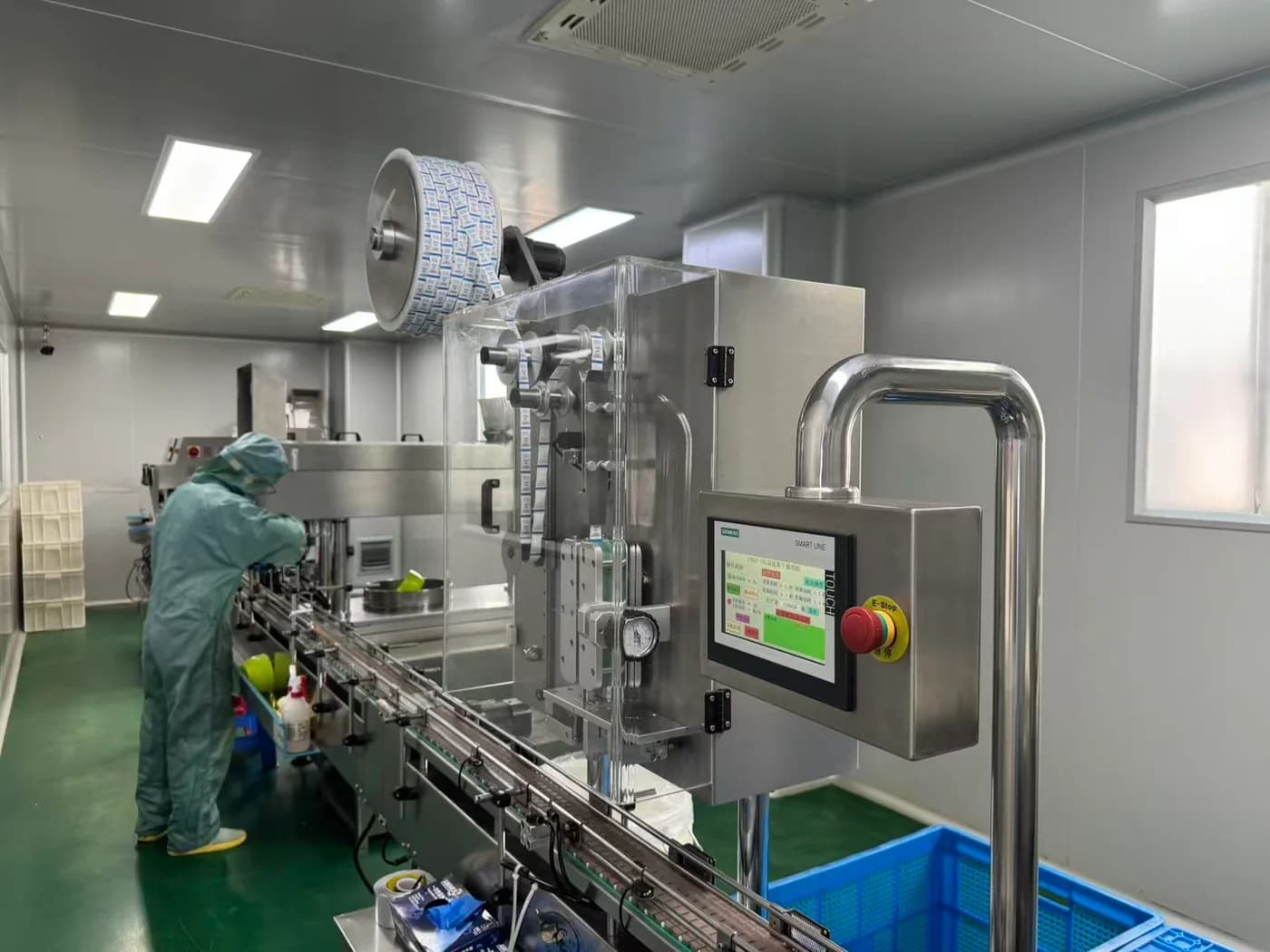
A private label manufacturer's equipment list determines what you can actually launch. Look for capsule filling lines, tablet presses, powder blending and sachet filling under one roof, because split production adds 5–10 days and extra freight. This plant runs 12 capsule fillers, 8 tablet presses and 4 powder lines, with capacity up to 2 million capsules or 1.5 million tablets per day. That matters when a retail launch needs 50,000 units in a single run.
Ask for the fill weight range. Capsules typically run 300–1,000 mg, tablets 500–1,500 mg, and powders 100–1,000 g per unit. If your formula sits outside those ranges, tooling changes can add 10–15 days. Confirm whether the manufacturer handles coated tablets, delayed-release capsules or effervescent formats in-house. Outsourced coating is a common source of delay and quality drift.
Formulation and ingredient sourcing
Formulation support separates a contract manufacturer from a broker. A capable partner offers standard formulations you can brand, or custom development from a brief. For custom work, expect 2–4 weeks for bench samples and stability testing. Ingredient sourcing matters more than most buyers expect: botanical extracts vary by 10–20% in active marker content between suppliers. Ask for certificates of analysis (CoA) per lot and confirm the marker compound used for standardisation.
Allergen and diet positioning should be settled before sampling. Vegan capsules (HPMC) add roughly USD 0.01–0.03 per unit versus gelatin. Organic certification requires USDA organic or EU organic input documentation for every ingredient, and halal status depends on both the capsule shell and the excipients. Request the ingredient declaration and allergen statement at sample stage, not after you have paid a deposit.
Quality compliance and logistics
Certifications are a starting filter, not a guarantee. GMP, ISO 22000 and HACCP cover process control; halal and organic certificates cover specific markets. Check the certificate scope and expiry date, and ask whether the plant is FDA-registered for US-bound products. Third-party testing per lot should cover identity, potency, heavy metals, and microbial limits. A certificate of analysis should accompany every shipment, not just the first one.
Logistics planning starts with the MOQ. At 1,000 units per SKU, air freight is often viable for launch quantities, while sea freight suits replenishment above 20,000 units. Production runs 20–35 working days after sample approval, so add 7–10 days for documentation and 15–30 days for sea transit to the US or EU. Confirm Incoterms (FOB, CIF, DDP) and who handles customs clearance before you sign.
Quality Control and Batch Documentation
A private label supplement manufacturer should test every batch at three points: incoming raw materials, in-process blend, and finished goods. Identity testing by FTIR or HPLC confirms the ingredient matches its certificate of analysis. Potency assays verify the active marker compound falls within 95–105% of label claim. Microbial testing covers total aerobic count, yeast and mould, E. coli and Salmonella, with limits set by the destination market. Heavy metals (lead, arsenic, cadmium, mercury) are tested against USP <232> or EU pharmacopoeia limits. Disintegration testing follows USP <701> for tablets and capsules, typically requiring full disintegration within 30 minutes for immediate-release dosage forms.
Batch documentation is compiled before release. The certificate of analysis (COA) lists the product name, lot number, manufacturing date, expiry date, tests performed, specifications, results and the analyst's signature. It should reference the method used for each test, not just pass or fail. A retention sample of at least twice the finished-pack size is held for the shelf life plus six months. Stability protocols normally include accelerated conditions at 40°C/75% relative humidity for six months and real-time studies at 25°C/60% RH for the declared shelf life, with intervals at 0, 3, 6, 9 and 12 months for the first year.
Buyers should request the batch record summary and the deviation log for their lot. A manufacturer that cannot produce these documents on request is not operating a mature quality system, regardless of the certificates on its website. For private label supplement manufacturers serving multiple export markets, the COA should also state compliance with the destination country's contaminant limits, for example EU maximum levels for lead in food supplements or USP limits for the United States.
Packaging, labelling and retail readiness with private label supplement manufacturers
Packaging options from a Guangdong-based private label supplement manufacturer include high-density polyethylene (HDPE) bottles from 60 cc to 500 cc, glass bottles for premium lines, blister packs on PVC/PVDC or alu-alu, stick packs for powders, and sachets for single-serve doses. Bottle closures can be induction-sealed and child-resistant where required. Desiccant sachets or cotton are added according to the product's moisture sensitivity. Label substrates range from standard coated paper to waterproof synthetic stock for sport and outdoor channels.
For the US market, the dietary supplement label must carry a statement of identity, net quantity of contents, nutrition or supplement facts panel, ingredient list, allergen declarations where applicable, and the manufacturer or distributor name and address. The FDA does not pre-approve labels, so the brand owner is responsible for compliance. Lot codes and expiry dates must be printed or laser-etched on the primary package and the outer carton. A typical format is LOT followed by a six-digit code and EXP followed by MM/YYYY. Inkjet coding is common; laser coding is preferred for high-humidity environments.
Carton specifications should be agreed before production. A standard export carton for 60-count bottles holds 48 units, measures around 50 x 35 x 30 cm, and weighs 12–15 kg. Pallets are typically 120 x 100 cm or 120 x 80 cm, stretch-wrapped and corner-boarded, with 20–24 cartons per layer and 4–5 layers per pallet. For Amazon FBA, the manufacturer can apply FNSKU labels, poly-bag units and print carton weight and dimension labels. Retail compliance for the EU requires a responsible person address, batch code and, for food supplements, the phrase 'food supplement' and recommended daily dose.
MOQ, lead times and delivery from private label supplement manufacturers
The sample timeline starts with a formulation brief and target dosage form. A private label supplement manufacturer typically provides a quotation within 2–3 working days, then produces a sample in 7–10 working days for stock formulas. Custom formulations that require flavour matching or stability screening add 10–15 working days. Sample courier costs are usually borne by the buyer and can be credited against the first production order. Sample approval should be documented in writing, including the approved label artwork and specification sheet, because these become the reference for the production batch.
Mass production begins only after written sample approval and receipt of the deposit, usually 30–50% of the order value. The production window is 20–35 working days for standard capsules, tablets and powders, and 30–45 working days for gummies or effervescents that need additional drying and curing. Chinese New Year, usually late January or February, adds 2–3 weeks of downtime and should be planned around. Buyers with fixed retail launch dates should add a 10–15% buffer to the quoted lead time.
Delivery terms are agreed using Incoterms 2020. EXW means the buyer collects from the factory in Guangdong. FOB covers delivery to the named port, commonly Shenzhen or Hong Kong, and is the most common term for first orders. DDP is available for some destinations and includes freight, import clearance and duties, but the buyer should confirm the seller's import licence and tax registration in the destination country. Air freight takes 5–8 days door to door for 100–500 kg; sea freight takes 25–40 days to Europe or North America. Documents provided with each shipment include the commercial invoice, packing list, bill of lading or air waybill, COA, material safety data sheet (MSDS) where relevant, free-sale certificate, and phytosanitary certificate for botanical ingredients that require it.
Options for Your Format
Capsules and tablets
Standard two-piece capsules, coated tablets, delayed-release formats. Fill weights 300–1,500 mg. MOQ 1,000 units per SKU.
Powders and sachets
Stick packs, jars and bulk powder blending. Fill weights 100–1,000 g. Suitable for sports nutrition and functional blends.
Custom formulation
Bench samples in 2–4 weeks, stability testing, scale-up. Requires a brief with target actives and dosage form.
Private label stock formulas
Pre-developed formulas for fast launch. Lower MOQ on pilot runs, 7–10 day samples, no formulation cost.
From Spec to Shipment
- 01
Define your spec
Write the dosage form, fill weight, actives, target market and monthly volume. This makes quotes comparable across suppliers.
- 02
Request samples
Ask for a sample of your formula or a stock equivalent. Sample lead time is typically 7–10 working days.
- 03
Verify certifications
GMP, ISO 9001, ISO 22000, HACCP, NSF/ANSI 455-2 and halal certification; FDA facility registration for US-bound shipments.
- 04
Compare moqs
MOQ 1,000 units per SKU is standard for retail bottling. Pilot runs can be lower for first orders.
- 05
Confirm lead times
Mass production runs 20–35 working days after sample approval. Add transit and customs time.
- 06
Review commercial terms
Check Incoterms, payment schedule, tooling costs and who owns the formula. Get it in writing.
Why EUPHM
Predictable lead times
Sample in 7–10 working days, production in 20–35. In-house capsule, tablet and powder lines reduce outsourcing delays.
Certification coverage
GMP, ISO 9001, ISO 22000, HACCP, NSF/ANSI 455-2 and halal certification; FDA facility registration for US-bound shipments.
Scalable moqs
Start at 1,000 units per SKU for retail, with pilot run options before committing to a full production batch.
Questions buyers ask.
What is the typical MOQ for private label supplements?+
For retail bottling, MOQ is usually 1,000 units per SKU. Pilot runs can be lower for a first order, but unit cost rises. If you plan multiple SKUs, some manufacturers apply a combined MOQ across the order rather than per SKU.
How long does sample and production take?+
Sample lead time is 7–10 working days for stock formulas, or 2–4 weeks for custom development. Mass production runs 20–35 working days after you approve the sample. Add 7–10 days for documentation and 15–30 days for sea freight.
Which certifications should a manufacturer hold?+
At minimum GMP, ISO 22000 and HACCP for process control. For specific markets, add halal or organic. For US-bound products, check the facility is FDA-registered. Always verify the certificate scope and expiry date, not just the logo.
Can I get a custom formula developed?+
Yes. Provide a brief with target actives, dosage form and fill weight. Bench samples take 2–4 weeks, followed by stability testing. Ask about ingredient standardisation, allergen statements and who owns the formula IP before you start.
What are the payment and shipping terms?+
Most manufacturers work on 30–50% deposit, balance before shipment. Incoterms vary: FOB for buyers with their own freight forwarder, CIF or DDP for door-to-door. Confirm who handles customs clearance and import duties in your destination market.
Can you supply a free-sale certificate and MSDS with my order?+
Yes. A free-sale certificate confirms the product is manufactured under GMP and is freely sold in China. It is issued per product and usually valid for one to two years. The material safety data sheet (MSDS) is provided for the finished goods or raw materials where relevant, following the 16-section format. Both documents are typically issued within 3–5 working days of request and are sent with the shipping documents. Some destination markets require the free-sale certificate to be legalised or apostilled, which adds 5–10 working days.
What label artwork files do you need, and who checks FDA compliance?+
The manufacturer needs a print-ready PDF or AI file at 300 dpi with bleed and dieline. The brand owner is responsible for FDA dietary supplement label compliance, including the supplement facts panel, allergen statements and claims. Many private label supplement manufacturers offer a pre-press check for technical issues such as barcode scannability and lot-code space, but they do not provide regulatory sign-off. For the US market, a third-party label review before printing is advisable and usually costs USD 150–400 per SKU.
How are stability and shelf life handled for a new private label formula?+
For a new formula, the manufacturer runs accelerated stability at 40°C/75% RH for six months and real-time testing at 25°C/60% RH. A tentative shelf life of 24 months is often assigned pending real-time data, with the label stating 'best before end' plus the month and year. The buyer should request the stability protocol and interim reports before committing to a label claim. Retesting at 3, 6, 9 and 12 months is standard. If the formula contains probiotics or sensitive oils, a shorter shelf life or refrigerated storage may be specified.
Have a product in mind?
Send us the brief and we will come back with a formulation direction, indicative price and a realistic lead time — usually within one working day.