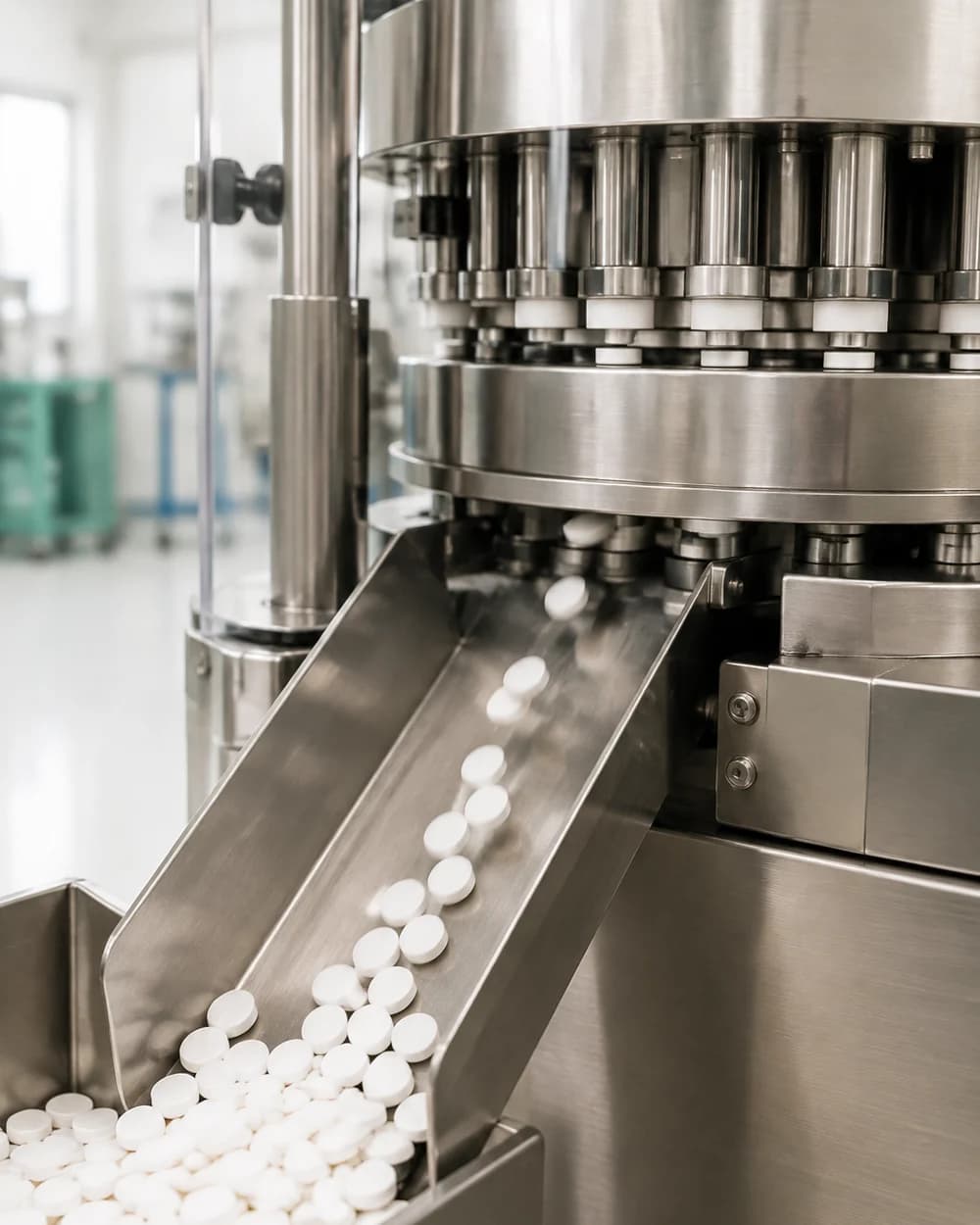
Tablet Manufacturer for Dietary Supplements
EUPHM is a GMP-certified tablet manufacturer in Guangdong, China. We produce coated and uncoated tablets for supplement brands in the US, EU, UK and Middle East, with MOQs from 1,000 units and sample turnaround in 7–10 working days.
Overview
Sourcing tablets means matching a dosage form to your formulation, your fill weight and your market's compliance rules. As a contract tablet manufacturer, EUPHM handles granulation, compression, coating and packaging under one roof. We run pilot batches from 1,000 units and scaled retail runs from 1,000 units per SKU. Certifications include GMP, ISO 22000, HACCP, plus halal and organic where your label requires them.
Tablet Compression Capacity and Tooling
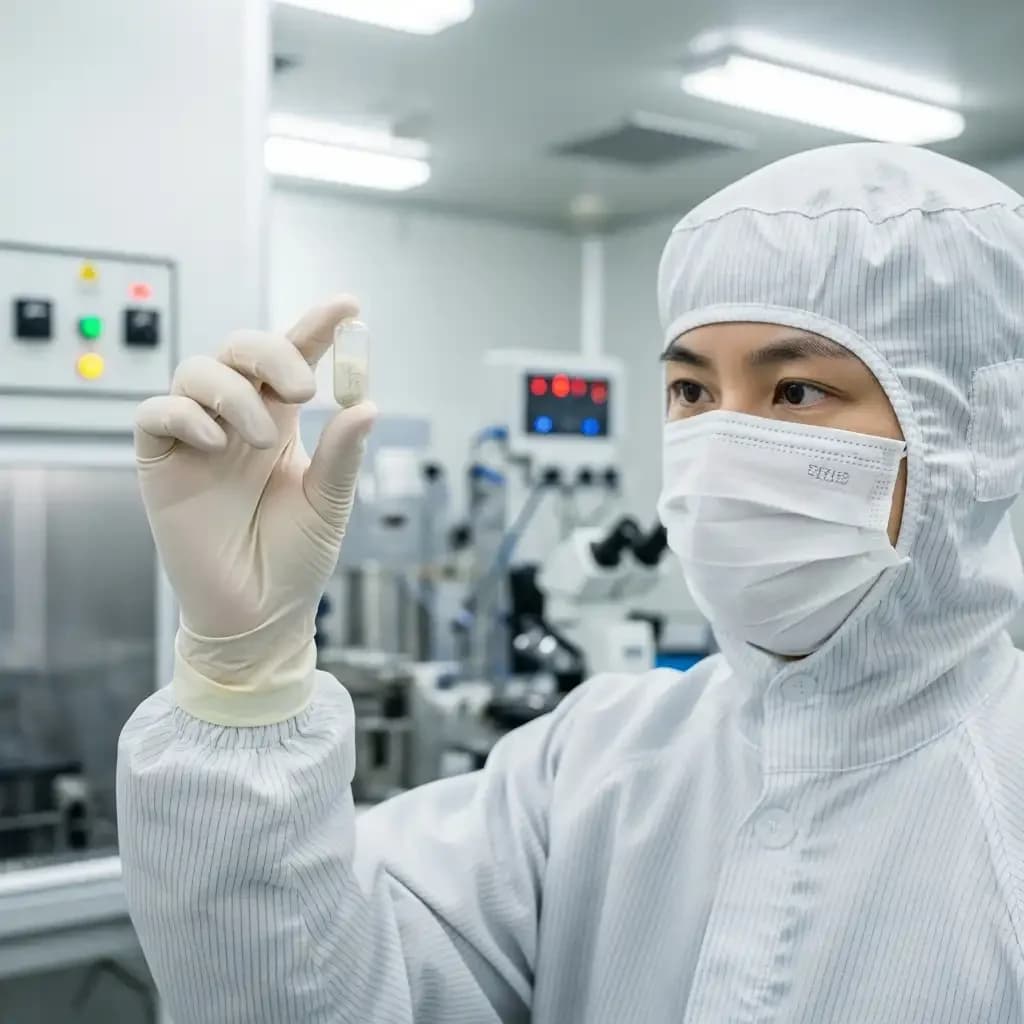
Our tablet manufacturing lines handle both single-layer and bilayer compression. Standard round and caplet tooling is available in-house. For custom shapes or embossing, tooling lead time is 15–20 working days and we store it for repeat orders. Production capacity runs at 2–4 million tablets per day across multiple compression suites, which keeps 20–35 day lead times realistic even for multi-SKU launches.
We run hardness, thickness and weight checks every 30 minutes during compression. Weight variation is held to ±3% for uncoated tablets and ±5% for coated tablets. If your formula includes hygroscopic actives or volatile ingredients, we adjust granulation and compression parameters to protect stability. Batch sizes scale from 50 kg pilot runs to 500 kg commercial runs without changing the tooling.
Formulation Support for Coated and Chewable Tablets
Film coating improves swallowability and masks bitter actives. We offer aqueous film coating in clear, white or custom Pantone colours. Enteric coating is available for ingredients that need to survive stomach acid, such as probiotics or certain enzymes. For chewable tablets, we adjust binder and sweetener systems to reach a clean mouthfeel without chalkiness, using mannitol, sorbitol or sucralose as your label allows.
Effervescent tablets require low-humidity production and foil packaging. We run these on dedicated lines at 15–20% relative humidity. Bilayer tablets let you separate incompatible ingredients, for example a mineral in one layer and a vitamin in another. Our formulation team reviews your actives for compressibility, flow and potential interactions before we commit to a batch record.
Quality Control and Export Documentation
Every batch is tested for identity, potency, uniformity of dosage units and microbial limits. We hold GMP, ISO 22000 and HACCP certifications. Our facility is FDA-registered. Certificates of analysis are issued per batch, and we retain samples for 12 months after the expiry date. Heavy metals, residual solvents and pesticide panels are available on request for EU and US market entry.
For export, we prepare halal and organic certificates where the ingredient list qualifies. Documentation includes commercial invoice, packing list, certificate of origin and health certificate. We ship FOB Shenzhen or Yantian, or arrange air freight for urgent pilot batches. Typical port-to-port transit is 18–28 days to US West Coast, 22–30 days to EU ports and 12–20 days to Middle East hubs.
Quality Control and Batch Documentation
Every tablet batch is tested against a written specification at three points: incoming raw materials, in-process compression, and finished goods. Identity and potency are confirmed by HPLC or UV-Vis against a reference standard. Microbial limits follow USP <2021> or <2022> as applicable, with total aerobic count, yeast and mould, E. coli and Salmonella screened. Heavy metals (lead, arsenic, cadmium, mercury) are tested by ICP-MS on the finished tablet, not just the raw material. Disintegration testing runs on six tablets per batch using the basket method at 37°C; film-coated tablets are also checked for appearance and weight variation across the compression run.
A certificate of analysis (COA) is issued per batch and includes the product name, batch number, manufacturing date, expiry date, specification limits, test methods, results and a pass/fail statement signed by the QC manager. Where a customer needs a specific marker compound, the COA reports the assay value against that marker. Retention samples of every batch are held for the shelf life plus 12 months, stored under labelled conditions. Stability testing follows a bracketed protocol: 0, 3, 6, 12, 24 and 36 months at 25°C/60% RH, with accelerated conditions at 40°C/75% RH for six months. Customers can request interim stability reports before committing to a full shelf-life claim.
In-process controls are recorded on the batch manufacturing record (BMR), which is reviewed and released by QA before packaging. The BMR captures granulation parameters, compression force, tablet hardness, friability (target under 1% after 100 drops), thickness and average weight. Any deviation is logged and investigated before release. For export orders, the COA is issued in English with the customer's product name and label claim, and can be legalised or apostilled if the destination market requires it. We do not issue COAs for products we did not manufacture, and we do not alter results to match a target label claim.
Packaging, Labelling and Retail Readiness
Tablets can be packed in HDPE bottles with induction seals and child-resistant or standard caps, in PVC/PVDC or alu-alu blisters, in single-dose sachets, or in stick packs for effervescent and chewable formats. Bottle sizes run from 30 cc to 500 cc, with desiccant or cotton options depending on the formulation's moisture sensitivity. Blister tooling is quoted per SKU; standard cavity counts are 10, 12 or 14 per card. Cartons are printed to the customer's artwork, with lot number and expiry date applied by inkjet or laser at the time of packing. We can also apply a tamper-evident shrink band and a QR code linking to a batch record if the brand requires it.
For the US market, the label must carry a Supplement Facts panel with serving size, amount per serving, % Daily Value where established, and a list of other ingredients in descending order of weight. The principal display panel needs the product name, net quantity and, for tablets, the count. Allergen declarations follow FALCPA. For the EU, Regulation 1169/2011 applies, with nutrition declaration and allergen highlighting. We review artwork against the destination market's rules before printing, but final legal responsibility for the label rests with the brand owner. We do not write health claims or structure/function claims on the customer's behalf.
Lot coding is alphanumeric and unique per batch, with the expiry date calculated from the stability protocol agreed at order confirmation. Cartons are packed to a standard count per shipper, typically 12, 24 or 48 units, and palletised to a maximum height of 1.8 m with stretch wrap and edge protectors. For Amazon FBA, we can apply FNSKU labels and poly-bag units with the required suffocation warning, and pack to Amazon's carton weight and dimension limits. Retail compliance for major chains may require a GS1 barcode on the carton and a specific pallet configuration; both are quoted at the packaging specification stage, not after production.
MOQ, Lead Times and Delivery
Sample requests are quoted at 1,000 units for pilot runs and are typically dispatched within 7–10 working days of formula and artwork approval. Sample costs are credited against the first mass-production order. Mass production runs 20–35 working days after sample approval, depending on coating requirements, packaging complexity and whether stability testing is required before release. Orders above 100,000 units per SKU are scheduled in campaigns and may extend the window by 5–10 working days. We confirm the production slot in writing once the deposit is received and the artwork is signed off.
Air freight is used for samples and urgent retail replenishment, with transit from Guangdong to major EU and US hubs typically 5–8 days door to door. Sea freight is the default for full-container orders: 25–35 days to European ports and 18–28 days to US west coast ports, depending on routing. We quote EXW, FOB Shenzhen or Hong Kong, and DDP for customers who want a landed-cost price. DDP includes duties and customs clearance but excludes any destination-market registration fees, such as FDA facility registration or EU responsible-person fees, which remain with the brand owner.
Every shipment is accompanied by a commercial invoice, packing list, bill of lading or air waybill, certificate of analysis, material safety data sheet where applicable, and a free-sale certificate. For plant-derived ingredients, a phytosanitary certificate can be arranged where the destination requires it. Halal certificates are issued per batch by the relevant certifying body. Documents are sent electronically before dispatch so the customer can pre-clear customs. We do not under-declare value or misclassify goods on shipping documents, and we do not ship without a signed purchase order and deposit.
Why tablets are still the cheapest dose — and what compression costs you
At volume, nothing beats a tablet on cost per unit or on dose ceiling: 1,000 mg and above is routine, and a scored tablet gives you two doses in one piece. That is why multivitamins, minerals and high-dose botanicals live here. Coating solves the two things people complain about — taste and stomach upset — with film, sugar or enteric coats.
What compression costs you is heat and force. Some actives, especially enzymes, probiotics and certain plant extracts, do not survive the die; those belong in a capsule or a stick pack. Chewables need a completely different binder system and a sweetness profile that masks the actives, and effervescent chemistry cannot be compressed on the same platform at all.
Tablet press control: capping, friability and the hardness window
Every formula has a hardness window — typically 6–12 kp — where the tablet is strong enough to survive bottling and shipping but still dissolves inside the spec. Run too hard and dissolution fails; too soft and friability climbs above 1% and you ship dust. We control weight to ±3%, measure thickness and hardness hourly, and use pre-compression to deaerate the fill so the main compression does not laminate.
Granulation is where most tablet problems are decided: moisture at 1–3% before compression, particle size distribution stable batch to batch, and a lubricant blend time that is long enough to prevent sticking but short enough not to destroy hardness. Coated tablets add pan inlet temperature and spray rate to the batch record. Dissolution and uniformity of content are run on every batch, not on a sample of batches.
Configurations to Compare
Uncoated tablets
Standard compressed tablets for vitamins, minerals and botanical extracts. Fill weights from 100 mg to 1,000 mg. Suitable for high-volume retail bottles and private label.
Film-coated tablets
Aqueous film coating in clear, white or custom colours. Improves swallowability and masks bitter actives. Fill weights from 200 mg to 1,500 mg. Available with logo embossing.
Chewable tablets
Formulated with mannitol, sorbitol or sucralose for a smooth texture. Common for children's vitamins, antacids and mineral supplements. Fill weights from 500 mg to 1,500 mg.
Effervescent tablets
Produced at 15–20% relative humidity. Packed in foil tubes or sachets. Suitable for vitamin C, electrolytes and immunity blends. Fill weights from 1,000 mg to 1,500 mg.
Production in Six Steps
- 01
Brief and quote
Send your formula, target fill weight, tablet count per bottle and market. We return a quote with MOQ, unit price and lead time within 2 working days.
- 02
Sample development
We produce a pilot batch of 100–500 tablets. You receive samples in 7–10 working days. Revisions to flavour, colour or coating are made at this stage.
- 03
Sample approval
You test the samples for taste, hardness and appearance. We lock the formulation and tooling. A signed approval triggers mass production scheduling.
- 04
Raw material sourcing
We source actives and excipients from qualified suppliers. Each lot arrives with a certificate of analysis. Incoming materials are quarantined until QC release.
- 05
Production and QC
Granulation, compression, coating and packaging run over 20–35 working days. In-process checks occur every 30 minutes. Finished tablets are tested against your specification.
- 06
Packaging and shipping
Tablets are bottled, labelled and packed into cartons. We arrange FOB Shenzhen or air freight. Export documents are issued within 3 working days of shipment.
Why EUPHM
Low MOQs for launches
Start at 1,000 units per SKU for retail bottling. Pilot runs from 1,000 units let you test the market before committing to larger volumes.
Certified for global markets
GMP, ISO 9001, ISO 22000, HACCP, NSF/ANSI 455-2 and halal certification; FDA facility registration for US-bound shipments.
Predictable lead times
Samples in 7–10 working days. Mass production in 20–35 working days. Capacity of 2–4 million tablets per day keeps schedules stable across multi-SKU orders.
Questions buyers ask.
What is the MOQ for tablet manufacturing?+
MOQ is 1,000 units per SKU for retail bottling. For pilot runs or market testing, we can produce from 1,000 units. Bottle size, tablet count and label complexity affect the final MOQ. We confirm exact numbers in your quote.
How long do samples take?+
Sample lead time is 7–10 working days after we receive your formula and target specifications. You receive 100–500 tablets for testing. One round of revisions for colour, flavour or coating is included at no extra tooling cost.
Can you produce enteric-coated or bilayer tablets?+
Yes. Enteric coating is available for acid-sensitive actives. Bilayer tablets separate incompatible ingredients into two layers. Both formats require a formulation review before we confirm feasibility. Tooling lead time for bilayer is 15–20 working days.
What certifications do you hold?+
We hold GMP, ISO 22000 and HACCP certifications. Our facility is FDA-registered. halal and vegan certificates are available depending on your ingredient list and market requirements. We provide certificates of analysis per batch.
How do you handle shipping and export documents?+
We ship FOB Shenzhen or Yantian, or arrange air freight for urgent batches. Export documents include commercial invoice, packing list, certificate of origin and health certificate. Transit is 18–28 days to US West Coast, 22–30 days to EU ports and 12–20 days to Middle East hubs.
Can you match a competitor's tablet specification exactly?+
We can reverse-engineer a tablet from a supplied sample or specification sheet, but we do not copy a competitor's proprietary formulation or label. We match the dosage form, weight range, coating type and disintegration profile, then confirm the formulation against your target label claim. If the sample contains an ingredient we cannot legally use in your market, we will propose an alternative and document the difference in the quotation.
Do you provide stability data before I place a mass-production order?+
Yes. We can run a bracketed stability study on your pilot batch at 25°C/60% RH and 40°C/75% RH, with interim reports at 3 and 6 months. This is quoted separately and typically adds 8–12 weeks to the timeline. Many customers use the 6-month accelerated data to support a 24-month shelf-life claim at launch, then extend the claim once real-time data is available.
What happens if a batch fails a specification test?+
A failed batch is placed on hold, investigated and not released. The deviation is logged, the root cause is identified, and the batch is either reworked within the approved process or rejected. We inform the customer in writing within 48 hours of the failed result, share the investigation report, and agree the disposition. Rejected batches are not shipped, and the customer is not invoiced for product that does not meet the agreed specification.
Other versions built in this dosage form.
- Film-Coated Tablet Manufacturer
- Chewable Tablet Manufacturer
- Effervescent Tablet Manufacturer
- Multi-Layer Tablet Manufacturer
- Sustained-Release Tablet Manufacturer
- Bi-Layer Tablet Manufacturer
- Sugar-Coated Tablet Manufacturer
- Mini Tablet Manufacturer
- Vitamin C Tablet Manufacturer
- Vitamin D3 Tablet Manufacturer
- Vitamin B12 Tablet Manufacturer
- Vitamin B Complex Tablet Manufacturer
- Multivitamin Tablet Manufacturer
- Folic Acid Tablet Manufacturer
- Probiotics Tablet Manufacturer
- Collagen Tablet Manufacturer
- Biotin Tablet Manufacturer
- Melatonin Tablet Manufacturer
- Magnesium Tablet Manufacturer
- Zinc Tablet Manufacturer
- Iron Tablet Manufacturer
- Calcium Tablet Manufacturer
- Selenium Tablet Manufacturer
- Chromium Tablet Manufacturer
- NMN Tablet Manufacturer
- Glucosamine Tablet Manufacturer
- Hair Skin & Nails Tablet Manufacturer
- Sleep Support Tablet Manufacturer
- Immune Support Tablet Manufacturer
- Menopause Tablet Manufacturer
- Joint Health Tablet Manufacturer
Have a product in mind?
Send us the brief and we will come back with a formulation direction, indicative price and a realistic lead time — usually within one working day.