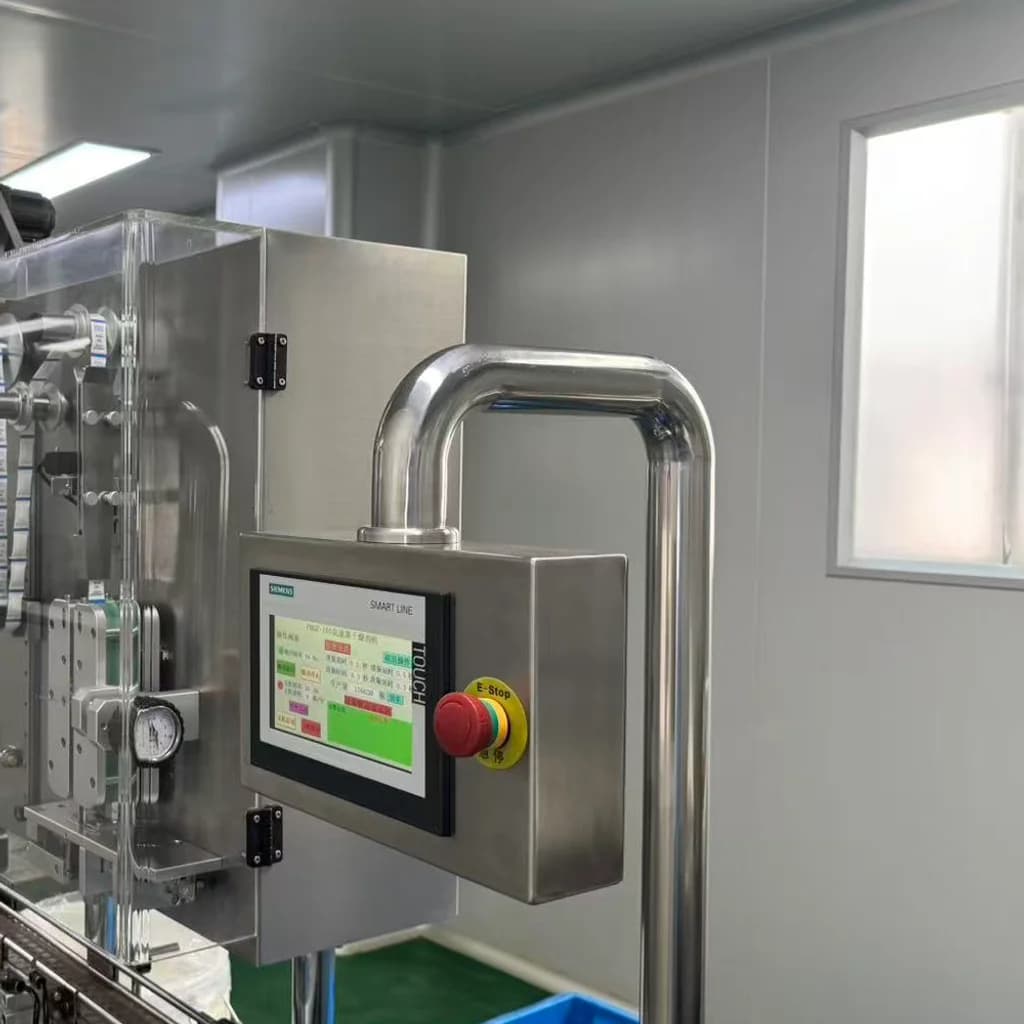
Sugar-Coated Tablet Manufacturer for Global Brands
EUPHM produces sugar-coated tablets at 1,000 unit MOQ. Our GMP-certified facility in Guangdong handles aqueous film and sugar coating, with sample runs in 7–10 working days and full production in 20–35 working days.
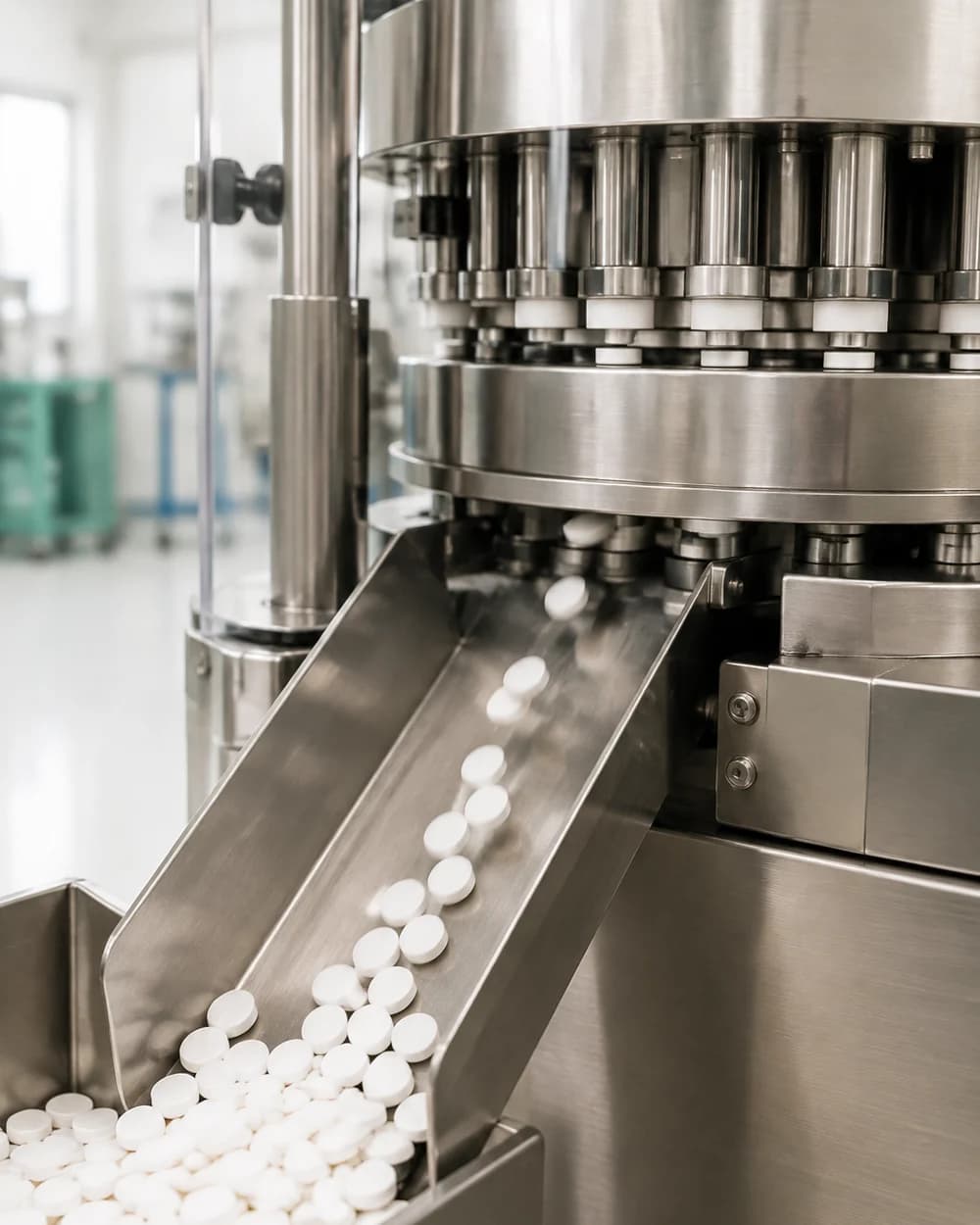
Overview
Sugar coating remains the preferred finish for effervescent cores, herbal extracts, and bitter actives. It masks taste, improves swallowability, and adds a glossy, uniform appearance that supports premium shelf positioning. As a contract manufacturer, we run sugar coating on dedicated pans with controlled humidity and temperature, then cure and polish each batch. This page covers our sugar-coated tablet capabilities; for broader tablet formats, see our /tablet-manufacturer overview.
| MOQ – retail bottling | 1,000 units per SKU |
|---|---|
| MOQ – pilot run | 1,000 units per SKU |
| Sample lead time | 7–10 working days |
| Mass production | 20–35 working days |
| Coating options | Sugar, film, enteric, or combinations |
| Certifications | GMP, ISO 9001, ISO 22000, HACCP, NSF/ANSI 455-2, halal, FDA-registered |
Sugar Coating Capability and Line Capacity
We operate 12 coating pans with batch sizes from 50 kg to 400 kg. Each pan has independent temperature, airflow, and spray control. For sugar coating, we use a standard syrup build-up: seal coat, subcoat, smoothing, colouring, and polishing. This produces a 2–4% weight gain, depending on core size and desired opacity. Line capacity reaches 1.2 million tablets per day across two shifts.
Cores can be compressed in-house on 35 stations rotary presses, ranging from 6 mm to 22 mm in diameter. We run both single-layer and bi-layer cores. If your formula includes moisture-sensitive actives, we recommend a film subcoat before sugar coating to reduce water migration. All coating parameters are logged per batch and retained for 5 years.
Formulation and Ingredient Considerations
Sugar coating works with a wide range of actives: herbal extracts, vitamins, minerals, amino acids, and probiotics. We adjust syrup composition to match core hardness and porosity. For hygroscopic ingredients, we add a shellac or zein seal coat. For effervescent cores, we use a non-aqueous coating solvent to avoid premature reaction. Typical sugar coating formulations use sucrose, glucose, or a sugar alcohol blend for reduced sugar claims.
We can incorporate natural colours, titanium dioxide alternatives, and polished finishes. Flavour masking is a common request for bitter botanicals such as valerian root or artichoke extract. Our R&D team runs small-batch coating trials to confirm appearance, taste, and disintegration before scale-up. Stability testing follows ICH guidelines, with 6-month accelerated and 24-month real-time options.
Quality, Compliance, and Logistics
Every sugar-coated tablet batch is tested for weight variation, hardness, friability, disintegration, and microbial limits. We hold GMP, ISO 22000, and HACCP certifications. halal and vegan certifications are available on request. Our facility is FDA-registered for dietary supplements. We provide a Certificate of Analysis for each shipment, plus full traceability from raw material lot to finished bottle.
Packaging runs from 30-count to 180-count HDPE bottles, blister packs, and stick packs. We ship FOB Shenzhen or Yantian, with air freight for urgent orders. Lead times are 20–35 working days for mass production after sample approval. For repeat orders, we hold your approved formula and artwork for 24 months. Documentation includes commercial invoice, packing list, health certificate, and free sale certificate if required.
Quality Control and Batch Documentation
Every sugar-coated tablet batch is tested against a written specification before coating and after curing. Incoming raw materials are sampled at 100% of containers for identity by FTIR or HPLC, and each active is assayed for potency. During coating, pan speed, inlet temperature, spray rate and syrup solids are logged every 15 minutes. After polishing, finished tablets are tested for appearance, weight variation (target ±5%), hardness, friability (under 1.0% after 100 drops), disintegration (typically 15–30 minutes for sugar-coated cores, depending on the formula) and microbial limits (TPC under 1,000 cfu/g, absence of E. coli and Salmonella).
Heavy metals (lead, arsenic, cadmium, mercury) are tested per batch or per raw material lot, depending on risk. A certificate of analysis (COA) is issued for each batch and includes lot number, product name, specification version, test items, methods, acceptance criteria, results and a pass/fail statement, signed by the QC manager. The COA also lists the coating type, colourants used and the expiry date assigned. Where a customer requires it, we add a statement of composition and allergen status.
Retention samples of every batch are kept for the shelf life plus 12 months, stored under labelled conditions at 25°C/60% RH and 30°C/65% RH. Stability protocols follow ICH Q1A(R2) where the destination market requires it: 0, 3, 6, 9, 12, 18 and 24 months for long-term, with accelerated conditions at 40°C/75% RH for 6 months. Assay, disintegration, microbials and appearance are monitored at each point. If a batch is exported to a market with different climatic zone requirements, we adjust the protocol accordingly.
Documentation is released as a batch record package: executed batch record, COA, deviation log (if any), line clearance record, environmental monitoring data for the coating room, and a retention sample register entry. These are provided in English as standard; translated labels and market-specific declarations are handled at the packaging stage. Buyers auditing the facility can request the full package for any lot before shipment.
Packaging, Labelling and Retail Readiness
Sugar-coated tablets are packed in HDPE bottles (30, 60, 90, 120, 180 or 250 cc) with induction seals, in blisters (PVC/PVDC or alu/alu), in stick packs or in sachets. Bottle filling runs at 40–60 bottles per minute on our line, with desiccant options for hygroscopic cores. Blister tooling is available for standard cavity sizes; custom shapes require a 15–20 working day tooling lead time. For effervescent sugar-coated cores, we recommend alu/alu blisters or tubes with desiccant to control moisture.
Labels are produced to the destination market's requirements. For the US, we include the FDA dietary supplement label elements: statement of identity, net quantity of contents, supplement facts panel with serving size and percent daily value where applicable, other ingredients list, and the required domestic address and phone number of the distributor. For the EU, we include the nutrition declaration, allergen statement and the food business operator address. Lot number and expiry date are inkjet-printed on the bottle, blister or carton, and we can add a QR code linking to a batch-specific COA if required.
Cartons are specified to withstand retail and e-commerce handling. Standard export cartons are 5-ply corrugated with a bursting strength of at least 18 kg/cm². We can print the carton with the customer's artwork, barcodes (UPC/EAN) and Amazon FNSKU labels. For Amazon FBA shipments, we apply FNSKU labels to each unit, poly-bag or shrink-wrap as required, and print the box labels with the correct FBA box ID. Pallet configuration is typically 1,200 x 1,000 mm or 1,200 x 800 mm, stretch-wrapped and corner-protected, with a maximum height of 1.8 m for sea freight.
Retail compliance checks are built into the packaging line: barcode verification (ANSI grade C or better), label proof against the approved artwork, and a first-article inspection before the run starts. We keep approved artwork and label proofs on file for each SKU. If a retailer requires a specific carton marking, such as a lot code on the outside, we add it during carton sealing. All packaging materials are food-grade and meet EU 10/2011 and US FDA 21 CFR 174-186 requirements where applicable.
MOQ, Lead Times and Delivery
Sampling starts with a 7–10 working day turnaround from receipt of a signed specification and sample request. We provide up to 500 g of coated tablets for evaluation, with a preliminary COA. If formulation work is needed, such as taste masking or colour matching, add 5–7 working days. Sample costs are credited against the first production order. For pilot runs, the MOQ is 1,000 units per SKU; for retail bottling, 1,000 units per SKU depending on bottle size and label complexity.
Mass production takes 20–35 working days after sample approval and receipt of packaging materials. This includes raw material testing, granulation, compression, sugar coating, curing, polishing, packaging and QC release. If the order requires custom blister tooling or printed cartons, add 10–15 working days. We confirm the production slot in writing once the deposit is received, and we send weekly progress updates with photos of the coating and packaging stages.
Shipping is arranged by air or sea. Air freight takes 5–8 days door to door for most destinations; sea freight takes 25–40 days depending on the port. We work with EXW, FOB Shenzhen or Hong Kong, and DDP for selected markets. DDP includes customs clearance and delivery to the customer's warehouse, but the buyer remains responsible for import licensing and product registration. For DDP shipments, we provide the commercial invoice, packing list, bill of lading or airway bill, and the certificate of origin where required.
The export document pack includes the COA for each batch, a material safety data sheet (MSDS) where applicable, a free-sale certificate issued by the local authority, and a phytosanitary certificate for herbal or botanical ingredients where the destination country requires it. We also provide a certificate of manufacture and a GMP certificate copy. Documents are sent electronically before shipment and the originals travel with the cargo or by courier, depending on the Incoterm.
Options for Your Format
Aqueous sugar coating
Water-based syrup for standard taste masking and colour. Suitable for most vitamin and herbal cores. Weight gain 2–4%.
Solvent-based sugar coating
For moisture-sensitive actives like effervescents or probiotics. Uses ethanol or isopropanol. Requires explosion-proof coating room.
Film subcoat + sugar
A hydroxypropyl methylcellulose subcoat seals the core before sugar build-up. Reduces water migration and improves stability.
Polished and printed
Carnauba wax polish for gloss. Optional printing with brand name or dosage strength using food-grade ink.
From Spec to Shipment
- 01
Send your specification
Share formula, tablet size, coating type, and target MOQ. We confirm feasibility and pricing within 2 working days.
- 02
Sample production
We produce 1,000–2,000 unit samples in 7–10 working days. You receive coated tablets, a COA, and packaging options.
- 03
Sample approval
You test appearance, taste, and disintegration. We adjust coating thickness or colour until you sign off.
- 04
Mass production
After approval, we schedule a 20–35 working day production run. You receive weekly progress updates.
- 05
QC and release
Each batch is tested for weight, hardness, friability, and microbials. We release only after internal QA sign-off.
- 06
Shipping and documents
We pack in HDPE bottles or blisters, then ship FOB Shenzhen. Documents include COA, invoice, packing list, and health certificate.
Why EUPHM
Taste masking that works
Sugar coating hides bitter or metallic notes from herbal extracts, minerals, and vitamins. Improves patient compliance.
Consistent appearance
Uniform colour and gloss across batches. Supports premium retail positioning and brand recognition.
Flexible MOQ
Start at 1,000 units for pilot runs, then scale to 1,000 units for retail bottling. No long-term commitment required.
Questions buyers ask.
What is the minimum order quantity for sugar-coated tablets?+
Our MOQ is 1,000 units per SKU for retail bottling. For pilot runs or stability testing, we can produce as few as 1,000 units. This covers most new product launches and reformulations.
How long does sugar coating take compared to film coating?+
Sugar coating adds 2–4 hours per batch, depending on pan size and number of coats. Film coating takes 1–2 hours. We schedule both in the same facility, so lead times remain 20–35 working days for mass production.
Can you coat effervescent tablets with sugar?+
Yes, but we use a solvent-based coating process to avoid moisture activation. The core must be compressed at low humidity, and we apply a seal coat before sugar layering. We have produced effervescent sugar-coated tablets for EU and Middle East clients.
What certifications do you hold for sugar-coated tablets?+
We are GMP, ISO 22000, and HACCP certified. Our facility is FDA-registered for dietary supplements. halal and vegan certifications are available on request. We provide certificates with each shipment.
Do you offer low-sugar or sugar-free coating options?+
Yes. We can use maltitol, xylitol, or isomalt in place of sucrose. These sugar alcohols produce a similar gloss and taste mask, with 0–2% sugar content. Note that sugar-free coatings may require a film subcoat for stability.
Can you provide a certificate of analysis for each batch of sugar-coated tablets?+
Yes. Every batch receives a batch-specific COA that lists identity, potency, microbial limits, heavy metals, disintegration, hardness and appearance, with methods and acceptance criteria. The COA is signed by the QC manager and includes the lot number and expiry date. We can also provide a certificate of composition and allergen statement if your market requires it.
What label information do you need from me for US retail packaging?+
We need the supplement facts panel, statement of identity, net quantity, other ingredients list, and the name and address of the distributor or manufacturer. We also need the UPC barcode and any Amazon FNSKU if applicable. Our team checks the artwork against FDA dietary supplement labelling requirements before printing. You remain responsible for the accuracy of claims and structure/function statements.
How do you handle shipping terms and export documents for sugar-coated tablet orders?+
We quote EXW, FOB Shenzhen or Hong Kong, and DDP for selected markets. The export pack includes COA, MSDS where applicable, free-sale certificate, certificate of manufacture and GMP certificate. For botanical ingredients, a phytosanitary certificate can be added. Documents are sent electronically before shipment, and originals follow by courier or with the cargo depending on the Incoterm.
Other versions built in this dosage form.
- Tablet Manufacturer
- Film-Coated Tablet Manufacturer
- Chewable Tablet Manufacturer
- Effervescent Tablet Manufacturer
- Multi-Layer Tablet Manufacturer
- Sustained-Release Tablet Manufacturer
- Bi-Layer Tablet Manufacturer
- Mini Tablet Manufacturer
- Vitamin C Tablet Manufacturer
- Vitamin D3 Tablet Manufacturer
- Vitamin B12 Tablet Manufacturer
- Vitamin B Complex Tablet Manufacturer
- Multivitamin Tablet Manufacturer
- Folic Acid Tablet Manufacturer
- Probiotics Tablet Manufacturer
- Collagen Tablet Manufacturer
- Biotin Tablet Manufacturer
- Melatonin Tablet Manufacturer
- Magnesium Tablet Manufacturer
- Zinc Tablet Manufacturer
- Iron Tablet Manufacturer
- Calcium Tablet Manufacturer
- Selenium Tablet Manufacturer
- Chromium Tablet Manufacturer
- NMN Tablet Manufacturer
- Glucosamine Tablet Manufacturer
- Hair Skin & Nails Tablet Manufacturer
- Sleep Support Tablet Manufacturer
- Immune Support Tablet Manufacturer
- Menopause Tablet Manufacturer
- Joint Health Tablet Manufacturer
Have a product in mind?
Send us the brief and we will come back with a formulation direction, indicative price and a realistic lead time — usually within one working day.