
Chromium Tablet Manufacturer for Retail and Private Label
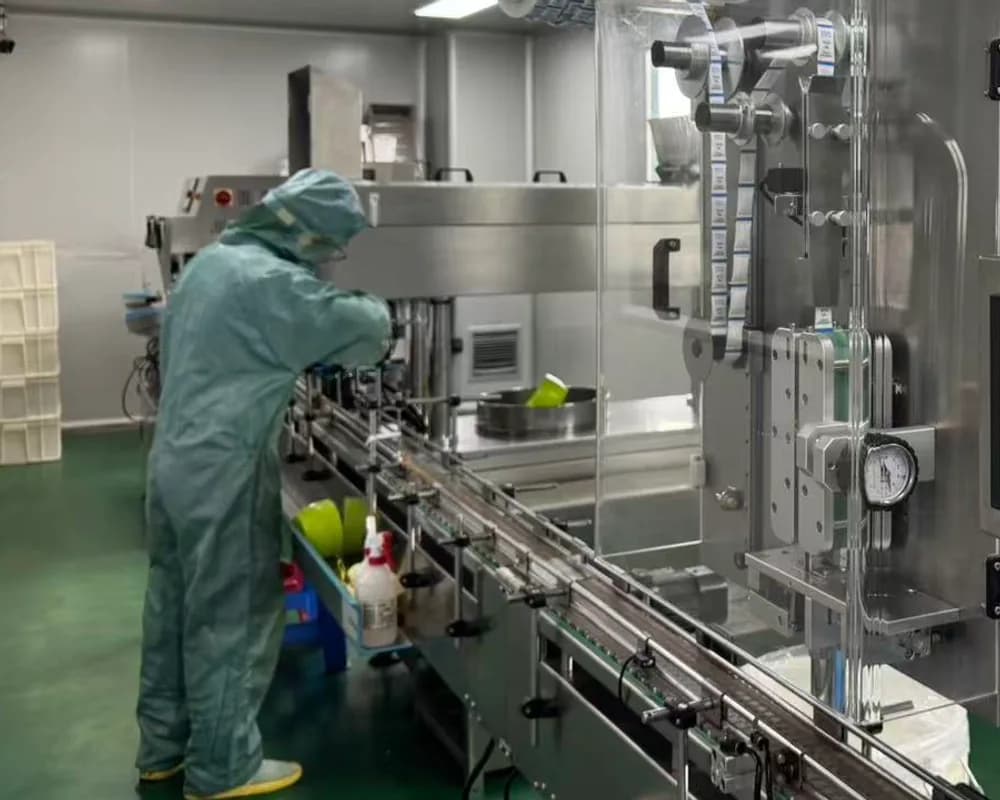
EUPHM produces chromium tablets in a GMP-certified facility in Guangdong, China. We handle chromium picolinate, polynicotinate and chloride formats, with MOQ from 1,000 units per SKU and 20–35 working day mass production.
Overview
Chromium tablets are a stable, low-dose format for blood sugar support and sports nutrition lines. As a contract manufacturer, EUPHM covers formulation, blending, compression, coating and packaging. Tablet weights typically run 200–800 mg, with chromium doses from 50 mcg to 1,000 mcg per tablet. We work with brand owners and procurement teams in the US, EU, UK and Middle East, and support pilot runs before full-scale production.
- MOQ
- 1,000 units per SKU; lower for pilot runs
- Tablet weight
- 200–800 mg; custom tooling available
- Chromium dose
- 50 mcg–1,000 mcg per tablet
- Sample lead time
- 7–10 working days
- Mass production
- 20–35 working days after approval
- Certifications
- GMP, ISO 9001, ISO 22000, HACCP, NSF/ANSI 455-2, halal, FDA-registered
Chromium tablet manufacturing capability
EUPHM runs rotary tablet presses with output up to 500,000 tablets per shift. We handle direct compression and wet granulation, depending on the chromium raw material and excipient mix. Tooling is available for round, oval and caplet shapes from 6 mm to 20 mm. Coating options include film, enteric and sugar. In-process checks cover weight variation, hardness, thickness and friability at 15-minute intervals.
Chromium is used at very low doses, so blend uniformity is critical. We use geometric dilution and validated mixing times to keep RSD below 5%. Tablets can be produced as immediate release or sustained release, and we can combine chromium with other actives such as cinnamon, berberine or alpha-lipoic acid. Packaging formats include HDPE bottles, blisters and sachets.
Chromium forms and formulation detail
Chromium picolinate is the most common retail form, typically dosed at 200 mcg or 500 mcg. Chromium polynicotinate offers similar stability and is often paired with niacin. Chromium chloride is cost-effective but has lower bioavailability. We source from suppliers with USP, EP or food-grade documentation, and each lot is tested for assay, heavy metals and microbial limits before release.
Excipients are selected for compressibility and stability. Common choices include microcrystalline cellulose, dicalcium phosphate, magnesium stearate and silicon dioxide. For clean-label lines, we can use rice hull or acacia fibre as flow agents. Tablets can be scored for dose splitting. We also offer chromium gummies and capsules if a tablet format does not fit the brand position.
Quality, compliance and logistics
The facility is GMP-certified and holds ISO 22000 and HACCP. halal and vegan certifications are available on request, depending on the ingredient list. We are an FDA-registered facility, which supports US market entry. Every batch has a certificate of analysis covering assay, disintegration, heavy metals and microbiological tests. Stability studies follow ICH guidelines.
Shipping is arranged from Shenzhen or Hong Kong ports. Typical transit is 18–25 days to the US west coast, 25–35 days to the EU, and 12–20 days to the Middle East. We provide commercial invoices, packing lists, certificates of origin and health certificates. For urgent orders, air freight is available at 5–10 days. Payment terms are 30% deposit, 70% before shipment.
Quality Control and Batch Documentation
Every chromium tablet batch is tested at three stages: incoming raw material, in-process blend and finished tablets. Raw chromium (picolinate, polynicotinate or chloride) is verified for identity by FTIR and assayed by HPLC or ICP-MS. Excipients such as microcrystalline cellulose, dicalcium phosphate and magnesium stearate are checked against specification. During compression, weight variation, hardness and thickness are monitored every 30 minutes. Finished tablets are tested for potency, microbial limits (total aerobic count, yeast and mould, E. coli, Salmonella), heavy metals (lead, arsenic, cadmium, mercury) and disintegration time.
The certificate of analysis (COA) issued with each batch lists batch number, manufacturing date, expiry date, tablet weight, chromium content per tablet, microbial results, heavy metal results and disintegration time. It also references the specification version and test methods used. A retention sample of at least twice the quantity needed for full testing is kept for the shelf life plus six months. Stability testing follows ICH guidelines: 25°C/60% RH and 40°C/75% RH for accelerated conditions, with testing at 0, 3, 6, 9, 12, 18 and 24 months for long-term studies.
Disintegration testing is critical for chromium tablets because low-dose actives can be released too slowly if hardness is excessive. We target disintegration within 15 minutes for uncoated tablets and within 30 minutes for coated tablets, using USP <701> or Ph. Eur. 2.9.1 methods. If a batch fails any specification, it is quarantined and an investigation is opened before any rework or rejection decision. Batch records, including blending times, compression force and coating parameters, are retained for at least five years and are available for review during customer audits.
Packaging, Labelling and Retail Readiness
Chromium tablets can be packed in HDPE bottles (30, 60, 90, 120 or 180 counts), blister packs (PVC/PVDC or alu-alu for moisture protection), stick packs (single or two-tablet) or sachets. Bottles are induction-sealed and fitted with child-resistant or standard caps. Blister cards can be printed with lot and expiry coding. Cartons are specified by caliper, print method (offset or digital) and finish. We provide dieline templates and can supply artwork checks against FDA dietary supplement labelling requirements, including the Supplement Facts panel, serving size, amount per serving, percent daily value, ingredient list, allergen statement and the mandatory “Distributed by” or “Manufactured for” statement.
Lot and expiry coding is applied to each bottle, blister or carton by inkjet or laser. Expiry is set from stability data, typically 24 months from the date of manufacture for uncoated tablets and 18 to 24 months for coated tablets, depending on the packaging format. Cartons are packed in corrugated shippers with a maximum gross weight of 20 kg for manual handling. Pallet specifications are 1,200 mm x 1,000 mm or 1,200 mm x 800 mm, stretch-wrapped and labelled with batch, quantity and dimensions. For Amazon FBA, we can apply FNSKU labels and poly-bag units according to the seller’s instructions.
Retail readiness also covers barcode verification (UPC or EAN), country of origin marking and any market-specific requirements such as the EU nutrition and health claims regulation or UK novel food status. We do not provide legal advice on claims; brand owners are responsible for final label content. However, we review artwork for technical accuracy, including units (mcg versus mg), tablet count and storage statements. Packaging components are sampled and approved before mass production, and packaging records are retained alongside batch records.
MOQ, Lead Times and Delivery
Sample lead time for chromium tablets is 7 to 10 working days after formulation and artwork approval. Samples are provided with a draft COA and are typically 100 to 300 tablets, depending on testing requirements. Pilot runs start at 1,000 units per SKU and can be lower for first-time orders subject to tooling and packaging minimums. Mass production runs 20 to 35 working days after sample approval and receipt of packaging materials. If custom tooling is required, add 10 to 15 working days for tooling fabrication and qualification.
We ship under EXW, FOB (Shenzhen or Hong Kong) or DDP terms. Air freight takes 5 to 10 days door to door for most destinations, while sea freight takes 25 to 40 days depending on port and routing. For urgent retail launches, air freight is common for the first order, with sea freight for replenishment. We provide a commercial invoice, packing list, COA, MSDS (where required for transport), free-sale certificate and, for certain plant-derived excipients, a phytosanitary certificate. Halal certificates are available for the finished product when the formulation and production line meet the relevant requirements.
Delivery schedules are confirmed in the sales contract. We recommend booking freight at least two weeks before the planned ex-factory date to secure space, particularly for air freight during peak season. For DDP shipments, we handle customs clearance and duties where the destination country allows; otherwise, the buyer’s customs broker is used. All documents are issued in English and can be legalised or attested if required by the destination country. We do not arrange product registration in the destination market; that remains the brand owner’s responsibility.
Manufacturing Options to Compare
Chromium picolinate tablets
Standard retail format with 200 mcg or 500 mcg per tablet. Good stability and a familiar label claim for blood sugar support.
Chromium polynicotinate tablets
Often combined with niacin. Suitable for sports nutrition and metabolic health lines. Dose ranges from 100 mcg to 500 mcg.
Chromium + cinnamon blend
Combination tablet for glucose metabolism positioning. Cinnamon extract at 100–500 mg per tablet, plus chromium at 200 mcg.
Sustained-release chromium
Hydrophilic matrix tablet for gradual release over 6–8 hours. Reduces dosing frequency. Available in 500 mcg and 1,000 mcg.
How a Project Runs
- 01
Brief and quote
Send your target dose, tablet weight, packaging and market. We reply with a quote and lead time within 2 working days.
- 02
Sample development
We produce a pilot batch of 100–500 tablets. Sample lead time is 7–10 working days. You approve appearance, hardness and taste.
- 03
Formulation lock
After sample approval, we finalise the bill of materials and run a small validation batch to confirm blend uniformity and tablet weight.
- 04
Mass production
Full production runs 20–35 working days. We share daily output reports and in-process check results.
- 05
QC and release
Finished tablets are tested for assay, disintegration, microbial limits and heavy metals. A certificate of analysis is issued per batch.
- 06
Packaging and shipping
Bottling, labelling and cartoning are done on-site. We arrange freight from Shenzhen or Hong Kong and provide all export documents.
Why EUPHM
Low MOQ for pilot runs
Start with 1,000 units per SKU. Scale to 50,000 units or more once the product is validated in your market.
Full documentation
COA, MSDS, stability data and certification files are provided for regulatory submissions in the US, EU and Middle East.
Flexible formulation
Combine chromium with cinnamon, berberine, ALA or vitamins. Choose tablet, capsule or gummy format from one supplier.
Questions buyers ask.
What is the MOQ for chromium tablets?+
MOQ is 1,000 units per SKU for retail bottling. For pilot runs, we can produce 500–1,000 units at a higher per-unit cost. Tablet tooling and packaging setup are included in the quote.
Can you produce chromium tablets with organic certification?+
Yes, if all ingredients meet organic standards. We hold organic certification and can source organic chromium sources where available. Note that chromium picolinate is not typically certified organic, so we would discuss alternative forms.
What is the lead time for a new chromium tablet order?+
Sample lead time is 7–10 working days. Mass production takes 20–35 working days after sample approval and deposit. Repeat orders are often faster at 15–20 working days.
Do you provide stability testing for chromium tablets?+
Yes. We run accelerated stability studies at 40°C/75% RH for 6 months and real-time studies at 25°C/60% RH for 24 months. Reports are available for your regulatory filings.
Can you pack chromium tablets in blister packs?+
Yes. We offer blister packaging with aluminium or PVC/PVDC film, as well as HDPE bottles, sachets and stick packs. Blister tooling is customised to your tablet size and shape.
Can you provide a certificate of analysis before shipment?+
Yes. A draft COA is issued after finished tablet testing and before shipment. It includes batch number, potency, microbial results, heavy metals and disintegration time. The final signed COA is issued with the shipping documents. If you need third-party testing, we can send samples to an accredited laboratory at your cost, and the report will be included with the batch documentation.
What is the shelf life of your chromium tablets and how is it determined?+
Shelf life is typically 24 months for uncoated tablets and 18 to 24 months for coated tablets, based on real-time and accelerated stability data. We test at 25°C/60% RH and 40°C/75% RH. The expiry date is calculated from the date of manufacture and printed on the packaging. If you require a longer shelf life, we can discuss formulation adjustments or packaging changes that may support it.
Do you offer low-MOQ options for start-up brands?+
Yes. Pilot runs start at 1,000 units per SKU, and we can sometimes go lower for first orders depending on tablet weight and packaging format. Tooling and packaging minimums may apply. We recommend starting with a pilot run to validate the formulation and label before committing to larger volumes. Lead time for pilot runs is typically 15 to 20 working days after approval.
Have a product in mind?
Send us the brief and we will come back with a formulation direction, indicative price and a realistic lead time — usually within one working day.