Best Supplement Manufacturers in Europe: What Buyers Should Compare
Finding the best supplement manufacturers in Europe means balancing MOQ, certification and lead time. This guide covers what to check before you request quotes, with realistic benchmarks from a GMP-certified plant.

Overview
European brand owners often start with a shortlist of contract manufacturers in Germany, the Netherlands, Italy or Poland. The best choice depends on your SKU format, batch size and target market. This page sets out the parameters that matter: minimum order quantities from 1,000 units, sample turnaround of 7-10 working days, and mass production of 20-35 working days. Use it to compare European suppliers and non-EU alternatives on equal terms.
| Minimum order quantity | 1,000 units per SKU for retail bottling; lower for pilot runs |
|---|---|
| Sample lead time | 7-10 working days |
| Mass production lead time | 20-35 working days after sample approval |
| Certifications | GMP, ISO 9001, ISO 22000, HACCP, NSF/ANSI 455-2, halal, FDA-registered |
| Fill weights | Capsules 300-800 mg; tablets 500-1,500 mg; powders 100-1,000 g; liquids 30-500 ml |
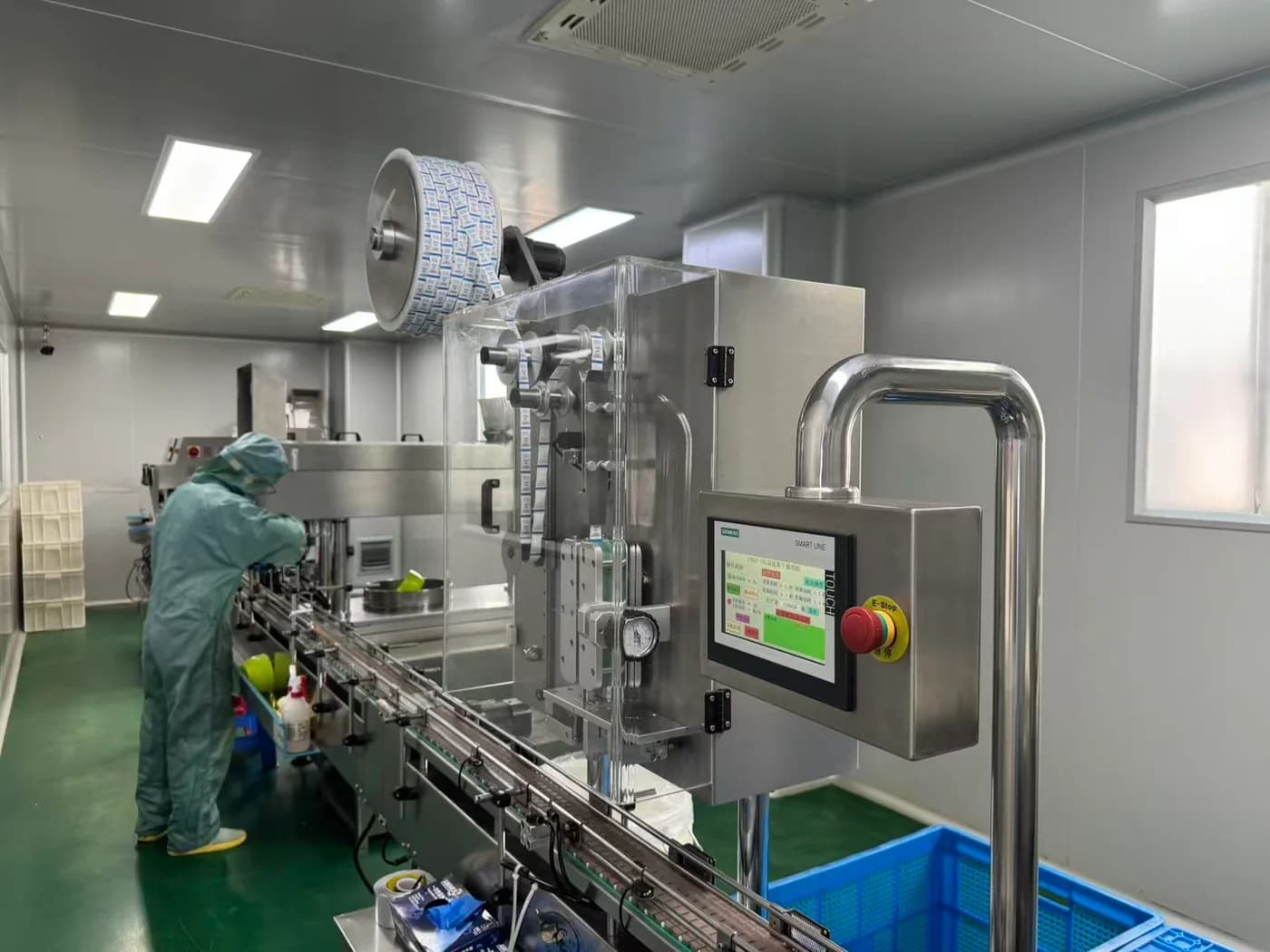
| Line capacity | Up to 2 million capsules per day; 1.5 million tablets per day; 20,000 bottles per shift |
Capability: what European manufacturers can and cannot do
European contract manufacturers typically run capsule, tablet and powder lines with capacities from 500,000 to 3 million units per day. They excel at small-batch, high-compliance work for EU retail. However, many European plants set MOQs at 10,000-50,000 units per SKU, which is difficult for emerging brands. Lead times for samples can be 15-20 working days, and production slots are often booked 8-12 weeks ahead. For launches under 5,000 units, non-EU GMP-certified plants can be more flexible.
If your target market is the EU, check whether the manufacturer holds GMP and ISO 22000. For sports nutrition, verify banned-substance testing. For herbal products, confirm pesticide and heavy-metal limits. European plants are strong on documentation, but they may not offer halal certification in-house. Ask for certificates with expiry dates and scope. A plant with 2 million capsules per day and 20,000 bottles per shift can handle scale, but only if your MOQ fits their schedule.
Formulation and ingredient sourcing
The best European manufacturers often source actives from global suppliers. Ask where each ingredient is grown, extracted and tested. For example, curcumin from India, ashwagandha from India, and omega-3 from Peru or Norway. European plants may charge more for EU-sourced botanicals. Specify fill weights: capsules 300-800 mg, tablets 500-1,500 mg, powders 100-1,000 g. Confirm excipient compatibility, especially for vegan or allergen-free claims. Request a finished-product specification before you sign.
For organic or claims, the entire supply chain must be certified. This includes the ingredient supplier, the contract manufacturer and the storage facility. Halal certification require separate audits. If you plan to sell in the Middle East, halal is non-negotiable. In the UK and EU, vegan and organic labels drive premium pricing. A manufacturer that holds GMP, ISO 22000, HACCP, halal and organic certificates can reduce your audit burden. Ask for the certificate scope, not just the logo.
Quality, Compliance and Logistics
For EU and UK buyers, compliance is the first filter. The manufacturer must be GMP-certified and ideally ISO 22000 and HACCP. If you sell on Amazon or to pharmacies, you may need a site audit. European plants are usually FDA-registered if they export to the US. Ask for a copy of the GMP certificate and the last audit report. Check heavy-metal, microbial and pesticide testing per batch. A Certificate of Analysis (CoA) should accompany every shipment.
Logistics affect landed cost. European plants ship within 3-7 days to EU addresses. Non-EU plants may take 20-35 days by sea or 5-10 days by air. For urgent launches, air freight from a GMP-certified plant in Asia can still beat a European production slot. Calculate total cost: unit price, freight, duties, VAT and warehousing. A 1,000-unit pilot run from a flexible manufacturer can validate your formula before you commit to 50,000 units. Always request a sample first.
Quality control and batch documentation at European supplement manufacturers
A European contract manufacturer should test every batch against a written specification before release. Identity is confirmed by FTIR or HPLC, potency by HPLC or titration, microbials by total aerobic count, yeast and mould, E. coli and Salmonella, heavy metals by ICP-MS for lead, cadmium, arsenic and mercury, and disintegration by USP <701> for tablets or <2040> for capsules. Finished-product testing happens after blending and again after packaging, with in-process checks on weight variation, hardness and moisture at start, middle and end of each run.
The certificate of analysis (COA) issued with each batch should list the product name, lot number, manufacture and expiry dates, tests performed, specification limits, results and the analyst's signature. It should reference the pharmacopoeial or internal method used. Buyers sourcing from European supplement manufacturers should request a COA for the exact lot shipped, not a generic example. Retained samples are kept for at least one year beyond expiry, typically two years, and stored under the same conditions as the commercial stock.
Stability follows ICH Q1A(R2) guidance: 25°C/60% RH for long-term and 40°C/75% RH for accelerated testing, with assays at 0, 3, 6, 9, 12, 18 and 24 months. A new formula usually starts with three months of accelerated data before commercial release, and the shelf life is confirmed by ongoing studies. For probiotics and softgels, additional tests cover viability, peroxide value and fatty acid profile. Ask whether the stability programme is run in-house or outsourced, and who signs the final shelf-life assignment.
Packaging, Labelling and Retail Readiness
European supplement manufacturers typically offer HDPE or PET bottles from 30 ml to 500 ml, blisters, stick packs from 5 g to 30 g, and sachets from 2 g to 10 g. Bottle fills run from 30 to 300 capsules, with induction seals, desiccant sachets and child-resistant closures where required. Blister tooling is product-specific, so a new blister format adds 10-15 working days to the timeline. Stick and sachet lines suit powders and gels but usually carry a higher minimum order quantity than bottles.
Label content depends on the destination market. For the United States, the FDA dietary supplement label needs a statement of identity, net quantity, supplement facts panel with serving size and percent daily value, ingredient list, allergen declaration, and the manufacturer or distributor name and address. For the EU, Regulation (EU) No 1169/2011 applies, with nutrition declaration, allergens and a minimum font size of 1.2 mm. Lot and expiry coding is applied by inkjet or laser, and the format should be agreed in writing before the first run.
Carton and pallet specifications should be confirmed early. A standard export carton holds 12 to 48 bottles, and a EUR pallet (1200 x 800 mm) or a GMA pallet (1200 x 1000 mm) can carry 800 to 1,200 kg depending on height. For Amazon sellers, FNSKU labels must cover the original barcode, and polybags need a suffocation warning. Retail chains in Germany and the UK often require GS1 barcodes, specific case markings and, for some categories, a printed batch code on the carton as well as the bottle.
MOQ, lead times and delivery when comparing European supplement manufacturers
A sample request usually takes 7-10 working days from receipt of the formula and packaging brief. If a stock formula is used, samples can ship in 3-5 working days. Once the sample is approved in writing, mass production runs 20-35 working days for capsules and tablets, and 25-40 working days for gummies, liquids and stick packs. The clock starts when the deposit clears and all artwork is approved, not when the purchase order is issued.
Shipping from Europe to the UK or within the EU is typically by road or rail in 3-7 days. For intercontinental shipments, air freight takes 5-10 days door to door, while sea freight takes 28-40 days to the US East Coast and 30-45 days to Asia. Incoterms should be stated explicitly: EXW leaves all export clearance to the buyer, FOB places loading on the seller, and DDP means the seller handles duty and final delivery. DDP is common for Amazon FBA shipments but requires a clear agreement on who bears import VAT.
Documents provided with each shipment should include the commercial invoice, packing list, COA for each lot, safety data sheet (MSDS) where relevant, and a free-sale certificate for the destination market. For herbal ingredients, a phytosanitary certificate may be needed, and for organic claims a transaction certificate under the relevant scheme. Buyers comparing European supplement manufacturers with non-EU alternatives should request the same document set from each supplier so that quotes can be compared on a like-for-like basis.
Packaging and Format Choices
Full-service turnkey
Formulation, sourcing, production, packaging and labelling under one roof. Best for brands with no supply chain team. MOQ 1,000 units per SKU.
White-label stock formulas
Choose from existing capsule, tablet or powder formulas. Lower MOQ, faster samples (7-10 days). Limited differentiation, but quick to market.
Custom formulation
Develop a unique blend with your actives and dosages. Requires 2-4 weeks for R&D and stability testing. Higher MOQ, typically 5,000 units.
Private label packaging
Use a manufacturer's formula but your brand, bottle and label. MOQ 1,000 units. Ideal for Amazon FBA and pharmacy chains.
How a Project Runs
- 01
Define your spec
Write fill weight, dosage form, serving size, certifications and target market. Capsules 300-800 mg, tablets 500-1,500 mg. This prevents vague quotes.
- 02
Request samples
Ask for 2-3 sample units and a CoA. Sample lead time is 7-10 working days. Test taste, smell, disintegration and label accuracy.
- 03
Audit certifications
GMP, ISO 9001, ISO 22000, HACCP, NSF/ANSI 455-2 and halal certification; FDA facility registration for US-bound shipments.
- 04
Confirm MOQ and pricing
Get a written quote with MOQ, unit price, tooling, packaging and freight. MOQ 1,000 units for retail bottling. Lower for pilot runs.
- 05
Approve the sample
Sign off on the golden sample. Mass production starts after approval. Lead time 20-35 working days. Plan for 5 days of buffer.
- 06
Arrange logistics
Decide sea or air freight. Sea to EU takes 20-35 days; air 5-10 days. Confirm Incoterms, duties and VAT before dispatch.
Why EUPHM
Lower MOQ, faster launch
Start with 1,000 units per SKU. Pilot runs available. Sample in 7-10 working days. Mass production 20-35 working days.
Certifications that open markets
GMP, ISO 9001, ISO 22000, HACCP, NSF/ANSI 455-2 and halal certification; FDA facility registration for US-bound shipments.
Scalable capacity
Up to 2 million capsules per day and 20,000 bottles per shift. Move from pilot to 500,000 units without changing supplier.
Questions buyers ask.
What is the MOQ for supplement manufacturing in Europe?+
European contract manufacturers often set MOQs at 10,000-50,000 units per SKU. Some flexible GMP-certified plants offer 1,000 units for retail bottling and lower for pilot runs. Always confirm whether the MOQ applies per SKU or per order.
How long does sample and mass production take?+
Sample lead time is typically 7-10 working days. Mass production takes 20-35 working days after sample approval. Add 5-10 days for packaging and 5-10 days for air freight to the EU. Sea freight adds 20-35 days.
Which certifications should a European supplement manufacturer hold?+
At minimum GMP, ISO 22000 and HACCP. For halal, organic or claims, the manufacturer needs specific certificates with scope covering your product. Vegan certification is separate. Ask for expiry dates and audit reports.
Can I get a custom formula with low MOQ?+
Yes, but custom formulation usually requires 2-4 weeks for R&D and stability testing. MOQ may rise to 5,000 units. If you need 1,000 units, consider a white-label or private-label stock formula with your branding.
How do I compare European manufacturers with non-EU options?+
Compare total landed cost, not unit price. Include freight, duties, VAT, warehousing and lead time. European plants offer short shipping, but non-EU GMP-certified plants can match quality at lower MOQ. Request samples from both before deciding.
Do European supplement manufacturers provide stability data before I place a bulk order?+
Most provide accelerated stability data at 40°C/75% RH for three to six months before a first commercial run, plus a written shelf-life assignment. Full long-term data at 25°C/60% RH accumulates after launch. Ask for the protocol, the test intervals and whether the study is run in-house or at an external laboratory. For probiotics, request viability data at the claimed CFU count through end of shelf life, not just at release.
Can a European manufacturer handle Amazon FNSKU labelling and retail-ready packaging?+
Many can, but it should be specified in the quote. FNSKU labels must cover the original barcode, and each unit usually needs a polybag with a suffocation warning. Retail-ready cartons may need a GS1 case code, specific pallet patterns and a printed batch code on the outer carton. Confirm who supplies the labels, who applies them, and whether the cost is per unit or per carton before production starts.
What Incoterms and shipping documents should I expect from European supplement manufacturers?+
EXW, FOB and DDP are the most common. EXW leaves export clearance and freight to you, FOB places loading on the seller, and DDP means the seller handles duty and delivery, which suits FBA shipments. Each shipment should include a commercial invoice, packing list, lot-specific COA, MSDS where relevant and a free-sale certificate. For herbal materials, ask whether a phytosanitary certificate is required for your destination.
Have a product in mind?
Send us the brief and we will come back with a formulation direction, indicative price and a realistic lead time — usually within one working day.