Best Supplement Manufacturers in Saudi Arabia for Your Brand
Sourcing a supplement manufacturer for Saudi Arabia means halal certification, SFDA compliance and reliable lead times. EUPHM runs GMP, ISO 22000 and HACCP lines with MOQ 1,000 units and 20–35 day mass production.

Overview
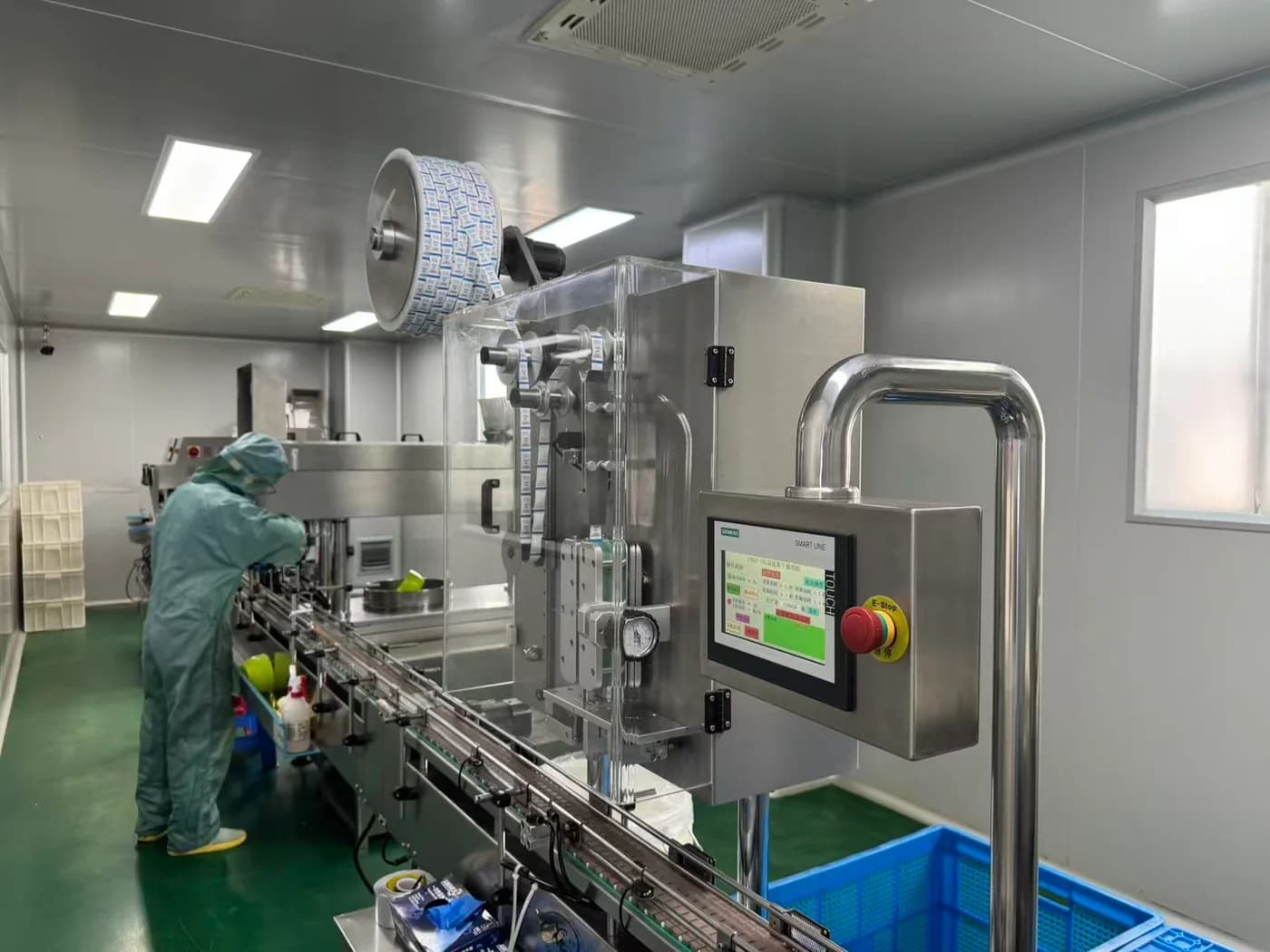
Saudi Arabia’s supplement market is growing at 8–10% annually, driven by Vision 2030 health initiatives and a young, digitally native population. Brand owners need a manufacturing partner that understands halal integrity, Arabic labelling and SFDA import rules. EUPHM operates a GMP-certified facility in Guangdong, China, with dedicated halal lines. We produce capsules, tablets, softgels, powders and gummies for Saudi distributors and private-label brands, with full documentation for customs clearance in Jeddah or Dammam.
| MOQ | 1,000 units per SKU; 1,000 units for pilot runs |
|---|---|
| Sample lead time | 7–10 working days |
| Mass production | 20–35 working days after sample approval |
| Certifications | GMP, ISO 9001, ISO 22000, HACCP, NSF/ANSI 455-2, halal, FDA-registered |
| Fill weights | Capsules 300–800 mg; tablets 500–1,500 mg; gummies 2–4 g; powders 5–30 g |
| Line capacity | 1.2 billion capsules, 800 million tablets, 300 million softgels annually |
Production Capability for Saudi Volume
Saudi buyers often start with 5,000 to 10,000 units per SKU for a pharmacy or online launch, then scale to 50,000 units quarterly. Our Guangdong plant runs 12 encapsulation lines, 8 tablet presses and 4 gummy depositors, with changeover under 4 hours. That means a 10,000-unit order can move from approved sample to finished goods in 20 working days. For larger volumes, we allocate dedicated shifts and hold raw materials in a climate-controlled warehouse at 18–22°C and 45–55% relative humidity.
Shipping from Shenzhen or Hong Kong to Jeddah or Dammam takes 18–25 days by sea, or 5–8 days by air. We provide commercial invoices, packing lists, certificates of analysis, halal certificates and SFDA-required product registration dossiers. For Saudi Arabia, we also arrange Arabic-English bilingual labels with production and expiry dates in Hijri and Gregorian calendars. Our documentation team has cleared over 200 shipments to GCC ports since 2019.
Formulation and Ingredient Sourcing
Saudi consumers favour specific categories: vitamin D3 (often 5,000 IU), omega-3 fish oil (1,000–2,000 mg EPA/DHA), collagen peptides (5–10 g), probiotics (10–50 billion CFU), and sports nutrition (whey, creatine, BCAAs). We formulate with branded ingredients such as TSI magnesium, Albion minerals, and Sabinsa curcumin. For halal compliance, all gelatin capsules use bovine halal-certified sources, and softgels use either bovine or fish gelatin. We avoid alcohol-based excipients and porcine derivatives entirely.
Our R&D team can match a competitor’s profile or develop a custom blend. Typical development takes 10–15 days for a bench sample, then 7–10 days for a pilot batch. We test stability at 40°C/75% RH for 6 months to simulate Saudi summer conditions. Flavour systems for gummies and powders include halal-certified natural flavours, with sugar-free options using allulose or stevia. Every formula is reviewed for SFDA restricted ingredients before production.
Quality, Compliance and Logistics
Saudi Arabia’s SFDA enforces strict rules on supplement claims, labelling and import permits. Our quality team prepares a technical file per SKU: certificate of analysis, heavy metal test (lead <0.5 ppm, cadmium <0.5 ppm, mercury <0.1 ppm), microbial test (total plate count <1,000 cfu/g, absence of E. coli and Salmonella), and shelf-life statement. We are an FDA-registered facility and follow GMP, ISO 22000 and HACCP. Halal certificates come from an accredited body recognised by the Saudi Standards, Metrology and Quality Organization (SASO).
For logistics, we offer FOB Shenzhen, CIF Jeddah, or DDP Riyadh. DDP includes customs clearance and last-mile delivery to your warehouse. We handle all export documents, including certificate of origin, halal certificate, and health certificate. Payment terms are 50% deposit, 50% before shipment, with LC at sight available for orders above 30,000 USD. We also provide digital assets: product images, label templates, and Arabic-English ingredient lists.
Quality Control and Batch Documentation
Every batch produced for a Saudi brand is tested at three points: incoming raw materials, in-process blend and finished goods. Identity and potency are confirmed by HPLC or UV-Vis against a reference standard, microbials by USP <61>/<62> with total aerobic count under 1,000 cfu/g and absence of E. coli and Salmonella, heavy metals by ICP-MS to limits of lead under 0.5 ppm, arsenic under 0.5 ppm, cadmium under 0.5 ppm and mercury under 0.1 ppm, and disintegration by USP <701> with capsules releasing within 30 minutes. Testing is performed in-house and, for release, by a third-party ISO 17025 laboratory.
The certificate of analysis issued with each batch lists product name, lot number, manufacture and expiry dates, fill weight, appearance, identity, assay result as a percentage of label claim, microbial results, heavy metals, disintegration time and a statement of conformity to the agreed specification. A retention sample of at least twice the finished-goods test quantity is held for 24 months after expiry under controlled temperature and humidity, so any market query can be traced to the original lot.
Stability follows a bracketed protocol: accelerated conditions at 40°C and 75% relative humidity for six months, plus real-time data at 25°C and 60% relative humidity for the declared shelf life, typically 24 months for capsules and tablets and 18 months for gummies. Where a Saudi distributor requires a specific shelf life at import, we can set the expiry from the stability batch rather than the production date, provided the order is placed before the stability window closes.
Packaging, Labelling and Retail Readiness
Finished goods can be packed in HDPE bottles from 30 to 500 ml with induction seals and child-resistant or standard caps, in PVC/PVDC blisters of 10 to 30 units, in stick packs of 5 to 30 g and in sachets of 2 to 10 g. Bottle labelling supports wrap-around or two-panel formats; cartons are printed with lot number, expiry date and, where requested, a QR code linking to the batch certificate. Cartons are specified to a maximum of 15 kg and pallets to 1,200 by 1,000 mm with a maximum height of 1,800 mm including the pallet.
For Saudi retail, labels can carry the SFDA-required Arabic and English text, including product name, ingredient list, net content, dosage, storage conditions, manufacturer and importer details, and the halal mark where the line is certified. We do not print an SFDA registration number ourselves; that number is issued to the Saudi importer or brand owner and supplied to us as print-ready artwork. Lot and expiry coding is applied by inkjet or laser at the filling line, with a verification scan before cartoning.
For Amazon and other e-commerce channels, we can apply FNSKU labels, poly-bag units and print the carton mark and box dimensions required by the marketplace. Retail compliance checks cover barcode grade to ISO/IEC 15416 at grade B or above, net-content declaration in metric units, and allergen and warning statements in both Arabic and English. Artwork is proofed against the approved specification and a signed proof is retained with the batch record.
MOQ, Lead Times and Delivery
Sampling starts with a brief and a target formulation; a sample of 7 to 10 working days follows once the formula and packaging are agreed. Pilot runs of 1,000 units per SKU are available for market testing, while standard MOQ is 1,000 units per SKU depending on the dose form and packaging. Mass production runs 20 to 35 working days after sample approval, with the longer window applying to gummies and to orders requiring new artwork or a new bottle mould.
Shipments to Jeddah or Dammam move by sea in 22 to 30 days port to port, or by air in 5 to 8 days door to door. We quote EXW, FOB Shenzhen or Hong Kong, and DDP to the consignee's warehouse where the buyer prefers a single landed cost. Air freight is typically used for launch quantities under 500 kg or for products with a short shelf life; sea freight is used for full pallet orders where the freight cost per unit is lower.
Each shipment is accompanied by a certificate of analysis per lot, a material safety data sheet where the product is classified, a free-sale certificate, a halal certificate for the relevant line, and a phytosanitary certificate where a botanical ingredient requires one. Commercial invoice, packing list and bill of lading are issued in the names the Saudi importer specifies, and documents can be legalised or attested through the chamber of commerce where the consignee's bank requires it.
Configurations to Compare
Bottles and blisters
HDPE bottles 60–180 cc with induction seal and child-resistant cap. Blister packs for pharmacy chains, 10–30 tablets per card.
Sachets and stick packs
Powder or granule sachets 5–30 g, ideal for collagen, electrolytes and sports drinks. Stick packs for single-serve convenience.
Gummies and softgels
Pectin or gelatin gummies in halal-certified moulds. Softgels for omega-3, vitamin D and CoQ10, 500–1,500 mg fill.
Arabic-english labels
Bilingual labels with Hijri/Gregorian dates, SFDA registration number field, and halal logo. We supply print-ready artwork.
Production in Six Steps
- 01
Inquiry and quote
Send your product spec, target volume and certification needs. We reply within 1 working day with a quote and lead time.
- 02
Sample development
We produce a bench sample in 7–10 working days. You approve taste, colour, fill weight and label.
- 03
Pilot batch
Optional 1,000–2,000 unit pilot run to test stability and packaging. Takes 10–15 working days.
- 04
Order confirmation
Sign PI, pay 50% deposit. We lock raw materials and schedule production within 5 working days.
- 05
Mass production
Full run of 1,000+ units in 20–35 working days. In-process QC at 3 stages.
- 06
Shipping and docs
We book freight, prepare halal and COA documents, and ship to Jeddah, Dammam or Riyadh.
Why EUPHM
Halal and SFDA ready
Halal certificates from SASO-recognised bodies. Full SFDA technical file support for import permits.
Low MOQ for testing
Start with 1,000 units for pilot runs, then scale to 1,000 units per SKU for retail.
Fast turnaround
Samples in 7–10 days, mass production in 20–35 days. Sea freight to Jeddah in 18–25 days.
Questions buyers ask.
Do you provide halal certification for Saudi Arabia?+
Yes. Our facility holds halal certificates from an accredited body recognised by SASO. All gelatin, capsules and excipients are halal-certified. We provide the halal certificate with every shipment, and it covers the specific production batch.
What is the MOQ for a private label supplement in Saudi Arabia?+
MOQ is 1,000 units per SKU for retail bottling. For pilot runs or market testing, we accept 1,000 units. This applies to capsules, tablets, softgels, gummies and powders.
How long does production and shipping take to Jeddah?+
Sample lead time is 7–10 working days. Mass production takes 20–35 working days after sample approval. Sea freight from Shenzhen to Jeddah is 18–25 days. Air freight is 5–8 days. We handle all export documents.
Can you help with SFDA registration and Arabic labelling?+
Yes. We prepare the technical file for SFDA import permits, including COA, heavy metal tests, microbial tests and shelf-life data. We also design Arabic-English bilingual labels with Hijri and Gregorian dates, and include the halal logo.
What certifications does your facility hold?+
We are GMP-certified, ISO 22000, HACCP, and FDA-registered. We also hold halal and vegan certifications. Certificates are available for review before you place an order.
Can you supply stability data before my SFDA submission?+
Yes. For a new formula we can run a six-month accelerated stability study and issue an interim report at three months, followed by the full report at six months. Real-time data at 25°C and 60% relative humidity is generated in parallel for the declared shelf life. If your SFDA file needs a specific format, send the template and we will complete it with the batch results.
Do you offer low-MOQ pilot runs for a new Saudi brand?+
Yes. Pilot runs start at 1,000 units per SKU for capsules, tablets and powders, and at 2,000 units for gummies where a mould change is needed. Pilot pricing is higher per unit than mass production because setup and cleaning costs are spread over a smaller batch. The pilot batch carries the same testing and documentation as a full production run.
What Incoterms do you quote for Saudi Arabia and who handles customs?+
We quote EXW, FOB Shenzhen or Hong Kong, and DDP to a warehouse in Jeddah, Riyadh or Dammam. Under FOB the Saudi importer clears customs and pays duty and VAT; under DDP we arrange freight and clearance through a forwarder and invoice a single landed cost. We provide the commercial invoice, packing list, certificate of origin and certificates needed for clearance.
Have a product in mind?
Send us the brief and we will come back with a formulation direction, indicative price and a realistic lead time — usually within one working day.