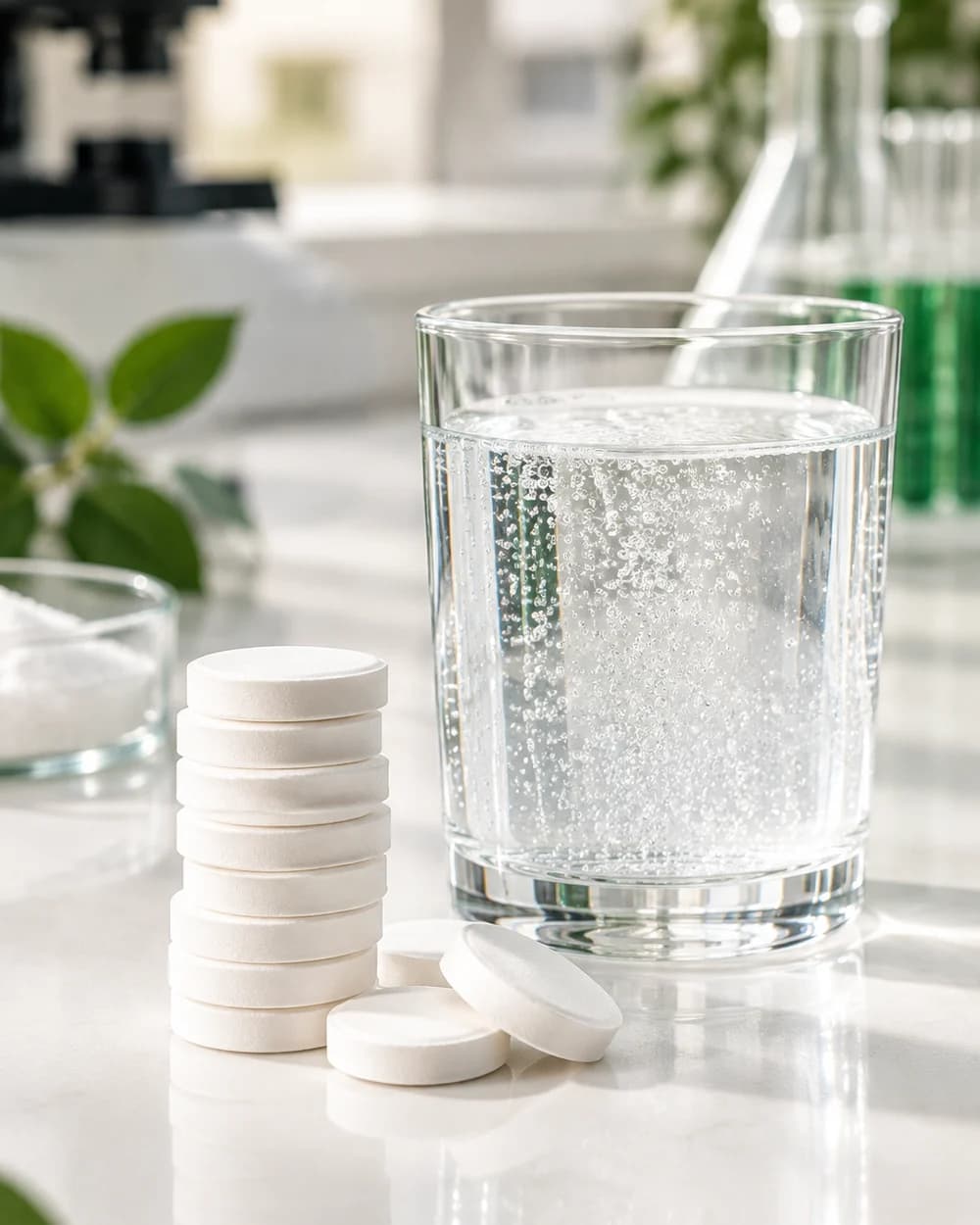
Effervescent Manufacturer for Private Label Supplements
EUPHM produces effervescent tablets and powders at a GMP-certified facility in Guangdong, China. Tablet weights from 2.5 g to 5.5 g, tube or sachet formats, and MOQs from 1,000 units per SKU.
Overview
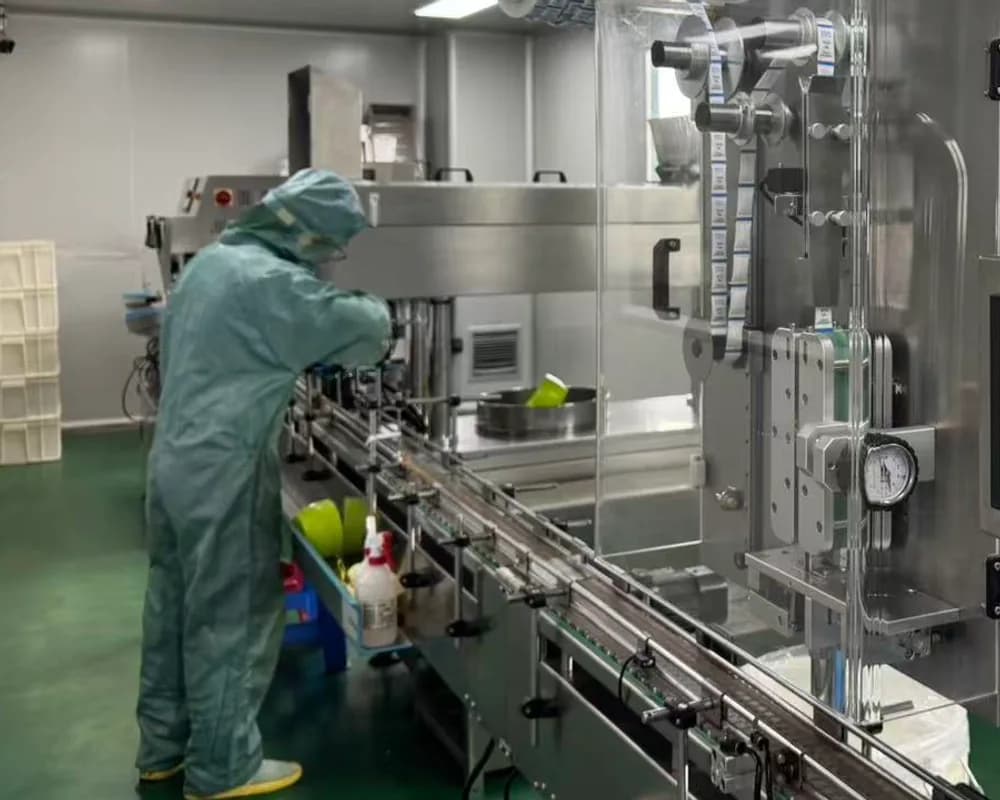
Effervescent formats demand tight control of moisture, compression force and acid-base balance. Our plant runs dedicated granulation, drying and tableting lines for effervescent products, with humidity-controlled packing rooms. We supply brands in the US, EU, UK and Middle East with retail-ready tubes, sachets and bulk tablets. Certifications include GMP, ISO 22000, HACCP, plus halal and organic options where relevant.
| MOQ | 1,000 units per SKU for retail bottling |
|---|---|
| Tablet weight | 2.5 g to 5.5 g, custom weights on request |
| Sample lead time | 7-10 working days for formulation and samples |
| Mass production | 20-35 working days after sample approval and deposit |
| Line capacity | Up to 120,000 tablets per shift across two effervescent lines |
| Certifications | GMP, ISO 9001, ISO 22000, HACCP, NSF/ANSI 455-2, halal, FDA-registered |
Effervescent Production Capability
EUPHM operates two dedicated effervescent lines with granulation, fluid-bed drying, compression and packing under controlled humidity below 30% RH. We run tablet diameters from 20 mm to 30 mm and fill tubes from 10 to 20 tablets. Sachet filling is available for powder formats at 3 g to 10 g per stick. Changeover between SKUs takes 4 to 6 hours, which keeps small runs practical.
Annual capacity exceeds 40 million effervescent tablets. We hold stock of common actives and excipients, so pilot batches can start within 10 working days of formula sign-off. For brands scaling from 5,000 to 500,000 units, we schedule production in blocks to avoid long waits between runs. Packaging options include PP tubes, aluminium tubes, stick packs and single-serve sachets.
Formulation and Ingredient Support
Effervescent systems rely on a precise ratio of acid to bicarbonate. We work with citric acid, tartaric acid, malic acid and sodium bicarbonate, adjusting the ratio to hit target pH, dissolution time and mouthfeel. Typical dissolution is 60 to 90 seconds in 200 ml of water at 20°C. We can mask bitter actives with sweeteners, flavours and clouding agents, and we test taste at three time points during development.
Common actives include vitamin C, vitamin B complex, zinc, magnesium, calcium, electrolytes, glutathione, collagen and herbal extracts. We can formulate sugar-free, vegan, halal versions. For organic claims, we source certified organic raw materials and maintain full traceability. Stability testing runs at 25°C/60% RH and 40°C/75% RH for 3 to 6 months, with real-time data available for regulatory submissions.
Quality Control and Compliance
Every batch is tested for weight variation, hardness, friability, disintegration time, pH and microbial limits. We hold GMP, ISO 22000 and HACCP certifications, and our facility is FDA-registered for dietary supplements. Certificates of analysis are issued per batch, and we retain samples for 24 months. Heavy metal and pesticide testing is available on request, with third-party lab reports from Eurofins or SGS.
For export, we prepare documentation for US, EU, UK and Middle East markets. This includes free sale certificates, halal certificates, organic transaction certificates, and allergen statements. We can print labels with your artwork and apply batch codes, expiry dates and barcodes. Shipping is arranged by sea or air from Shenzhen or Hong Kong, with DDP options to major ports.
Effervescent Quality Control and Batch Documentation
Every effervescent batch is tested against a written specification before release. Incoming raw materials are sampled at 100% of containers for identity by FTIR and assay by HPLC or titration. During production, we check tablet weight every 15 minutes (target ±2%), hardness (typically 60-90 N for 4 g tablets), thickness and friability (below 0.8% after 100 drops). Disintegration is tested in 200 ml of water at 20°C; effervescent tablets must fully dissolve within 5 minutes, and we record the actual time for each batch.
Microbial testing covers total aerobic count, yeast and mould, E. coli, Salmonella and Staphylococcus aureus, with limits set to EU and USP <2021>/<2022> requirements. Heavy metals (lead, cadmium, arsenic, mercury) are tested by ICP-MS on each finished batch. Potency testing confirms that active ingredients such as vitamin C, electrolytes or NSAIDs remain within 95-105% of label claim at release. We also test pH and total acidity of the dissolved solution to confirm the acid-base balance matches the approved formula.
A certificate of analysis (COA) is issued for every batch and includes lot number, manufacturing date, expiry date, tests performed, specifications, results and the analyst's signature. Retention samples of each batch are stored for the full shelf life plus 12 months under controlled conditions (25°C/60% RH and 30°C/65% RH). Stability protocols follow ICH Q1A(R2): accelerated at 40°C/75% RH for 6 months and long-term at 25°C/60% RH for 24-36 months, with testing at 0, 3, 6, 9, 12, 18 and 24 months.
Documentation is available in English and can be provided in Chinese or Arabic on request. Batch records, deviation reports and change controls are retained for at least five years and are available for audit by appointment. If a batch fails any specification, it is quarantined, investigated and either reworked under a written protocol or rejected; no batch is released without a signed COA and quality manager approval.
Effervescent Packaging, Labelling and Retail Readiness
Effervescent tablets are hygroscopic, so packaging must provide a moisture barrier. We offer polypropylene tubes with desiccant caps (10, 20 or 30 tablets), aluminium blister packs (1-2 tablets per cavity), stick packs (single-dose powder or granule) and sachets (3-5 g). Tubes are induction-sealed and labelled with lot number and expiry date by inkjet or laser. Blisters use alu-alu or PVC/PVDC film depending on shelf-life requirements. Cartons are printed to your artwork and can include a leaflet or booklet.
For US dietary supplements, labels must carry a supplement facts panel, ingredient list, net quantity, directions for use, warnings, manufacturer or distributor name and address, and allergen declarations where applicable. We can review your artwork for FDA 21 CFR 101 compliance before printing. For EU and UK markets, labels follow FIC Regulation 1169/2011 and supplement-specific rules, including nutrition declaration and 'food supplement' wording. Lot and expiry coding is applied to every unit; we use Julian date codes or your specified format.
Retail-ready cartons are specified with dimensions, board grade (typically 300-350 gsm), print finish and barcode placement. We apply Amazon FNSKU labels, poly-bag units where required and carton labels with SKU, quantity and expiry date. Pallet configuration is agreed before production: standard EU pallets (1200 x 800 mm) or US pallets (48 x 40 in), with stretch-wrap and corner boards. We can ship to Amazon FBA warehouses directly using your preferred carrier account.
Before mass production, we provide a packaging specification sheet and a physical or digital proof for approval. If you supply your own packaging components, we require a minimum of 5% overage to cover line losses. All packaging materials are checked for food-contact compliance (EU 10/2011 and FDA 21 CFR 174-186) and stored in a humidity-controlled area before filling.
Effervescent MOQ, Lead Times and Delivery Terms
Sampling starts with a formulation brief and target label claim. We provide a quotation within 2 working days and a sample plan within 5 working days. Prototype samples (typically 100-200 tablets) are ready in 7-10 working days, including a preliminary COA. If you need a stability indication, we can provide 4-week accelerated data with the sample. Sample costs are credited against the first mass-production order. For formula matching, we need your existing label, specification or a sample of the finished product.
Mass production runs 20-35 working days after sample approval, deposit and packaging artwork sign-off. This includes raw material procurement, granulation, drying, tableting, packing and QC release. Peak season (August to November) may add 5-7 working days. We update you with production photos and a batch record summary at key stages. If you need faster delivery, air freight can reduce transit to 3-7 days compared with 25-35 days by sea.
We ship under EXW, FOB Shenzhen or Hong Kong, or DDP to your door. For DDP, we handle customs clearance and duties for most destinations, including the US, EU, UK and Middle East. Air shipments are usually palletised and shrink-wrapped; sea shipments use FCL (20ft or 40ft) or LCL. We provide a packing list, commercial invoice and certificate of origin with every shipment.
Export documents include COA, material safety data sheet (MSDS) where applicable, free-sale certificate, and phytosanitary certificate for herbal ingredients where required. We can also provide halal or organic certificates for the specific batch if your order is certified. Shipping documents are sent by email within 24 hours of dispatch, and tracking details are shared for air and sea consignments.
Why effervescents sell — and why most factories avoid them
An effervescent tablet dissolves in water in under two minutes, tastes like a drink and carries a 1,000 mg dose without anyone swallowing a pill. That combination is why they outperform in vitamin C, electrolytes, hangover and immunity products, and why the tube format keeps winning shelf space.
The reason more factories do not run them is chemistry. An acid and a carbonate will start reacting the moment moisture gets in, so the production room has to sit at 20–25% RH, the compression force has to stay low enough not to crush the granule, and the tablet has to be wrapped in foil within minutes of leaving the press. Sodium load is also real: a 4 g tablet is mostly bicarbonate, so low-sodium formulas need a different acid-base pair and a different taste profile.
Effervescent control: humidity, hardness and dissolution
The two numbers that decide whether a batch survives are room humidity and tablet hardness. We hold the filling room at 20–25% RH and 20–25 °C, because above that the granules pick up moisture and start releasing CO2 before the foil is sealed. Hardness is kept in a deliberately low 2–4 kp window — hard enough to survive the wrap, soft enough to dissolve in the glass inside two minutes.
Every batch is checked for disintegration time, CO2 content, moisture pick-up after 24 hours of exposure, and seal integrity of the foil. Tablets are wrapped immediately on a high-barrier aluminium laminate; a pinhole in the wrap is the most common cause of a tube that swells on a warehouse shelf. Stability runs for the full shelf life at 25 °C/60% RH, with tube swelling and taste checked at each interval, not just assay.
Formats and Packaging Options
Tablet tubes
PP or aluminium tubes with 10 to 20 tablets. Child-resistant caps and desiccant stoppers available. Suitable for pharmacy and retail shelves.
Stick packs
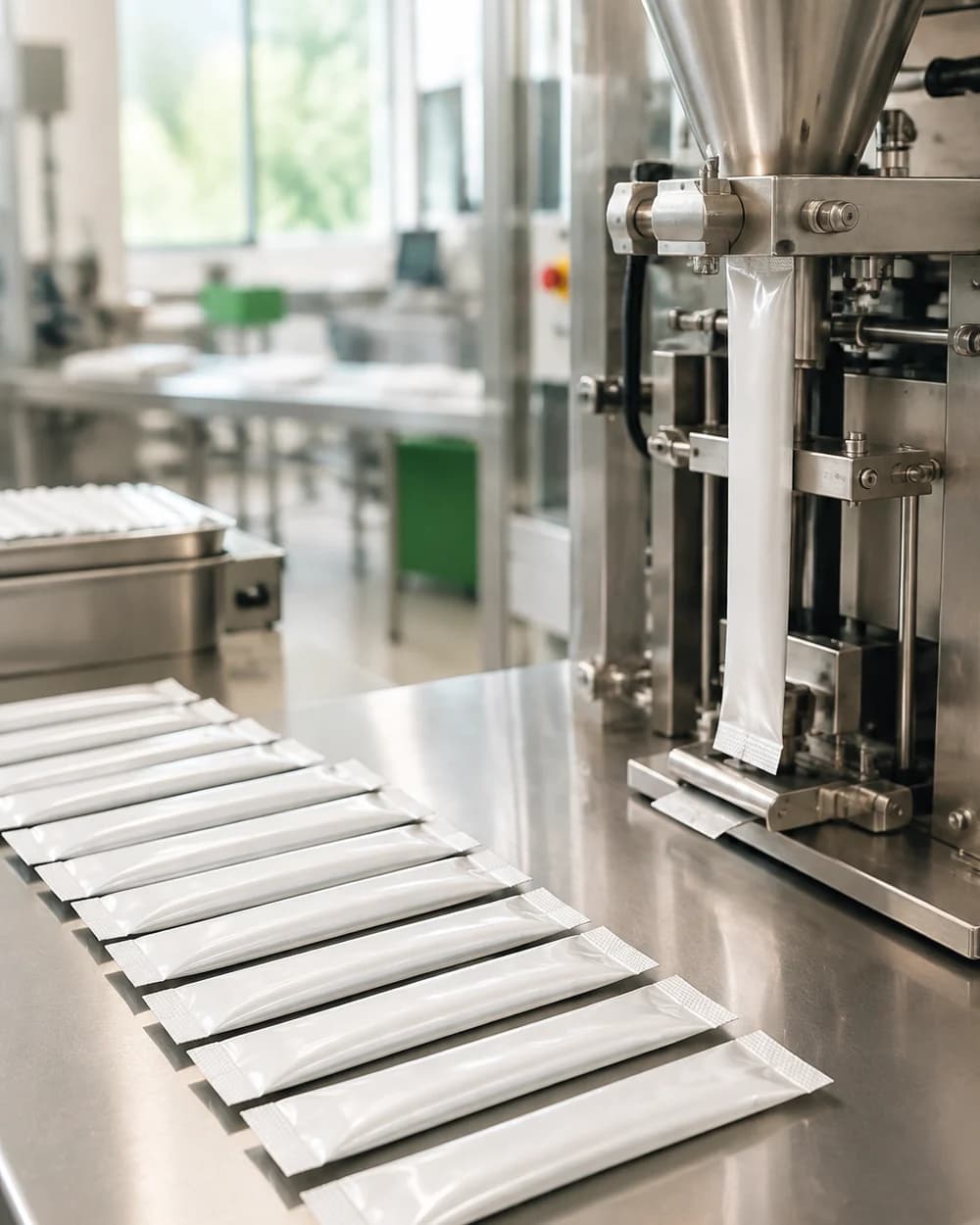
Single-serve stick packs from 3 g to 10 g. Ideal for electrolytes, energy and immunity blends. Low MOQ per flavour.
Sachet powders
Effervescent powder in 3 g to 10 g sachets. Faster dissolution and easier flavour masking than tablets. Good for paediatric or senior lines.
Bulk tablets
Unpacked tablets in food-grade drums for local packing. Reduces unit cost and shipping volume for brands with in-house filling.
From Enquiry to Delivery
- 01
Share your brief
Send target actives, dosage, flavour, packaging format and target markets. We confirm feasibility within 2 working days.
- 02
Receive a quote
We provide unit pricing, MOQ, lead time and tooling costs if custom shapes are needed. Quotes are valid for 30 days.
- 03
Approve samples
We produce samples in 7-10 working days. You test dissolution, taste and packaging. Two revision rounds are included.
- 04
Confirm artwork
Our design team checks dielines, label claims and regulatory text for your market. We send a print-ready proof for sign-off.
- 05
Mass production
Production runs in 20-35 working days after deposit. We share batch records and in-process QC data during the run.
- 06
QC and shipping
Final QC, certificate of analysis and export documents are prepared. We ship by sea or air and provide tracking.
Why EUPHM
Low MOQ per SKU
Start at 1,000 units for retail tubes. Pilot runs from 1,000 units help you test the market before scaling.
Fast sampling
Samples in 7-10 working days. We keep common actives in stock to shorten development time.
Export-ready docs
Halal, organic and free sale certificates prepared for US, EU, UK and Middle East buyers.
Questions buyers ask.
What is the MOQ for effervescent tablets?+
MOQ is 1,000 units per SKU for retail tubes and stick packs. Pilot runs start at 1,000 units. For bulk tablets, MOQ is 5,000 units. We can mix flavours or actives within one order to meet the total quantity.
How long does sampling take?+
Sample lead time is 7-10 working days after we receive your brief and confirm raw material availability. This includes formulation, tableting and packing. If custom tooling is needed, add 10-15 working days for moulds.
Can you match my existing formula?+
Yes. Send your current formula or a competitor sample. We reverse-engineer the acid-base ratio, flavour and actives, then produce a matching sample. You approve taste, dissolution time and packaging before mass production.
What certifications do you hold?+
We hold GMP, ISO 22000 and HACCP certifications. halal and vegan certificates are available for relevant products. Our facility is FDA-registered for dietary supplements. We provide certificates of analysis and third-party lab reports per batch.
What is the production lead time?+
Mass production takes 20-35 working days after sample approval and deposit. This covers granulation, tableting, packing and QC. Shipping by sea to the US or EU adds 25-35 days. Air freight takes 5-10 days.
What is the shelf life of your effervescent tablets?+
Shelf life depends on formulation and packaging. In aluminium tubes with desiccant, typical shelf life is 24 months at 25°C/60% RH. In blisters, it can be 18-24 months. We confirm shelf life through ICH stability studies and state it on the COA and label. If you need 36 months, we can develop a formulation with a moisture barrier and run extended stability testing.
Can you produce effervescent tablets with a sugar-free or low-sodium formula?+
Yes. We use sweeteners such as sucralose, steviol glycosides or erythritol, and sodium-free acid sources like citric acid and malic acid. Sodium bicarbonate can be partly replaced with potassium bicarbonate or calcium carbonate, depending on taste and dissolution. We adjust the acid-base ratio to maintain a pH of 4.0-5.5 in solution and test taste and mouthfeel during sampling.
Do you provide stability data before I place a mass-production order?+
We can provide 4-week accelerated stability data (40°C/75% RH) with your samples, covering assay, disintegration, moisture and appearance. Full ICH stability studies (6 months accelerated and 24-36 months long-term) are run on the first production batch and data is shared as it becomes available. If you need a specific shelf-life claim before launch, we can discuss a parallel stability programme.
Other versions built in this dosage form.
Have a product in mind?
Send us the brief and we will come back with a formulation direction, indicative price and a realistic lead time — usually within one working day.