Sugar-Free Effervescent Manufacturer for Private Label Brands
EUPHM produces sugar-free effervescent tablets and powders from a GMP-certified plant in Guangdong. We handle formulation, flavour matching, packaging and regulatory documentation for brands in the US, EU, UK and Middle East.
Overview
Sugar-free effervescent formats need more than removing sucrose. The binder system, acid-base ratio and tablet hardness must be rebuilt to keep the product stable and fully soluble. This page covers how we produce sugar-free effervescent tablets and powders at 1,000 unit MOQs, with sample lead times of 7 to 10 working days and mass production in 20 to 35 working days. For the full range of effervescent formats, see our /effervescent-manufacturer page.
Production Capability for Sugar-Free Formats
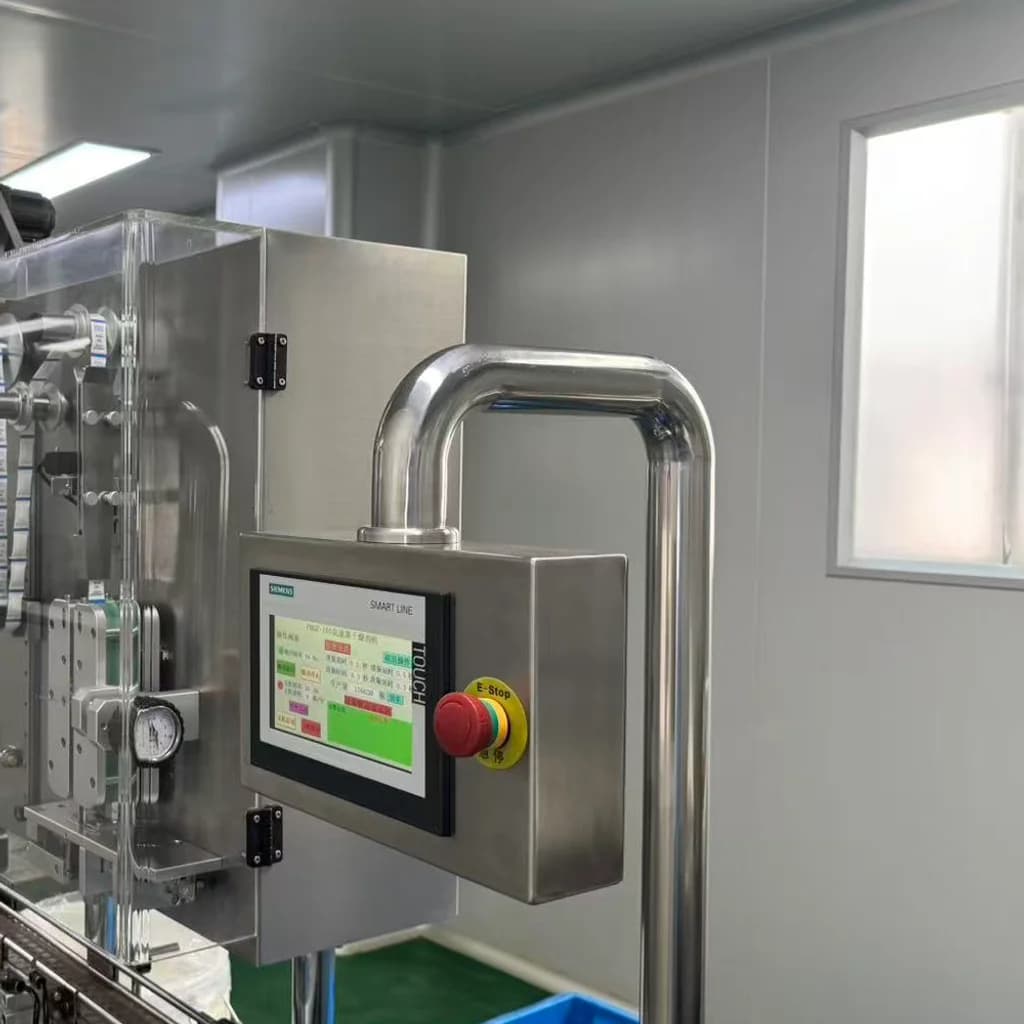
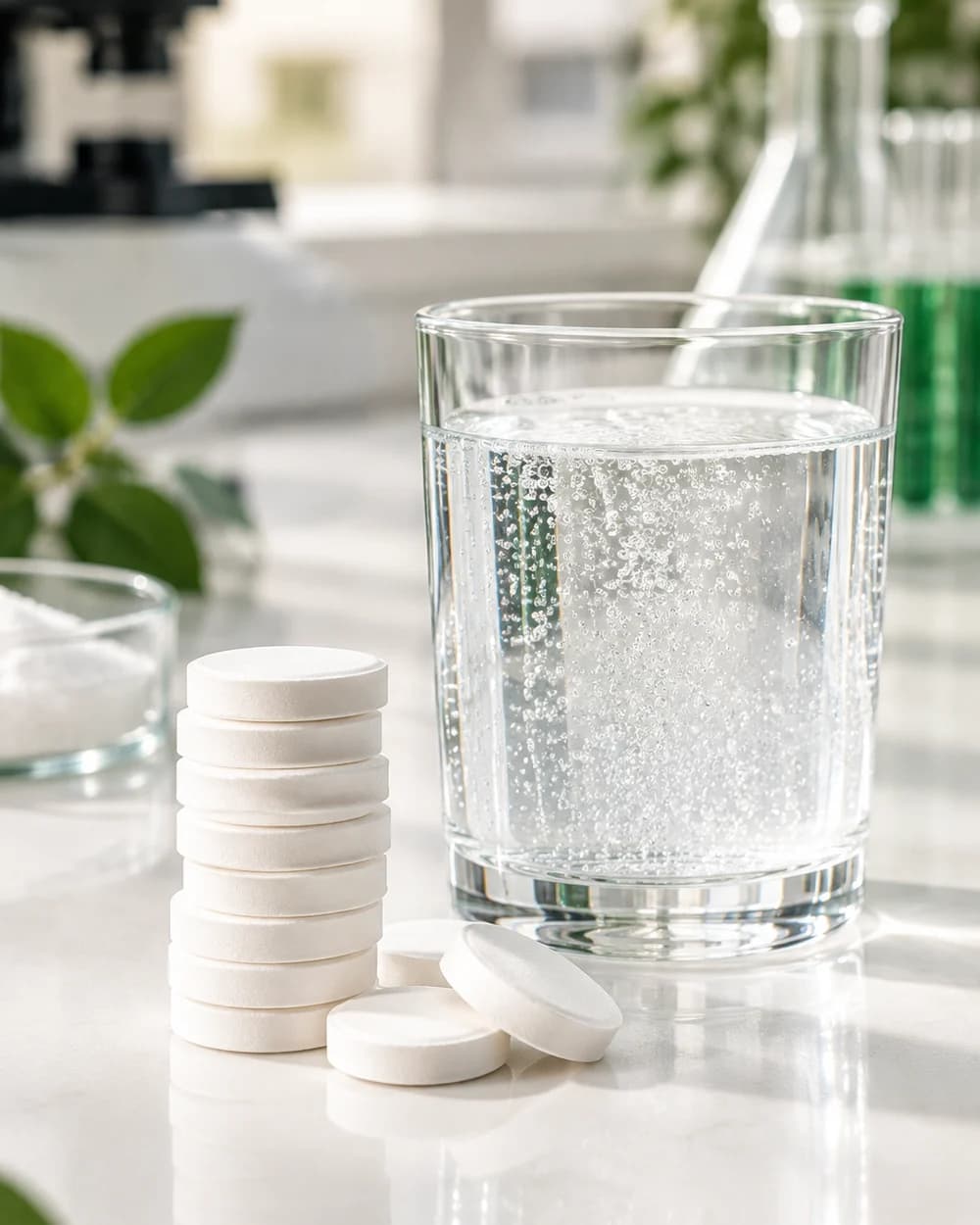
Sugar-free effervescent tablets are compressed on rotary presses with strict humidity control below 25% RH. Our plant runs two effervescent lines dedicated to sugar-free and low-sugar formats, producing 2.0 g to 4.5 g tablets at up to 500,000 tablets per day. We use direct compression and roller compaction depending on the active ingredient load. Tablets are packed into tubes, stick packs, sachets or blister packs. Tube filling runs at 120 tubes per minute, stick pack filling at 400 sachets per minute. Every batch is checked for hardness, friability, disintegration time and pH.
For sugar-free powders, we use a dry blending process with a ribbon blender and vacuum conveyor to prevent moisture ingress. Powder fill weights range from 3 g to 10 g per sachet. We can produce effervescent granules with a uniform particle size distribution to ensure consistent dissolution. The plant holds separate suites for high-potency ingredients, including vitamins, minerals, amino acids and herbal extracts. Changeover and cleaning validation follow a documented SOP for each product family.
Formulation Without Sugar or Artificial Sweeteners
Removing sugar changes mouthfeel, sweetness curve and tablet integrity. We build sugar-free formulas around polyols such as sorbitol, mannitol or xylitol, or use stevia and monk fruit for zero-calorie options. The acid system typically combines citric acid and sodium bicarbonate at a 1:1.2 to 1:1.5 ratio to control fizz and pH. Binders like PVP or HPMC are selected to maintain hardness above 80 N without slowing disintegration beyond 90 seconds. We can match flavour profiles from existing sugar-based products or develop new ones with natural or nature-identical flavours.
Common sugar-free actives include vitamin C, B-complex, magnesium, zinc, electrolytes and collagen. Dosage ranges from 50 mg to 1,000 mg per tablet. We test compatibility with sweeteners and acids at 40°C and 75% RH for 3 months to confirm stability. For vegan and halal claims, we avoid gelatine and use plant-based magnesium stearate or stearic acid. Organic versions require certified organic raw materials and a separate production run. Every formula is documented with a full ingredient breakdown for your regulatory filing.
Quality Control and Export Documentation
The facility is GMP-certified and holds ISO 22000, HACCP, halal and certifications. Incoming raw materials are tested for identity, potency and microbial load. In-process checks cover tablet weight variation, hardness, thickness and disintegration. Finished products are tested for total plate count, yeast and mould, E. coli, Salmonella and heavy metals. We retain samples for 24 months. Batch records are available for audit. A certificate of analysis is issued per batch, with full traceability from raw material lot to finished unit.
For exports to the US, EU, UK and Middle East, we provide documentation including certificate of origin, health certificate, free sale certificate and halal certificates where applicable. Our regulatory team can support label reviews for FDA 21 CFR 111, EU Directive 2002/46/EC and Gulf Standard GSO 2528. We are not an FDA-approved facility, but our plant is FDA-registered. Shipping is arranged from Shenzhen or Hong Kong ports, with air freight for urgent orders. Typical sea freight to Rotterdam takes 28–32 days; to Jebel Ali 18–22 days.
Quality Control and Batch Documentation
Every sugar-free effervescent batch is sampled at three points: incoming raw materials, in-process during blending and compression, and finished tablets or powder. Identity testing by FTIR confirms each active and excipient, including the acid source (citric or malic) and the alkali system. Potency is assayed by HPLC against the master formula, with acceptance at 95.0 to 105.0 percent of label claim. Microbial testing covers total aerobic count, yeast and mould, E. coli and Salmonella, with results released only when all parameters fall within USP or Ph. Eur. limits.
Heavy metals are tested on every batch by ICP-MS for lead, arsenic, cadmium and mercury, with limits set to EU and US pharmacopoeial thresholds. Disintegration time is measured in 200 ml of water at 20 to 25 degrees Celsius, and sugar-free tablets must fully dissolve within 120 seconds without visible residue. Hardness and friability are checked every 30 minutes during compression to keep the tablet intact through packaging and transit. Any out-of-specification result triggers a hold and a documented investigation before release.
The certificate of analysis issued with each batch lists batch number, production date, expiry date, active ingredient assay, microbial results, heavy metals, disintegration, hardness, moisture content and appearance. It also states the sweetener system used, such as stevia or erythritol, and confirms the absence of sucrose, glucose and fructose. A retention sample of at least two finished units per 1,000 tablets is stored for the full shelf life plus six months, and stability testing follows ICH climatic zone II conditions at 25 degrees Celsius and 60 percent relative humidity for 24 months, with accelerated data at 40 degrees Celsius and 75 percent relative humidity for six months.
Documentation is issued in English as standard and can be translated into the destination market language on request. Batch records, deviation reports and stability summaries are retained for five years and are available for audit or regulatory submission. For buyers filing a product notification in the EU or a structure-function claim in the US, we provide the formulation sheet, allergen statement and a signed declaration that the product is manufactured under GMP and ISO 22000.
Packaging, Labelling and Retail Readiness
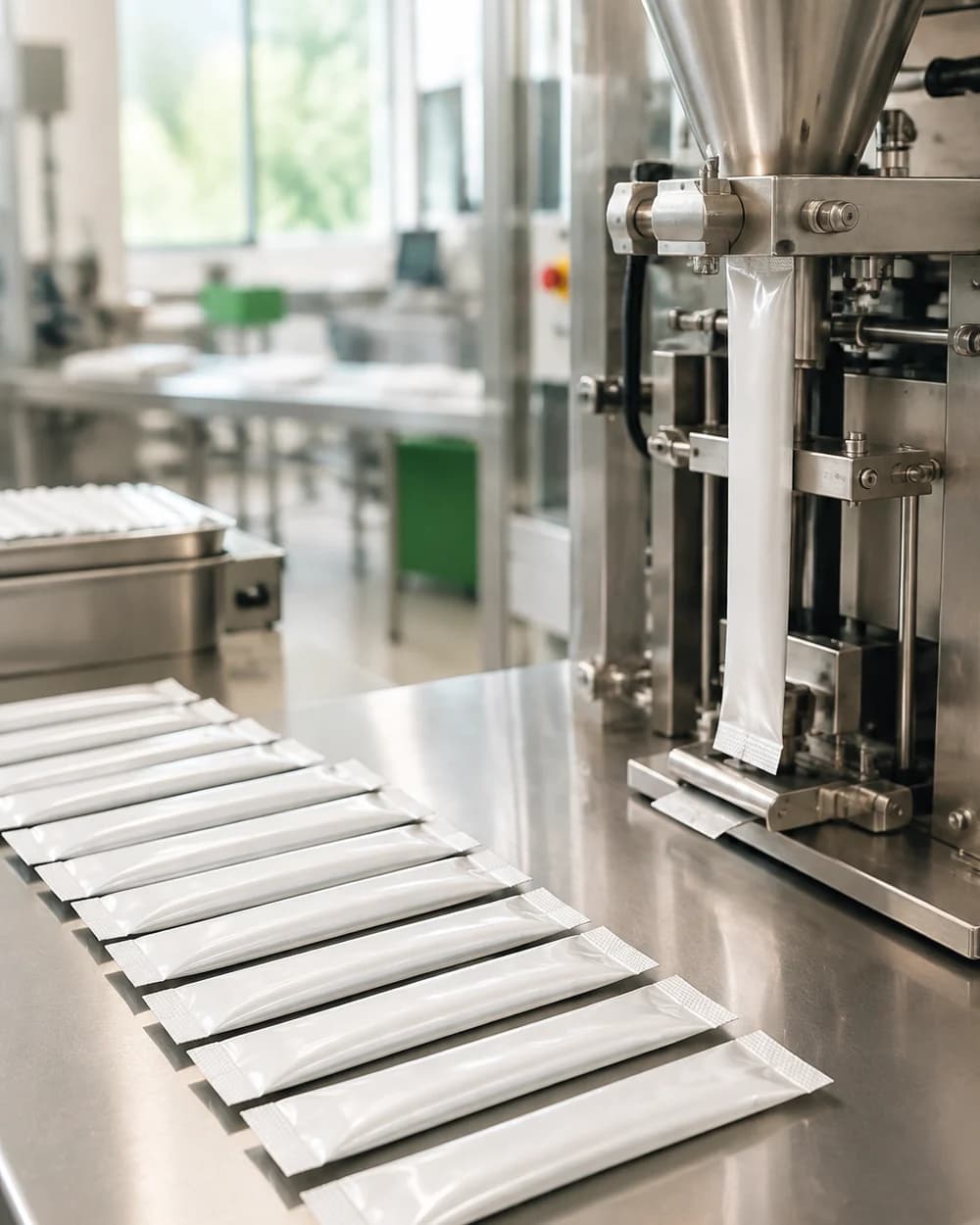
Sugar-free effervescent tablets are packed in three primary formats: PP tubes with a desiccant stopper, aluminium blister strips, and single-dose sachets for powder. Tubes are available in 10, 20 and 30 tablet counts, with a moisture barrier liner and a child-resistant option where required. Blisters use a paper-PE-aluminium lidding foil and are suited to pharmacy and travel retail. Stick packs and sachets are filled at 2 g to 6 g per unit and are the usual choice for sugar-free powder formats. We run packaging trials to confirm that the chosen format keeps tablet hardness and disintegration within specification after simulated transport.
Labels are prepared to the destination market's rules. For the US, the dietary supplement label includes the supplement facts panel, serving size, active ingredients with percent daily value where applicable, other ingredients, allergen statement, and the manufacturer or distributor address. For the EU, the label carries the nutrition declaration, the sweetener declaration, the net quantity, the lot number and the best-before date, plus the food business operator address. We print lot and expiry codes by inkjet or laser on the tube, blister or carton, and we can apply Amazon FNSKU labels, retail barcodes and security seals on the line.
Cartons are specified to survive export handling. A standard shipper holds 24 to 48 tubes depending on count, with a gross weight of 8 kg to 14 kg. Pallets are loaded at 1,000 to 1,200 kg per Euro or standard pallet, with stretch wrap and edge protectors. We provide artwork templates, dieline files and a packaging specification sheet so your designer can work to the correct dimensions. Pre-shipment checks include seal integrity, label placement, code legibility and a carton drop test to ISTA 1A where requested.
MOQ, Lead Times and Delivery
Sampling starts with a formulation brief and a target flavour profile. We produce a 200 g to 500 g laboratory batch, then a 1 kg to 2 kg pilot batch for taste and dissolution checks. Sample lead time is 7 to 10 working days from receipt of the brief and the signed specification. Courier costs for samples are quoted at cost, and the sample fee is credited against the first mass-production order. For a flavour match to an existing sugar-based product, we ask for a 100 g reference sample and the current ingredient list so the sweetener system can be rebuilt without sucrose.
Mass production runs 20 to 35 working days after artwork approval and receipt of the deposit. The window depends on tablet count, packaging format and whether the label is printed in-house or supplied. We confirm a production slot at order confirmation and issue a weekly progress update covering blending, compression, packaging and QC release. If a batch needs rework, the schedule is revised in writing before the release date is confirmed.
Shipping is quoted on EXW, FOB Shenzhen or Hong Kong, and DDP for buyers who want a landed cost. Air freight takes 5 to 10 days door to door and suits pilot orders and urgent retail launches. Sea freight takes 25 to 40 days depending on the destination port and is the usual choice for full-pallet orders. We provide the commercial invoice, packing list, certificate of analysis, material safety data sheet, free-sale certificate and, where the destination requires it, a phytosanitary certificate for plant-derived ingredients. Halal certificates are supplied when the order is placed under those programmes.
Manufacturing Options to Compare
Tablets in tubes
2.0–4.5 g tablets, 10–20 per tube. Common for vitamin C and multivitamins. Tube filling at 120 units per minute. Suitable for retail shelf.
Stick packs
3–10 g powder per stick. Single-serve format for electrolytes, energy and immunity. Stick pack filling at 400 per minute. Good for gym and travel channels.
Sachets
3–10 g powder per sachet. Cost-effective for larger doses. Available in 3-side seal or 4-side seal. Suitable for pharmacy and bulk retail.
Blisters
2.0–4.5 g tablets, 10–30 per blister. Tamper-evident and moisture-resistant. Often used for pharmacy private label and prescription-adjacent products.
From Spec to Shipment
- 01
Brief and quote
Send your formula, target dose, packaging format and market. We reply within 1 working day with a costed proposal and MOQ confirmation.
- 02
Sample development
We produce 50–100 sample units in 7–10 working days. You receive tablets or powder, packaging mock-up and a draft specification.
- 03
Sample approval
You test the sample for taste, dissolution and stability. We adjust the formula or flavour if needed. Two revision rounds are included.
- 04
Order and deposit
Confirm the final specification and place a purchase order. A 30–50% deposit triggers raw material procurement and production scheduling.
- 05
Production and QC
Mass production runs in 20–35 working days. In-process and finished product testing is completed. A certificate of analysis is issued.
- 06
Shipping and documents
We pack for export and arrange freight from Shenzhen or Hong Kong. All certificates and batch records are sent before dispatch.
Why EUPHM
Low MOQ 1,000
Start with 1,000 units per SKU. Pilot runs are available at lower volumes so you can test the market before scaling.
Full certification set
GMP, ISO 9001, ISO 22000, HACCP, NSF/ANSI 455-2 and halal certification; FDA facility registration for US-bound shipments.
Flavour and formula support
In-house flavour matching and stability testing. We reformulate sugar-based recipes into sugar-free versions without losing mouthfeel.
Questions buyers ask.
What is the MOQ for sugar-free effervescent tablets?+
MOQ is 1,000 units per SKU for retail-ready bottling or stick packs. For pilot runs we can go lower, typically 1,000 to 2,000 units, with a per-unit surcharge. MOQ depends on tablet weight, packaging format and whether the formula is new or existing.
Can you match a flavour from an existing sugar-based product?+
Yes. Send us a sample or a flavour description. Our lab develops a sugar-free version using polyols, stevia or monk fruit. We run a side-by-side taste panel and adjust the acid-sweetener ratio. Two revision rounds are included in the sample stage.
How long does shipping take to the EU or US?+
Sea freight from Shenzhen or Hong Kong to Rotterdam takes 28–32 days. To Los Angeles or New York, 25–35 days. Air freight takes 5–8 days. We handle export clearance and provide all certificates before dispatch. For urgent orders, air freight is available at higher cost.
Are your sugar-free effervescent products halal certified?+
Yes. The plant holds halal certifications for effervescent production. We use plant-based magnesium stearate and avoid gelatine, alcohol and animal-derived ingredients. Certificates are issued per batch and can be included in your shipping documents.
What testing do you do on finished sugar-free effervescent?+
Each batch is tested for tablet weight, hardness, friability, disintegration time, pH, microbial limits and heavy metals. We retain samples for 24 months. A certificate of analysis is issued with every batch. Stability testing at 40°C and 75% RH for 3 months is available on request.
What is the shelf life of your sugar-free effervescent tablets and how is it validated?+
Shelf life is set at 24 months for tubes and blisters when stored below 25 degrees Celsius and 60 percent relative humidity. We validate it with real-time stability data at ICH zone II conditions, supported by six-month accelerated data at 40 degrees Celsius and 75 percent relative humidity. Moisture pick-up, hardness, disintegration and active assay are tested at 0, 3, 6, 12, 18 and 24 months. A shorter shelf life is declared if a specific flavour or active is less stable.
Can you produce sugar-free effervescent tablets with a specific sweetener system such as stevia or erythritol?+
Yes. We formulate with stevia glycosides, erythritol, xylitol, sucralose or a blend, depending on the taste profile and the destination market's labelling rules. The sweetener system is declared on the label and in the certificate of analysis. We run a taste panel against your reference sample and adjust the acid-base ratio to balance sweetness. Where a market restricts a specific sweetener, we reformulate before the pilot batch is approved.
Do you provide a free-sale certificate and can you support product notification in the EU?+
We issue a free-sale certificate for each shipment on request, confirming the product is manufactured under GMP and ISO 22000 and is freely sold in China. For EU product notification, we supply the formulation sheet, allergen statement, GMP declaration, label artwork and certificate of analysis needed for the member state filing. The notification itself is submitted by the importer or brand owner. We can review the dossier before submission and answer competent authority queries during the process.
Other versions built in this dosage form.
Have a product in mind?
Send us the brief and we will come back with a formulation direction, indicative price and a realistic lead time — usually within one working day.