Oral Spray Manufacturer for Dietary Supplements
EUPHM produces oral sprays for vitamins, minerals, botanicals and sleep or energy formulas. MOQ starts at 1,000 units per SKU. Samples ship in 7-10 working days from a GMP-certified plant in Guangdong.
Overview
Oral sprays suit actives that degrade in tablets or need fast buccal absorption. As an oral spray manufacturer, we handle formulation, flavour masking, fill and retail packaging under one roof. Lines run 30,000 to 50,000 units per day. We work with brand owners in the US, EU, UK and Middle East. Certifications include GMP, ISO 22000, HACCP, plus halal and vegan where required.

Spray Manufacturing Capability
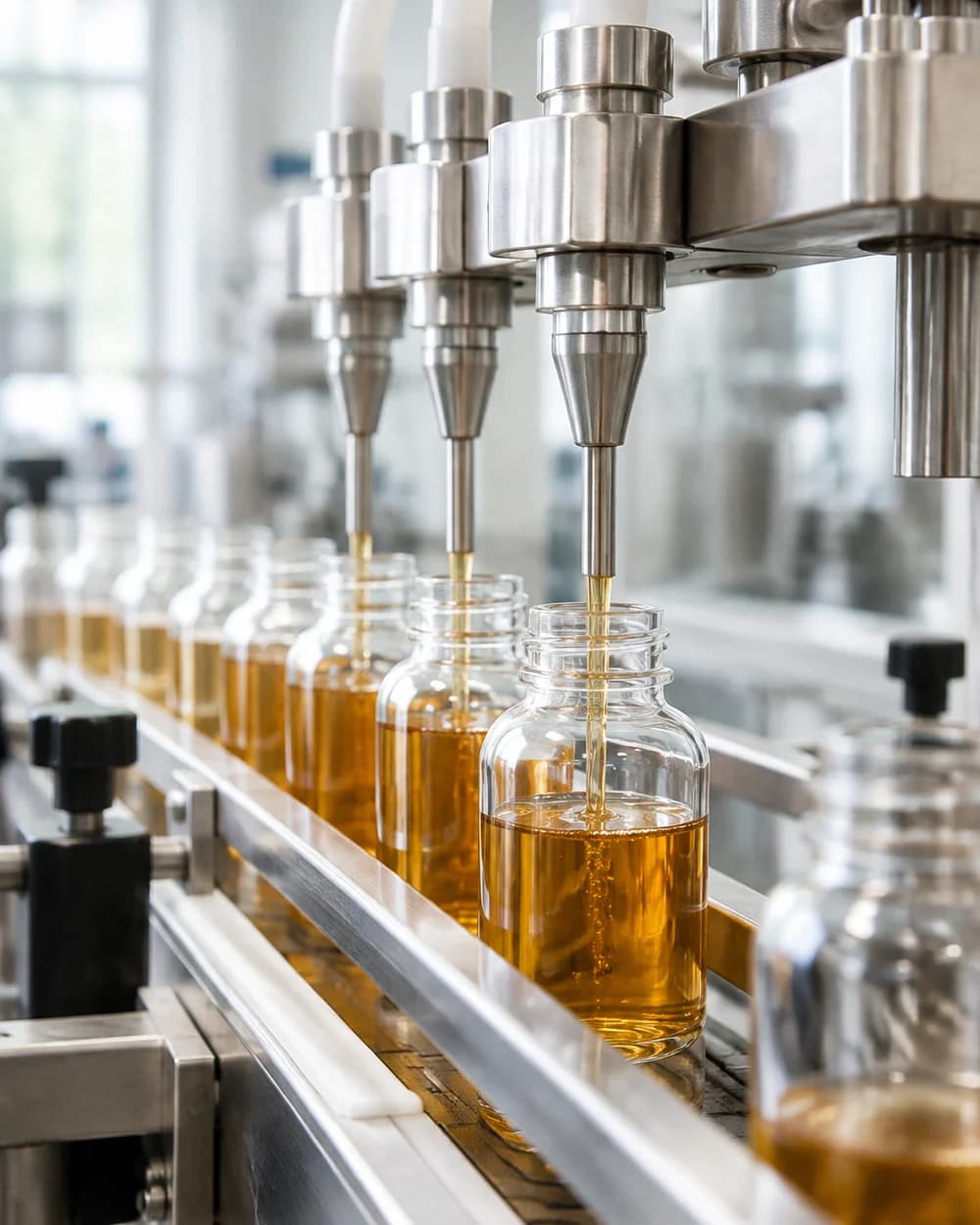
Our oral spray lines run 30,000 to 50,000 units per day across 10 ml, 15 ml, 30 ml and 60 ml bottle formats. We fill 0.1 ml per actuation as standard, with pump and valve options from Aptar and similar suppliers. Filling tolerances sit at ±2% for most formulas. We run ethanol-based, glycerin-based and water-based systems on the same line with full changeover cleaning.
Pilot runs start at 1,000 units so you can test market fit before committing to a full batch. Scale-up to 5,000 or 50,000 units uses the same formula and fill parameters. Every batch carries a retain sample held for 24 months. We can quote single-SKU runs or multi-SKU orders with staggered delivery.
Formulation and Ingredient Support
We formulate around your actives: melatonin at 1-3 mg per spray, vitamin D3 at 1,000-4,000 IU, B12 at 500-1,000 mcg, or botanical extracts such as ashwagandha and valerian. Flavour masking matters in sprays because the liquid contacts the tongue. We use natural mint, berry and citrus systems, plus stevia or monk fruit for sweetness. Preservative-free options use glycerin and pH control instead.
Stability testing runs at 25°C/60% RH and 40°C/75% RH for 3-6 months accelerated. We check pH, viscosity, microbial load and actives assay at each interval. If an active degrades, we adjust the solvent ratio or switch to a liposomal carrier. You receive a full formula sheet, allergen statement and nutritional panel draft before production.
Quality, Compliance and Logistics
The plant is GMP-certified, ISO 22000 and HACCP compliant. We are FDA-registered for US-bound supplements. Halal and certifications are available where the formula and supply chain qualify. Each batch ships with a certificate of analysis covering identity, potency, heavy metals, microbials and residual solvents. Third-party lab testing is available on request at cost.
For EU and UK orders, we prepare documentation for EFSA and UK FSA labelling rules. Middle East shipments include halal certificates and Arabic labelling support. Standard lead time is 20-35 working days after formula and artwork approval. We ship FOB Shenzhen or Yantian, with air freight for pilot runs. Cartons are export-grade with desiccant where humidity matters.
Oral Spray Quality Control and Batch Documentation
Every oral spray batch is sampled at three points: incoming raw materials, the bulk solution after compounding and mixing, and the finished filled units off the line. Identity testing on actives uses HPLC or UV spectrophotometry against a reference standard, with potency assayed to a specification of 95.0 to 105.0 percent of label claim. Microbial testing covers total aerobic count, yeast and mould, E. coli and Salmonella, with typical release limits of under 100 CFU per ml for aerobes. Heavy metals are screened by ICP-MS against the limits in USP <232> or the relevant EU regulation, and preservative effectiveness is checked where a multi-dose system is used.
Compounding records capture the order of addition, mixing speed, temperature and pH adjustment, because those variables affect solubility and spray performance. Each batch is assigned a number that links the bulk record, the filling record and the packaging record. In-process checks during filling cover fill weight, actuation volume, spray pattern and leak testing on the pump and valve assembly. Actuation volume is verified gravimetrically, typically targeting 0.1 ml per spray with an acceptance range agreed with the client at validation. Any out-of-specification result triggers a documented investigation before release.
The certificate of analysis issued with each batch states the batch number, manufacture and expiry dates, test parameters, specification limits, results and the release decision, signed by the QC manager. Buyers receive the COA as a PDF and can request raw data on assay runs. Retention samples are held for the shelf life plus twelve months, stored under the label conditions, so a stability question can be answered from physical stock rather than memory. Stability follows a bracketed protocol: accelerated conditions at 40 degrees Celsius and 75 percent relative humidity for six months, plus real-time data at 25 and 30 degrees Celsius to support the claimed expiry.
Microbial and chemical testing on stability pulls happens at zero, three, six, twelve, twenty-four and thirty-six months depending on the claimed shelf life. Spray actuators are also cycled at intervals to confirm the pump does not clog or drift in dose delivery over time. If a formula contains a probiotic or a sensitive botanical, we run additional counts or marker assays at each pull. All of this documentation is available for audit, and clients who need it for a notified or registered product can request a technical file compiled to their market's format.
Oral Spray Packaging, Labelling and Retail Readiness
Standard oral spray formats are a 10 to 60 ml PET or glass bottle with a crimped or screw-fit pump, a metered valve and an actuator cap. Where a client wants single-use formats, we fill stick packs and sachets on separate lines, and blister-packed ampoules are available for travel or sample kits. Bottle neck finishes are matched to the pump so the assembly passes leak and dose testing; changing pump supplier mid-project requires re-validation of actuation volume. Cartons are printed on coated board with a matt or gloss finish, and we can apply a tamper-evident shrink band and a child-resistant closure where the market requires it.
For US-bound dietary supplements, the label must carry a statement of identity, net quantity, a supplement facts panel with the correct serving size and percent daily values where applicable, a list of other ingredients, and the name and place of business of the distributor. We lay out artwork to those elements and check the supplement facts panel against the approved formula before plates are made. For EU and UK clients we check the nutrition or food supplement declaration, allergen highlighting and the required contact details. We do not write claims; the client's regulatory team signs off all on-pack text before print.
Lot and expiry coding is applied by inkjet or laser at filling, with the format agreed at artwork approval. Typical coding is a lot number plus best-before date in the market's required order, and we retain a coding sample from each shift. Cartons are specified with board grade, dimensions and print process, and we can supply a dieline for the client's designer. Pallets are built to a standard footprint, usually 1200 by 1000 mm or 1200 by 800 mm, shrink-wrapped and labelled with carton count, lot and gross weight. Amazon sellers can have FNSKU labels applied and cartons packed to the marketplace's requirements, including poly-bagging where the unit is not rigid.
Retail compliance checks happen before mass production, not after. We confirm barcode symbology and placement, verify the GS1 number belongs to the client, and check that the carton and bottle carry the same lot logic so a recall can be traced to a single run. Where a retailer requires a specific carton mark, such as a country of origin statement or a recycling symbol, it is added at the artwork stage. Clients receive a pre-production sample in final packaging for sign-off, and that signed sample becomes the reference for the production run.
Oral Spray MOQ, Lead Times and Delivery Terms
Sampling starts with a brief: target actives, dose per spray, flavour direction, bottle size and market. From an approved brief, a lab sample in a stock bottle takes 7 to 10 working days, and a sample in custom-printed packaging adds roughly 10 to 15 working days for artwork and print. Sample costs are quoted per project and are usually credited against the first mass-production order. Clients should allow one round of revision for flavour or sweetness adjustment, since taste is the most common reason a spray sample is rejected.
Mass production runs 20 to 35 working days after the client approves the sample, artwork and purchase order. The lower end applies to stock bottles and pumps with a label applied in-house; the upper end applies to custom tooling, printed cartons or a new pump specification. MOQ is 1,000 units per SKU for standard formats, with lower quantities possible for pilot runs at a higher unit cost. Capacity is 30,000 to 50,000 units per day, so a 50,000-unit order typically occupies one to two production days plus QC release time.
Shipping is quoted by air or sea depending on volume and urgency. Air freight suits pilot and launch orders up to a few hundred kilograms and moves in 5 to 10 days door to door; sea freight in LCL or FCL suits repeat orders and takes 25 to 40 days depending on the destination port. We quote EXW, FOB and DDP, and DDP is common for Amazon sellers who want the goods delivered to a warehouse with duties handled. Aerosol-classified sprays may need a transport classification check before booking, and we confirm this at order stage.
The document pack issued with each shipment includes the commercial invoice, packing list, certificate of analysis, safety data sheet where the formula requires one, and a free-sale or manufacturing certificate for markets that ask for it. Phytosanitary certificates apply only where a botanical ingredient triggers the requirement, and we confirm that at order stage rather than assume it. Clients receive scanned copies before the goods leave and originals with the shipment. For repeat orders, the specification and artwork files are held on file so reordering does not restart the sampling process.
Configurations to Compare
Pump spray bottles
10-30 ml PET or glass with fine mist pump. Suitable for vitamins, melatonin and herbal tinctures. Actuation 0.1 ml.
Metered dose sprays
15-60 ml with metered valve for precise dosing. Used for B12, vitamin D and CBD. Dose accuracy ±2%.
Alcohol-free base
Glycerin and water system for sensitive users. No ethanol. Preservative-free options with pH control.
Flavoured systems
Natural mint, berry, citrus or unflavoured. Stevia or monk fruit sweetened. Masking for bitter actives.
How We Work
- 01
Brief and quote
Send target actives, fill volume, quantity and market. We return a quote with MOQ, unit cost and lead time within 2 working days.
- 02
Sample development
We formulate and ship 3-5 samples in 7-10 working days. You test taste, spray pattern and stability.
- 03
Formula lock
You approve the formula, flavour and fill weight. We issue a specification sheet and stability protocol.
- 04
Artwork and compliance
You supply label artwork. We check against US, EU, UK or Middle East labelling rules and flag issues.
- 05
Mass production
Production runs 20-35 working days. In-process checks every 30 minutes. Batch records kept for 5 years.
- 06
QC and shipping
Final QC on fill, actuation, microbials and label. We ship FOB Shenzhen with full documentation.
Why EUPHM
Low MOQ for pilots
Start at 1,000 units for pilot runs. Scale to 1,000-2,000 for retail. No need to commit to 50,000 units before testing.
Fast sample turnaround
Samples in 7-10 working days. We courier worldwide. You test spray pattern, taste and stability before production.
Full documentation
COA, allergen statement, nutritional panel and stability data with every batch. Halal certificates where applicable.
Questions buyers ask.
What is the MOQ for oral sprays?+
MOQ is 1,000 units per SKU for retail bottling. Pilot runs start at 1,000 units. Lower MOQs apply to stock formulas and standard bottles. Custom bottles or metered valves may raise the MOQ to 5,000 units.
How long do samples take?+
Sample lead time is 7-10 working days after we receive your brief and target actives. This covers formulation, fill and courier dispatch. You receive 3-5 bottles per sample set. We ship by air to the US, EU, UK and Middle East.
Can you produce alcohol-free oral sprays?+
Yes. We run glycerin and water-based systems with no ethanol. Preservative-free options use pH control and glycerin. We check microbial stability at 25°C and 40°C. Alcohol-free formulas suit children's and sensitive-user products.
What certifications does the plant hold?+
The plant holds GMP, ISO 22000 and HACCP. We are FDA-registered for US-bound supplements. Halal and certifications are available where the formula and supply chain qualify. Vegan capsules and sprays are standard.
What is the production lead time?+
Mass production runs 20-35 working days after formula and artwork approval. This includes compounding, filling, labelling and QC. Shipping from Shenzhen adds 2-4 weeks by sea or 5-7 days by air. We confirm dates in the proforma invoice.
Can you match a competitor's oral spray formula?+
We can reverse-engineer a target formula from its ingredient list and a sample, using assay and sensory work to get close on actives, pH, sweetness and mouthfeel. We do not copy a protected formula or a trademarked flavour, and the client is responsible for confirming freedom to operate. Matching typically takes one to two sample rounds and is quoted as a development project.
Do you offer sugar-free or sweetener-free oral sprays?+
Yes. Most of our sprays use a sugar-free base built on glycerin, sorbitol or a non-caloric sweetener such as steviol glycosides or sucralose. Where a client wants no sweetener at all, we adjust the flavour system and acid level to carry the taste. Sweetener choice is confirmed at sample stage because it affects mouthfeel and, in some markets, on-pack claims.
What happens if a batch fails a specification?+
The batch is placed on hold and a documented investigation is opened to identify the cause, whether that is a raw material, a process deviation or a test error. Options are rework where technically valid, rejection and disposal, or release against a client-approved concession. The client is informed before any decision is taken, and the investigation record is available for audit.
Have a product in mind?
Send us the brief and we will come back with a formulation direction, indicative price and a realistic lead time — usually within one working day.