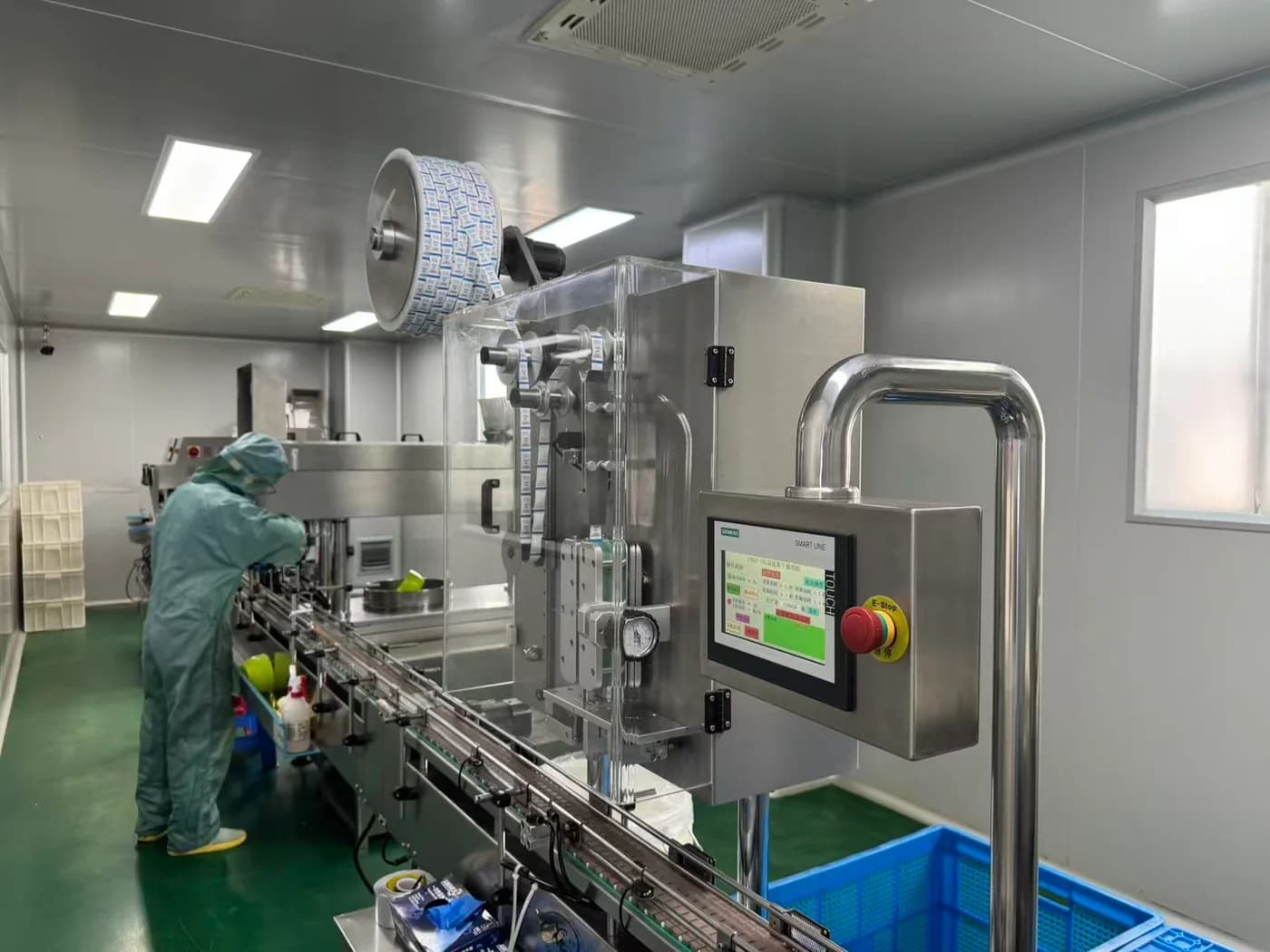
Best Supplement Manufacturers in France: A Buyer's Guide
Finding the best supplement manufacturers in France means balancing EU regulations, MOQs and lead times. This guide covers what French contract manufacturers offer and how EUPHM compares as a GMP-certified alternative for scalable production.
Overview
France has a mature nutraceutical sector, with contract manufacturers clustered around Lyon, Paris and the Rhône-Alpes region. Most French facilities hold GMP certification and comply with EU food supplement directives. MOQs typically start at 5,000 units per SKU for retail bottling, and lead times run 25-40 working days. This page outlines capabilities, formulation options and compliance requirements so you can benchmark suppliers effectively, whether you source locally or from a GMP-certified partner like EUPHM in Guangdong.

- MOQ (retail bottling)
- 1,000 units per SKU
- Pilot run MOQ
- From 1,000 units
- Sample lead time
- 7-10 working days
- Mass production lead time
- 20-35 working days
- Certifications
- GMP, ISO 9001, ISO 22000, HACCP, NSF/ANSI 455-2, halal, FDA-registered
- Line capacity
- Up to 50,000 bottles per day
- Fill weights
- Capsules 300-800 mg; tablets 500-1,500 mg; powders 100-500 g
Manufacturing Capability in France
French contract manufacturers specialise in capsules, tablets, softgels and powders. Many run European-sourced ingredients and offer organic certification under EU 2018/848. Typical line capacity ranges from 10,000 to 30,000 bottles per day. However, MOQs often start at 5,000 units per SKU, which can be restrictive for emerging brands. Lead times for mass production usually fall between 25 and 40 working days, depending on ingredient sourcing and packaging complexity.
For brands needing lower MOQs or faster pilot runs, alternative GMP-certified facilities outside France can offer 1,000-unit MOQs and 20-35 day production. EUPHM, for example, runs pilot batches from 1,000 units and provides samples in 7-10 working days. This flexibility helps brands test the market before committing to larger volumes.
Formulation and Ingredient Sourcing
French manufacturers often emphasise clean-label formulations, using EU-approved additives and novel food ingredients. Common formats include vegetarian capsules, delayed-release tablets and stick packs. Ingredient traceability is strong, with many suppliers offering full documentation for vitamins, minerals, botanicals and probiotics. Organic certification is widely available, but costs can be higher due to EU sourcing requirements.
When comparing options, ask about excipient compatibility, stability testing and allergen controls. Some facilities specialise in specific categories such as sports nutrition or beauty-from-within. For custom formulations, request a sample batch to verify taste, texture and dissolution. Lead times for custom development typically add 10-15 working days to standard production schedules.
Quality and Compliance for EU Markets
Supplying supplements in France requires compliance with EU Directive 2002/46/EC and national notifications. French manufacturers must hold GMP certification and often ISO 22000 or HACCP. Halal certifications are available but not universal. For organic claims, EU organic certification is mandatory. Documentation for each batch includes certificates of analysis, MSDS and stability data.
If you plan to export from France to the UK or Middle East, verify that your manufacturer can provide the necessary export certificates and labelling support. Some French facilities are FDA-registered for US exports. Lead times for regulatory documentation can add 5-10 working days. Always confirm that the facility holds current certifications and can supply audit reports.
Quality Control and Batch Documentation at Supplement Manufacturers in France
At supplement manufacturers in France, every batch is tested against a written specification before release. Identity is confirmed by FTIR or HPLC, potency by HPLC or GC, microbials by total aerobic count, yeast and mould, E. coli and Salmonella, heavy metals by ICP-MS for lead, cadmium, arsenic and mercury, and disintegration by USP <2040> or Ph. Eur. 2.9.1. Finished-product testing occurs after blending and again after packaging, with in-process checks on weight variation, hardness and moisture at start, middle and end of each run.
A certificate of analysis (COA) for each batch lists the product name, batch number, manufacturing date, expiry date, tests performed, specification limits, results and the analyst's signature. It also references the retained sample location. Retention samples of each batch are kept for the shelf life plus 12 months, stored under labelled conditions. Stability follows ICH Q1A(R2) guidelines: 25°C/60% RH for long-term and 40°C/75% RH for accelerated, with testing at 0, 3, 6, 9, 12, 18 and 24 months for potency, microbials and appearance.
Packaging, Labelling and Retail Readiness
French supplement manufacturers typically offer HDPE bottles from 30 ml to 500 ml, blisters with alu-alu or PVC/PVDC, stick packs from 5 g to 30 g, and sachets from 2 g to 50 g. Bottles can be supplied with induction seals, child-resistant closures and desiccant sachets. Labelling must include the product name, net quantity, supplement facts or nutrition declaration, ingredient list, allergen statement, directions for use, storage conditions, lot code and expiry date, plus the manufacturer's name and address. For EU retail, the nutrition declaration follows Regulation (EU) No 1169/2011; for US retail, the FDA dietary-supplement label requires the Supplement Facts panel, serving size, percent daily value and the 'Other ingredients' statement.
Lot and expiry coding is applied by inkjet or laser on the bottle base, label or carton, in a format agreed at artwork approval. Cartons are specified with dimensions, board grade and gross weight; pallets are typically 1200 x 800 mm or 1200 x 1000 mm, stretch-wrapped and labelled with SSCC. For Amazon FNSKU compliance, the manufacturer can apply the FNSKU barcode over the retail barcode and poly-bag units with the appropriate suffocation warning. Retail-ready packaging can include shelf-ready trays and display cartons, subject to dieline approval.
MOQ, Lead Times and Delivery from Supplement Manufacturers in France
A sample order typically takes 7-10 working days from approved formulation and artwork, including raw material receipt, small-scale blending and packaging into the requested format. Mass production then runs 20-35 working days for standard capsules and tablets, or 25-40 working days for powders and stick packs, depending on component availability. MOQs are 1,000 units per SKU for retail bottling and from 1,000 units for pilot runs. Lead times are counted from receipt of deposit and signed artwork, not from enquiry.
Delivery can be arranged by air freight for urgent orders, typically 5-8 days door-to-door from Guangdong to Paris, or by sea freight, typically 30-40 days port-to-port to Le Havre or Marseille. Incoterms offered include EXW, FOB Shenzhen or Hong Kong, and DDP for EU destinations where the manufacturer handles import clearance and duties. Documents provided with each shipment include the commercial invoice, packing list, COA for each batch, MSDS where applicable, free-sale certificate, and phytosanitary certificate for plant-derived ingredients where required by the destination country.
Formats and Packaging Options
Full-service turnkey
Includes formulation, sourcing, production, packaging and labelling. Ideal for brands without in-house R&D. MOQ 1,000 units. Lead time 20-35 working days.
Custom formulation
Develop a unique blend with your chosen actives. Requires stability testing and sample approval. Adds 10-15 days to production. Suitable for differentiated products.
Private label
Choose from existing stock formulas. Lower MOQs from 1,000 units for pilot runs. Faster sampling in 7-10 working days. Good for quick market entry.
Packaging and filling
Bottling, blistering, sachets and stick packs. Fill weights from 300 mg capsules to 500 g powders. Capacity up to 50,000 bottles per day.
Production in Six Steps
- 01
Define your spec
Outline dosage form, fill weight, actives and packaging. This determines MOQ and lead time. Include target certifications such as organic or halal.
- 02
Request samples
Ask for samples of similar products. Sample lead time is typically 7-10 working days. Evaluate taste, texture and dissolution.
- 03
Verify certifications
GMP, ISO 9001, ISO 22000, HACCP, NSF/ANSI 455-2 and halal certification; FDA facility registration for US-bound shipments.
- 04
Confirm MOQ and pricing
French MOQs often start at 5,000 units. Alternatives may offer 1,000 units. Clarify tooling, packaging and labelling costs.
- 05
Place pilot order
Run a small batch from 1,000 units to test the market. Pilot lead times are usually 15-25 working days.
- 06
Scale to mass production
After approval, schedule full production. Mass production takes 20-35 working days. Plan for 5-10 days for shipping and customs.
Why EUPHM
Lower moqs
Start from 1,000 units for pilot runs and 1,000 units for retail bottling. This reduces initial inventory risk compared to typical French MOQs of 5,000 units.
Fast sampling
Receive samples in 7-10 working days. Evaluate formulation and packaging before committing to mass production. Speeds up decision-making.
Broad certifications
GMP, ISO 9001, ISO 22000, HACCP, NSF/ANSI 455-2 and halal certification; FDA facility registration for US-bound shipments.
Questions buyers ask.
What is the MOQ for supplement manufacturing in France?+
Most French contract manufacturers require a minimum order quantity of 5,000 units per SKU for retail bottling. Some offer lower MOQs for pilot runs, starting at 1,000 to 2,000 units. Always confirm MOQ before requesting a quote, as it affects pricing and lead times.
How long does production take for supplements in France?+
Mass production typically takes 25-40 working days after sample approval. This includes ingredient sourcing, production, packaging and quality checks. Custom formulations may add 10-15 days. Shipping within the EU adds 3-7 days.
Are French supplement manufacturers GMP-certified?+
Yes, most reputable French contract manufacturers hold GMP certification. Many also have ISO 22000 or HACCP. For organic products, EU organic certification is required. Halal certifications are available but not universal. Always request current certificates.
Can I get a sample before placing a bulk order?+
Yes, most manufacturers provide samples. Sample lead time is usually 7-10 working days. Some charge a fee that is credited against the first order. Samples help you verify formulation, taste and packaging before committing to mass production.
What is the best alternative to French supplement manufacturers?+
If you need lower MOQs or faster lead times, consider GMP-certified facilities in other regions. EUPHM in Guangdong offers MOQs from 1,000 units, sample lead time of 7-10 working days and mass production in 20-35 working days, with certifications including GMP, ISO 22000 and HACCP.
What documentation is provided with each batch from supplement manufacturers in France?+
Each batch is supplied with a certificate of analysis covering identity, potency, microbials, heavy metals and disintegration, plus the batch number, manufacturing date and expiry date. A material safety data sheet is provided where applicable, along with a free-sale certificate for customs. Retention samples are kept for the shelf life plus 12 months. Stability data from accelerated and long-term studies can be shared under a confidentiality agreement.
Can French supplement manufacturers handle Amazon FNSKU labelling and retail-ready packaging?+
Yes, most French contract manufacturers can apply FNSKU barcodes over the retail barcode, poly-bag units with a suffocation warning, and print lot and expiry codes on bottles and cartons. Retail-ready trays and display cartons are available subject to dieline approval. Carton dimensions and pallet configurations are agreed at artwork stage so that Amazon and retail compliance checks are met before production.
What Incoterms and shipping documents do supplement manufacturers in France provide for export orders?+
Common Incoterms are EXW, FOB and DDP. For EU destinations, DDP means the manufacturer handles import clearance and duties. Shipping documents include the commercial invoice, packing list, batch COA, MSDS where applicable, free-sale certificate and, for plant-derived ingredients, a phytosanitary certificate where the destination requires it. Air freight to Paris takes about 5-8 days door-to-door; sea freight to Le Havre or Marseille takes 30-40 days port-to-port.
What is the difference between a certificate of analysis and a certificate of conformity for supplement batches?+
A certificate of analysis (COA) reports the actual test results for a specific batch, including assay values, microbial counts and heavy metal levels against specification limits. A certificate of conformity is a declaration that the batch meets the agreed specification and regulatory requirements, without listing individual results. French manufacturers often issue both. Buyers should request the COA for each batch and treat the certificate of conformity as a summary document, not a substitute for analytical data.
Can French supplement manufacturers produce labels in multiple languages for EU cross-border sales?+
Yes, most French contract manufacturers can print multilingual labels for EU markets, provided the artwork is supplied with verified translations. The label must include the nutrition declaration, allergen information and mandatory statements in the language of the country of sale. Manufacturers typically do not provide translation or regulatory review as standard, so buyers should arrange for a qualified translator or regulatory consultant to approve each language version before printing. This avoids reprints that can add 10 to 15 working days.
What are the typical payment terms and deposit requirements for supplement manufacturing in France?+
French manufacturers commonly require a 30% to 50% deposit with the purchase order, with the balance due before shipment or against a copy of the bill of lading. For first orders, a 50% deposit is common; repeat customers may negotiate 30% deposit and 30-day net terms. Payment is usually by bank transfer in euros. Letters of credit are accepted by some suppliers for orders above EUR 20,000, but they add bank fees and administrative time. Terms should be confirmed in the quotation.
Have a product in mind?
Send us the brief and we will come back with a formulation direction, indicative price and a realistic lead time — usually within one working day.