Private Label·9 min read
How to Choose a Private Label Partner
Choosing a private label partner affects your margin, launch speed and repeat orders. This guide covers the six checks that separate a reliable manufacturer from one that delays…
Guides, specifications and sourcing data for brands building a supplement line. MOQ 1,000 units per SKU, 7-10 day samples, 20-35 day production. GMP, ISO 22000 and HACCP certified.
This hub collects the practical material buyers ask for before placing a first order: fill weights, capsule sizes, lead times, certification scope and label requirements. It is built for founders and procurement managers in the US, EU, UK and Middle East who need to compare suppliers on facts rather than sales claims. Each guide links to deeper pages under /resources, and every figure reflects a GMP-certified plant in Guangdong, China. Use it to shortlist formats, estimate timelines and prepare a brief before requesting a sample.
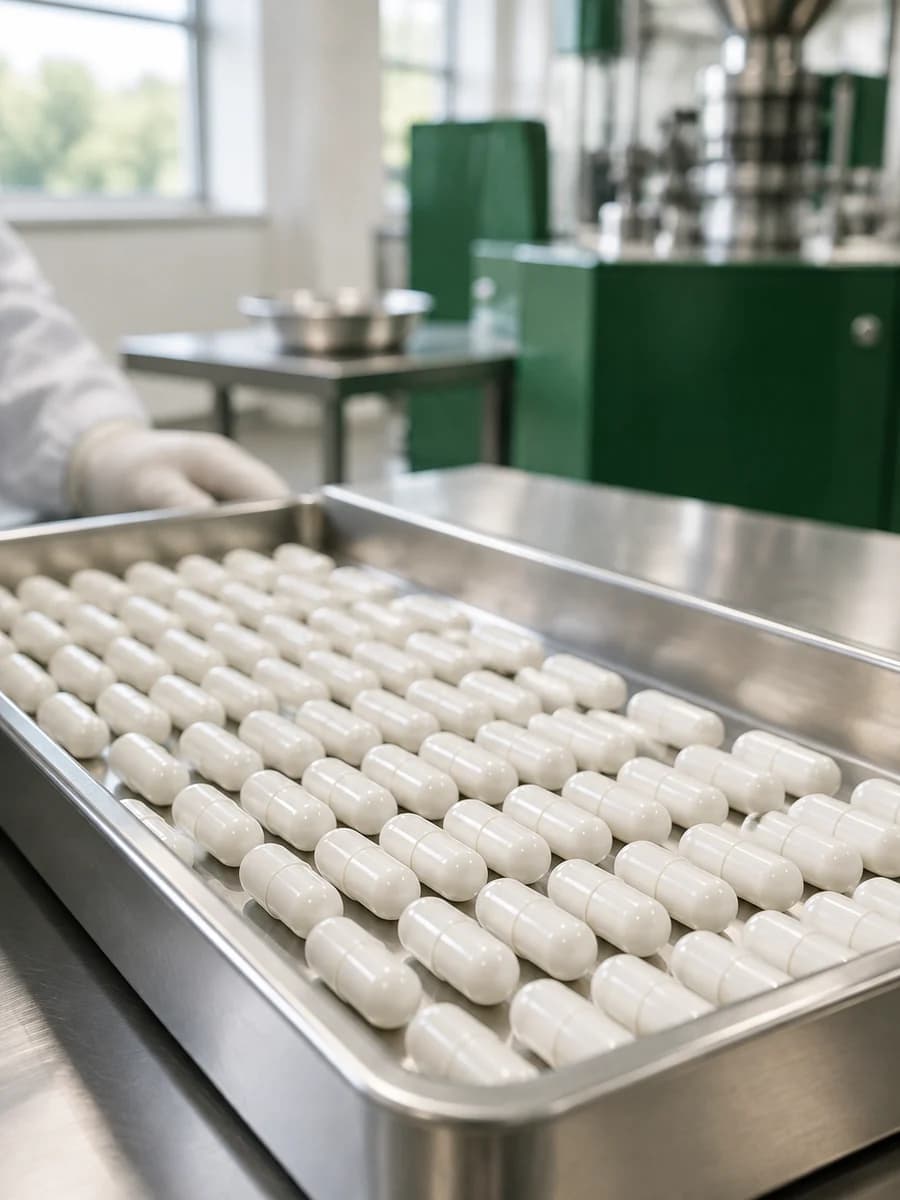
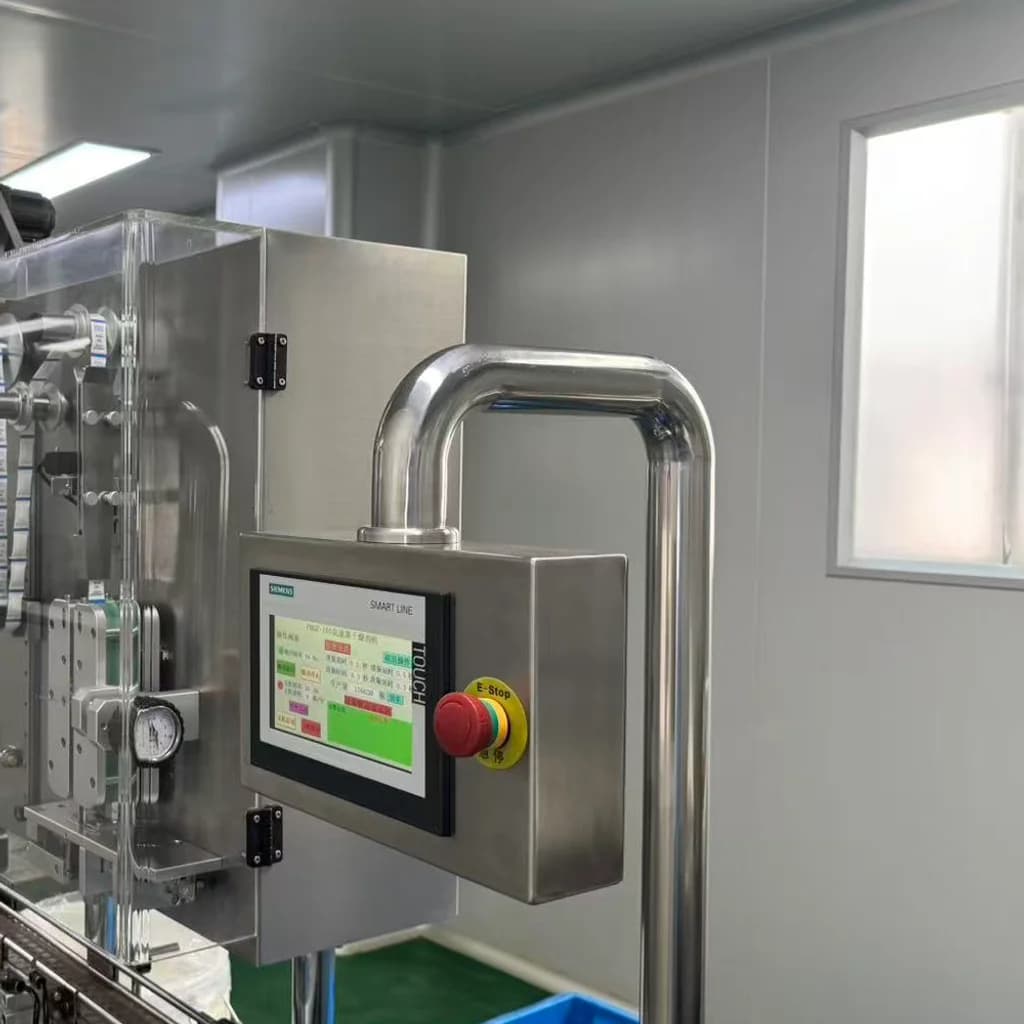
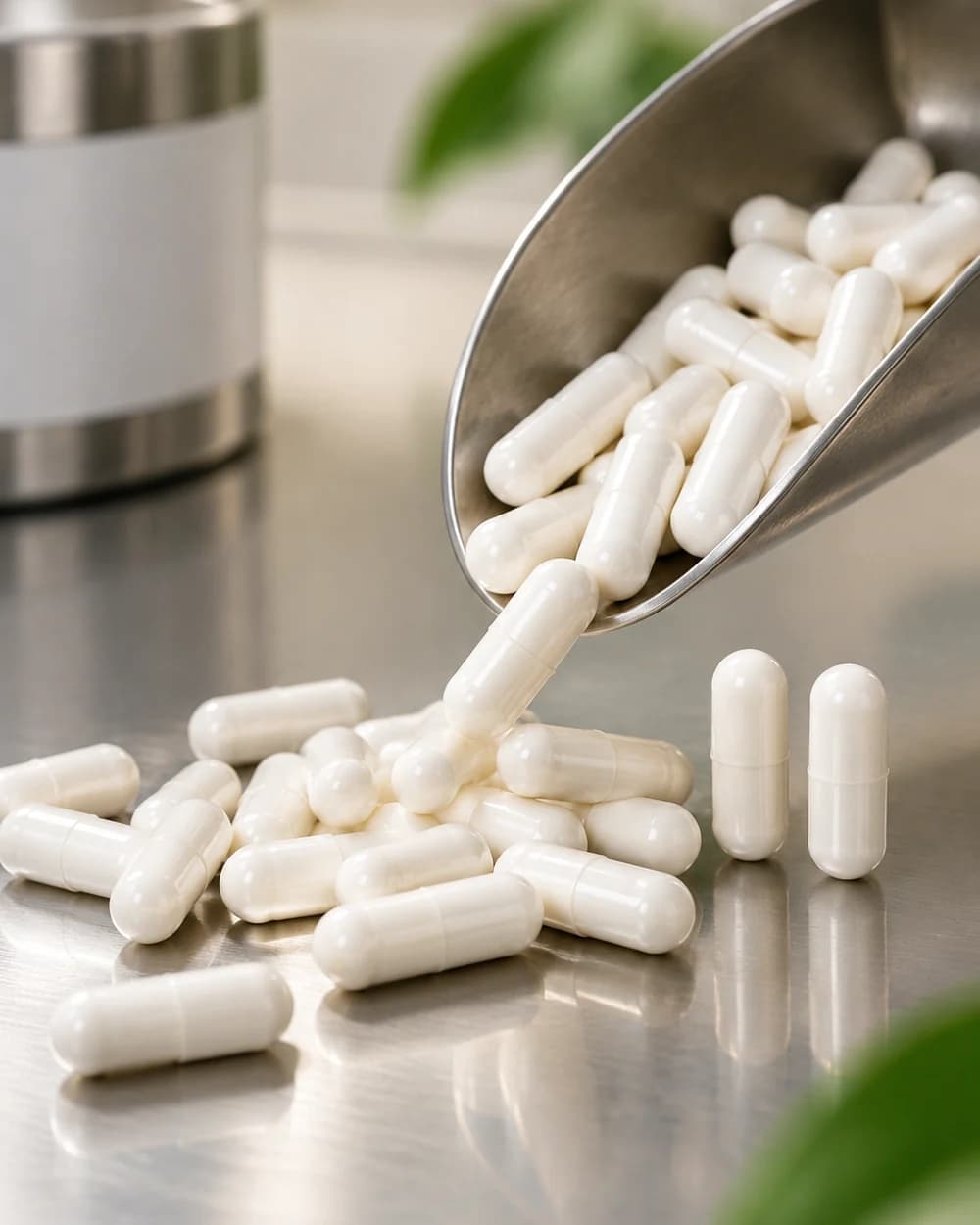
The plant runs separate lines for capsules, tablets, softgels, powders and gummies, with a combined output of 2.5 million units per day across two shifts. Capsule filling handles size 0 to 3, with fill weights from 250 mg to 800 mg. Tablet compression covers 500 mg to 1,500 mg, including coated and sustained-release options. Powder blending runs 100 kg to 1,000 kg batches, filled into jars, pouches or stick packs. Softgels suit oil-based actives and are produced on a 60,000-per-hour line.
For brands planning a range, the practical constraint is usually MOQ rather than capacity. Retail bottling starts at 1,000 units per SKU. Pilot runs of 1,000 units are possible on selected formats when the formula uses stock ingredients. Multi-SKU orders can share a production window, which shortens the total timeline and reduces changeover cost. A typical three-SKU launch moves from sample approval to shipped goods in 20-35 working days.
Formulation support covers standard blends and custom actives. The team works from a customer brief or a reference product, then adjusts for dosage, taste, flow and stability. Common inputs include vitamins, minerals, botanicals, amino acids, probiotics and omega-3 oils. Ingredient documentation follows EU and US expectations: certificates of analysis, allergen statements, non-GMO declarations and country-of-origin records. Where a branded ingredient is required, the plant can source it under a non-disclosure agreement.
Ingredient lead time varies. Stock vitamins and minerals add no delay. Specialty botanicals, probiotic strains and organic-certified inputs can add 5-15 working days to the sample stage. For or vegan claims, the full supply chain must be documented, so early confirmation matters. Excipient choices also affect the label: magnesium stearate, silicon dioxide and cellulose are common, and clean-label alternatives are available at a modest cost increase. Halal certification applies to both the formula and the capsule shell.
Quality control runs at three points: incoming raw material, in-process checks and finished goods. Each batch is tested for identity, potency, microbial limits and heavy metals. Retain samples are held for two years. The facility is GMP-certified, ISO 22000 and HACCP compliant, and registered with the FDA. Halal and vegan certifications are maintained where the product line requires them. Documentation packs include COA, MSDS, flow chart and shelf-life data.
Shipping terms are FOB Shenzhen or Yantian, with air and sea options. A 20-foot container holds roughly 12-15 pallets, depending on carton size. Standard retail cartons are 24 or 48 units. Labels can be applied in-house, or supplied by the brand for application on the line. For EU and UK buyers, the plant provides the technical file inputs needed for a responsible person. For Middle East buyers, halal certificates and Arabic labelling support are available. Typical door-to-door sea transit to Rotterdam is 28-35 days.
Every private label batch is tested against a written specification before release. Raw materials are sampled on receipt and screened for identity by FTIR or HPLC, with potency assayed against the certificate of analysis from the ingredient supplier. During production, in-process checks cover weight variation, hardness for tablets, and fill weight for capsules at intervals of no more than 30 minutes. Finished goods are then tested for potency, microbial limits (total aerobic count, yeast and mould, E. coli, Salmonella), heavy metals (lead, arsenic, cadmium, mercury) and disintegration time. Disintegration is typically 15 minutes or less for capsules and 30 minutes or less for tablets, depending on the monograph.
A certificate of analysis accompanies each batch and lists the product name, batch number, manufacturing date, expiry date, tests performed, specification limits and results. It also names the analytical methods used and carries a signed release by the quality control manager. Where a customer needs third-party verification, samples can be sent to an external laboratory and the report attached to the COA. Retention samples of every batch are kept for the full shelf life plus six months, stored under labelled conditions. Stability is monitored through accelerated studies at 40°C and 75% relative humidity for six months, with real-time data at 25°C and 60% relative humidity for products with a two-year claim.
Deviations are documented and investigated before release, and a batch is not shipped until the quality unit signs off. For private label customers, the batch record and COA are shared as part of the order documentation. If a customer requires a specific microbial limit or a narrower heavy-metal threshold, this is written into the specification before the first production run so that testing and release criteria match the target market.
Packaging options cover high-density polyethylene bottles from 30 ml to 500 ml, blister packs, stick packs, sachets and gusseted pouches. Bottles can be supplied with induction seals, child-resistant closures and desiccant sachets where required. For stick packs and sachets, fill weights range from 2 g to 30 g, with three-side or four-side seals. Labelling follows the destination market: for the US, the FDA dietary supplement label requires a statement of identity, net quantity of contents, supplement facts panel, ingredient list, allergen declaration where applicable, and the manufacturer or distributor name and address. We print lot numbers and expiry dates by inkjet or laser, with the format agreed at artwork approval.
Carton and pallet specifications are confirmed before production. Standard export cartons are double-wall corrugated, with a maximum gross weight of 20 kg, and pallets are 1,200 x 1,000 mm or 1,200 x 800 mm depending on the market, stretch-wrapped and labelled with batch, quantity and handling symbols. For Amazon sellers, we can apply FNSKU labels and poly-bag units according to the marketplace requirements, but the seller remains responsible for confirming the final label content with Amazon. Retail-ready packaging, such as shelf-ready trays or display cartons, is available on request and adds 5 to 10 working days to the schedule.
The sample process starts with a formula brief and target dosage form. Once the formula is agreed, a sample is produced in 7 to 10 working days, including a preliminary COA. Sample costs are quoted per project and are typically credited against the first mass-production order. After sample sign-off, mass production takes 20 to 35 working days depending on format and packaging complexity. Capsules and tablets are at the shorter end; gummies and liquids need additional set-up and hold time. A deposit of 30 to 50 per cent is required to schedule production, with the balance due before shipment.
Shipping terms are quoted as EXW, FOB Shenzhen or Hong Kong, or DDP to the destination address. Air freight takes 5 to 10 days door to door and suits pilot runs or urgent replenishment; sea freight takes 25 to 40 days depending on the port and is more economical for full containers. For LCL shipments, we consolidate at the forwarder's warehouse and provide a packing list with carton dimensions and weights. Documents provided with each shipment include the commercial invoice, packing list, certificate of analysis, material safety data sheet where relevant, and a free-sale certificate. Phytosanitary certificates are arranged when a product contains botanical ingredients that the destination country regulates.
Size 0-3 capsules at 250-800 mg fill; tablets 500-1,500 mg with coating options. Suitable for vitamins, minerals, botanicals and amino acids.
Oil-based actives in softgels, plus tinctures and liquid fills. Softgel line runs at 60,000 units per hour; liquids filled 30-250 ml.
Blends from 5 g to 500 g per pouch or jar. Stick packs at 5-30 g suit single-serve protein, collagen and electrolyte products.
Pectin and gelatin bases, 2-4 g per piece. Vegan pectin options available. Typical MOQ 5,000 units for retail bottling.
Share target format, dosage, claims and market. Include any reference product or existing formula. A cost estimate follows within 2 working days.
The team proposes a formula and label spec. Adjustments cover taste, flow, fill weight and excipients. Halal or organic scope is fixed here.
Samples ship in 7-10 working days. Test for appearance, taste, dissolution and label fit. One revision round is standard before sign-off.
MOQ is 1,000 units per SKU for retail bottling. Pilot runs from 1,000 units on selected formats. Deposit confirms the production slot.
Mass production takes 20-35 working days. In-process and finished-goods testing runs throughout. Retain samples are held for two years.
Goods ship FOB Shenzhen or Yantian by air or sea. Documentation includes COA, MSDS, flow chart and shelf-life data for your market.
MOQ, fill weights, lead times and certification scope are published here, so you can shortlist without a sales call. Every figure reflects the Guangdong plant.
Capsules, tablets, softgels, powders, gummies and liquids under one roof. Multi-SKU orders share a production window and reduce total lead time.
COA, MSDS, allergen statements, halal certificates, and organic records. Inputs for EU, UK, US and Middle East compliance are prepared in advance.
Retail bottling starts at 1,000 units per SKU. Pilot runs from 1,000 units are possible on selected formats when the formula uses stock ingredients. Multi-SKU orders can share a production window, which lowers the effective minimum per product and shortens the total timeline.
Samples ship in 7-10 working days from an approved formula. Mass production runs 20-35 working days after sample sign-off. Specialty botanicals, probiotic strains or organic-certified inputs can add 5-15 working days to the sample stage.
The plant is GMP-certified, ISO 22000 and HACCP compliant, and registered with the FDA. Halal and vegan certifications are maintained where the product line requires them. Certificates are shared with the documentation pack for each order.
Yes. Halal certification covers both the formula and the capsule shell. and vegan claims require full supply-chain documentation, so these should be confirmed at the brief stage. Additional ingredient lead time may apply for certified organic inputs.
Goods ship FOB Shenzhen or Yantian by air or sea. A 20-foot container holds roughly 12-15 pallets. Door-to-door sea transit to Rotterdam is typically 28-35 days. Air freight is available for urgent launches, with transit of 5-8 days plus customs clearance.
The COA lists product name, batch number, manufacturing and expiry dates, tests performed, specification limits, results and the analytical methods used. It is signed by the quality control manager and can include third-party laboratory reports on request. Retention samples are kept for the shelf life plus six months.
Yes. We print labels to your approved artwork and can apply FNSKU labels and poly-bag units for Amazon. You remain responsible for confirming that the label content meets Amazon and FDA requirements. Artwork approval is required before production, and retail-ready packaging adds 5 to 10 working days.
We quote EXW, FOB Shenzhen or Hong Kong, and DDP. Each shipment includes a commercial invoice, packing list, certificate of analysis, material safety data sheet where relevant, and a free-sale certificate. Phytosanitary certificates are arranged for regulated botanical ingredients. Air freight takes 5 to 10 days; sea freight 25 to 40 days.
Choosing a private label partner affects your margin, launch speed and repeat orders. This guide covers the six checks that separate a reliable manufacturer from one that delays…
Private label, OEM and ODM differ in who owns the formula, the mould and the margin. This guide compares MOQs, lead times and IP so you can pick the right route before you request…
MOQ, or minimum order quantity, is the smallest number of units a manufacturer will produce in one run. For supplements, it typically ranges from 1,000 units per SKU for retail…
Send us the brief and we will come back with a formulation direction, indicative price and a realistic lead time — usually within one working day.