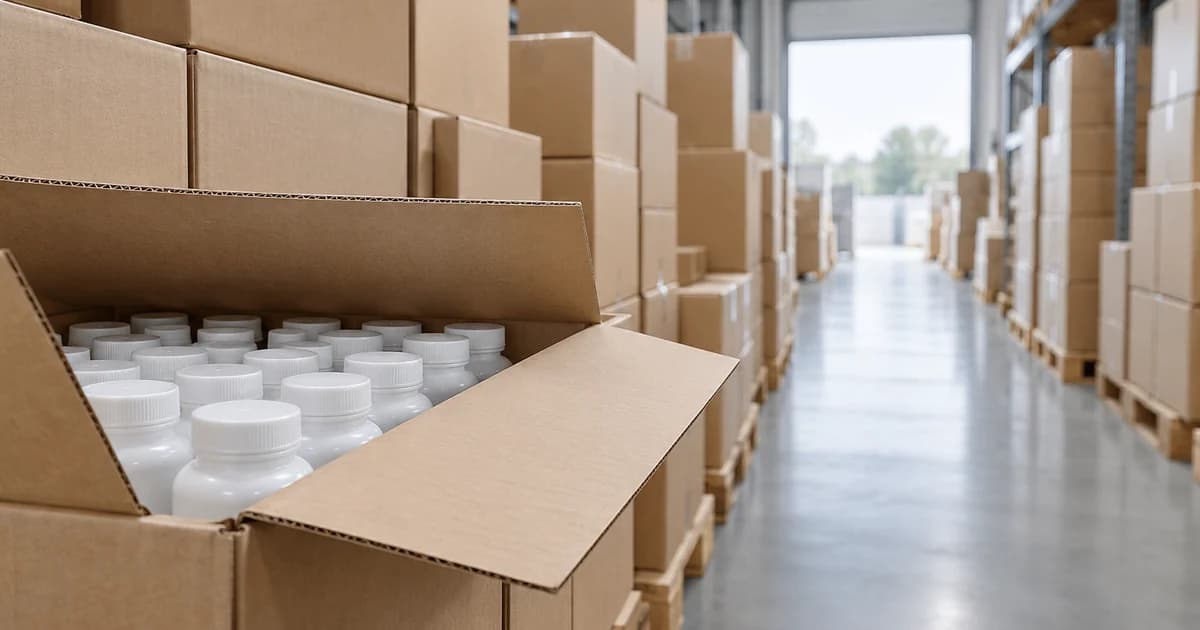
What Is MOQ for Supplements? A Complete Guide
MOQ, or minimum order quantity, is the smallest number of units a manufacturer will produce in one run. For supplements, it typically ranges from 1,000 units per SKU for retail bottling, with lower thresholds for pilot runs.
Overview
If you are sourcing a supplement manufacturing partner, understanding MOQ is essential for budgeting, inventory planning, and cash flow. MOQ is not arbitrary; it is driven by setup costs, ingredient minimums, and packaging requirements. This guide breaks down what MOQ means for supplements, how it differs by format and order type, and how to negotiate terms that fit your brand's stage.
- MOQ for retail bottling
- 1,000 units per SKU
- MOQ for pilot runs
- Lower, often 1,000 units
- Sample lead time
- 7–10 working days
- Mass production lead time
- 20–35 working days
- Certifications
- GMP, ISO 9001, ISO 22000, HACCP, NSF/ANSI 455-2, halal, FDA-registered
- Line capacity
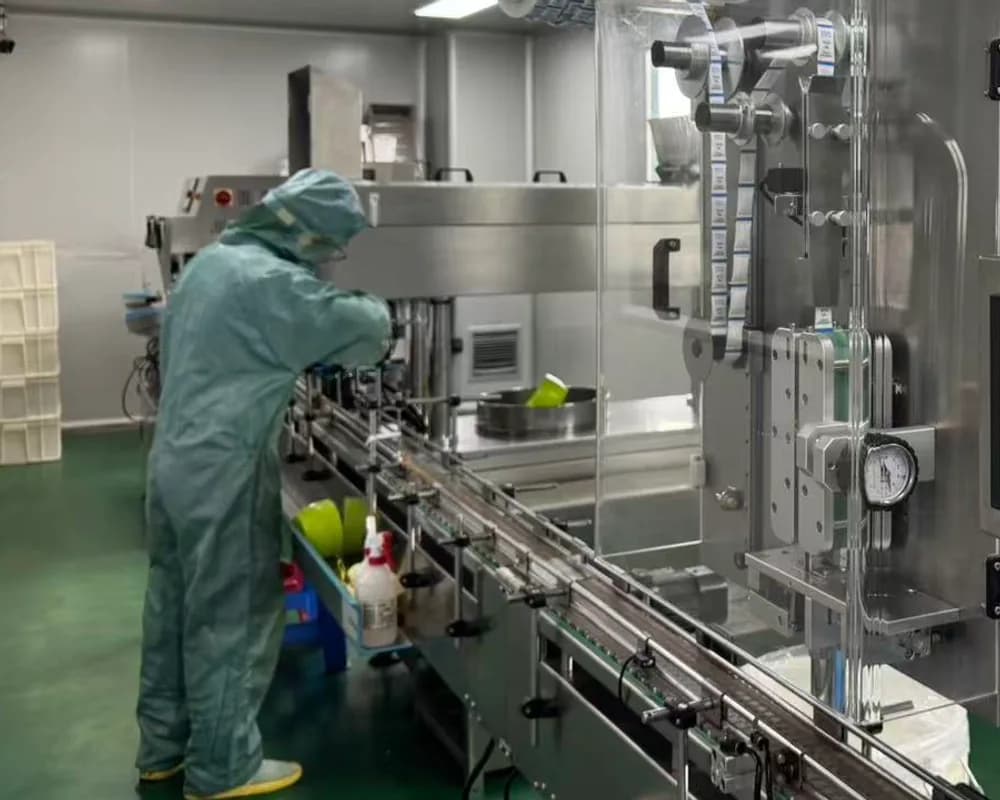
- Up to 50,000 bottles per day
How MOQ Varies by Supplement Format
MOQ is not a single number. It depends on the dosage form. Capsules and tablets typically have MOQs of 1,000 units because they run on high-speed encapsulation and compression lines. Powders and stick packs may have similar or slightly higher MOQs due to filling equipment. Liquids and gummies often require higher MOQs, sometimes 5,000–10,000 units, because of batch mixing and moulding constraints. Softgels can be higher still, as low-volume runs are inefficient.
Packaging also plays a role. Stock bottles and closures reduce MOQ. Custom moulded bottles, unique caps, or printed pouches may push MOQ to 10,000 units or more because suppliers impose their own minimums. If you are launching a new SKU, start with stock packaging to keep MOQ manageable, then move to custom formats once volumes justify the tooling investment.
Ingredient and Formulation Impact on MOQ
Specialty ingredients drive MOQ. If your formula includes a patented or clinically studied ingredient, the ingredient supplier may set a minimum order that translates to a higher finished-goods MOQ. For example, a branded probiotic strain might require 50 kg of raw material, which yields 5,000 bottles. Similarly, organic or fair-trade certified ingredients often come in larger lot sizes. Always ask your manufacturer to map ingredient MOQs to finished-unit MOQs before you finalise your formula.
Formulation complexity also matters. A simple two-ingredient capsule can run at lower MOQ than a 20-ingredient blend, because blending and quality testing take longer. If your MOQ is constrained, simplify the formula. Reduce the number of actives, use standardised extracts, and avoid ingredients that require special handling. This can bring MOQ down without compromising efficacy.
Quality, Compliance, and Logistics Considerations
MOQ affects quality control and compliance. Every production run requires testing: raw material identity, potency, microbial safety, and finished-product stability. These tests have fixed costs, so a low MOQ means higher per-unit testing cost. A GMP-certified facility will not skip testing, so expect a minimum that covers these expenses. Certifications such as ISO 22000, HACCP, halal, and organic add audit and documentation requirements that also influence MOQ.
Logistics and warehousing are part of the equation. Shipping a small batch internationally may not fill a container, raising freight cost per unit. Many manufacturers offer lower MOQ for pilot runs but require you to cover air freight. For full production, sea freight becomes viable at 5,000 units or more. Plan your MOQ with landed cost in mind, not just unit price.
Quality Control and Batch Documentation
Every production batch, regardless of MOQ size, is tested against a defined specification. Identity testing confirms the raw material is what the certificate claims, typically via HPLC or FTIR. Potency assays verify the active ingredient falls within 95–105% of label claim. Microbial testing covers total aerobic count, yeast and mould, E. coli, and Salmonella. Heavy metals are screened against USP <232> or equivalent limits. Disintegration testing ensures capsules or tablets break down within 30–60 minutes per USP <701>. Finished-product testing occurs before release, not after.
A Certificate of Analysis (COA) accompanies each batch and lists the test parameters, specification limits, results, and pass/fail status. It also includes the batch number, manufacturing date, expiry date, and the testing laboratory's name. Retention samples are kept for at least one year past the expiry date, stored under controlled conditions. Stability protocols typically follow ICH Q1A guidelines, with accelerated conditions at 40°C/75% RH for six months and real-time studies at 25°C/60% RH for the product's shelf life.
For MOQ orders under 5,000 units, the same batch testing applies, though some manufacturers may pool raw material lots to meet the minimum. This is acceptable if traceability is maintained. Request the raw material COAs and the finished product COA before shipment. If your formula includes probiotics or delicate actives, confirm that potency testing is performed at release and at expiry, not just at release. This affects your MOQ because low-volume runs may not justify the cost of full stability studies, so clarify upfront whether stability data is included or charged separately.
Packaging, Labelling and Retail Readiness at Your Supplement MOQ
Primary packaging options include HDPE bottles, glass bottles, blisters, stick packs, and sachets. Bottles are the most common for capsules and tablets, with MOQs typically starting at 1,000 units. Blisters suit unit-dose formats but carry higher tooling costs, often pushing MOQs to 5,000–10,000 units. Stick packs and sachets are popular for powders and gummies, with MOQs from 5,000 to 10,000 units depending on fill weight. Secondary packaging includes cartons, shrink-wrap, and display-ready cases.
For the US market, labels must include the Supplement Facts panel, a statement of identity, net quantity, ingredient list, allergen declaration, and the manufacturer's name and address. Lot codes and expiry dates are printed or laser-etched on the bottle and outer carton. Carton specifications typically use B-flute corrugated with a 200 lb test, and pallets are standard 48x40 inches, stretch-wrapped and labelled with SSCC codes. For Amazon FNSKU compliance, each unit must carry a scannable FNSKU label, and cartons must meet Amazon's weight and dimension limits.
Retail compliance for the EU requires the address of the food business operator and a nutrition declaration. If you sell on Amazon or to retail chains, confirm that the manufacturer can apply FNSKU labels, poly-bag units, and print carton labels to your specification. These services may add 5–10 working days to lead time and a per-unit cost. Clarify at quotation stage whether packaging components are included in the MOQ price or billed separately, as this affects your total landed cost.
MOQ, Lead Times and Delivery
Sample lead time is typically 7–10 working days from approved formula and packaging artwork. Production begins after sample approval and receipt of deposit, with mass production taking 20–35 working days depending on format and packaging complexity. For MOQ orders of 1,000 units, plan for a total timeline of 6–8 weeks from purchase order to ex-factory. If you need custom packaging components, add 10–15 working days for tooling and print proofing.
Shipping options include air freight (5–10 days door-to-door) and sea freight (25–40 days port-to-port). Air is cost-effective for pilot runs under 500 kg, while sea freight suits MOQs above 1,000 kg. Incoterms commonly used are EXW, FOB, and DDP. EXW places all export clearance and freight costs on you; FOB includes delivery to the named port and export clearance; DDP includes delivery to your door with duties paid. Confirm which Incoterm your quotation uses, as it changes your total cost by 15–30%.
Documents provided with each shipment include the commercial invoice, packing list, bill of lading or airway bill, Certificate of Analysis, Material Safety Data Sheet (MSDS) where applicable, and a free-sale certificate for certain markets. For plant-based ingredients, a phytosanitary certificate may be required by destination customs. Ensure the manufacturer can provide these documents promptly, as missing paperwork can delay clearance by several days and incur storage fees.
Manufacturing Options to Compare
Pilot run
1,000 units. Ideal for market testing, small-scale stability studies, and fundraising samples. Higher per-unit cost but lower upfront risk.
Standard retail bottling
1,000 units per SKU. The most common MOQ for brands entering retail or scaling online sales. Balances cost and inventory.
Custom packaging
5,000–10,000 units. Required when using custom bottles, caps, or printed pouches. Tooling and setup costs are amortised over the run.
Private label stock
1,000 units. Choose from existing formulas and stock packaging. Fastest route to market with the lowest MOQ.
Production in Six Steps
- 01
Define your sales channel
Retail, e-commerce, or practitioner channel each has different volume expectations. Retail often requires 1,000+ units per SKU to fill shelves.
- 02
Choose your dosage form
Capsules and tablets have lower MOQs than gummies or liquids. Select a format that matches your budget and target market.
- 03
Review ingredient minimums
Ask your manufacturer for ingredient MOQs. Branded or specialty ingredients can raise the finished-goods MOQ significantly.
- 04
Select packaging
Stock bottles keep MOQ at 1,000 units. Custom packaging may push MOQ to 10,000 units or more.
- 05
Request a pilot run
Start with 1,000 units to validate the formula and packaging. Use feedback to refine before mass production.
- 06
Negotiate terms
Discuss MOQ flexibility, payment schedules, and lead times. A good partner will work with you to find a viable starting point.
Why EUPHM
Cost control
MOQ directly affects your upfront investment and per-unit cost. Knowing the numbers helps you budget accurately and avoid surprises.
Inventory management
Ordering too many units ties up cash and risks expiry. Ordering too few raises per-unit cost. The right MOQ balances both.
Scalability
Starting with a pilot run lets you test the market before committing to a full production run. You can scale up as demand grows.
Questions buyers ask.
What is the typical MOQ for a supplement brand?+
For retail bottling, most manufacturers require 1,000 units per SKU. Pilot runs can be lower, often 1,000 units. MOQ varies by dosage form, ingredients, and packaging.
Can I get a lower MOQ for a new supplement?+
Yes, many manufacturers offer pilot runs with lower MOQs. These are ideal for market testing. However, per-unit costs are higher because setup and testing costs are spread over fewer units.
Does MOQ differ for capsules vs. gummies?+
Yes. Capsules and tablets typically have MOQs of 1,000 units. Gummies often require 5,000–10,000 units due to moulding and batch mixing constraints. Liquids can be similar or higher.
How does packaging affect MOQ?+
Stock bottles and closures keep MOQ low. Custom moulded bottles, unique caps, or printed pouches may raise MOQ to 10,000 units or more because packaging suppliers have their own minimums.
What certifications should I look for in a manufacturer?+
Look for GMP, ISO 22000, and HACCP at minimum. If you sell in the Middle East or Asia, halal certification is important. For organic claims or EU organic certification is required. Vegan certification supports plant-based positioning.
What is the difference between a pilot MOQ and a production MOQ?+
A pilot MOQ is a small run, often 1,000 units, used to validate formula, packaging, and market response. It may carry a higher per-unit cost due to setup and testing. A production MOQ is the standard minimum for repeat orders, typically 1,000 units, with lower unit costs. Clarify whether pilot runs count toward future production volumes and whether tooling or setup fees are credited against larger orders.
Can I mix SKUs to meet the MOQ?+
Some manufacturers allow mixed SKUs within the same format to meet the total MOQ, but each SKU may still have a minimum run size, often 1,000–1,500 units. Mixing formats, such as capsules and gummies, usually requires separate MOQs because they run on different lines. Ask for a written breakdown of per-SKU minimums and whether changeover costs apply when multiple SKUs are produced in one batch window.
How do I verify a manufacturer's quality system before placing an MOQ order?+
Request a copy of the manufacturer's GMP certificate, ISO 22000 or HACCP certification, and a sample COA for a similar product. Ask whether they conduct in-house testing or use a third-party laboratory, and request the laboratory's accreditation scope. A video or on-site audit is advisable for orders above 5,000 units. Confirm that retention samples and stability data are available and that batch records can be provided upon request.
Xu Wei writes the manufacturing, quality and regulatory guides on EUPHM. He works directly with the plant's production and QA teams to document how each dosage form is made, tested and released, so every claim on the site can be traced back to a batch record or a certificate on file.
More guides in this category.
See all →
How to Choose a Private Label Partner
Choosing a private label partner affects your margin, launch speed and repeat orders. This guide covers the six checks that separate a reliable manufacturer from one that delays your first shipment.
Read the guide →
Private Label vs OEM vs ODM: Which Supplement Model Fits
Private label, OEM and ODM differ in who owns the formula, the mould and the margin. This guide compares MOQs, lead times and IP so you can pick the right route before you request quotes.
Read the guide →Have a product in mind?
Send us the brief and we will come back with a formulation direction, indicative price and a realistic lead time — usually within one working day.