
How Much Does It Cost to Manufacture Supplements?
Supplement manufacturing cost depends on formula, dose, packaging and order volume. At MOQ 1,000 units per SKU, most capsules and tablets land between $0.80 and $3.50 per unit before freight, labels and duties.
Overview
There is no single price per bottle. A 60-count capsule SKU at 500 mg costs less to make than a 30-serving powder with branded ingredients and a custom bottle. Your quote is built from ingredient cost per dose, capsule or tablet size, packaging format, label application, order quantity and testing. This guide breaks down the numbers brand owners and procurement teams see in 2025, based on GMP-certified production in Guangdong, China.
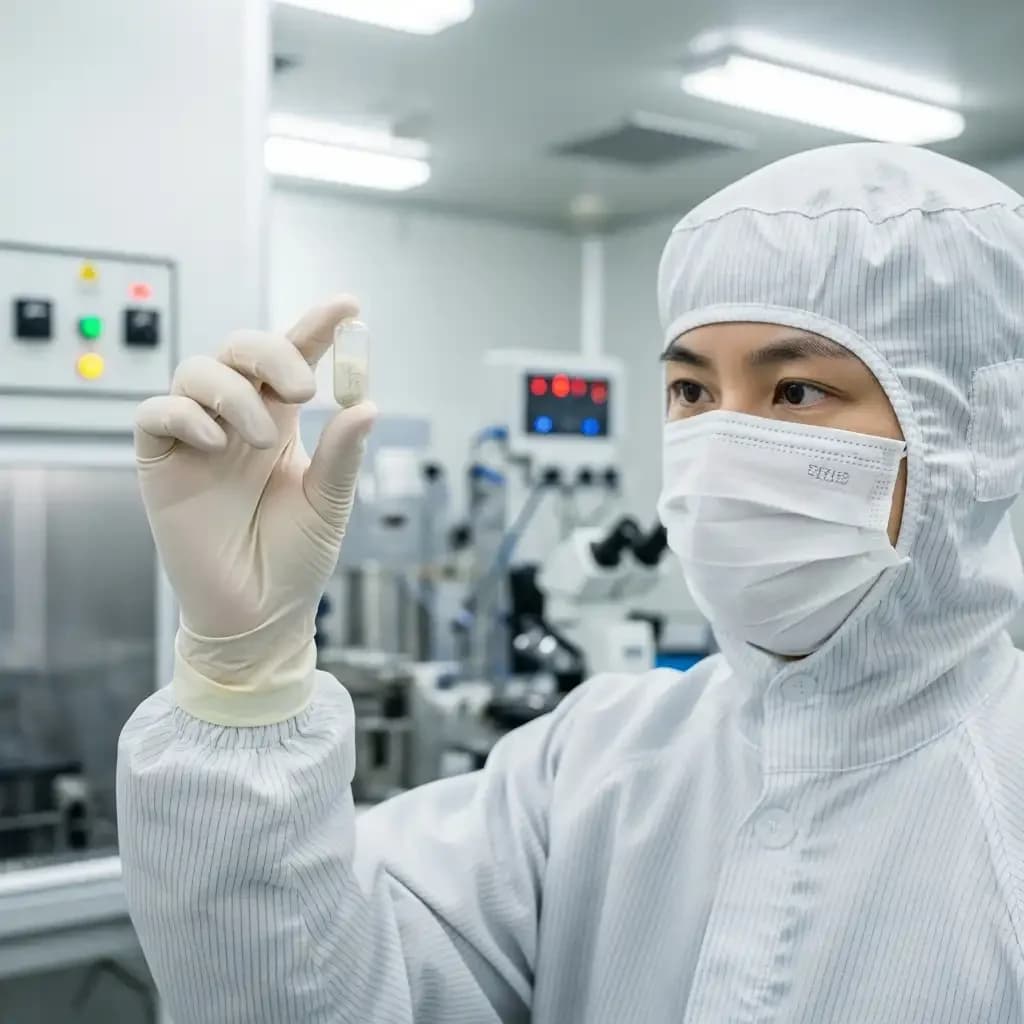
- MOQ (retail bottling)
- 1,000 units per SKU
- MOQ (pilot run)
- 500–1,000 units per SKU
- Sample lead time
- 7–10 working days
- Mass production lead time
- 20–35 working days
- Certifications
- GMP, ISO 9001, ISO 22000, HACCP, NSF/ANSI 455-2, halal, FDA-registered
- Typical unit cost range
- $0.80–$3.50 per unit at MOQ (capsules/tablets, 60ct)
What Drives Cost: Capability and Volume
Volume is the largest lever. At 1,000 units, setup, cleaning and QC are spread over a small batch. At 10,000 units, the same fixed costs spread further. Capsules and tablets are the most economical formats. Powders and liquids cost more to fill, seal and ship. A 60-count capsule SKU at 500 mg typically runs $0.80–$1.60 per unit at 5,000 units, while a 30-serving powder with a scoop and custom jar can reach $2.50–$3.50.
Line capacity also matters. A high-speed capsule line can fill 80,000–120,000 capsules per shift, but a small pilot run uses the same line at lower efficiency. If your formula needs a dedicated allergen-free suite or organic handling, expect a 10–20% premium. Ask for a costed quote at 1,000, 5,000 and 10,000 units to see the curve before you commit.
Formulation and Ingredient Cost Detail
Ingredient cost per dose is the second big driver. Commodity vitamins and minerals are cheap. Branded or patented ingredients, standardised botanicals, and clinically studied strains cost more. A 500 mg vitamin C capsule may use $0.02 of actives. A 300 mg ashwagandha extract at a 5% withanolide specification can cost $0.15–$0.30 per dose. Excipients, capsule shells and coatings add $0.01–$0.05 per unit.
Overages protect potency through shelf life. If your label claims 100 mg, we may need to add 5–10% extra to meet the claim at expiry. That raises ingredient cost. Taste and texture also matter for gummies and powders. Natural flavours, sweeteners and colours can add $0.05–$0.20 per serving. Request a formula cost sheet that lists each ingredient, its dose and its cost per unit.
Quality, Compliance and Logistics Costs
Testing and compliance are not optional. Every batch needs identity testing on incoming ingredients, plus micro and heavy metal testing on the finished product. Third-party COAs cost $200–$600 per batch depending on the panel. halal certification add audit and material costs. Organic ingredients carry a 20–40% premium over conventional. These costs are real but they protect your brand and your retail listings.
Packaging and freight add the rest. A stock bottle, cap and label may cost $0.15–$0.40 per unit. Custom tooling for a unique bottle can add $2,000–$8,000 one time. Freight from Guangdong to the US or EU by sea is typically $0.10–$0.30 per unit for a full container, more for air. Duties and taxes vary by country. A landed cost model should include all of these.
Quality Control and Batch Documentation in Supplement Manufacturing
Every production batch is sampled at defined points rather than only at the end of the line. Incoming raw materials are checked against the supplier's certificate of analysis before release to production, and finished capsules or tablets are pulled after coating and drying. Identity testing confirms the material is what the purchase order specifies, potency testing measures the active marker against your formula target, and microbiological testing covers total plate count, yeast and mould, E. coli and Salmonella. Heavy metals (lead, arsenic, cadmium, mercury) are run on every batch of botanical or mineral inputs, and disintegration testing confirms the capsule or tablet breaks down within the pharmacopoeial window, typically under 30 minutes for capsules.
Testing is carried out in-house for routine parameters and by accredited third-party laboratories for heavy metals, pesticide residues and any claim that requires an external report. A certificate of analysis is issued per batch and lists the parameter, specification, method reference and result, plus the batch number, manufacture date and expiry date. Brand owners receive this document before shipment so it can be filed with their own quality records. Where a customer needs a specific marker compound or a tighter assay range than the standard specification, that method is written into the batch record at the sampling plan stage.
Retention samples are held for the full shelf life stated on the label plus twelve months, stored under the same conditions as commercial stock. These samples allow a batch to be re-tested if a customer complaint or a market surveillance query arises after delivery. Stability follows a real-time protocol at 25°C/60% RH and 30°C/65% RH, with pull points at 0, 3, 6, 12, 18 and 24 months depending on the intended shelf life. Accelerated testing at 40°C/75% RH over six months is used to support an initial shelf-life assignment before real-time data is complete.
Documentation is retained for at least five years and is available to customers for audit purposes. The batch record links every raw material lot number to the finished goods lot, so a traceability exercise can be run backwards from a single bottle to the supplier of each input. This matters for retail compliance and for any recall scenario, where the speed of identifying affected stock determines the cost of the exercise. If your market requires additional testing beyond the standard panel, such as a specific allergen screen or an organic integrity check, that is added to the sampling plan and quoted separately.
Packaging, Labelling and Retail Readiness
Packaging format drives both unit cost and the tooling you need to budget for. High-density polyethylene bottles in 60, 90, 120 and 180 count are the most economical for capsules and tablets, with induction seals and child-resistant closures available where regulation requires them. Blister packs suit tablets and softgels where unit-dose protection matters, but the forming and sealing tools add a one-off cost and a longer changeover. Stick packs and sachets work for powders and are typically filled at 5 g to 30 g per stick. Custom bottle shapes, colours and moulded caps require a tooling investment that is only sensible at volumes well above the minimum order.
Labels must carry the elements your destination market requires. For the United States, the FDA dietary supplement label needs a statement of identity, net quantity of contents, a Supplement Facts panel with serving size and percent daily value where established, a list of ingredients in descending order of weight, and the name and place of business of the distributor. Allergen declarations, advisory statements and the mandatory disclaimer are added where relevant. The lot code and best-by date are applied by inkjet or laser at filling, and the format is agreed with you before the print run so it matches your own traceability system.
Secondary packaging is specified alongside the primary. Cartons are usually printed corrugated with your artwork, and the master carton carries the quantity, gross weight, lot number and dimensions. Pallet configuration is agreed to suit the receiving warehouse: standard 1200 x 1000 mm or 1200 x 800 mm pallets, with a stated number of cartons per layer and layers per pallet, stretch-wrapped and corner-boarded for sea freight. For Amazon sellers, FNSKU labels can be applied at the factory, and cartons can be packed to Amazon's weight and dimension limits, but you must supply the label file and confirm the box requirements before production starts.
Proofing runs before mass production. A digital or physical proof of the label is approved by you in writing, and a pre-production sample of the filled and labelled unit is signed off. Any change to artwork after that approval restarts the proofing step and can add several days to the schedule. Retailer-specific requirements, such as a specific barcode symbology, a security seal or a shelf-ready tray, should be confirmed at the quotation stage because they affect the packaging specification and therefore the unit price.
MOQ, Lead Times and Delivery in Supplement Manufacturing
Sampling starts with a brief covering formula, dosage form, target dose, packaging and destination market. A stock formulation sample can be dispatched in 7 to 10 working days. A custom formulation that needs development, pilot batching and stability set-up takes longer, typically three to four weeks before a sample is in your hands, because the pilot batch must be made and tested before it can be released to you. Sample costs are usually credited against the first production order, and courier charges are borne by the buyer.
Mass production begins only after written approval of the pre-production sample and receipt of the deposit. The production window is 20 to 35 working days for standard capsules and tablets, counted from approval rather than from the purchase order date. Orders that require custom tooling, imported branded ingredients with a long replenishment cycle, or a packaging format new to the line sit at the upper end of that range. If your launch date is fixed, the approval date is the milestone to protect, because everything downstream is scheduled from it.
Delivery terms are agreed at quotation. EXW places collection at the factory, FOB covers delivery to the named port and export clearance, and DDP delivers to your door with duties and import clearance handled, which suits brand owners without an import entity. Air freight is used for samples, pilot runs and urgent replenishments and typically takes 5 to 8 days door to door; sea freight takes 25 to 40 days depending on the destination port and is the normal choice for full container or palletised orders.
The shipping document pack includes the commercial invoice, packing list, bill of lading or air waybill, certificate of analysis per batch, a material safety data sheet where the product requires one, and a free-sale certificate for markets that request it. Phytosanitary certificates apply only to plant-derived materials where the destination requires them, and halal certificates are provided where the product is certified. Confirm the document list with your customs broker before booking, because a missing certificate at the port of entry is the most common cause of clearance delay.
Formats and Packaging Options
Increase order volume
Moving from 1,000 to 10,000 units can cut unit cost by 15–30% because setup and QC costs spread across more units.
Use stock packaging
Stock bottles, caps and labels avoid tooling fees and reduce lead time. Custom moulds add $2,000–$8,000 and 10–15 days.
Simplify the formula
Fewer actives means lower ingredient cost and simpler testing. A 3-ingredient blend costs less than a 12-ingredient blend at the same dose.
Book capacity early
Confirming your slot 6–8 weeks ahead avoids rush fees and air freight. Planned production runs 20–35 working days.
From Enquiry to Delivery
- 01
Share your formula
Send the target dose, serving size and any branded ingredients. We check feasibility and flag cost drivers before quoting.
- 02
Choose format and pack
Capsule, tablet, powder, gummy or liquid. Bottle size, cap type and label finish all change the unit cost.
- 03
Set order quantity
Tell us your first run and your 12-month forecast. We quote at 1,000, 5,000 and 10,000 units so you see the curve.
- 04
Receive a line-item quote
You get ingredient cost per dose, packaging, testing, labour, MOQ and lead time. No hidden fees.
- 05
Approve samples
We produce samples in 7–10 working days. You confirm taste, appearance and label artwork before mass production.
- 06
Production and shipping
Mass production runs 20–35 working days. We handle batch records, COAs and freight documents for your market.
Why EUPHM
Transparent cost breakdown
Every quote lists ingredient, packaging, testing and labour costs. You see where each dollar goes before you commit.
Low MOQ for pilot runs
Start at 500–1,000 units to test the market, then scale to 1,000 units for retail bottling with the same formula.
Certified for global retail
GMP, ISO 9001, ISO 22000, HACCP, NSF/ANSI 455-2 and halal certification; FDA facility registration for US-bound shipments.
Questions buyers ask.
What is the minimum order for supplement manufacturing?+
For retail bottling, MOQ is 1,000 units per SKU. For pilot runs, we can produce 500–1,000 units so you can test the market. Lower MOQ means higher unit cost because setup and testing spread over fewer units.
How much does a 60-count capsule bottle cost to make?+
At 5,000 units, a 60-count capsule SKU at 500 mg typically costs $0.80–$1.60 per unit before freight, labels and duties. Cost depends on ingredients, capsule size and packaging. A costed quote gives exact numbers.
Do you charge for samples?+
Sample costs depend on formula and packaging. We quote sample fees separately and credit them against your first mass production order. Sample lead time is 7–10 working days after formula and artwork approval.
What certifications do you hold?+
The facility is GMP-certified and holds ISO 22000 and HACCP. We also produce to halal and vegan standards where the formula and materials allow. Certificates are available for your compliance files.
How long does production take after I approve samples?+
Mass production runs 20–35 working days from deposit and artwork approval. This covers ingredient ordering, production, testing and packing. Freight time to the US or EU adds 20–35 days by sea.
Can you match a formula I already sell with another manufacturer?+
Yes, provided you supply the full quantitative formula and the specification for each ingredient. The formulation is reviewed for feasibility on our equipment, and a pilot batch is made and tested against your existing specification so the match can be verified before scale-up. Where a branded or patented ingredient is used, you need to confirm the supply or authorise us to source it, as some materials are restricted to approved manufacturers.
What deposit and payment terms do you require?+
Standard terms are a 30 to 50 percent deposit with the balance due before shipment, confirmed against the pre-shipment inspection report and the certificate of analysis. The exact split depends on order value, whether custom tooling is involved and the payment history on the account. Payment is usually by bank transfer in US dollars, and the deposit is what triggers raw material purchasing and production slot booking.
Can you produce a supplement that is certified vegan?+
vegan production is possible where the formula and every input qualify, and where the relevant certificate covers the specific product. Organic claims require certified raw materials with valid transaction certificates and a segregated production run, which affects both lead time and cost. Vegan status depends on the capsule shell, the excipients and any coating, so these are reviewed at formulation stage rather than assumed.
Xu Wei writes the manufacturing, quality and regulatory guides on EUPHM. He works directly with the plant's production and QA teams to document how each dosage form is made, tested and released, so every claim on the site can be traced back to a batch record or a certificate on file.
More guides in this category.
See all →
How to Negotiate a Supplement MOQ (Without Lying to Your Supplier)
A minimum order is not a sales tactic — it is the point where a factory stops losing money on setup, cleaning, yield loss and QC. Negotiate the components, not the number, and 1,000 units can often become 500 without anyone pretending the cost disappeared.
Read the guide →
What a First Supplement Run Really Costs at 1,000 Units
The ex-works price is roughly half the story. Samples, tooling, artwork, testing, documents, freight, duty and receiving add a fixed block that does not shrink with order size — which is why a 1,000-unit run often lands at two to three times the unit price you were quoted.
Read the guide →
How to Price Your Supplement Product
Pricing a supplement starts with landed cost, not competitor guesswork. Build the number from formula, packaging, fill weight, MOQ and freight. Then add your margin and channel fees. This guide shows the inputs that move price most.
Read the guide →Have a product in mind?
Send us the brief and we will come back with a formulation direction, indicative price and a realistic lead time — usually within one working day.