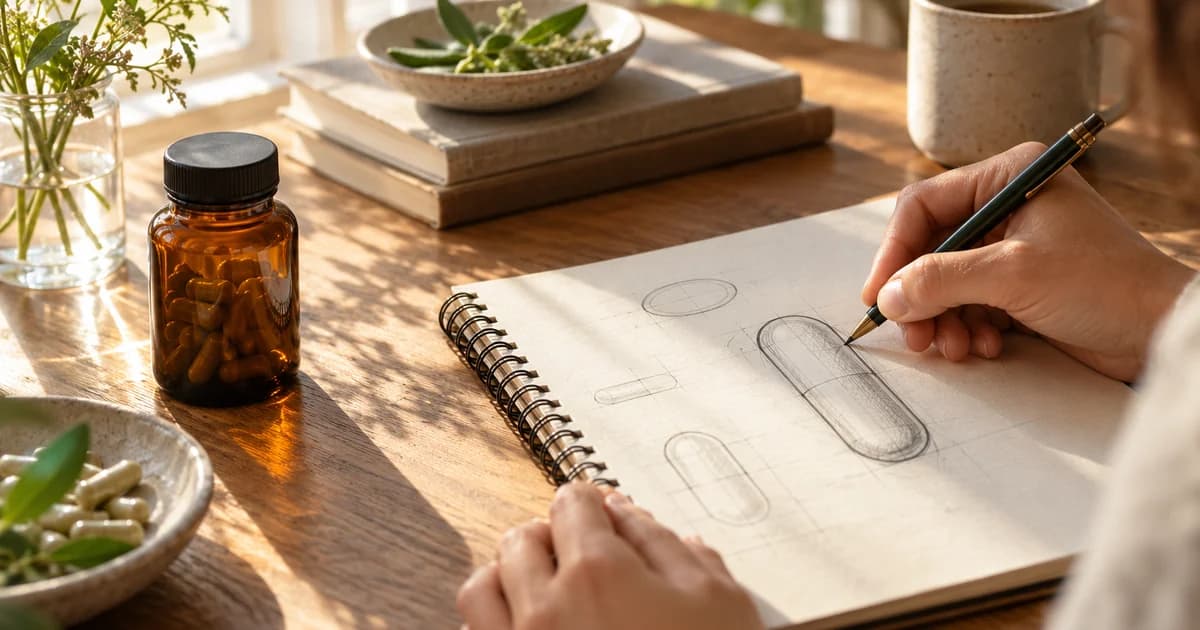
How to Start a Supplement Brand: A Sourcing Guide
Launching a supplement brand starts with product format, formula, and a manufacturing partner that can scale. This guide covers MOQs, lead times, certifications, and the steps to move from concept to retail-ready bottles.
Overview
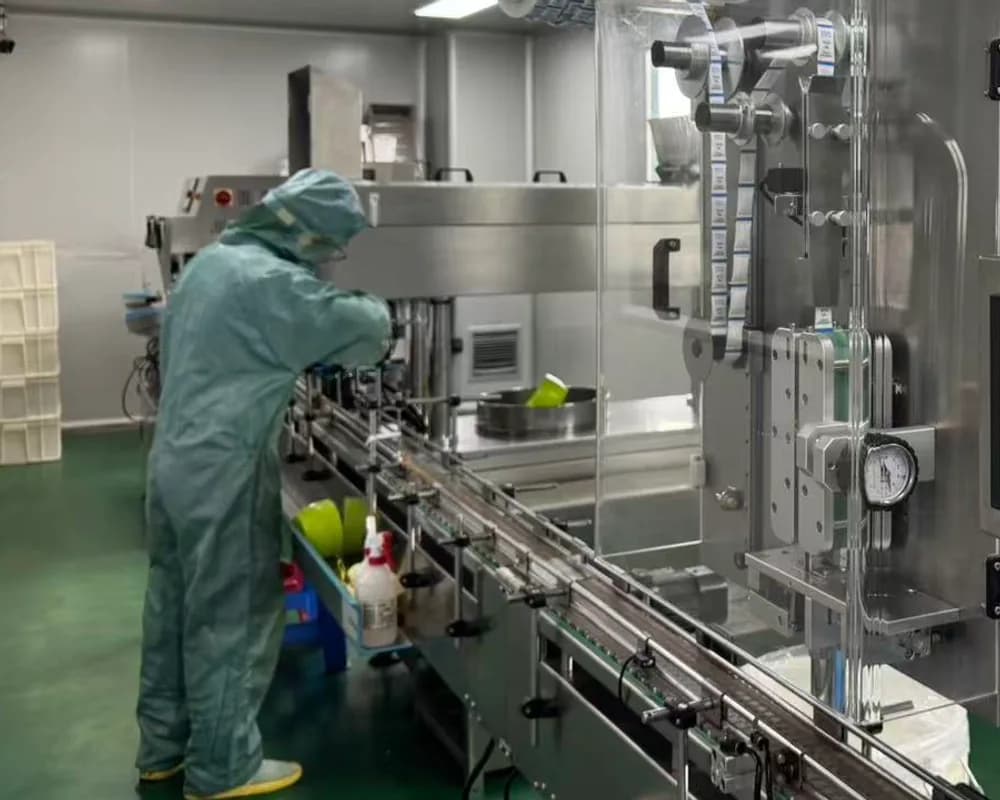
Most first-time brand owners underestimate the operational work behind a launch: selecting a dosage form, finalising a formula, confirming label claims, and booking production capacity. EUPHM runs GMP, ISO 22000 and HACCP-certified lines in Guangdong, producing capsules, tablets, powders and gummies for brands in the US, EU, UK and Middle East. This article outlines realistic MOQs, sample and production timelines, and the compliance checks to complete before you pay a deposit.
- Minimum order quantity
- 1,000 units per SKU for retail bottling; lower for pilot runs
- Sample lead time
- 7–10 working days
- Mass production lead time
- 20–35 working days after sample approval and deposit
- Certifications
- GMP, ISO 9001, ISO 22000, HACCP, NSF/ANSI 455-2, halal, FDA-registered
- Dosage forms
- Capsules, tablets, softgels, powders, gummies, liquids
- Fill weights
- Capsules 300–1,000 mg; tablets 250–1,200 mg; gummies 2–5 g; powder 5–30 g per serving
Manufacturing capability and line capacity
A contract manufacturer's equipment dictates which formats you can sell. Capsule filling lines typically run 60,000–120,000 capsules per shift, while gummy lines produce 2–5 tonne batches and powder lines handle 500–2,000 kg blends. If your launch plan includes multiple SKUs, confirm changeover time between products. A plant that runs capsules, tablets and powders under one roof reduces the number of suppliers you manage and keeps fill weights consistent across your range.
Capacity also determines whether your reorder arrives on time. Ask for monthly output figures per dosage form and current utilisation. A plant running at 70–80% capacity can usually slot a 5,000-unit run into a 20–35 working day window. One running at 95% may push you to 45 days. For pilot runs under 1,000 units, expect manual or semi-automatic lines and a higher per-unit cost.
Formulation, ingredients and fill weights
Your formula should be built around clinically studied dosages, not label decoration. If a study used 500 mg of an extract, a 50 mg sprinkle will not support the same claim. Work with the manufacturer's R&D team to set actives, excipients and overage. Common capsule sizes are 0, 00 and 000, holding roughly 300–1,000 mg. Tablets range 250–1,200 mg. Gummies usually sit at 2–5 g, and powders at 5–30 g per serving.
Ingredient sourcing affects both cost and lead time. Standardised botanical extracts, marine collagen and probiotic blends may need 15–30 days to arrive at the plant before production starts. Ask whether the manufacturer holds stock or buys against your PO. For organic, halal claims, the ingredient supplier needs matching certification. Request a certificate of analysis for each lot and confirm the testing lab used for identity, potency and heavy metals.
Quality, compliance and shipping logistics
A GMP-certified facility follows written procedures for blending, filling, packaging and batch records. ISO 22000 and HACCP add food-safety controls. These certifications support your label claims but do not replace market-specific rules. In the US, you file a structure-function claim notification if needed. In the EU, novel food status and health claims regulation apply. In the Middle East, halal certification and Arabic labelling are often required.
Shipping from Guangdong to Los Angeles takes about 18–25 days by sea; to Rotterdam, 28–35 days; to Jebel Ali, 20–28 days. Air freight runs 5–8 days at 4–6 times the cost. Confirm Incoterms, whether the manufacturer handles export documents, and who pays for any customs inspection. For retail bottling, request food-grade secondary packaging that survives transit without dents.
Quality Control and Batch Documentation
Every production batch is sampled at three points: incoming raw materials, in-process blend or fill, and finished goods. Identity testing by FTIR or HPLC confirms each active ingredient against its reference standard. Potency assays quantify actives to within 90–110% of label claim, while microbial testing covers total aerobic count, yeast and mould, E. coli and Salmonella. Heavy metals (lead, arsenic, cadmium, mercury) are screened against USP <2232> or EU pharmacopoeia limits, and disintegration testing follows USP <701> for tablets and capsules. Gummies require additional texture and water-activity checks.
A Certificate of Analysis (COA) is issued per batch and typically lists the product name, lot number, manufacturing date, expiry date, tests performed, specification limits, results and the analyst's signature. For US-bound products, the COA should reference the finished-product specification agreed at sample approval. Retention samples of each batch are kept for at least one year past expiry under controlled temperature and humidity, so a query about a specific lot can be resolved without relying on production records alone.
Stability protocols follow ICH Q1A(R2) guidance: accelerated conditions at 40°C/75% RH for six months and long-term at 25°C/60% RH for the shelf life claimed. A typical supplement brand orders a 12-month real-time study alongside the accelerated arm, with interim timepoints at 0, 3, 6 and 12 months. If you plan to sell in the EU, the stability data should support the shelf life printed on the label, and any excipient or packaging change triggers a re-test.
Deviations are documented in a batch record that traces every ingredient lot, operator, equipment clean-down and in-process check. If a result falls outside specification, the batch is quarantined pending an investigation. Ask your contract manufacturer for a sample COA and a blank batch record before you place a deposit; the format tells you more about their documentation discipline than any brochure claim.
Packaging, Labelling and Retail Readiness
Primary packaging options include HDPE bottles (typically 60, 90, 120 or 180 count), PET jars for powders, blister packs for pharmacy channels, stick packs for single-serve powders and sachets for sample or travel sizes. Bottles can be supplied with induction seals, desiccant canisters or cotton, and child-resistant closures where required. Gummies usually ship in PET or glass jars with a shrink band. Confirm the bottle dimensions and closure thread with your manufacturer early, because tooling and label dielines depend on them.
For the US market, the FDA dietary-supplement label must carry a Supplement Facts panel with serving size, amount per serving and % Daily Value where established, plus a complete ingredient list in descending order of weight. The statement of identity, net quantity, name and place of business of the manufacturer or distributor, and allergen declarations are mandatory. Structure-function claims require the DSHEA disclaimer. For the EU, the Nutrition and Health Claims Regulation governs wording, and the label must show the recommended daily portion and a warning not to exceed it.
Lot and expiry coding is applied by inkjet or laser on the bottle, carton and, where used, the shrink band. The format should match your market: in the US, a best-by date is common; in the EU, an expiry date is expected. Cartons are specified with board grade, print process and pallet configuration, typically 12 to 48 units per carton and 40 to 60 cartons per pallet. If you sell on Amazon, the FNSKU label must be applied so it covers the original barcode, and poly-bagged units need a suffocation warning.
Retail readiness also means checking that the dieline accommodates your mandatory text without font sizes falling below local minimums. A common delay is a label that looks correct on screen but fails the printer's pre-flight because of low-resolution images or missing bleed. Ask for a printed proof on the actual substrate before mass printing; the cost of a proof is small compared with reprinting 5,000 labels.
MOQ, Lead Times and Delivery
The sample timeline starts with a formulation brief and typically runs 7–10 working days for a stock formula, or 15–20 working days if a new flavour or custom blend is required. Sample costs are usually credited against the first production order. Once you approve the sample and pay the deposit, mass production takes 20–35 working days depending on dosage form and packaging complexity. Gummies and softgels sit at the longer end because of curing and drying steps.
Shipping method depends on volume and urgency. Air freight suits pilot runs of 50–200 kg and takes 5–10 days door to door, while sea freight is economical above roughly 500 kg and takes 25–40 days to the US or EU. Express couriers are used for samples and small replenishments. Provide your destination postcode and product weight so the manufacturer can quote accurately; volumetric weight often governs air costs for low-density powders.
Incoterms should be agreed in writing. EXW means you arrange collection from the Guangdong factory; FOB covers delivery to the named port, typically Shenzhen or Hong Kong; DDP means the manufacturer handles freight, customs and duties to your door, which simplifies accounting but usually carries a higher unit cost. For first orders, FOB is the most common choice because it gives you visibility of freight costs and insurance.
Documents provided with each shipment include the COA, a material safety data sheet (MSDS) for the finished product, a free-sale certificate, and a certificate of origin. For plant-derived ingredients, a phytosanitary certificate may be required by the destination country. Confirm the document set before booking freight, because missing paperwork at customs can add several days and demurrage charges.
Configurations to Compare
Two-piece capsules
Holds 300–1,000 mg. Suitable for powders, granules and pellets. Vegetarian HPMC shells available for vegan claims. Lowest tooling cost and fast changeover between SKUs.
Tablets
250–1,200 mg. Higher compression allows larger doses per unit. Requires granulation and coating equipment. Film coating can mask taste and improve swallowability.
Gummies
2–5 g per piece. Popular for vitamin, mineral and beauty SKUs. Pectin or gelatin base. Production runs need 2–5 tonne batches, so MOQs are higher.
Powders and stick packs
5–30 g per serving. Good for protein, greens and pre-workout. Stick packs offer single-serve convenience. Check moisture barrier and scoop accuracy.
From Enquiry to Delivery
- 01
Define format and dose
Choose capsule, tablet, gummy or powder. Set the active dose per serving based on published research or a qualified formulator's recommendation.
- 02
Request samples
Ask for 7–10 day sample turnaround. Compare taste, fill weight consistency and capsule appearance before committing to a full run.
- 03
Confirm certifications
GMP, ISO 9001, ISO 22000, HACCP, NSF/ANSI 455-2 and halal certification; FDA facility registration for US-bound shipments.
- 04
Approve label and artwork
Check market-specific rules for claims, allergens, net quantity and language. Build in space for batch number and best-before date.
- 05
Place deposit and book capacity
MOQ is 1,000 units per SKU. Deposit secures raw materials and a production slot. Expect 20–35 working days for mass production.
- 06
Arrange shipping and reorder
Confirm Incoterms, freight mode and customs documents. Plan a reorder 6–8 weeks before stockout based on your sell-through rate.
Why EUPHM
Low MOQ for pilots
Start at 1,000 units for retail bottling. Lower thresholds available for pilot runs, so you can test the market before scaling.
Certified quality systems
GMP, ISO 9001, ISO 22000, HACCP, NSF/ANSI 455-2 and halal certification; FDA facility registration for US-bound shipments.
Full documentation
Batch records, certificates of analysis and ingredient traceability provided. Supports retailer and marketplace compliance checks.
Questions buyers ask.
What is the minimum order quantity for a supplement brand?+
For retail bottling, MOQ is typically 1,000 units per SKU. Pilot runs can be lower, often 500–1,000 units, but per-unit cost rises because lines run slower and raw materials are bought in smaller quantities. Confirm MOQ per dosage form, as gummies usually require larger batches than capsules.
How long does it take to manufacture a supplement?+
Sample lead time is 7–10 working days. Mass production takes 20–35 working days after sample approval and deposit. Add 15–30 days if a custom ingredient must be sourced. Sea freight to the US takes 18–25 days, to the EU 28–35 days, and to the Middle East 20–28 days.
Do I need FDA approval to sell supplements?+
No. The FDA does not approve supplement products or facilities before sale. Manufacturers register their facility and follow current Good Manufacturing Practice. If you make a structure-function claim, you must notify the FDA within 30 days of marketing. Your contract manufacturer should provide batch records and certificates of analysis.
What certifications should a contract manufacturer have?+
At minimum, look for GMP, ISO 22000 and HACCP. If you sell in the Middle East, halal certification is often required. For organic claims, the plant and ingredient suppliers need organic certification. Vegan certificates matter for specific audiences. Always request copies and verify the certifying body.
How do I choose between capsules, tablets and gummies?+
Capsules suit 300–1,000 mg doses and have low tooling cost. Tablets handle 250–1,200 mg and allow film coating. Gummies work well for 2–5 g doses but need larger batches and often higher MOQs. Powders and stick packs fit 5–30 g servings. Match the format to your dose, target consumer and budget.
What is the difference between a stock formula and a custom formula?+
A stock formula is a pre-developed blend the manufacturer already produces, so it has an existing specification, COA and stability data. Lead time is shorter and MOQ is often lower. A custom formula is developed for your brand, requiring a formulation brief, sample rounds and a fresh stability study. Custom work typically adds 10–15 working days and may raise the MOQ to 5,000 units per SKU.
Can you produce a supplement that is certified organic or non-GMO?+
Organic and non-GMO claims depend on ingredient sourcing and facility segregation. The manufacturer can source certified organic raw materials and hold organic certification on request, but each ingredient must be verified. Non-GMO status is supported by supplier declarations and, where required, PCR testing. These claims add documentation work and should be specified at the quotation stage, not after the formula is fixed.
How do I handle a product recall or quality complaint after delivery?+
Retention samples and batch records allow the manufacturer to investigate a complaint against the specific lot. If a recall is required, the batch record traces the ingredient lots and production date, and the manufacturer can issue a replacement or credit under the supply agreement. Confirm the complaint-handling timeline and recall support terms in the contract before the first order, as these vary between suppliers.
Xu Wei writes the manufacturing, quality and regulatory guides on EUPHM. He works directly with the plant's production and QA teams to document how each dosage form is made, tested and released, so every claim on the site can be traced back to a batch record or a certificate on file.
More guides in this category.
See all →
How to Negotiate a Supplement MOQ (Without Lying to Your Supplier)
A minimum order is not a sales tactic — it is the point where a factory stops losing money on setup, cleaning, yield loss and QC. Negotiate the components, not the number, and 1,000 units can often become 500 without anyone pretending the cost disappeared.
Read the guide →
What a First Supplement Run Really Costs at 1,000 Units
The ex-works price is roughly half the story. Samples, tooling, artwork, testing, documents, freight, duty and receiving add a fixed block that does not shrink with order size — which is why a 1,000-unit run often lands at two to three times the unit price you were quoted.
Read the guide →
How to Price Your Supplement Product
Pricing a supplement starts with landed cost, not competitor guesswork. Build the number from formula, packaging, fill weight, MOQ and freight. Then add your margin and channel fees. This guide shows the inputs that move price most.
Read the guide →Have a product in mind?
Send us the brief and we will come back with a formulation direction, indicative price and a realistic lead time — usually within one working day.