
How to Price Your Supplement Product
Pricing a supplement starts with landed cost, not competitor guesswork. Build the number from formula, packaging, fill weight, MOQ and freight. Then add your margin and channel fees. This guide shows the inputs that move price most.
Overview
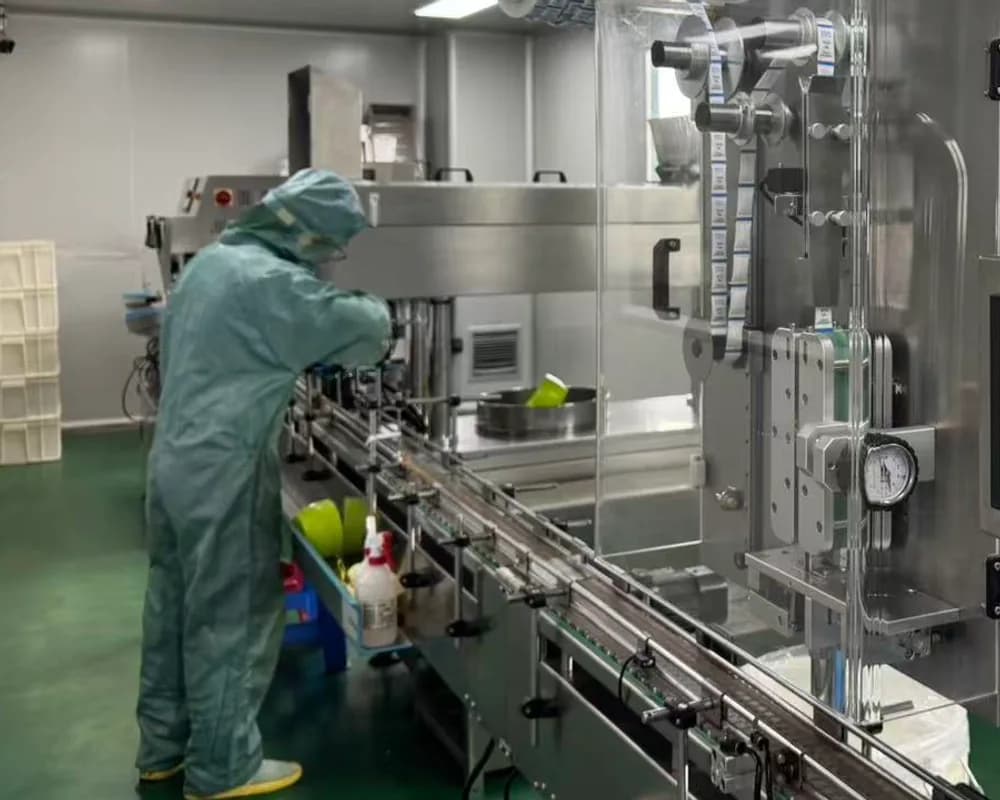
Most first-time brand owners price from the shelf backwards, then discover the unit economics do not work at 1,000 units. A better method is to cost the product forward: active ingredients, excipients, capsule or tablet size, bottle, label, carton, testing, freight and duty. Once you know your true landed cost per unit, you can set a wholesale and retail price that leaves room for distributor margin, marketing and returns. The goal is a repeatable margin, not a single lucky SKU.
| MOQ retail bottling | 1,000 units per SKU |
|---|---|
| Pilot run MOQ | 500–1,000 units per SKU |
| Sample lead time | 7–10 working days |
| Mass production | 20–35 working days |
| Certifications | GMP, ISO 9001, ISO 22000, HACCP, NSF/ANSI 455-2, halal, FDA-registered |
| Fill weights | Capsules 300–800 mg; tablets 500–1,500 mg; powders 100–500 g |
Cost drivers that set your floor price
Your floor price is the sum of materials and processing. For a 60-count capsule at 500 mg fill, the active blend might be 40–60% of material cost. Bottle, cap, induction seal, label and carton add a further 15–25%. Encapsulation, blending, QC and packing make up the rest. At 1,000 units, setup and testing are spread over fewer bottles, so unit cost is higher than at 10,000. Ask your manufacturer for a costed BOM, not a single unit price.
Freight and duty change the landed number. Air freight from Guangdong to the US can add 8–15% to unit cost; sea freight adds 2–5% but needs 30–45 days. EU and UK buyers also face VAT and possible import duty. Middle East buyers should check halal certification and country-of-origin labelling before booking freight. Build a landed-cost model in a spreadsheet with columns for material, processing, packaging, testing, freight, duty and FX buffer.
Formulation choices that move unit cost
Ingredient form matters. Magnesium oxide is cheaper than magnesium glycinate. Standard fish oil is cheaper than triglyceride-form omega-3. If your label claims a specific form, the price follows. Excipients also add cost: enteric coatings, sustained-release matrices and natural colours can add 5–12% to a batch. Vegan capsules (HPMC) cost more than gelatin. Choose the form that matches your claim and your customer, not the cheapest option that fails stability testing.
Fill weight and count drive the same cost curve. A 1,000 mg tablet needs more powder and a bigger die than a 500 mg tablet. A 120-count bottle uses twice the capsules of a 60-count but only one label and one bottle. That lowers cost per serving. Run three scenarios: 30, 60 and 120 servings. Then check whether the retail price point you want still supports a 60% gross margin after distributor and retailer markups.
Quality, compliance and logistics costs
Testing is not optional. Expect to pay for identity, potency, heavy metals, microbials and stability. A full panel per batch can add 3–7% to unit cost at 1,000 units. If you sell in the EU, you need a responsible person and a product information file. In the US, an FDA-registered facility is a baseline, not a marketing claim. Halal certification add a small per-batch fee but open Gulf and Israel markets. Organic claims require USDA organic or EU organic certification and a paper trail.
Logistics costs scale with volume. A 1,000-unit order might ship as 15–25 cartons on a pallet. At 10,000 units, you fill a 20ft container and cut freight per unit by 40–60%. Lead times matter too: 20–35 working days for mass production, plus 7–10 working days for samples. If you need to hit a retail launch date, price in air freight for the first run and sea freight for reorders. EUPHM quotes these line items separately so you can see the trade-offs.
Quality control and batch documentation that protect your price
Every production batch is sampled at three points: incoming raw materials, in-process blend or granulation, and finished goods. Identity is confirmed by FTIR or HPLC against a reference standard; potency is assayed against the label claim with a typical acceptance range of 95–105%. Microbial testing covers total aerobic count, yeast and mould, E. coli, Salmonella and Staphylococcus aureus. Heavy metals (lead, arsenic, cadmium, mercury) are tested against USP <232> or EU 2023/915 limits. Disintegration testing follows USP <701> or Ph. Eur. 2.9.1, with capsules required to disintegrate within 30 minutes and tablets within 15–30 minutes depending on the monograph.
A certificate of analysis (COA) is issued per batch and includes the product name, batch number, manufacturing date, expiry date, label claim, test method, specification, result and pass/fail status. It is signed by the QC manager and references the retained sample. Retention samples of each batch are kept for the full shelf life plus 12 months, stored under the labelled conditions. Stability is run on the first three commercial batches: accelerated at 40°C/75% RH for six months and real-time at 25°C/60% RH for the duration of the claimed shelf life, typically 24 months for capsules and 36 months for tablets.
This documentation is not administrative overhead. It is what allows you to defend a higher retail price, pass a retailer technical audit, and answer a customer complaint without discounting or withdrawing the SKU. A missing COA or a potency result outside specification can force a rework or a write-off of 1,000 units, which is often the entire margin on the first run.
Packaging and labelling choices that affect unit cost and retail readiness
Primary packaging drives both unit cost and freight. High-density polyethylene (HDPE) bottles with induction seals are the default for capsules and tablets at 60, 90, 120 or 180 counts. Blister packs suit pharmacy and travel formats but add tooling and a per-unit cost premium of roughly 0.08 to 0.15 USD. Stick packs and sachets are used for powders and single-serve doses, with fill weights from 5 g to 30 g. Bottle diameter and height determine carton count and pallet yield, so a 120-count bottle can reduce your per-unit carton cost but increase freight weight.
For the US market, the dietary supplement label must carry a Supplement Facts panel with serving size, amounts per serving, % Daily Value where established, and a list of other ingredients. The statement of identity, net quantity of contents, name and place of business, and allergen or advisory statements are also required. Lot number and expiry date must be printed or laser-coded on the bottle and the carton; we recommend a best-by date rather than a manufacture date. Amazon sellers also need the FNSKU applied over the UPC barcode on the retail unit, and cartons must meet the retailer's case-pack and pallet specification, typically 12 to 24 units per shipper and 48 to 60 shippers per pallet.
Labels are proofed against the approved artwork before printing, and a pre-production sample is signed off before the full run. If your label claims are not supported by the formulation or the testing protocol, the COA and stability data will not align with the pack, which is a common reason retail buyers reject a first delivery.
MOQ, Lead Times and Delivery
The sampling timeline starts with a formulation brief and target cost per unit. We issue a quotation within three working days, produce a sample in 7 to 10 working days, and ship it by courier. Sample and courier costs are credited against the first production order. Once the sample and label artwork are approved, a pilot run of 500 to 1,000 units can be scheduled in 15 to 20 working days, while a retail bottling run of 1,000 units takes 20 to 35 working days after deposit and artwork sign-off. Chinese New Year and National Day add two to three weeks to any window that overlaps them.
Delivery terms are usually EXW, FOB Shenzhen or Hong Kong, or DDP to a named warehouse. Air freight is used for pilot runs and for launches where stock-out risk outweighs cost; sea freight is used for full pallets and full containers, with transit times of roughly 30 to 40 days to Europe and 25 to 35 days to the US west coast. DDP pricing includes duty and clearance but requires an accurate HS code and product description, otherwise the shipment can be held at destination.
Documents provided with each shipment include the commercial invoice, packing list, COA per batch, material safety data sheet where relevant, free-sale certificate, and a certificate of origin. Phytosanitary certificates apply only to botanical raw materials and are issued on request. These documents are what your customs broker and your retail compliance team will ask for, so they are built into the quoted price rather than added later.
Options for Your Format
Cost-plus pricing
Add a fixed markup to landed cost. Simple, but ignores what the market will pay. Best for commodity supplements where you compete on price.
Competitor-based pricing
Set price near three to five direct competitors. Useful for fast entry, but you must still check that your unit cost leaves a margin after fees.
Value-based pricing
Price from the customer's perceived benefit, such as a patented ingredient or clinical study. Requires strong claims and usually higher ad spend.
Tiered pricing
Offer 30, 60 and 120-count versions at different price points. The largest size lowers cost per serving and raises average order value.
How a Project Runs
- 01
Calculate landed cost
Add material, processing, packaging, testing, freight, duty and FX buffer. Use a costed BOM from your manufacturer, not an estimate.
- 02
Set your target margin
Decide gross margin before channel fees. Most supplement brands need 60–75% gross margin to fund marketing and returns.
- 03
Model channel fees
Add distributor markup (25–40%), retailer margin (30–50%) and payment fees. These decide your wholesale price.
- 04
Check price points
Compare your retail price to three to five competitors. If you are 20% higher, justify it with a claim or ingredient.
- 05
Run MOQ scenarios
Price at 1,000, 5,000 and 10,000 units. Show how unit cost falls and when to reorder.
- 06
Stress-test the model
Change freight, FX and return rate by 10%. If the margin still holds, the price is defensible.
Why EUPHM
Avoids hidden cost surprises
Freight, duty and testing are included from the start. You will not discover a 12% gap after the first batch.
Supports retail conversations
A costed model shows buyers you understand their margin needs. That speeds up listing and reorder decisions.
Scales with volume
You can see exactly when a larger MOQ cuts unit cost enough to fund a price promotion or a new flavour.
Questions buyers ask.
What is a realistic MOQ for a first supplement run?+
For retail bottling, 1,000 units per SKU is typical. Pilot runs can start at 500–1,000 units, but unit cost is 20–40% higher because setup and testing are spread over fewer bottles. Ask for both quotes before you commit.
How long does sampling and production take?+
Samples take 7–10 working days. Mass production takes 20–35 working days after sample approval and deposit. Add 30–45 days for sea freight to the US or EU. Air freight cuts transit to 5–10 days but adds cost.
Do certifications affect the price?+
Yes, but usually by a small percentage. GMP and ISO 22000 are baseline. Halal and organic add per-batch fees and paperwork. Vegan capsules cost more than gelatin. These costs are predictable and should be in your landed-cost model.
How do I price a 60-count versus a 120-count bottle?+
The 120-count uses double the capsules but the same bottle, label and carton. That lowers cost per serving. Price the larger size 60–75% above the 60-count, not double. This encourages trade-up and improves average order value.
What margin should I target before marketing?+
Aim for 60–75% gross margin after landed cost. If you sell through distributors, they take 25–40%, and retailers take 30–50%. Your direct-to-consumer price must leave room for ads, shipping and returns. Test the model at a 10% higher return rate.
Can I change the capsule colour or bottle size after the first production run?+
Yes, but expect a new MOQ and a new artwork approval cycle. Capsule colour changes are usually free at 1,000 units or more, while a bottle size change requires new tooling or a new mould, which can add 500 to 1,500 USD and 10 to 15 working days. Plan packaging changes between SKU launches rather than mid-run.
What happens if a batch fails potency or microbial testing?+
The batch is placed on hold and not released. If the failure is within rework limits, we re-blend or re-encapsulate and retest at our cost. If it cannot be corrected, the batch is written off and remade against the same purchase order. You receive the failed COA and the corrective action record, which your retailer may request during an audit.
Do you provide stability data before I place a full order?+
Accelerated stability data is available from the pilot batch, typically at the six-week and three-month points at 40°C/75% RH. Real-time data accumulates on the first three commercial batches. If your retailer requires a specific shelf-life claim, we can run a dedicated stability protocol on the pilot batch before the mass production order is confirmed.
Xu Wei writes the manufacturing, quality and regulatory guides on EUPHM. He works directly with the plant's production and QA teams to document how each dosage form is made, tested and released, so every claim on the site can be traced back to a batch record or a certificate on file.
More guides in this category.
See all →
How to Negotiate a Supplement MOQ (Without Lying to Your Supplier)
A minimum order is not a sales tactic — it is the point where a factory stops losing money on setup, cleaning, yield loss and QC. Negotiate the components, not the number, and 1,000 units can often become 500 without anyone pretending the cost disappeared.
Read the guide →
What a First Supplement Run Really Costs at 1,000 Units
The ex-works price is roughly half the story. Samples, tooling, artwork, testing, documents, freight, duty and receiving add a fixed block that does not shrink with order size — which is why a 1,000-unit run often lands at two to three times the unit price you were quoted.
Read the guide →
Supplement Regulations by Country: What Brands Must Know
Selling supplements across borders means meeting different rules for notification, labelling, and ingredient limits. This guide covers the EU, US, UK, and Middle East, with practical notes for brands sourcing from a GMP-certified contract manufacturer.
Read the guide →Have a product in mind?
Send us the brief and we will come back with a formulation direction, indicative price and a realistic lead time — usually within one working day.