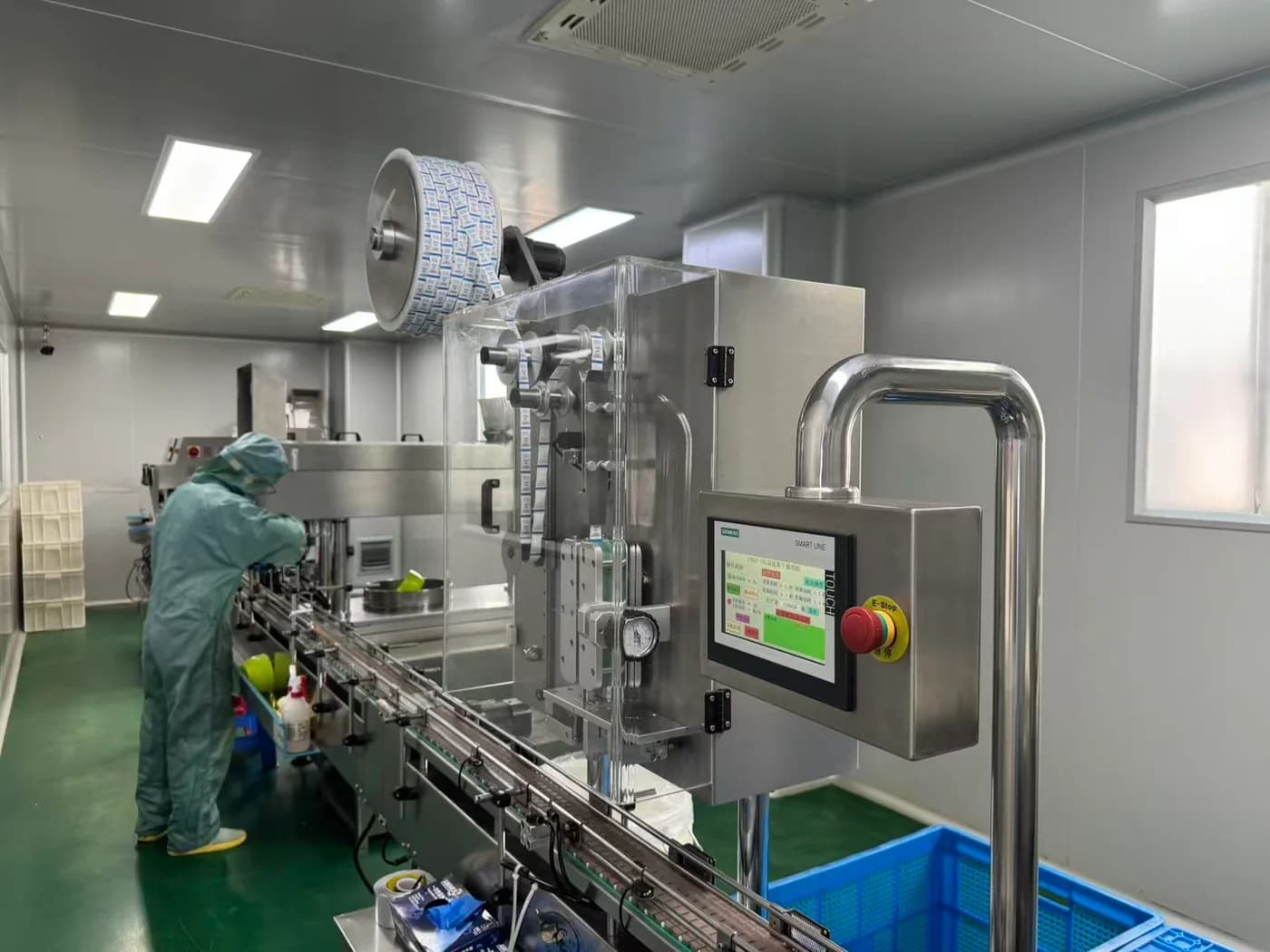
Best Supplement Manufacturers in South Korea: A Buyer's Guide
South Korea's supplement market reached $4.2bn in 2024, driven by red ginseng, probiotics and collagen. This guide covers what to verify in a Korean manufacturer, and how EUPHM supports brands that need a second qualified source.
Overview
South Korea is the fourth-largest supplement market in Asia-Pacific, with domestic contract manufacturers concentrated in Gyeonggi and Chungcheong provinces. Most Korean CMOs hold K-GMP certification, and many also carry HACCP and ISO 22000. The catch is fit: Korean plants typically prioritise domestic brands and set MOQs of 10,000 units or more. For buyers in the US, EU, UK and Middle East, the practical question is not whether Korean manufacturers are capable, but whether their MOQ, lead time and export documentation match your launch plan.
What Korean CMOs Actually Offer
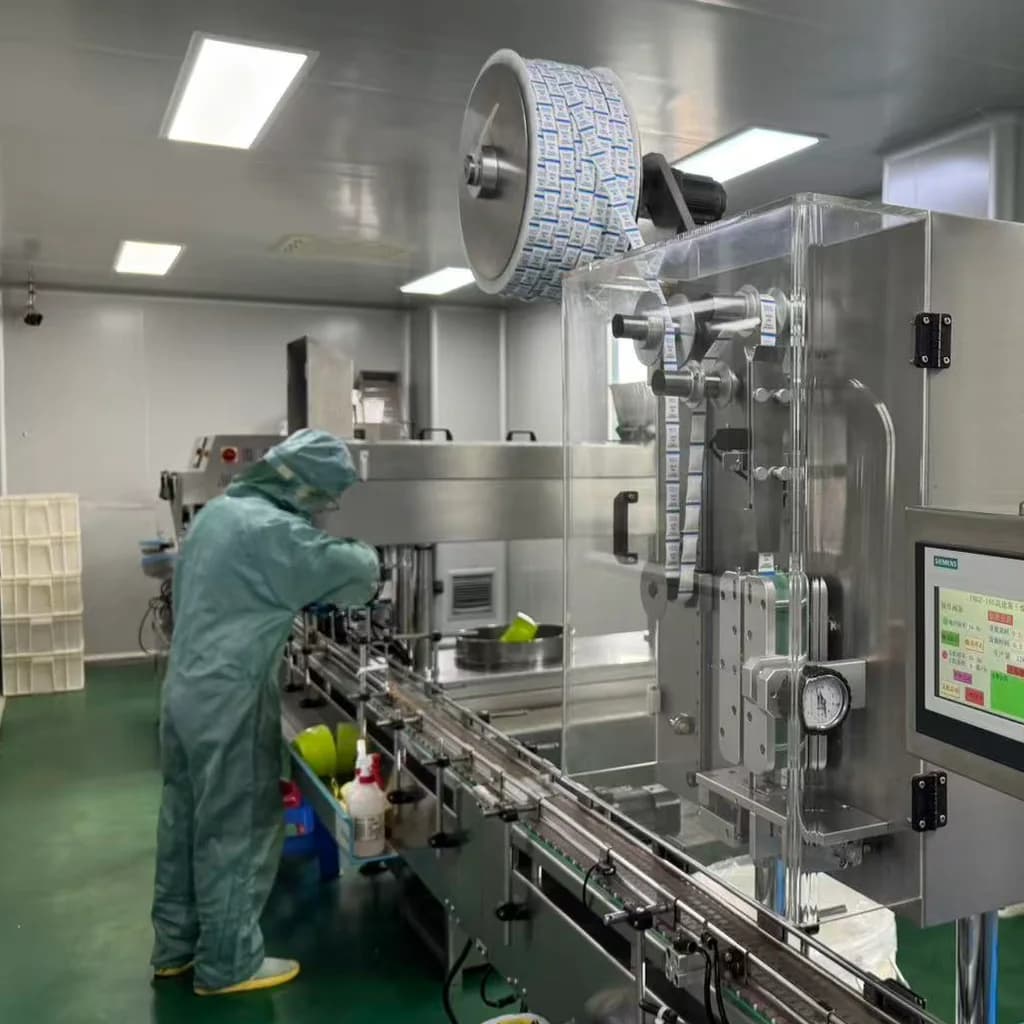
South Korea's contract manufacturing base is strong in fermented ingredients, red ginseng extracts and probiotic blends. Companies such as Kolmar Korea and Cosmax NBT operate large facilities with K-GMP and ISO 22000 certification. Domestic demand is high, so capacity is often booked 8-12 weeks ahead. For a Korean brand launching a single SKU, that is workable. For an export brand that needs 1,000 units to test a market, it is usually not.
Export documentation is another variable. Korean manufacturers are comfortable with Korean and Japanese regulatory filings. US and EU buyers need FDA-registered facilities, EU GMP Annex 1 awareness, and label compliance for 27 member states. Some Korean CMOs handle this; many do not. Before shortlisting, ask for a sample export dossier and a named regulatory contact. If the response takes more than five working days, that tells you something about the account you will get.
Formulation and Ingredient Sourcing
Korean manufacturers excel at botanical extracts: Panax ginseng, Schisandra chinensis, and fermented red ginseng concentrates. If your formula is built around these, a Korean partner may offer better raw material access and lower cost per kilogram than a Chinese or US plant. For standard actives such as vitamin D3, magnesium glycinate, or creatine monohydrate, the ingredient is globally traded and the country of manufacture matters less than the certificate of analysis.
Where Korean CMOs often fall short is flexibility on dosage forms. Many run high-volume lines optimised for stick packs and sachets, with less capacity for small-batch two-piece capsules or delayed-release tablets. If your SKU needs 250 mg capsules at 1,000 units, a plant set up for 50,000-unit sachet runs will either decline or quote a price that does not work. Ask for the minimum batch size per dosage form, not per company.
Quality Systems and Export Logistics
K-GMP is a solid baseline, but it is not identical to US 21 CFR Part 111 or EU GMP. Korean audits focus on domestic requirements; US buyers should verify that the facility is FDA-registered and has passed a recent third-party audit. HACCP and ISO 22000 are common. Halal certification is less common in Korea than in China or Southeast Asia, which matters if you sell into the Middle East or Israel.
Shipping from Busan to Los Angeles takes 12-16 days; to Rotterdam, 28-35 days. That is comparable to Chinese ports. The difference is cost: Korean ocean freight runs 15-25% higher on average, and air freight from Incheon is roughly 20% above Hong Kong rates. For a 1,000-unit pilot, air freight may still make sense. For repeat orders above 20,000 units, the freight delta becomes a line item worth negotiating.
Quality Control and Batch Documentation at Korean Supplement Manufacturers
Korean supplement manufacturers operate under K-GMP, which mandates batch-level testing for identity, potency, microbial contamination, heavy metals and disintegration. At a typical Gyeonggi-based CMO, raw materials are quarantined and sampled on receipt, with HPLC or UV-Vis used for actives such as ginseng saponins, vitamins and amino acids. Microbial tests follow Korean Food Code methods, with total aerobic counts below 1,000 CFU/g and absence of E. coli and Salmonella in 10 g. Heavy metals are screened by ICP-MS against KFDA limits, typically lead under 3 ppm and arsenic under 2 ppm for herbal extracts.
In-process checks occur at blending, encapsulation and coating. Weight variation is monitored every 30 minutes, with a tolerance of ±5% for capsules and ±3% for tablets. Disintegration testing follows KP or USP protocols, with most immediate-release capsules specified to disintegrate within 15 minutes. Finished-product testing is performed on the bulk batch before packaging, and a certificate of analysis (COA) is issued per lot. The COA lists test parameters, specifications, results, methods and the analyst's signature, and is usually available in English for export orders.
Retention samples are kept for one year beyond the shelf life, stored under labelled conditions at 25°C/60% RH or 30°C/65% RH. Stability protocols typically include accelerated testing at 40°C/75% RH for six months and real-time data at 12, 24 and 36 months. For export to the EU or US, manufacturers can provide a stability summary and a batch manufacturing record (BMR) extract on request, though full BMRs are usually withheld unless an audit is scheduled. Buyers should confirm in writing that COAs will be issued per batch and that retention samples will be held for the agreed period.
Packaging, Labelling and Retail Readiness
Korean contract manufacturers offer primary packaging in HDPE bottles, glass bottles, blisters, stick packs and sachets. Bottle sizes range from 60 cc to 500 cc, with induction seals and child-resistant caps available. Blister formats include PVC/PVDC and alu-alu for moisture-sensitive probiotics. Stick packs are typically 5 g to 10 g for powders, filled on vertical form-fill-seal lines at 40 to 60 packs per minute. Secondary packaging includes folding cartons with lot and expiry coding by inkjet or laser, and cartons are packed into export-grade corrugated shippers.
For US-bound products, labels must include the supplement facts panel, serving size, amount per serving, percent daily value where applicable, other ingredients, allergen statements, and the manufacturer or distributor address with a domestic phone number. Korean CMOs can print FDA-compliant labels if artwork is supplied, but they do not formulate claims. EU labels require nutrition declaration, allergens in bold, and a food business operator address within the EU. For Amazon FNSKU labelling, manufacturers can apply FNSKU barcodes and poly-bag units, though buyers should confirm the exact barcode format and placement in the packaging specification.
Carton and pallet specifications should be agreed before production. A typical export carton holds 24 to 48 bottles, with a gross weight under 15 kg for manual handling. Pallets are usually 1,200 x 1,000 mm or 1,200 x 800 mm, stretch-wrapped and corner-boarded, with 20 to 24 cartons per layer and up to 1,800 kg per pallet. Korean manufacturers can provide pallet labels with SSCC codes and lot numbers. If you sell through retail chains, confirm that cartons carry ITF-14 barcodes and that shelf-life remaining on delivery meets the retailer's minimum, often 70% to 80% of total shelf life.
MOQ, Lead Times and Delivery from Korean Supplement Manufacturers
Sample lead times at Korean supplement manufacturers are typically 7 to 10 working days for a standard formula, including lab-scale batch and basic packaging. Custom formulations or novel ingredients may take 15 to 20 working days if a new supplier must be qualified. After sample approval, mass production runs 20 to 35 working days depending on format and packaging complexity. Capsule and tablet runs are usually faster than stick packs or blisters. Buyers should build in a buffer for artwork approval and pre-production samples, which can add 5 to 7 working days.
Shipping from South Korea offers air and sea options. Air freight from Incheon to Los Angeles takes 3 to 5 days door-to-door, with costs of USD 4 to 7 per kg for 100 kg to 500 kg shipments. Sea freight to the US West Coast takes 14 to 21 days port-to-port, with LCL costs around USD 80 to 120 per cubic metre plus destination charges. To Europe, sea freight takes 30 to 40 days. Korean manufacturers typically quote EXW or FOB Busan/Incheon. DDP terms are available through freight forwarders but are less common and should be confirmed in writing.
Export documents provided by Korean manufacturers include the COA, material safety data sheet (MSDS) for any hazardous ingredients, and a free-sale certificate issued by the Korea Food Industry Association or equivalent body. For plant-based ingredients, a phytosanitary certificate may be required by the destination country, and the manufacturer can arrange it through the relevant quarantine office. Halal certificates are available if the facility holds them, but buyers should verify the certifying body and certificate scope. Incoterms, document lists and responsibility for customs clearance should be fixed in the supply agreement before the first production run.
Packaging and Format Choices
Korean K-GMP CMO
Strong botanical extraction and domestic compliance. MOQs often 10,000+ units. Best for brands selling primarily in Korea or Japan.
Korean export specialist
Fewer than 20% of Korean CMOs hold both K-GMP and FDA registration. These plants handle US and EU dossiers but charge 10-20% more.
Chinese GMP manufacturer
MOQ from 1,000 units, 20-35 day production, lower freight. Broad dosage form range. Suits US, EU, UK and Middle East buyers.
US or EU domestic CMO
Shortest lead time and simplest regulatory path. MOQs typically 5,000-10,000 units and unit costs 30-60% above Asian equivalents.
From Enquiry to Delivery
- 01
Request the audit pack
GMP, ISO 9001, ISO 22000, HACCP, NSF/ANSI 455-2 and halal certification; FDA facility registration for US-bound shipments.
- 02
Confirm MOQ per SKU
Get the minimum batch size in writing for your specific dosage form. A company MOQ of 5,000 may become 20,000 for capsules.
- 03
Order a paid sample
Expect 7-10 working days and a fee of $200-600. Free samples usually mean the formula is not customised to your spec.
- 04
Verify export experience
Ask for two references from US or EU brands shipped in the last 12 months. Check the destination country and product category.
- 05
Review the commercial terms
Confirm payment schedule, tooling costs, and who owns the formula. Korean contracts often include a 3-year exclusivity clause.
- 06
Pilot, then scale
Run 1,000 units first. If the COA, label and freight all check out, place the 20,000-unit order.
Why EUPHM
MOQ from 1,000 units
Test a new market without committing to a 10,000-unit run. Lower pilot MOQs are available for first orders.
20-35 day production
Faster than most Korean CMOs during peak season. Sample lead time is 7-10 working days.
Export-ready documentation
FDA-registered facility, ISO 22000, HACCP. Halal and organic certificates available where the formula requires them.
Questions buyers ask.
Are Korean supplement manufacturers better than Chinese ones?+
Not categorically. Korea leads in fermented botanicals and red ginseng. China leads in dosage form range, MOQ flexibility and freight cost. For a 1,000-unit pilot in capsules or tablets, a Chinese GMP plant is usually the faster and cheaper route. For a ginseng stick pack at 50,000 units, Korea may win.
What certifications should a Korean CMO hold?+
At minimum K-GMP and HACCP. For US sales, check FDA registration. For EU sales, ask about ISO 22000 and EU GMP awareness. For Middle East distribution, halal certification is essential. Fewer than one in five Korean CMOs hold all four.
What is a realistic MOQ for a Korean manufacturer?+
Domestic-focused Korean CMOs typically set MOQs at 10,000-20,000 units per SKU. Export-focused plants may go as low as 5,000. If you need 1,000 units for a pilot, expect to pay a premium or look at alternative suppliers in China or Southeast Asia.
How long does shipping take from South Korea?+
Busan to Los Angeles is 12-16 days. Busan to Rotterdam is 28-35 days. Air freight from Incheon to New York is 3-5 days. Ocean freight costs run 15-25% above comparable Chinese routes, so factor that into your landed cost.
Can I get a sample before committing to a full run?+
Yes. Sample lead time is 7-10 working days for most capsule and tablet formulas. Expect to pay $200-600, which is usually credited against the first production order. Ask for a certificate of analysis with the sample, not after.
Can Korean supplement manufacturers produce organic-certified products?+
Some can, but organic certification is not universal. Korean CMOs may hold organic processing certification under Korean organic standards or USDA NOP if they export to the US. Buyers should request the certificate and confirm that the specific ingredient and process are covered. If the manufacturer is not certified, they may source certified ingredients but cannot label the finished product as organic. Always verify the certifying body and certificate validity before committing to a run.
What is the typical payment term for a Korean supplement manufacturer?+
Most Korean CMOs ask for a 30% to 50% deposit with the balance due before shipment, especially for first orders. Some accept letters of credit for orders above USD 50,000. Payment is usually in USD or KRW by telegraphic transfer. Terms may improve to 30 days net after several orders, but this is negotiated case by case. Buyers should confirm whether bank charges are shared and whether the deposit is refundable if the sample is rejected.
Do Korean manufacturers provide stability testing for export markets?+
Yes, most K-GMP facilities run stability studies, but the default protocol is often designed for the Korean market. For US or EU exports, buyers should request real-time data at 25°C/60% RH and 30°C/65% RH, plus accelerated data at 40°C/75% RH for six months. Confirm that the study covers the finished product in its final packaging, and that a stability summary in English will be provided. Full stability reports may incur an additional fee.
Have a product in mind?
Send us the brief and we will come back with a formulation direction, indicative price and a realistic lead time — usually within one working day.