Best Supplement Manufacturers in Brazil: A Buyer's Guide
Brazil's supplement market grows 11% annually, but local contract manufacturers often lack GMP certification for export. EUPHM offers GMP, ISO 22000, HACCP, halal production with MOQ 1,000 units.
Overview
Brazil has over 400 supplement manufacturers, yet fewer than 15% hold GMP certification recognised by the US FDA or EU authorities. For brand owners sourcing from Brazil, the choice is between local fillers with limited export compliance and international contract manufacturers that meet both Brazilian demand and global regulatory standards. This guide compares capabilities, MOQs, lead times and certifications to help you decide.
Manufacturing Capability in Brazil vs Global Standards
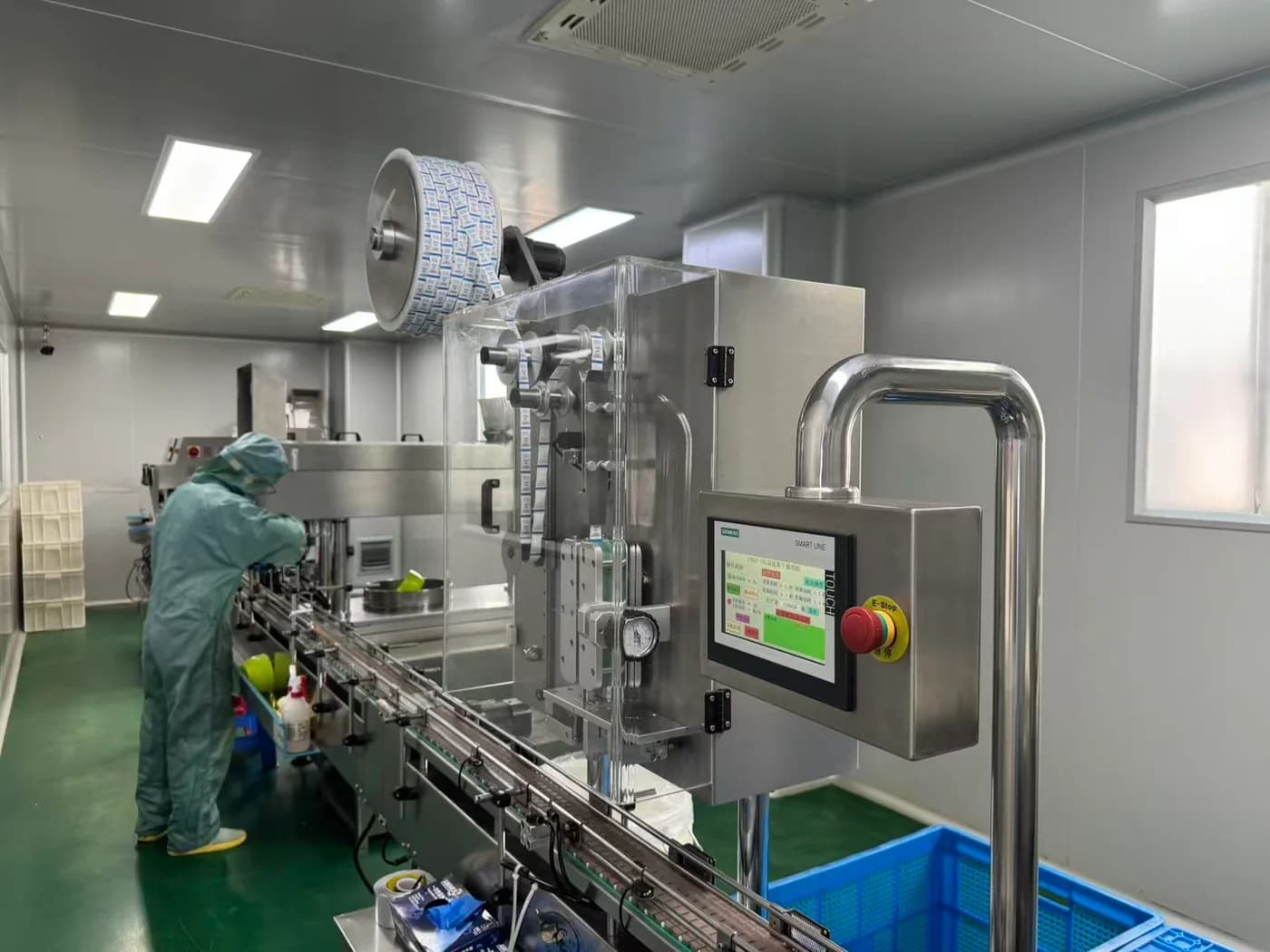
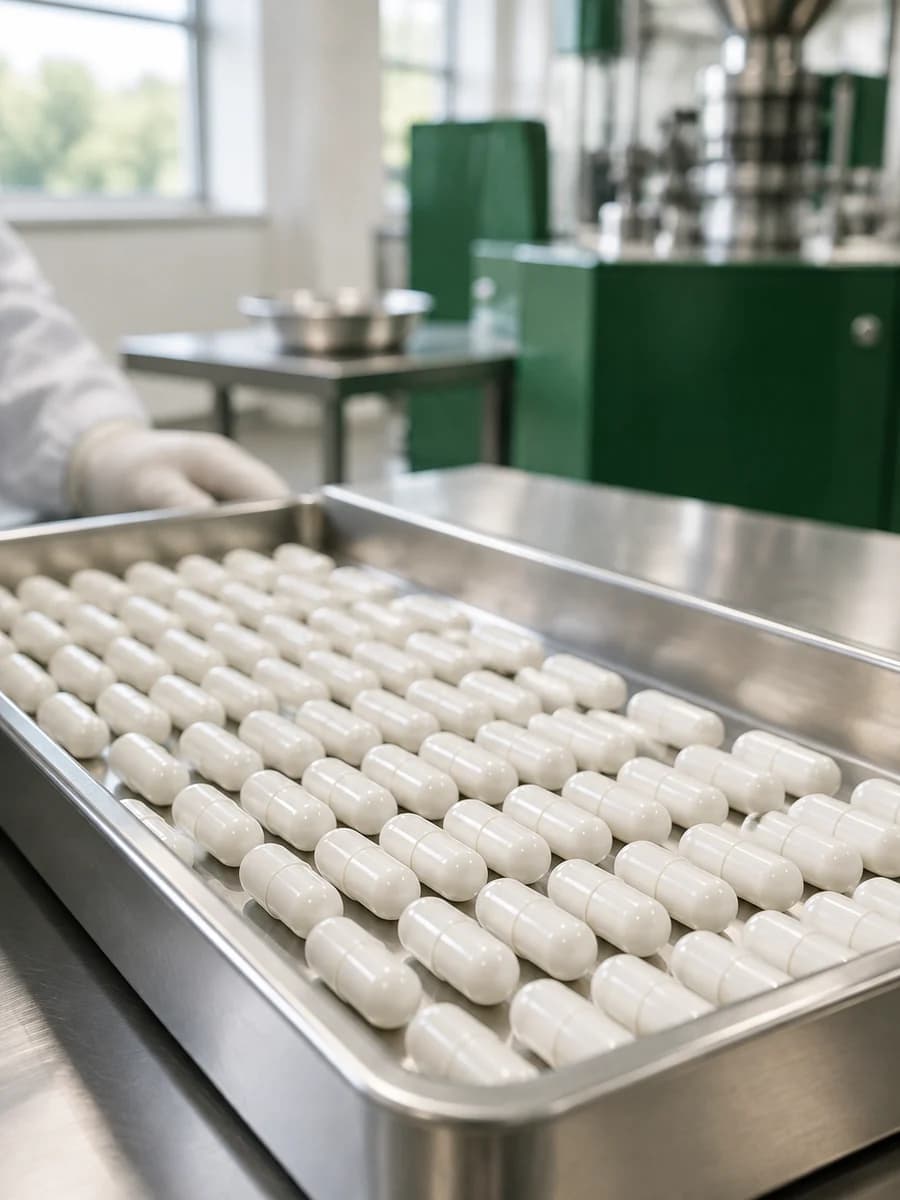
Brazilian contract manufacturers typically run lines for 500,000 to 2 million units per month. That suits local retail, but export orders often face capacity gaps. EUPHM operates 14 high-speed encapsulation lines and 9 tablet presses, producing 2.4 billion capsules and 1.8 billion tablets annually. For brands comparing the best supplement manufacturers in Brazil, check whether the plant can handle your annual volume without splitting runs across multiple facilities.
Lead times matter. Brazilian plants often quote 45-60 working days for mass production due to raw material import delays. EUPHM maintains 20-35 working days for orders under 500,000 units, with 7-10 working days for samples. If your launch window is tight, a manufacturer with in-house ingredient warehousing and a 98% on-time delivery rate reduces risk.
Formulation and Ingredient Sourcing for Brazilian Botanicals
Brazil is a source of acai, guarana, catuaba, muira puama and green coffee extract. Sourcing these ingredients locally cuts cost by 12-18% compared to importing from Asia. However, Brazilian suppliers often lack organic certification for export. EUPHM holds halal certification, and we source Brazilian botanicals through audited partners in São Paulo and Pará.
Formulation flexibility matters. Brazilian manufacturers may require 10,000-unit MOQs for custom blends. EUPHM works from 1,000 units for capsule and powder formats, scaling to 1,000 units for retail bottling. Fill weights range from 300 mg capsules to 500 g powder tubs. We can match your existing formula or develop a new one with 4-6 week turnaround.
Quality Compliance and Export Logistics
ANVISA regulates Brazilian supplements, but ANVISA registration does not equal FDA or EU compliance. For US buyers, the manufacturer must be FDA-registered and follow 21 CFR Part 111. For EU buyers, GMP and ISO 22000 are baseline. EUPHM holds GMP, ISO 22000, HACCP, halal certification. We are an FDA-registered facility and provide full documentation for customs.
Shipping from Brazil to Miami takes 12-18 days; to Rotterdam 18-25 days. EUPHM ships from Guangdong with 18-22 days to US West Coast, 22-28 days to EU ports, and 10-14 days to Middle East hubs. We handle export documents, certificates of analysis, and batch records. For brands comparing best supplement manufacturers in Brazil, factor in 5-8% higher freight and 3-5 days extra customs clearance.
Quality Control and Batch Documentation at Supplement Manufacturers in Brazil
Every batch produced by a supplement manufacturer in Brazil that serves export markets is tested at three stages: incoming raw materials, in-process blend, and finished goods. Identity testing uses FTIR or HPLC against a reference standard, potency is assayed at 95-105% of label claim, and microbial limits follow USP <2021> or <2022> with total aerobic count below 3,000 cfu/g for capsules. Heavy metals are screened by ICP-MS for lead, arsenic, cadmium and mercury against ICH Q3D limits, typically lead below 0.5 ppm for botanical extracts. Disintegration testing follows USP <701> with a 30-minute limit for immediate-release tablets and 15 minutes for capsules.
A certificate of analysis (COA) accompanies each batch and states the product name, lot number, manufacturing date, expiry date, test parameters, specification limits, results, and the analyst's signature. It also references the pharmacopoeial method used and the release decision. Retention samples of at least two finished retail units per lot are held for the full shelf life plus 12 months, stored under ICH climatic zone IVb conditions (30°C/75% RH) for Brazil and zone II (25°C/60% RH) for export. Stability protocols run at 0, 3, 6, 9, 12, 18 and 24 months, with accelerated data at 40°C/75% RH for six months to support a 24-month shelf life claim.
Microbial testing for probiotics and herbal products includes specific enumeration of Lactobacillus and Bifidobacterium species, plus absence of Salmonella, Escherichia coli, and Staphylococcus aureus in 10 g. Pesticide residues are screened for Brazilian botanicals such as açaí, guarana and catuaba against EU MRLs, with a limit of 0.01 mg/kg for the sum of organochlorines. For organic-certified lines, the manufacturer must provide transaction certificates linking each lot to the certified farm, and the COA must state the organic certifier and certifier code.
Packaging, Labelling and Retail Readiness
Supplement manufacturers in Brazil offer primary packaging in HDPE bottles (60, 90, 120, 180 and 240 cc), PET bottles for liquids, blister packs in PVC/PVDC or alu-alu for moisture-sensitive tablets, stick packs of 5-20 g, and sachets of 3-30 g. Bottles are induction-sealed with a foil liner and fitted with child-resistant or standard screw caps. Desiccant canisters of 1-3 g are added for hygroscopic powders. For Amazon FBA, bottles must be poly-bagged with a suffocation warning if the diameter is under 3.8 cm, and the FNSKU label must cover the original barcode without obscuring the supplement facts panel.
Labels for the US market must include the statement of identity, net quantity of contents, supplement facts panel with % daily value, list of ingredients in descending order of predominance, allergen declaration, and the manufacturer or distributor name and address. The FDA does not pre-approve labels, but the manufacturer should provide a label review against 21 CFR 101.36 before printing. Lot and expiry coding is applied by inkjet or laser at the filling line, with the format LYYMMDD and EXP MM/YYYY. Cartons are specified with a 5-ply corrugated board for export, and pallets are 1,200 x 1,000 mm or 1,200 x 800 mm, stretch-wrapped and labelled with SSCC-18 for retail distribution.
For the EU, labels must comply with Regulation (EU) 1169/2011 for food information and Directive 2002/46/EC for food supplements, including the permitted vitamin and mineral forms. Brazilian manufacturers exporting to the EU must provide a free-sale certificate and a health certificate issued by the Brazilian Ministry of Agriculture (MAPA) for products of animal origin, or by ANVISA for certain categories. Retail-ready packaging can include shelf-ready trays with a Euro hole for hanging, and display-ready cartons with a tear strip. The manufacturer should confirm barcode symbology (EAN-13 or UPC-A) and provide a digital artwork proof at 300 dpi with a 3 mm bleed before plate making.
MOQ, Lead Times and Delivery from Supplement Manufacturers in Brazil
Sampling from a supplement manufacturer in Brazil typically takes 7-10 working days for standard formulations and 15-20 working days for custom blends requiring new flavour or colour matching. The sample includes a draft COA, a label proof, and a 100-200 g bulk powder or 60-100 capsules in a generic bottle. Mass production runs 20-35 working days after artwork approval and receipt of the deposit, with 30% advance and 70% against the bill of lading. MOQs for retail bottling are 1,000 units per SKU, and 500–1,000 units for stick packs or sachets. Bulk powder MOQs start at 25 kg.
Air freight from São Paulo (GRU) to Miami takes 3-5 days door-to-door at USD 4.50-7.00 per kg for 100-500 kg shipments, while sea freight from Santos to Rotterdam takes 18-25 days at USD 1,200-2,200 per 20ft container. Incoterms offered are EXW, FOB Santos, and DDP for US and EU addresses, with DDP including customs clearance, duty and VAT. The manufacturer provides a commercial invoice, packing list, certificate of origin, COA, MSDS for hazardous ingredients, free-sale certificate, and phytosanitary certificate for botanical raw materials where required by the destination country. Shipping documents are issued within 48 hours of vessel departure.
For DDP shipments, the manufacturer or its freight forwarder handles import clearance and delivers to the buyer's warehouse, with transit time of 25-35 days to the US East Coast and 30-40 days to the EU. Buyers should confirm the HS code (2106.90 for most supplement preparations) and the destination country's import requirements, such as the FDA prior notice for US imports and the EU novel food status for Brazilian botanicals. Lead times can extend by 5-10 working days during Chinese New Year if the manufacturer sources packaging from Asia, so buyers should plan orders 90 days ahead of retail launch.
What We Can Build
Capsule production
Hard-shell capsules from 300 mg to 800 mg. Vegetarian, gelatin, or pullulan. MOQ 1,000 units. 7-10 day samples.
Tablet compression
Round, oval, or custom shapes. 500 mg to 1,200 mg. Film coating available. MOQ 5,000 units. 20-25 day production.
Powder blending
Single-serve sachets or 5-500 g tubs. Flavoured or unflavoured. MOQ 1,000 units. 20-30 day lead time.
Private label
Choose from 200+ stock formulas. Custom label and packaging. MOQ 1,000 units. 15-20 day turnaround.
How a Project Runs
- 01
Submit your brief
Send formula, target fill weight, and packaging requirements. We respond within 24 hours with a quote and timeline.
- 02
Request samples
We produce 7-10 working day samples. You approve taste, appearance, and dissolution profile before mass production.
- 03
Confirm MOQ and price
Lock in 1,000 unit MOQ for retail bottling. Smaller pilot runs discussed case by case.
- 04
Approve packaging
We source bottles, labels, and cartons. You approve digital proofs. Lead time for packaging: 10-15 days.
- 05
Mass production
20-35 working days from PO. We send batch records and certificates of analysis before shipping.
- 06
Shipping and delivery
We handle export documents. Delivery: 18-22 days to US, 22-28 days to EU, 10-14 days to Middle East.
Why EUPHM
Certified for export
GMP, ISO 9001, ISO 22000, HACCP, NSF/ANSI 455-2 and halal certification; FDA facility registration for US-bound shipments.
Low MOQ, fast samples
1,000 unit MOQ for retail. Pilot runs from 1,000 units. Samples in 7-10 working days.
Brazilian botanicals
Acai, guarana, catuaba, muira puama, green coffee. Sourced through audited partners in São Paulo and Pará.
Questions buyers ask.
Are Brazilian supplement manufacturers GMP-certified for export?+
Fewer than 15% of Brazilian contract manufacturers hold GMP certification recognised by the US FDA or EU authorities. Most hold only ANVISA registration, which is not equivalent. For export to the US or EU, verify GMP, ISO 22000, and HACCP. EUPHM holds all three plus halal certification.
What is the MOQ for supplement manufacturing in Brazil?+
Brazilian manufacturers typically require 5,000-10,000 units per SKU for retail bottling. Some accept 1,000 units for standard formulas. EUPHM offers MOQ 1,000 units for retail bottling and 1,000 units for capsules and powders.
How long does production take for Brazilian botanicals?+
If ingredients are in stock, production takes 20-35 working days. Brazilian botanicals like acai and guarana may add 5-7 days if sourced fresh. EUPHM maintains buffer stock of common Brazilian extracts, keeping mass production to 20-35 working days and samples to 7-10 working days.
Can I get organic certification for Brazilian ingredients?+
Yes, but it depends on the manufacturer. Brazilian suppliers often lack organic certification for export. EUPHM holds halal certification and sources Brazilian botanicals through audited organic partners. We provide certificates of analysis and organic transaction certificates with each batch.
What are the shipping times from Brazil to the US and EU?+
Brazil to Miami takes 12-18 days by sea; to Rotterdam 18-25 days. Add 3-5 days for customs clearance. EUPHM ships from Guangdong: 18-22 days to US West Coast, 22-28 days to EU ports, 10-14 days to Middle East. We handle all export documents.
Do Brazilian supplement manufacturers provide a free-sale certificate?+
Yes, most export-oriented manufacturers in Brazil can provide a free-sale certificate issued by the local health authority or a notarised declaration confirming the product is freely sold in Brazil. For EU imports, a health certificate from MAPA may be required for products containing animal-derived ingredients such as gelatin or bee propolis. Buyers should request the certificate at the quotation stage and confirm the issuing body matches the destination country's requirements.
What is the shelf life and stability testing protocol for Brazilian botanicals?+
Standard shelf life is 24 months for capsules and tablets and 18 months for powders, supported by real-time stability data at 30°C/75% RH and accelerated data at 40°C/75% RH for six months. The protocol tests appearance, assay, microbial limits, and disintegration at 0, 3, 6, 9, 12, 18 and 24 months. For a new botanical extract, the manufacturer runs a three-batch stability study before commercial release, which adds 8-12 weeks to the timeline.
Can Brazilian manufacturers handle Amazon FNSKU labelling and retail compliance?+
Yes, manufacturers can apply FNSKU labels, poly-bag bottles with a suffocation warning, and print lot and expiry codes that meet Amazon's requirements. They also provide a digital image of the label for Amazon's listing approval and confirm that the supplement facts panel complies with 21 CFR 101.36. Buyers should supply the FNSKU barcode file and confirm the label placement does not cover the original UPC or the supplement facts panel.
Have a product in mind?
Send us the brief and we will come back with a formulation direction, indicative price and a realistic lead time — usually within one working day.