How to Choose a Private Label Partner
Choosing a private label partner affects your margin, launch speed and repeat orders. This guide covers the six checks that separate a reliable manufacturer from one that delays your first shipment.
Overview
Private label supplement manufacturing is not a commodity purchase. The partner you pick sets your minimum order quantity, your fill weights, your certification options and your production calendar. A factory with 1,000-unit MOQs and 20-35 working day lead times behaves differently from a broker reselling capacity. Use the criteria below to shortlist suppliers, then request samples and a written quote before committing to a purchase order.
Capability: Can They Actually Make Your Format?
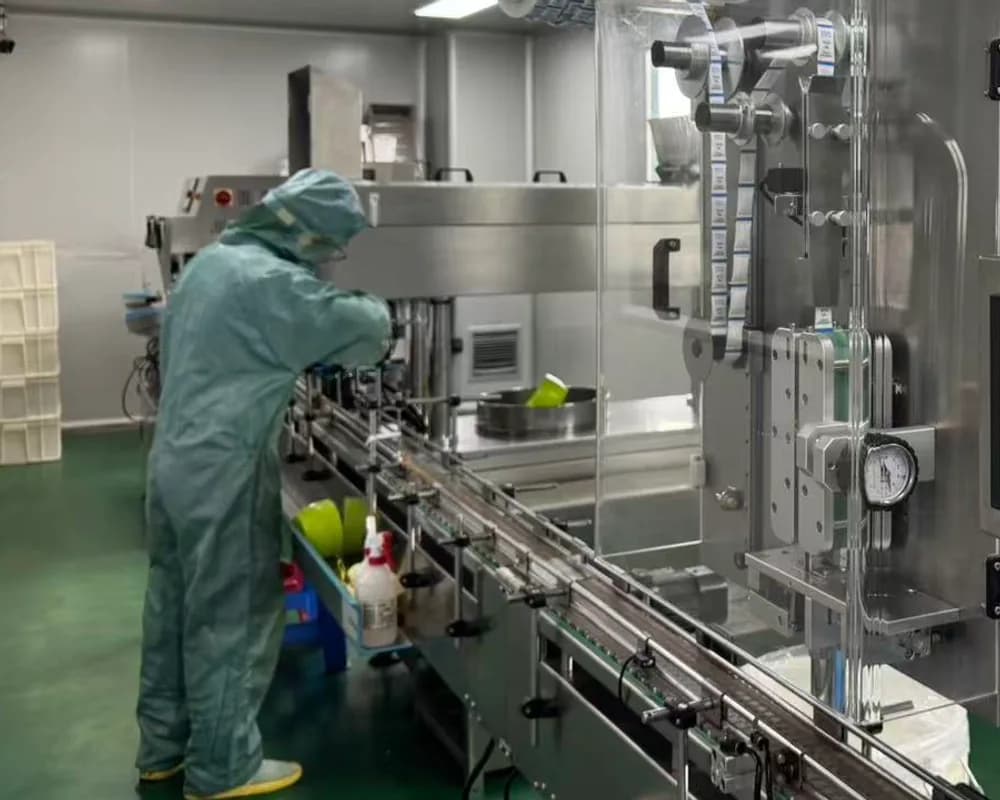
Ask for the plant's format list before you discuss price. A manufacturer that runs capsule filling, tablet compression and powder blending in-house gives you fewer handoffs and shorter lead times. If your product is a two-piece capsule at 500 mg fill weight, confirm the encapsulation line handles that size without custom tooling. If it is a effervescent tablet, check whether the facility has dedicated compression and packaging rooms with humidity control.
Capacity matters once you scale. A partner quoting 20-35 working days for mass production should be able to show monthly output figures. A line running 2 million units per month can absorb a 50,000-unit order without pushing your slot. Ask what percentage of capacity is committed to existing clients. If the answer is above 80 percent, your reorder may queue behind larger accounts.
Formulation and Ingredient Sourcing
Your private label partner should source actives, excipients and capsules from audited suppliers. Request a certificate of analysis for every raw material lot. For botanical extracts, ask for the extract ratio and the marker compound level, not just the ingredient name. A 10:1 extract and a 50:1 extract behave differently in a 500 mg capsule, and the label claim must match the input.
Formulation support separates a contract manufacturer from a filler. If you need a vegan capsule, a sugar-free gummy base or a delayed-release coating, the partner should propose options with fill weights and excipient lists. Confirm whether they hold halal certification for the specific ingredient you want. Certifications apply to the facility and the supply chain, not to every SKU by default.
Quality, Compliance and Shipping Logistics
Check the facility registration and audit history. A GMP-certified plant with ISO 22000 and HACCP covers the baseline for US, EU and UK retail buyers. FDA-registered facility status matters for US-bound products, but it is not FDA approval. Ask for the most recent third-party audit report and the scope of certification. If you sell in the Middle East, confirm halal certification on the production line, not just on paper.
Logistics decide your landed cost. Ask who handles export documentation, palletisation and freight terms. A manufacturer shipping from Guangdong can consolidate your order with other SKUs to reduce per-unit freight. Confirm the incoterm, the port of departure and the expected transit time. For repeat orders, a partner that holds your packaging components and formula records will cut 5-10 working days from the next run.
Quality Control and Batch Documentation
Every private label batch is tested at three points: incoming raw material, in-process blend, and finished goods. Raw materials are screened for identity by FTIR or HPLC against a reference standard, plus assay potency, microbial limits (total plate count, yeast and mould, E. coli, Salmonella), heavy metals by ICP-MS (lead, arsenic, cadmium, mercury) and, where relevant, pesticide residues. Finished capsules and tablets are tested for potency, uniformity of weight, disintegration time (typically under 30 minutes for capsules, under 15 minutes for uncoated tablets) and, for enteric or sustained-release formats, dissolution profile.
A certificate of analysis accompanies each batch and lists the product name, lot number, manufacture and expiry dates, the specification for each test, the result and the method used. It also names the testing laboratory and carries a reviewer signature. Buyers should check that the COA matches the lot code printed on the carton, and that specifications are stated as ranges with defined limits rather than vague pass marks. Third-party laboratory reports can be arranged on request when your retail channel requires independent verification.
Retention samples are held from every batch for the full shelf life plus a margin, usually 24 months beyond the labelled expiry. These samples allow re-testing if a customer complaint or regulatory query arises months after shipment. A stability protocol runs at accelerated conditions (40 degrees Celsius, 75 percent relative humidity) for six months, with real-time data at 25 degrees Celsius and 60 percent relative humidity for the declared shelf life. Microbiological challenge testing is added for powders and liquid-filled formats where water activity permits microbial growth.
Documentation is only useful if it is retrievable. Ask how the factory stores batch records, how quickly a COA can be reissued for a specific lot, and whether records are kept in a traceable system that links raw material lots to finished goods. A supplier that can produce a two-year-old COA within one working day is operationally mature. One that needs a week to find it is not, and that gap matters when a retailer audits your supply chain.
Packaging, Labelling and Retail Readiness
Private label supplement manufacturing covers the packaging format as well as the fill. Common options are high-density polyethylene bottles from 60 cc to 500 cc with induction seals and child-resistant closures, blister packs for pharmacy channels, stick packs and sachets for single-serve powders, and gusseted pouches for larger powder volumes. Bottle and closure colours, label substrate (paper, film, metallised) and finish (gloss, matt, soft-touch) are specified at the artwork stage, and a physical proof is produced before the print run.
Dietary supplement labels for the US market must carry a statement of identity, net quantity of contents, a supplement facts panel with serving size and percent daily value, a list of other ingredients, and the name and place of business of the manufacturer, packer or distributor. Allergen declarations, storage instructions and a lot code with best-by date are also required. The factory can lay out the supplement facts panel from your formula, but the brand owner remains responsible for claim substantiation and for confirming that every ingredient is permitted in the destination market.
Lot and expiry coding is applied by inkjet or laser at filling, and the code must match the COA. Cartons are specified with dimensions, board grade and gross weight; a typical 120-count bottle ships 12 or 24 per shipper carton. Pallet configurations are agreed in advance, with standard 1,200 by 1,000 mm or 1,200 by 800 mm pallets, stretch wrap and corner boards. For Amazon sellers, FNSKU labels can be applied at the factory, and cartons can be packed to Amazon's weight and dimension limits to avoid inbound receiving fees.
Retail compliance extends beyond the label. Some chains require a GS1 barcode on the unit and on the shipper carton, and some require a specific carton marking for lot and expiry. Confirm early whether your buyer needs a printed best-by date on the bottle base, a peel-back label for a second language, or tamper-evident bands. Changing packaging after the print run is expensive, so settle artwork and pack configuration before the purchase order is raised.
MOQ, Lead Times and Delivery
The MOQ and lead time conversation should happen before formulation is finalised, because both are driven by the same variables. A 1,000-unit run on an existing formula with stock packaging moves quickly; a 5,000-unit run requiring a new bottle mould, custom label print and a novel ingredient with a 45-day sourcing lead time does not. Ask for the sample timeline separately from the production timeline. Samples typically take 7 to 10 working days once the formula and packaging are agreed, and mass production takes 20 to 35 working days after sample approval.
Shipping method follows from the order value and the delivery date. Air freight suits pilot runs and replenishment of fast-moving SKUs, with transit from a Guangdong port to Europe or North America usually taking 5 to 10 days door to door. Sea freight suits full-container orders, with transit of 25 to 40 days depending on destination port and routing. Less-than-container loads sit between the two on cost and time. The factory provides a packing list with carton count, gross and net weight, and cubic volume so you can quote freight accurately.
Incoterms determine where risk and cost transfer. EXW leaves everything to the buyer from the factory gate. FOB places the goods on board at the named port, with export clearance handled by the supplier. DDP delivers to your door with duties and import clearance included, which simplifies budgeting but usually carries a higher unit cost. Confirm which Incoterm is quoted, because a unit price without it is not comparable between suppliers.
Documentation provided with shipment typically includes the commercial invoice, packing list, certificate of analysis per lot, material safety data sheet where applicable, and a free-sale or health certificate for markets that require one. Phytosanitary certificates apply to certain botanical raw materials and are arranged case by case. Confirm the document set at quotation stage, and check that the certificate names match the importer of record exactly, since mismatches are a common cause of customs delay.
Options for Your Format
Full turnkey manufacturing
Partner handles formulation, sourcing, production, packaging and export documents. Best for founders without a formula or supplier network. Higher per-unit cost, lower internal workload.
Formula supplied by you
You provide the recipe and ingredient specs; the partner manufactures and bottles. Suitable for brands with an existing formula or a contract research organisation behind them.
Stock formula private label
Choose from a catalogue of pre-developed formulas, then apply your label. Fastest route to market, with MOQs from 1,000 units and sample lead times of 7-10 working days.
Pilot run and scale-up
Start with a lower-volume pilot to test the market, then move to 1,000 unit retail runs. Useful for validating packaging and label claims before a full launch.
From Spec to Shipment
- 01
Define your specification
Write down format, fill weight, serving size, certifications and target retail price. A clear spec shortens every quote conversation and prevents reformulation later.
- 02
Request samples and COAs
Ask for a sample of the finished format and a certificate of analysis for each active. Sample lead time is typically 7-10 working days.
- 03
Audit certifications
GMP, ISO 9001, ISO 22000, HACCP, NSF/ANSI 455-2 and halal certification; FDA facility registration for US-bound shipments.
- 04
Confirm MOQ and pricing tiers
Get written MOQs per SKU and price breaks at 5,000, 10,000 and 25,000 units. Confirm whether packaging components are included or billed separately.
- 05
Map the production calendar
Ask for sample approval to first shipment timing. Mass production runs 20-35 working days. Add freight transit and customs clearance to get a realistic launch date.
- 06
Agree on reorder terms
Lock in formula records, packaging artwork and component storage. A partner holding your assets can start a reorder without repeating the setup phase.
Why EUPHM
Predictable lead times
20-35 working days for mass production and 7-10 working days for samples. You can plan a launch date and a reorder point without buffer stock.
Certification coverage
GMP, ISO 9001, ISO 22000, HACCP, NSF/ANSI 455-2 and halal certification; FDA facility registration for US-bound shipments.
Scalable moqs
Start at 1,000 units for retail bottling, or lower for a pilot run. Scale to 5,000 and beyond as your sell-through data justifies larger purchase orders.
Questions buyers ask.
What is the minimum order quantity for private label supplements?+
For retail bottling, expect 1,000 units per SKU. Pilot runs can go lower. MOQ depends on the format: capsules and tablets usually start at 1,000 units, while powders and gummies may require 5,000 units because of setup and packaging costs.
How long does private label manufacturing take?+
Sample lead time is 7-10 working days. After you approve the sample and packaging artwork, mass production runs 20-35 working days. Add freight transit and customs clearance. For a US or EU destination, plan 6-9 weeks from sample approval to warehouse receipt.
Do I need my own formula to start a private label brand?+
No. Many manufacturers offer stock formulas you can private label. You can also supply your own formula or ask the partner to develop one. If you use a stock formula, confirm the ingredient list and fill weight match your label claims before you print packaging.
Which certifications should a private label manufacturer hold?+
At minimum, GMP, ISO 22000 and HACCP. If you sell in the Middle East, add halal. For EU organic claims, the facility needs organic certification. For vegan products, ask for a vegan certificate covering the capsule shell and any excipients. Certificates must list your product category.
Can I visit the factory before placing an order?+
Yes, and you should for orders above 25,000 units. A visit lets you inspect the capsule or tablet lines, the packaging area and the raw material storage. If travel is not possible, request a live video audit and the most recent third-party audit report before you sign.
Can you match a formula from an existing product on the market?+
We can develop a formula to a target profile, such as a specified potency of actives or a comparable ingredient list, but we do not copy a competitor's proprietary formula. The starting point is your brief: actives, dosages, delivery format and any claims you intend to make. From there we propose a formulation with costed ingredient options, and you approve a sample before production. The brand owner remains responsible for ensuring the formula and claims comply with the destination market.
What happens if a batch fails a specification?+
If a finished batch fails potency, microbial or heavy metal limits, it is placed on hold and not released. Depending on the failure, the batch may be reworked within defined limits, re-tested, or rejected and destroyed. You receive written notification with the failing test result and the proposed disposition. Rework is only permitted where the specification allows it and the reworked batch is retested in full. The decision to release or reject rests with the brand owner, not the factory alone.
How do you handle ingredient shortages or price changes after the order is placed?+
Ingredient prices and availability move, particularly for botanicals and marine oils. Quotations state a validity period, typically 30 days, and the price is fixed once the purchase order is confirmed and deposit received. If a raw material becomes unavailable mid-order, we propose a documented substitution with the same specification and provide a new sample if the change affects taste, colour or potency. We do not substitute silently; any change is agreed in writing before production resumes.
Xu Wei writes the manufacturing, quality and regulatory guides on EUPHM. He works directly with the plant's production and QA teams to document how each dosage form is made, tested and released, so every claim on the site can be traced back to a batch record or a certificate on file.
More guides in this category.
See all →
Private Label vs OEM vs ODM: Which Supplement Model Fits
Private label, OEM and ODM differ in who owns the formula, the mould and the margin. This guide compares MOQs, lead times and IP so you can pick the right route before you request quotes.
Read the guide →
What Is MOQ for Supplements? A Complete Guide
MOQ, or minimum order quantity, is the smallest number of units a manufacturer will produce in one run. For supplements, it typically ranges from 1,000 units per SKU for retail bottling, with lower thresholds for pilot runs.
Read the guide →Have a product in mind?
Send us the brief and we will come back with a formulation direction, indicative price and a realistic lead time — usually within one working day.