How to Find Supplement Manufacturers That Fit Your Order
Finding a supplement manufacturer starts with matching your order size, format and certifications to a plant that can actually run it. This guide covers the checks that separate a workable partner from a costly mistake.
Overview
Most sourcing problems trace back to a shortlist built on price alone. A factory quoting 1,000-unit minimums may not hold GMP, and a low unit cost often hides tooling, testing or freight charges. This page sets out how to shortlist contract manufacturers by capability, formulation support, compliance and logistics. It also links to our comparison of supplement manufacturers for buyers who want a shorter path to quotes.
| Minimum order | 1,000 units per SKU for retail bottling; lower for pilot runs |
|---|---|
| Sample lead time | 7-10 working days |
| Mass production | 20-35 working days after sample approval |
| Certifications | GMP, ISO 9001, ISO 22000, HACCP, NSF/ANSI 455-2, halal, FDA-registered |
| Formats | Capsules, tablets, softgels, powders, gummies, liquids |
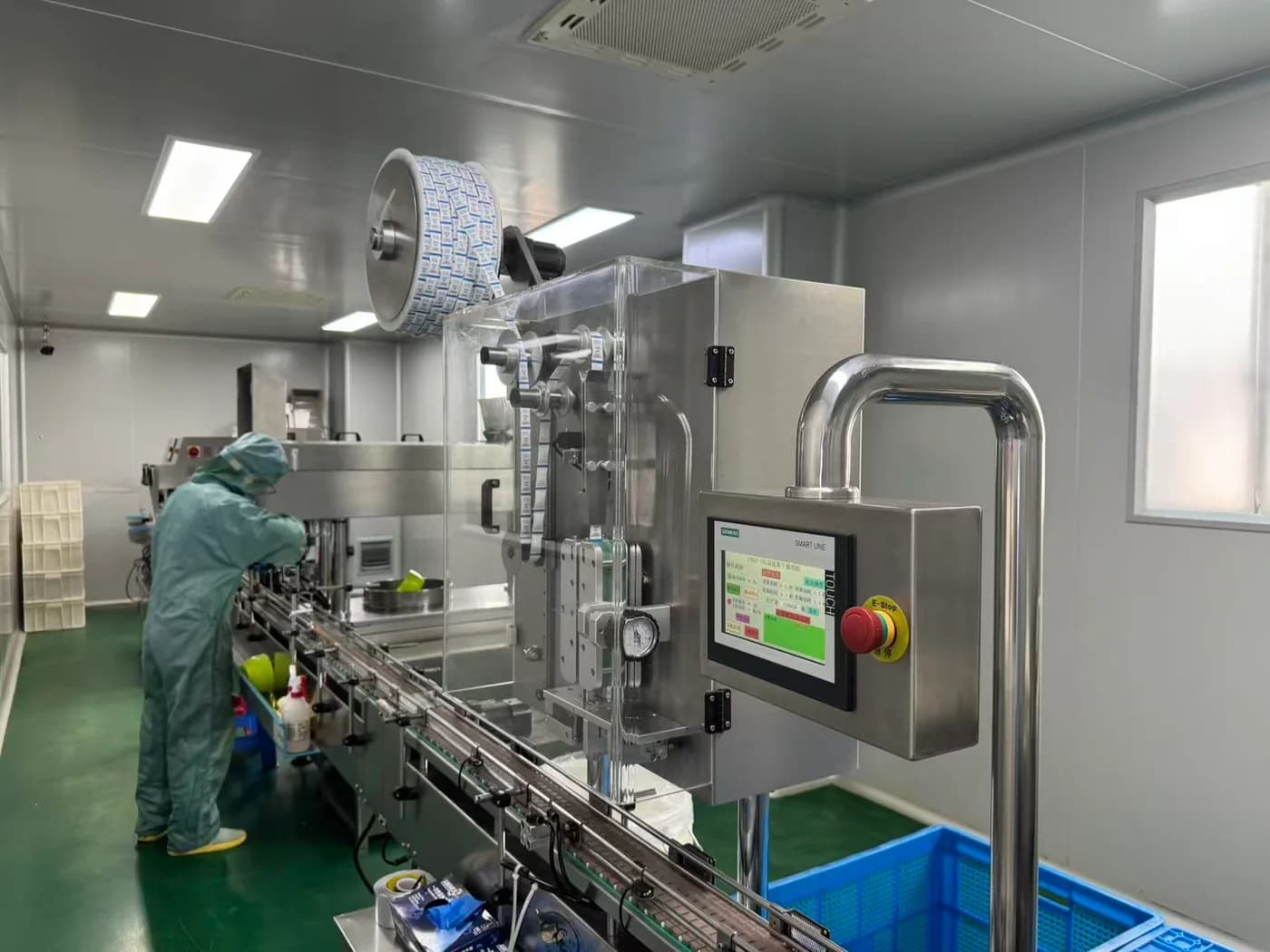
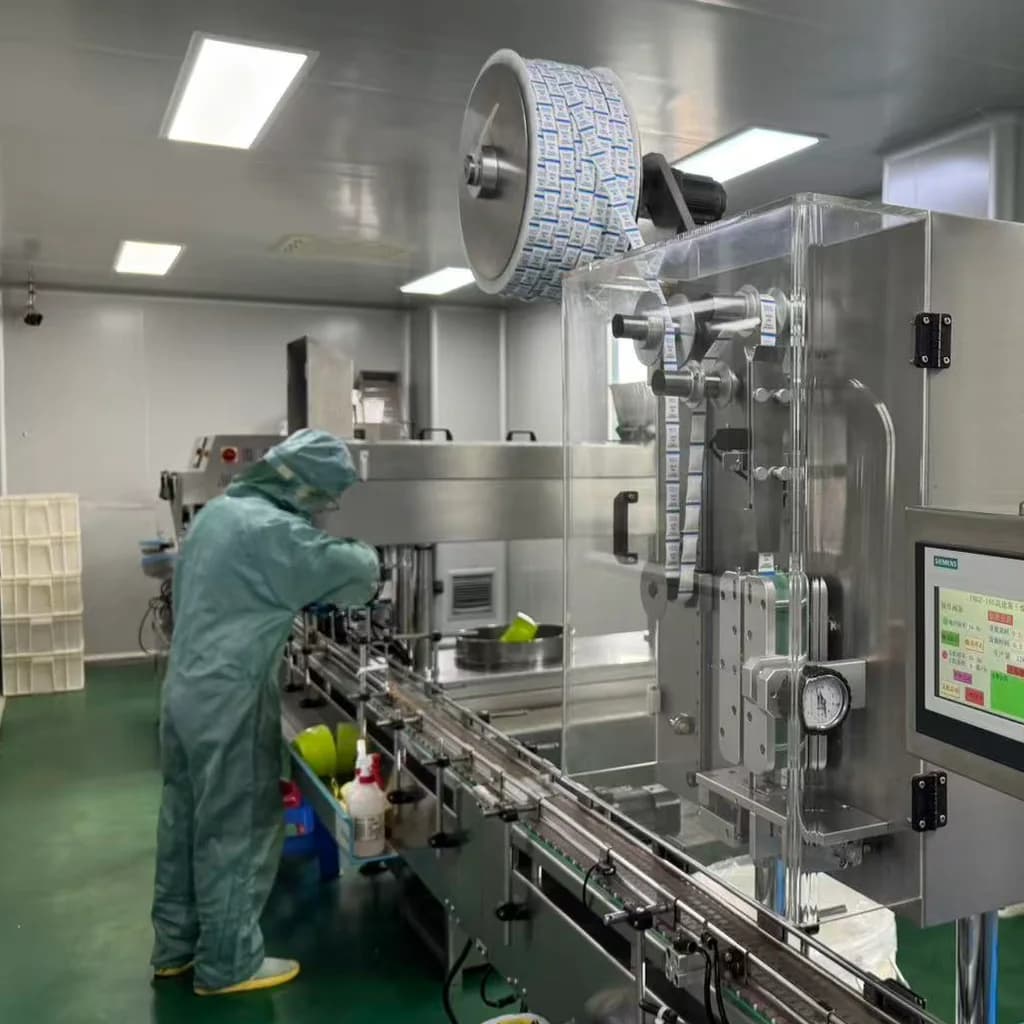
| Site | Guangdong, China; FDA-registered facility |
Match the Plant to Your Format and Volume
A capsule line and a gummy line are not interchangeable. Before requesting quotes, confirm the manufacturer runs your dosage form in-house rather than brokering it. Ask for the number of lines, typical batch size and changeover time. If your forecast is 5,000 units per SKU, a plant set up for 50,000-unit runs will either decline or price you out. Pilot runs of a few hundred units are common for market testing, but expect higher per-unit cost and a separate schedule.
Volume also decides packaging. Retail bottling, stick packs and blister packs need different equipment. A factory that fills 100-count bottles may not offer 30-count blisters without a tooling charge. Ask what fill weights and counts the line handles without new tooling, and whether the MOQ applies per SKU or per purchase order. Getting this in writing before sampling avoids a redesign three weeks into production.
Formulation Support and Ingredient Sourcing
Some manufacturers only produce to your finished formula. Others keep a library of stock formulas you can license and adjust. Both models work, but they change your timeline and your regulatory workload. If you bring your own formula, ask how the plant handles ingredient qualification, allergen screening and overage for potency loss. A 500 mg label claim may need 520-550 mg of input to still pass assay at end of shelf life.
Ingredient provenance matters more in some markets than others. EU buyers often need documentation for novel food or health claim review. Middle East buyers frequently require halal certification on the finished product, not just the gelatin capsule. US buyers may want organic or non-GMO documentation. Ask which ingredients the plant holds in stock and which are sourced per order, since custom sourcing can add 10-15 days to the lead time.
Quality Systems, Documentation and Logistics
Certificates are a starting point, not proof. Request the current GMP certificate, ISO 22000 scope and HACCP plan summary, and check the expiry dates. Ask who performs finished-product testing and whether third-party lab reports come with each batch. A manufacturer that cannot provide a certificate of analysis, a specification sheet and a material safety data sheet on request is a risk you do not need to take.
Logistics decides your landed cost as much as the unit price. Confirm Incoterms, whether the factory handles export documentation, and typical transit times to your port. Air freight from Guangdong to the US or EU runs 5-10 days; sea freight runs 25-40 days. Ask whether the plant ships full containers or consolidates LCL, and who covers duties. A clear handover at the port is better than a vague promise of door delivery.
Quality Control and Batch Documentation When Vetting Supplement Manufacturers
Every batch should be tested for identity, potency, microbials, heavy metals and disintegration before release. Identity testing confirms the raw material matches the specification, typically by HPLC or FTIR. Potency assays verify the active marker compound is within 95-105% of label claim. Microbial testing covers total aerobic count, yeast and mould, E. coli and Salmonella. Heavy metals testing screens for lead, arsenic, cadmium and mercury against USP <232> limits. Disintegration testing applies to tablets and capsules, with a typical specification of under 30 minutes in purified water at 37°C.
Testing happens at three points: incoming raw materials, in-process checks and finished goods. A certificate of analysis for each batch should list the test parameter, method reference, specification, result and pass/fail status. It should also include the batch number, manufacturing date, expiry date, and the name and signature of the quality control manager. Ask whether the manufacturer performs testing in-house or outsources to a third-party laboratory. In-house labs reduce turnaround time, but third-party ISO 17025 accredited labs provide an independent paper trail that some retailers prefer.
Retention samples are a useful indicator of quality discipline. A reliable supplement manufacturer keeps a retained sample from every batch for at least one year past the expiry date, stored under label conditions. Ask to see the retention sample policy and the storage log. Stability protocols should include accelerated testing at 40°C and 75% relative humidity for six months, plus real-time testing at 25°C and 60% relative humidity for the product's shelf life. If a manufacturer cannot provide a stability summary for a similar formula, treat the quoted expiry date as provisional.
Packaging, Labelling and Retail Readiness
Packaging format affects cost, MOQ and lead time. High-density polyethylene bottles are the most common for capsules and tablets, available in 60cc to 500cc sizes with induction seals and child-resistant closures. Blister packs suit unit-dose tablets and allow tamper evidence but carry higher tooling costs. Stick packs and sachets work for powders and single-serve liquids, with fill weights from 2g to 30g. Gummies typically require PET or glass jars with a pressure-sensitive seal. Confirm whether the manufacturer supplies packaging in-house or sources it, as external sourcing adds 10-15 working days to the schedule.
For the US market, the label must include a statement of identity, net quantity of contents, a supplement facts panel, other ingredients list, and the name and place of business of the manufacturer or distributor. Allergen declarations are required under FALCPA. Lot codes and expiry dates must be printed or embossed on the primary container and, for retail, on the carton. Ask the manufacturer to provide a label proof with dieline and barcode placement before printing. A common error is a supplement facts panel that does not match the batch record, so cross-check the two documents before approving artwork.
Carton and pallet specifications should be agreed in writing. Standard export cartons hold 12 to 48 units depending on bottle size, with a maximum gross weight of 15kg for manual handling. Pallet configurations vary by market: a standard US pallet is 1,200mm by 1,000mm, while a Euro pallet is 1,200mm by 800mm. For Amazon FBA, the manufacturer should apply FNSKU labels, poly-bag units where required, and a carton label with box contents and expiry. Confirm whether the manufacturer handles this or whether a prep centre is needed, as this affects the landed cost.
MOQ, Lead Times and Delivery When Comparing Supplement Manufacturers
Sample timelines depend on whether the formula is stock or custom. For a stock formula, samples typically ship in 7-10 working days. For a custom formula, add 5-7 working days for formulation and pilot batching. Sample costs are usually credited against the first production order, but confirm this in writing. Production windows run 20-35 working days after sample approval and receipt of deposit, with gummies and softgels at the longer end due to drying and curing stages. Chinese New Year and October holidays add two to three weeks, so plan orders around these periods.
Shipping method should be chosen on cost per kilogram and transit time. Air freight takes 5-10 days door to door and suits pilot runs or urgent replenishment, but costs roughly four to six times more per kilogram than sea freight. Sea freight takes 25-40 days depending on the port pair and whether it is a full container or less-than-container load. For first orders under 500kg, air or express courier is often more economical once warehousing and customs clearance at destination are included. Ask for a landed cost estimate rather than an FOB price alone.
Incoterms define where responsibility transfers. EXW means the buyer arranges everything from the factory gate. FOB means the manufacturer delivers to the named port and covers export clearance. DDP means the manufacturer delivers to the buyer's door with duties paid, which simplifies budgeting but usually carries a higher unit price. Standard documents include the commercial invoice, packing list, bill of lading or air waybill, certificate of analysis, material safety data sheet where relevant, and a free-sale certificate. Phytosanitary certificates apply only to botanical raw materials, not finished supplements.
Configurations to Compare
Domestic contract manufacturer
Shorter lead times and easier site visits, but MOQs of 10,000+ units and higher unit costs are common. Best when your margin supports premium pricing.
Asian contract manufacturer
Lower unit costs and broad format coverage. MOQs from 1,000 units are realistic. Budget 20-35 production days plus 25-40 days sea freight.
Private label supplier
Stock formulas and fast turnaround, often 15-25 days. Less control over potency and ingredient origin. Suitable for testing a category before custom development.
Broker or sourcing agent
Useful for comparing multiple plants, but adds a margin and a communication layer. Ask for the factory name and audit report before committing.
From Spec to Shipment
- 01
Define your spec first
Write down format, fill weight, servings, packaging, target shelf life and certification needs. A one-page spec gets accurate quotes; a vague email gets guesses.
- 02
Shortlist five to eight plants
Filter by dosage form, MOQ and certification. Request the GMP certificate and the last third-party audit date. Drop any supplier that will not share them.
- 03
Request samples and quotes
Ask for a sample of a comparable product and a full cost breakdown: unit price, tooling, testing, packaging and freight. Compare landed cost, not ex-works price.
- 04
Audit or video-review the site
If travel is impractical, request a live video walkthrough of the production and warehouse areas. Check segregation of allergens, pest control records and batch numbering.
- 05
Run a pilot batch
Order the smallest run the plant allows, often 500–1,000 units. Test stability, label accuracy and packaging integrity before scaling to 1,000 units.
- 06
Lock the supply agreement
Confirm lead times, payment terms, change-order process and defect policy in writing. A 20-35 day production window should be stated, not implied.
Why EUPHM
Predictable lead times
Samples in 7-10 working days and production in 20-35 working days, with a named contact who answers within one business day.
Documentation that clears customs
Certificates of analysis, specification sheets, halal certificates and organic documentation supplied per batch, not on request.
Scalable minimums
Pilot runs below 1,000 units for testing, then 1,000 units per SKU for retail bottling once the formula is stable.
Questions buyers ask.
What is a realistic MOQ for a supplement manufacturer?+
For retail bottling, 1,000 units per SKU is typical. Pilot runs can go lower, often 500–1,000 units, at a higher unit cost. MOQs are usually set by the smallest batch the blending and filling lines can run without excessive waste, so a 100-count bottle may carry the same MOQ as a 30-count.
How long does it take to get samples and then full production?+
Sample lead time is typically 7-10 working days for a stock formula, longer if custom ingredients are sourced. Mass production runs 20-35 working days after sample approval. Add 5-10 days for air freight or 25-40 days for sea freight. Total from brief to warehouse is often 8-12 weeks.
Which certifications should I check before signing?+
At minimum, confirm GMP, ISO 22000 and HACCP. If you sell in the Middle East, ask for halal certification on the finished product. EU and US organic claims need organic certification. Vegan certificates matter for specific audiences. Check certificate scope and expiry dates, not just the logo.
Can a manufacturer produce from my own formula?+
Yes, most contract manufacturers work from customer formulas. You will need to supply the ingredient list, dosages and specifications. The plant may adjust for overage, flowability or taste and will send a counter-sample for approval. Expect a confidentiality agreement and a formulation review before quoting.
How do I compare quotes from different manufacturers?+
Compare landed cost, not ex-works price. Include tooling, third-party testing, packaging, export documents, freight and duties. Then compare lead times and MOQ per SKU. A quote that is 10% cheaper but adds 15 days and a 10,000-unit minimum may tie up more cash than it saves.
How do I verify that a supplement manufacturer's certificate of analysis is genuine?+
Ask for the batch number and the testing laboratory's name and accreditation number. Cross-check the laboratory against ISO 17025 registries where available. Request the raw data or chromatograms for identity and potency tests, not just the summary page. A genuine COA will show method references and acceptance criteria, not only pass results. If the manufacturer refuses to share raw data, treat the COA as unverified.
Can a supplement manufacturer handle Amazon FBA prep and labelling?+
Many export-oriented manufacturers in Guangdong offer FNSKU labelling, poly-bagging and carton labelling for Amazon. Confirm whether the service is in-house or subcontracted, as this affects lead time and cost. Ask for a sample carton label and check that the expiry date and lot code are printed clearly. Some manufacturers only handle FBA prep for orders above a certain volume, so clarify the threshold before quoting.
What Incoterm is best for a first order from a Chinese supplement manufacturer?+
For a first order, FOB is usually the most transparent because it separates product cost from freight and insurance, letting you compare quotes on a like-for-like basis. DDP is simpler for budgeting but hides the freight margin inside the unit price. EXW shifts export clearance to you, which is rarely practical without a local agent. Ask for both FOB and DDP quotes to see the difference.
Have a product in mind?
Send us the brief and we will come back with a formulation direction, indicative price and a realistic lead time — usually within one working day.