Effervescent Tube Manufacturer for Private Label Brands
EUPHM produces effervescent tablets in resealable tubes at 1,000 unit MOQs. Our Guangdong facility handles 20–35 day mass production runs, with GMP, ISO 22000 and HACCP certification, plus halal and vegan options.
Overview
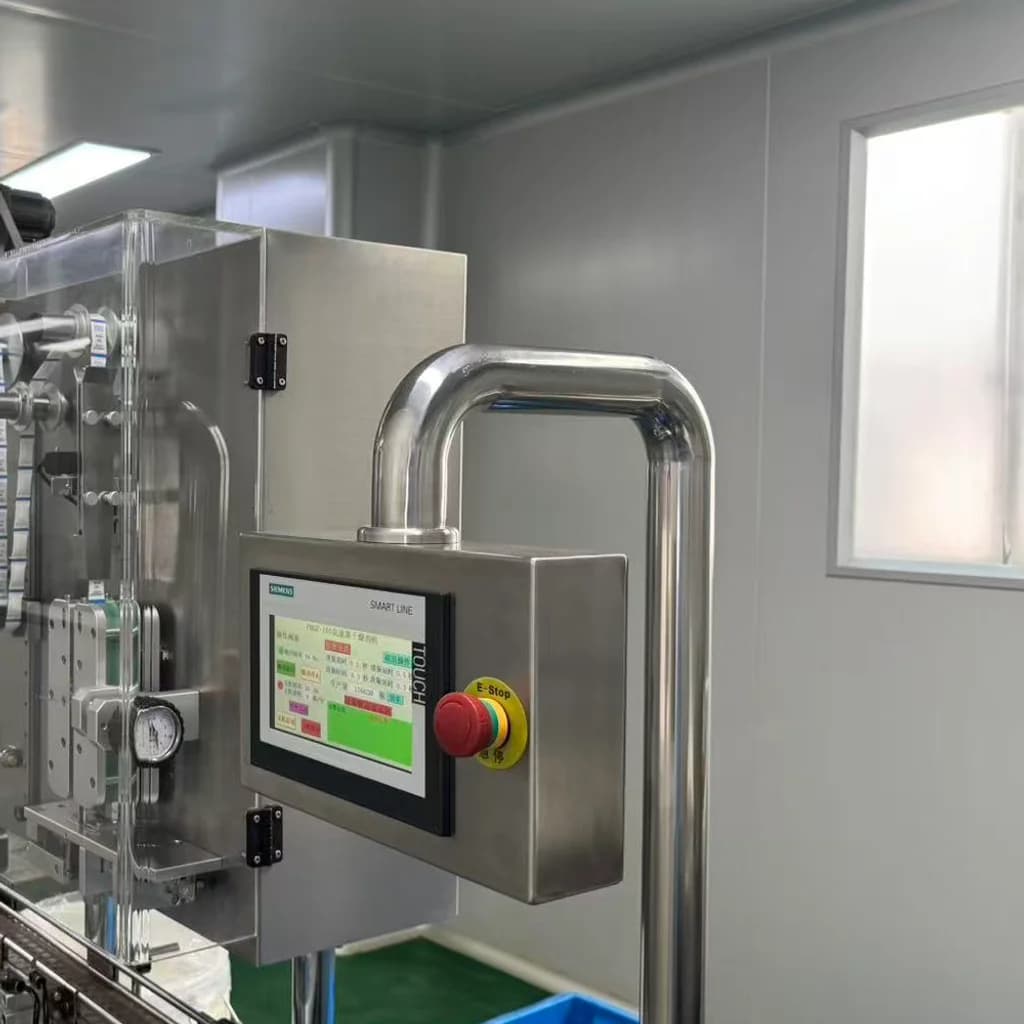
Effervescent tubes protect tablets from moisture and let consumers carry a full 20- or 30-tablet count without a bulky carton. For brand owners, the format also cuts secondary packaging cost and shelf space. EUPHM runs tube filling, capping and desiccant integration on the same line, so tablets, tube and cap tolerances are matched before mass production. This page covers the tube-specific capabilities, formulation limits and compliance documents buyers need when sourcing an effervescent tube manufacturer.
- MOQ (retail tubes)
- 1,000 units per SKU
- Pilot run MOQ
- 1,000 units per SKU
- Sample lead time
- 7–10 working days
- Mass production
- 20–35 working days after sample approval
- Tube sizes
- 20, 30, 40, 60 tablets; 30–120 mm diameter
- Certifications
- GMP, ISO 9001, ISO 22000, HACCP, NSF/ANSI 455-2, halal, FDA-registered
Tube Filling and Line Capability
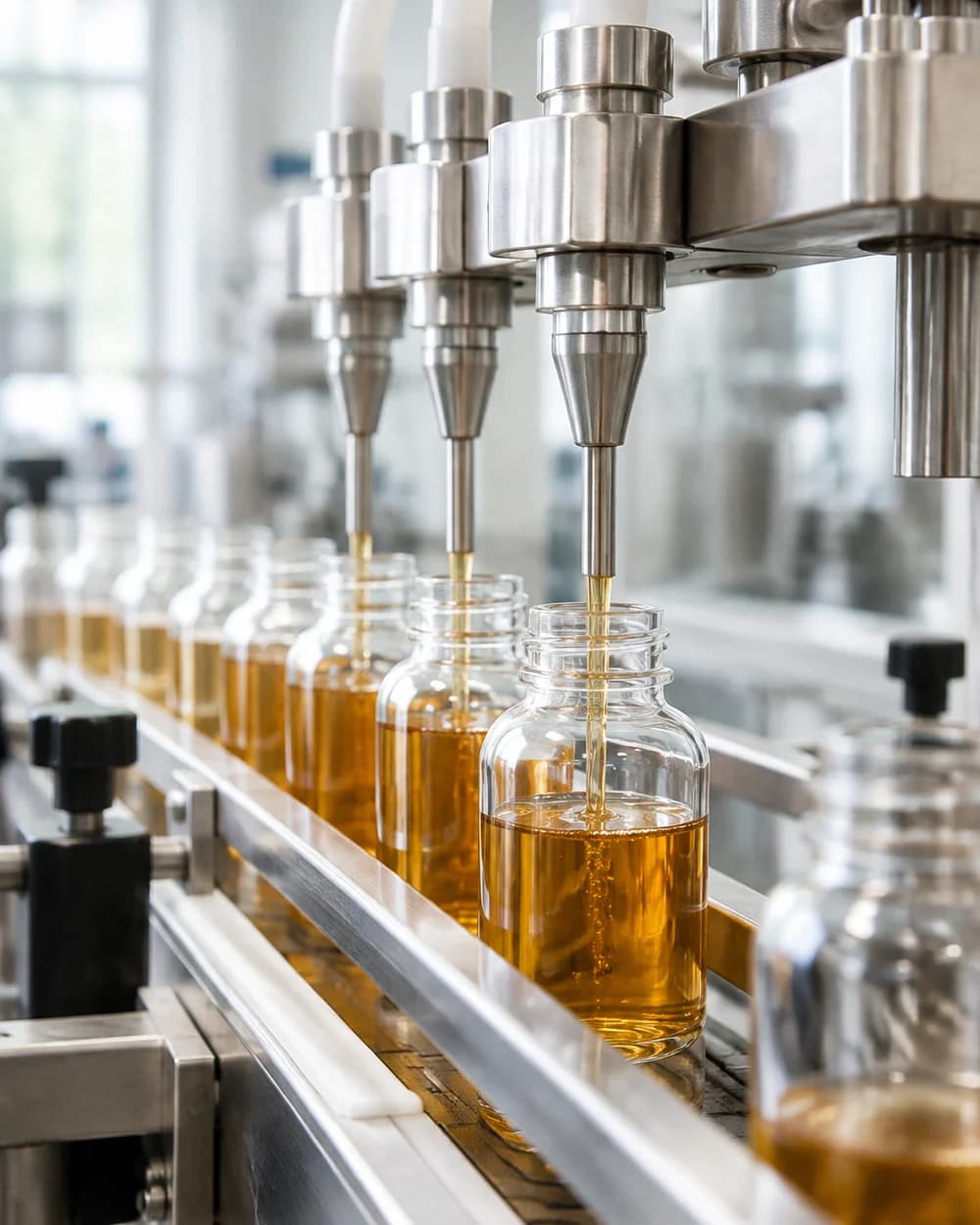
EUPHM operates two effervescent tableting lines with 25–35 punches, running at 15,000–30,000 tablets per hour depending on diameter and compression force. Tube filling runs at 60–120 tubes per minute. We handle 20 mm to 120 mm tube diameters and fill weights from 2 g to 8 g per tablet. Desiccant caps or integrated desiccant liners are fitted in-line, which keeps moisture ingress below 0.5 g per day under 75% relative humidity at 40°C.
Tooling changes for a new tube diameter take 4–6 hours. That matters when a brand wants a 20-count trial SKU alongside a 60-count core SKU on the same order. We run both on the same shift, with separate hoppers and verified clean-down between formulations. Line capacity is reserved in 5,000-unit blocks, so a 1,000-unit MOQ does not wait for a full production day.
Formulation Limits Inside a Tube
Effervescent tablets in tubes face a different moisture and headspace profile than blister strips. We formulate with citric acid, tartaric acid or a malic-citric blend, and sodium bicarbonate or potassium bicarbonate as the base. Typical acid-to-base ratios run 1:1.1 to 1:1.4 by weight. Tablet hardness sits between 60 N and 120 N; below 60 N, tube vibration during transport causes edge chipping. Above 120 N, dissolution time exceeds 120 seconds in 200 mL of water at 20°C.
Active ingredients are dosed at 5–40% w/w for vitamins such as vitamin C, B-complex and zinc. Electrolyte blends with 200–500 mg sodium and 100–300 mg potassium per tablet are common. Flavours are spray-dried or granulated, not liquid, to avoid premature reaction. Colourants must be water-soluble and acid-stable. We run a 72-hour accelerated stability check at 40°C and 75% RH before releasing a tube formulation to mass production.
Quality, Compliance and Export Logistics
Every batch is tested for weight variation (±3%), hardness, disintegration time, pH of the reconstituted solution, and microbial limits. We hold GMP, ISO 22000 and HACCP certification. Halal and certificates are available per SKU. Our facility is FDA-registered for dietary supplements. Certificates of analysis are issued per batch, and retain samples are kept for 24 months.
For export, tubes ship in 5-ply corrugated cartons with 24–48 tubes per carton. We palletise to 1,000–1,200 mm heights, stretch-wrap and desiccant-bag the pallet. FOB Shenzhen or Yantian port. Air freight samples leave within 3 working days of release. Documentation includes commercial invoice, packing list, certificate of origin, and health certificate where the destination requires it. Lead time from purchase order to port is 20–35 working days.
Quality Control and Batch Documentation
Every effervescent tube batch is tested against a written specification before release. Incoming raw materials are sampled for identity by FTIR or HPLC, and each active ingredient is assayed for potency. Tablets are checked for weight variation (target ±5%), hardness, thickness and disintegration time, which for effervescent tablets is typically under 5 minutes at 20°C in 200 ml water. Microbial limits follow the relevant pharmacopoeial or customer standard, with total aerobic count, yeast and mould, E. coli and Salmonella tested per batch. Heavy metals (lead, cadmium, arsenic, mercury) are screened on the finished tablet, not only on raw materials, because tube contact and processing can introduce trace contamination.
Testing happens at three points: incoming goods, in-process (granulation moisture, blend uniformity, compression weight) and finished product. In-process checks run every 30 minutes on the filling line, with tube fill weight, cap torque and desiccant presence verified. A batch is only released when the finished-product COA is signed by the QC manager. The COA lists batch number, production date, expiry date, active assay results, microbial results, heavy metals, disintegration, appearance, tube dimensions and desiccant type. It is issued in English as standard and can be translated for EU or Middle East importers on request.
Retention samples are kept for the full shelf life plus six months. For a 24-month shelf life, that means 30 months of retained tubes stored at 25°C/60% RH and, for stability batches, at 30°C/65% RH and 40°C/75% RH. The stability protocol covers 0, 3, 6, 9, 12, 18 and 24 months, testing assay, disintegration, moisture content, microbial limits and tube seal integrity. Accelerated data at 40°C/75% RH for six months is used to support the initial shelf-life claim before real-time data is complete. Customers receive the stability summary in the technical file, which is updated as new time points are added.
For private-label brands, the technical file also includes the master batch record, packaging specifications, a tube-to-tablet compatibility statement and a declaration of no prohibited substances. If the formula contains a novel ingredient or a high-dose active, additional assay method validation is performed and documented. Batch records are retained for five years, which meets most export market requirements. Buyers auditing the factory can request a batch record review during a site visit, and third-party audit reports (GMP, ISO 22000, HACCP) are shared under NDA.
Packaging, Labelling and Retail Readiness
Effervescent tubes are the primary pack, but the retail unit often includes a secondary carton, a shrink sleeve or a label applied to the tube body. Tube diameters from 30 mm to 120 mm allow tablet counts from 20 to 60. Caps can be plain, child-resistant or tamper-evident, and a desiccant plug or sachet is inserted during capping. For brands also selling other formats, the same line can output effervescent tablets into blisters, stick packs or sachets, but tube tooling is dedicated and should be specified at the quotation stage. Tube wall thickness and cap thread tolerance are matched to the filling head to avoid capping defects at speed.
Labelling for the US market must include the statement of identity, net quantity, ingredient list, supplement facts panel, directions for use, and the name and place of business of the manufacturer, packer or distributor. For EU retail, the label needs the nutrition declaration, allergens, lot number, best-before date and the food business operator address. Lot and expiry coding is applied by inkjet or laser on the tube body and, where required, on the carton. The code format is agreed with the customer before production; common formats are YYMMDD plus a line code. Cartons are specified with board grade, print colours and pallet configuration.
Pallet specifications are agreed per destination. A standard pallet is 1200 x 1000 mm or 1200 x 800 mm, with a maximum height of 1.8 m including the pallet, and stretch-wrapped with corner boards. Amazon sellers need FNSKU labels applied over the barcode, poly-bagged units where the tube is not shipper-ready, and carton weight under 22.7 kg for manual handling. Retail compliance for EU supermarkets often requires a specific barcode placement and a carton mark with the item number, quantity and batch. The factory can apply FNSKU labels and Amazon-compliant carton markings as a value-added service.
Retail-ready packaging also covers shelf-life claims and storage statements. Effervescent tubes are moisture-sensitive, so the label should state storage below 25°C and away from direct sunlight. If the brand makes a vegan, halal or organic claim, the relevant certificate number must appear on the label and match the certificate on file. Artwork proofs are checked by the factory against the approved formula and the destination regulation before printing. A pre-production proof is signed off by the customer, and any change to artwork after that point triggers a new proof cycle, typically adding three to five working days.
MOQ, Lead Times and Delivery
Sampling starts with a formula and tube specification review, which takes two to three working days. Prototype samples are produced in 7 to 10 working days for standard formulas and 12 to 15 working days if a new flavour or active blend needs development. Samples are sent by courier with a preliminary COA and a tube specification sheet. The customer approves the sample in writing, including artwork and tube dimensions, before a production slot is booked. A pilot run of 1,000 units per SKU is available for market testing, and the retail MOQ is 1,000 units per SKU depending on tube size and tablet count.
Mass production runs 20 to 35 working days after sample approval, depending on tube availability and whether labels are printed in-house or supplied. Tube shells are normally stocked in common diameters, but custom colours or printed tubes add 10 to 15 working days. The production window includes granulation, compression, tube filling, capping, labelling, cartoning and QC release. A pre-shipment inspection is carried out before dispatch, and the customer or a third-party inspector can attend. The final COA and packing list are issued with the shipping documents.
Delivery terms are quoted as EXW, FOB or DDP. FOB is from Shenzhen or Hong Kong, and sea freight to US west coast ports takes 18 to 25 days, to EU ports 28 to 35 days, and to Middle East ports 15 to 22 days. Air freight takes 5 to 8 days door to door but is only economic for samples or urgent pilot runs. DDP is available for Amazon FBA and for buyers who want a landed cost; the factory handles customs clearance and final-mile delivery through a freight forwarder. Incoterms and the named place are stated on the quotation and the sales contract.
Shipping documents include the commercial invoice, packing list, bill of lading or air waybill, COA, MSDS where the formula requires one, and a free-sale certificate for markets that request it. A phytosanitary certificate is not normally relevant for effervescent tubes, but a certificate of origin can be issued for preferential tariff treatment. Halal certificates are provided when the formula and line are certified. Documents are shared as PDFs before dispatch for buyer review, and originals are couriered with the shipment or sent by express courier, depending on the letter of credit terms.
Packaging and Format Choices
Standard PP tube
Polypropylene tube with snap-on or screw cap. 20–60 tablet counts. Moisture barrier suits 12–18 month shelf life.
Desiccant cap tube
Cap contains 1–3 g silica gel or molecular sieve. Extends shelf life to 24 months for hygroscopic actives.
Child-resistant tube
Push-and-turn or squeeze-and-turn closure. Meets US 16 CFR 1700.20 and EU EN ISO 8317 test protocols.
Airless or one-way valve tube
For effervescent powders or granules. Prevents moisture ingress during repeated opening. 30–120 mm diameter.
From Brief to Batch
- 01
Send your brief
Share target tablet weight, active ingredients, tube count and certification needs. We reply within 1 working day with feasibility and pricing.
- 02
Sample development
We produce 200–500 sample tablets and fill 20–50 tubes. Sample lead time is 7–10 working days. You receive physical tubes by courier.
- 03
Sample approval
You test dissolution, taste, tube opening force and label fit. We adjust formulation or tube tooling once at no extra tooling cost.
- 04
Purchase order
MOQ is 1,000 units per SKU for retail tubes. Pilot runs from 1,000 units. 30% deposit, balance before shipment.
- 05
Mass production
Production runs 20–35 working days. We send in-process photos at tableting, tube filling and cartoning stages.
- 06
QC and shipping
Batch COA, retain samples and packing list issued. FOB Shenzhen or Yantian. Air freight for urgent orders in 3 working days.
Why EUPHM
Tube-specific tooling
We hold 12 tube diameters in-house. No third-party tooling delay. Changeover takes 4–6 hours, not days.
Low MOQ, real runs
1,000 units per SKU for retail tubes. Pilot runs from 1,000 units. Both fit a single production shift.
Documentation ready
GMP, ISO 9001, ISO 22000, HACCP, NSF/ANSI 455-2 and halal certification; FDA facility registration for US-bound shipments.
Questions buyers ask.
What is the MOQ for effervescent tubes?+
MOQ is 1,000 units per SKU for retail-ready tubes. Pilot runs start at 1,000 units. The lower pilot MOQ lets you test market response before committing to a full 5,000-unit run. Tooling is shared across both volumes, so there is no separate tooling fee for a pilot.
How long do samples take?+
Sample lead time is 7–10 working days after we receive your formulation brief and confirm the tube diameter. You receive 20–50 filled tubes by courier. We include a dissolution test result and a tube opening-force measurement with each sample shipment.
Can you produce halal effervescent tubes?+
Yes. We hold halal certification for the facility and can produce certified SKUs on dedicated runs. Gelatin-free and alcohol-free formulations are standard. Certificates are issued per batch. For claims, we require certified organic raw materials and a separate production clean-down.
What tube sizes and tablet counts are available?+
Standard tube diameters are 20 mm, 25 mm, 30 mm, 40 mm, 50 mm, 60 mm and 120 mm. Tablet counts are 20, 30, 40 and 60. Fill weights range from 2 g to 8 g per tablet. Custom diameters are possible with a 4–6 week tooling lead time.
Do you ship to the US, EU and Middle East?+
Yes. We ship FOB Shenzhen or Yantian. For US and EU orders we provide commercial invoice, packing list, certificate of origin and health certificate where required. Middle East orders include halal certification. Air freight samples leave within 3 working days of batch release.
What is the shelf life of effervescent tablets in a tube, and how is it validated?+
A 24-month shelf life is standard for effervescent tubes with a desiccant cap, supported by real-time stability data at 25°C/60% RH and accelerated data at 40°C/75% RH for six months. The protocol tests assay, disintegration, moisture and microbial limits at 0, 3, 6, 9, 12, 18 and 24 months. Shorter or longer shelf lives can be validated on request, but a 36-month claim requires additional real-time data before release.
Can you fill tubes with a customer-supplied tube or cap?+
Yes, customer-supplied tubes and caps can be filled, provided they meet the line's dimensional tolerances. The factory requests 50 to 100 units for line trials before production. Tube diameter, wall thickness, cap thread and desiccant fit are checked, and any mismatch is reported before a production slot is booked. If the supplied tube fails the trial, the factory can recommend an equivalent stock tube. Customer-supplied packaging is stored under controlled humidity before filling.
What artwork and label files do you need, and who approves the final proof?+
The factory needs a print-ready PDF or AI file with bleed, plus a separate text file for variable data such as lot and expiry. Artwork is checked against the approved formula and the destination market's labelling rules. A pre-production proof is issued and must be signed off by the customer before printing. Any change after sign-off starts a new proof cycle, typically adding three to five working days. The factory does not alter artwork without written approval.
Other versions built in this dosage form.
Have a product in mind?
Send us the brief and we will come back with a formulation direction, indicative price and a realistic lead time — usually within one working day.