NMN Tablet Manufacturer for Custom Supplement Brands
EUPHM produces NMN tablets at 1,000 unit MOQ per SKU, with samples in 7–10 working days and mass production in 20–35 working days. Tablets run from 250 mg to 1,000 mg, in 30, 60 or 90 count bottles.
Overview
Nicotinamide mononucleotide is sold mainly as capsules, but tablets give brands tighter dose control, smaller bottles and lower freight per unit. A tablet is not a capsule in a different shape: NMN is hygroscopic, so granulation, compression pressure and coating all affect stability. This page covers what we can run, what we need from you, and where the practical limits sit. If you are still comparing formats, start at our tablet manufacturer overview.
Tablet Press Capacity and What It Means for You
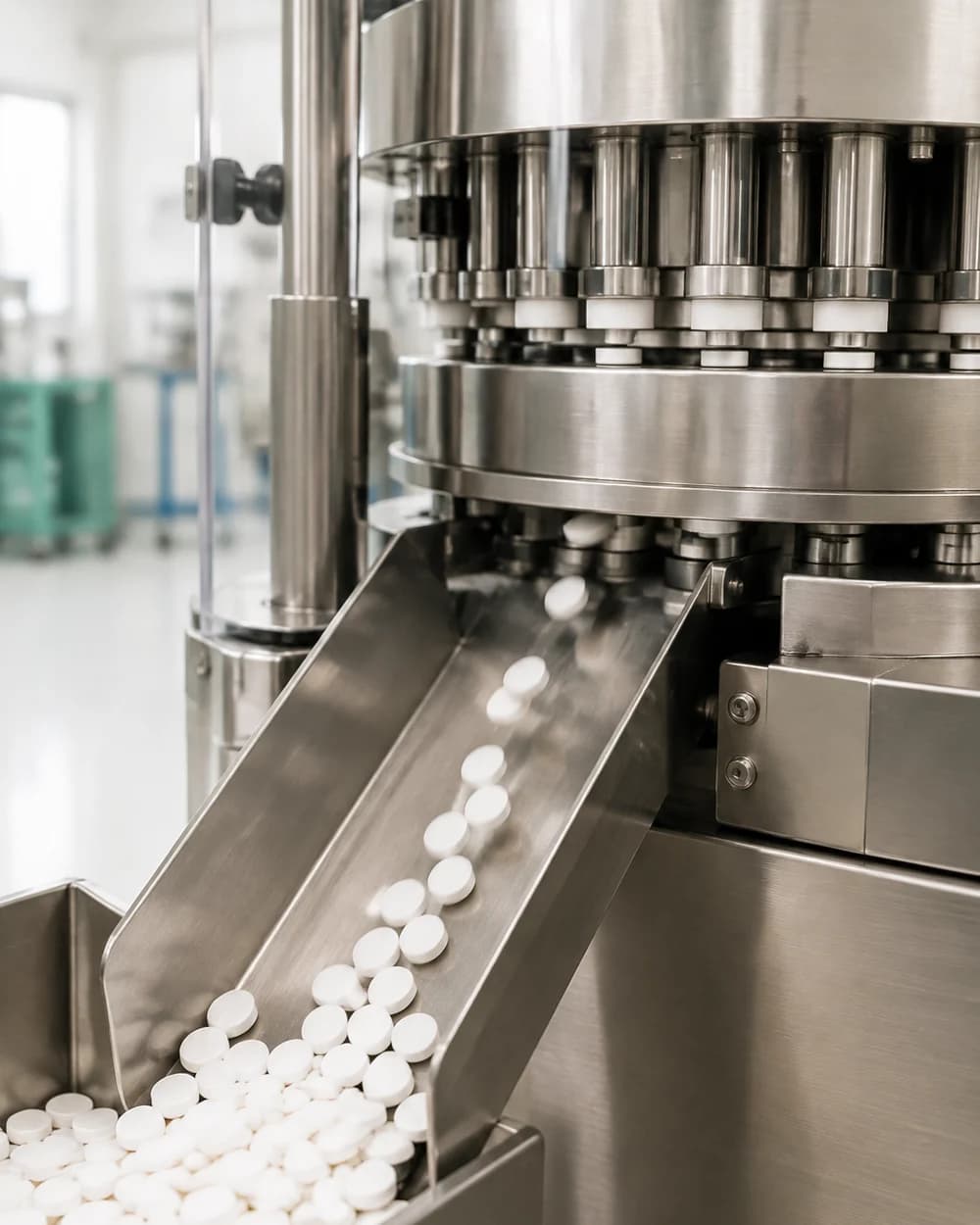
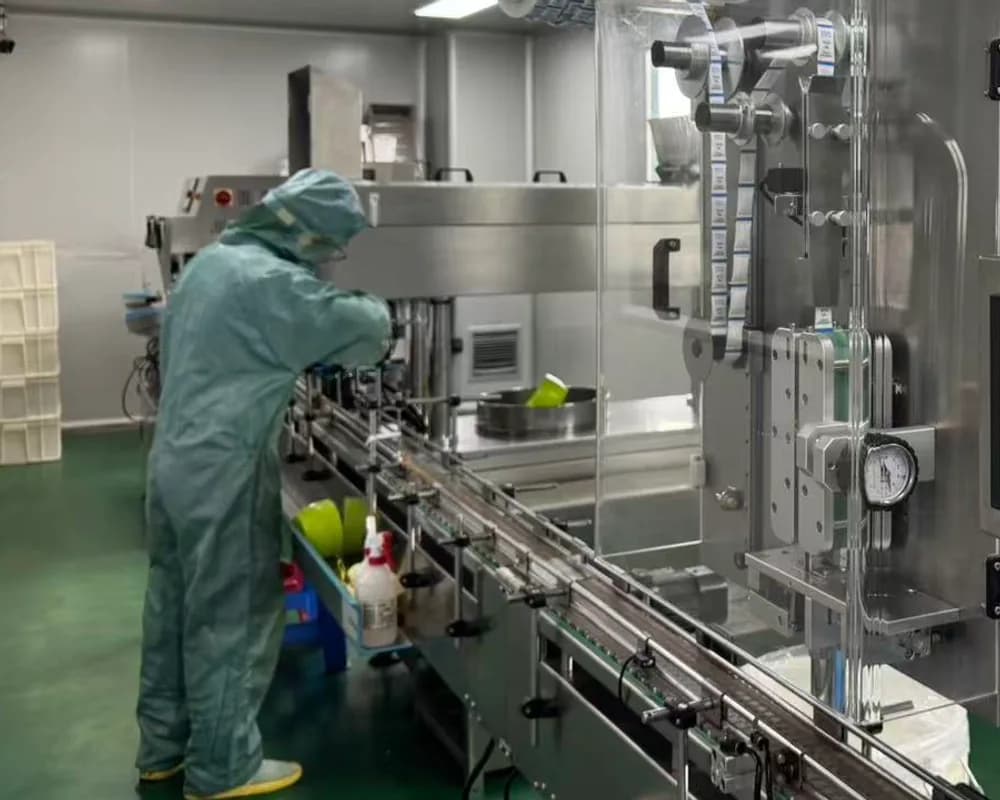
We run rotary tablet presses with a rated output of 150,000 to 400,000 tablets per hour depending on tooling, plus fluid-bed granulation and film-coating lines. In practice, a 1,000-unit order at 60 tablets per bottle is 180,000 tablets — roughly one shift of press time. That is why we can hold MOQ at 1,000 units rather than 50,000. Tooling is the real constraint. Standard round and oval dies are available off the shelf; a custom logo or unusual oblong adds 10–15 working days and a one-off tooling cost, quoted before you commit.
Hardness targets sit between 8 and 15 kp for a 500 mg NMN tablet. Below 8 kp, tablets chip in the bottle during transit. Above 15 kp, disintegration time in the stomach stretches past 30 minutes, which most label claims cannot support. We test hardness, friability and disintegration on every batch and report the numbers. If your formula needs a chewable or a fast-dissolve profile, say so at quoting stage — the excipient list changes.
Formulating NMN Tablets Without Losing Potency
NMN absorbs moisture from air, and moisture drives hydrolysis. Direct compression with a dry binder such as microcrystalline cellulose keeps water out of the process, but many NMN lots flow poorly at high load. The usual answer is dry granulation by roller compaction, which raises bulk density and improves flow without adding water. Typical NMN load is 50–70% of tablet weight; at 500 mg tablet weight, that is 250–350 mg of NMN. Purity is verified by HPLC against a certificate of analysis from the raw material supplier, and we retain a sample from every incoming lot.
Excipients are food-grade and non-GMO: microcrystalline cellulose, croscarmellose sodium, colloidal silicon dioxide, magnesium stearate. If you want a vegan claim, we use a plant-derived magnesium stearate and a cellulose film coat rather than shellac. If you want a clean-label claim, we can drop magnesium stearate and use stearic acid instead, though press speed drops by roughly 15%. Coating matters more than most buyers expect: a 3% film coat cuts moisture uptake and reduces the bitter back-taste that uncoated NMN tablets carry.
Quality Documentation and Export Logistics
The plant holds GMP, ISO 22000 and HACCP certification, and we arrange halal certification per order through recognised certifiers. and EU organic claims require an organic-certified NMN input, which is not widely available — we will tell you plainly if your claim cannot be substantiated rather than print it. Our facility is FDA-registered for dietary supplements. That is a registration, not an approval, and no supplement manufacturer should describe it otherwise.
Each shipment includes a certificate of analysis covering assay, heavy metals, microbial limits and disintegration, plus a retention sample held for 24 months. We ship FOB Shenzhen or Hong Kong, or DDP to US and EU warehouses on request. Air freight from Guangdong to Los Angeles runs 5–8 days, to Rotterdam 6–9 days. Sea freight is 22–35 days and costs roughly 70% less per kilogram on orders above 500 kg. Bottles ship with induction seals, and we can apply your label or supply unlabelled for local filling.
Quality Control and Batch Documentation
Every NMN tablet batch is tested at three points: incoming raw material, in-process blend, and finished tablets. Identity of NMN is confirmed by HPLC against a reference standard, with potency expressed as mg per tablet and percentage of label claim. Microbial limits follow USP <2021> and <2022>, heavy metals are screened by ICP-MS against ICH Q3D oral limits, and disintegration is run in purified water at 37°C to the USP <701> window. We retain a sealed sample of each batch for 24 months from the date of manufacture.
The certificate of analysis lists batch number, manufacture and expiry dates, tablet weight and hardness ranges, assay result, microbial and heavy-metal results, disintegration time, and a statement of conformity to the agreed specification. It is issued only after the finished-goods laboratory releases the batch, usually 3 to 5 working days after compression. If you need a pre-shipment COA before the full stability data is compiled, we can issue a provisional document and follow with the final version.
Stability follows a bracketed protocol: 0, 3, 6, 12, 18 and 24 months at 25°C/60% RH, with accelerated conditions at 40°C/75% RH for 6 months. Because NMN is hygroscopic, tablets are packed in HDPE with a desiccant canister and the stability programme monitors both potency and moisture uptake. We share the protocol and the first timepoint data with your QA team so you can set a justified shelf life in your own market.
Retention samples are stored under the same conditions as your commercial stock, and we keep them for the shelf life plus 12 months. If a market regulator requests batch records, we can supply the manufacturing record, the packaging record and the analytical worksheets within 10 working days. We do not release batch documentation to third parties without your written instruction.
Packaging, Labelling and Retail Readiness
NMN tablets can be packed in HDPE or PET bottles with induction seals, in blister packs with alu-alu lidding for moisture protection, or in single-dose sachets and stick packs where a daily-dose format suits your channel. Bottle counts of 30, 60, 90 and 120 are standard, and we can run 180 and 240 count on request. Blister cavities are sized to the tablet, typically 7 to 13 mm round or 22 mm oblong, and we can print lot and expiry on the blister foil.
For the US market, we set up your label to the FDA dietary-supplement requirements: statement of identity, net quantity of contents, supplement facts panel with the NMN quantity per serving, other ingredients in descending order, and the address of the distributor or manufacturer. We also apply the mandatory allergen statement where applicable and the 'Keep out of reach of children' caution. You supply the finished artwork; we run a pre-press check for bleed, barcode scannability and font size before printing.
Lot and expiry coding is applied by inkjet or laser on the bottle base, the carton and the shipper, in the format you specify. Cartons are specified to your retail case count, typically 12, 24 or 48 bottles, and pallets are built to a standard 1,200 x 1,000 mm footprint or to the 1,200 x 800 mm Euro pallet. We can print and apply Amazon FNSKU labels, poly-bag units for FBA, and prepare retail-compliant cartons with scannable ITF-14 barcodes.
If you sell through retail chains, we can provide dieline files, artwork proofs and a packaging specification sheet before mass production. For Amazon sellers, we handle FNSKU application, expiration-date labelling and carton weight limits so units pass inbound inspection. We do not print claims on your behalf; claims remain your responsibility and should be checked against the rules of your target market.
MOQ, Lead Times and Delivery
The sample timeline starts when we receive your formula brief and target specification. We source NMN raw material, run a small granulation and compression trial, and courier samples within 7 to 10 working days. If you need a coated tablet or a specific disintegration profile, allow an extra 5 working days for the trial. Sample costs are credited against your first mass-production order.
Mass production runs 20 to 35 working days after artwork approval and deposit receipt. That window covers raw-material release, granulation, compression, coating where required, packaging and finished-goods testing. Peak season, typically August to November, can add 5 to 7 working days, so confirm your launch date early. We send a production schedule with milestone dates once the deposit clears.
We ship by air for pilot and launch volumes, usually 5 to 8 days door to door, and by sea for full-container orders, typically 25 to 35 days to US and EU ports. Incoterms are EXW, FOB Shenzhen or Hong Kong, and DDP for select destinations where we have a cleared broker. We provide the commercial invoice, packing list, COA, MSDS, free-sale certificate and, where the destination requires it, a phytosanitary certificate for plant-derived excipients.
For DDP shipments, confirm the destination postcode and whether the consignee is a business or residential address, as this affects duties and last-mile charges. We do not under-declare customs value. If your market requires a certificate of origin, we can apply for a China-origin certificate through the local chamber of commerce, which adds 3 to 5 working days to the document timeline.
Packaging and Format Choices
Immediate or coated
Uncoated for lowest cost, film-coated for moisture protection and taste masking. Coating adds about 2–3% to tablet weight and 3–5 working days.
Scored or plain
A score line allows a half-dose, useful for 500 mg and 1,000 mg strengths. Scoring needs a dedicated die and is not available on very small tablets.
Bottle or blister
HDPE bottles with induction seal suit 30–120 count. Blister packs suit pharmacy channels but raise unit cost and MOQ to 10,000.
Single or combo
NMN alone, or blended with resveratrol, TMG, PQQ or NR. Combos change tablet weight and may need reformulation to hit target dose.
Production in Six Steps
- 01
Send your spec
Share target dose, tablet count, bottle type and any claims. We confirm feasibility and flag conflicts within 2 working days.
- 02
Quotation
You receive unit cost at 1,000, 5,000 and 10,000 units, tooling cost if needed, and a production timeline.
- 03
Sample batch
We produce a pilot batch and ship samples in 7–10 working days. Samples are yours to test and to share with buyers.
- 04
Formula sign-off
You approve the formulation, tablet dimensions, hardness range and label artwork. Nothing moves to production before written approval.
- 05
Mass production
Production runs 20–35 working days. In-process checks cover weight variation, hardness, friability and disintegration.
- 06
QC and dispatch
Finished-goods testing, certificate of analysis, retention sample, then FOB or DDP shipment with full export documents.
Why EUPHM
Low MOQ, real tooling
1,000 units per SKU lets you test a market before scaling. You are not paying for a container you cannot sell.
Stability-first formulation
Dry granulation and film coating are standard for NMN, not upgrades. Potency loss in transit is the main complaint we design against.
Documentation that clears customs
GMP, ISO 9001, ISO 22000, HACCP, NSF/ANSI 455-2 and halal certification; FDA facility registration for US-bound shipments.
Questions buyers ask.
What is the MOQ for NMN tablets?+
1,000 units per SKU for standard bottles at 30–120 count. Pilot runs start at 1,000 units with a higher unit cost. Blister packing raises MOQ to 10,000 units because of setup time on the blister line.
How long do samples take?+
7–10 working days from formula sign-off. You receive finished tablets in the bottle format you specified, with a preliminary COA. Sample cost is credited against the mass production order if you proceed within 90 days.
Can you make a 1,000 mg NMN tablet?+
Yes, at 1,000 mg tablet weight with an NMN load of 50–70%, giving 500–700 mg NMN per tablet. A true 1,000 mg NMN dose needs a 1,400–2,000 mg tablet, which is a large oblong and harder to swallow. We will show you both options.
Do you offer vegan NMN tablets?+
Vegan is straightforward: plant-derived magnesium stearate and a cellulose coat. Organic is harder because organic-certified NMN is scarce. We will check your raw material source and tell you honestly whether a USDA or EU organic claim can be supported.
What certifications does the facility hold?+
GMP, ISO 22000 and HACCP. Halal certification is arranged per order through recognised certifiers. The facility is FDA-registered for dietary supplements, which is a registration rather than an approval.
Can you supply NMN tablets with a specific dissolution or disintegration profile?+
Yes. We can adjust granulation, compression force and coating to target a disintegration time within the USP <701> window for uncoated tablets, typically under 15 minutes, or a slower release profile for coated tablets. You provide the target specification and the method, and we run a trial batch to confirm the profile before mass production. We report disintegration results on the COA for every batch.
What is your policy on NMN raw material sourcing and documentation?+
We source NMN from qualified suppliers and require a supplier COA, specification sheet and, where available, a non-GMO statement for each lot. Incoming material is sampled and tested for identity and potency before release to production. We do not disclose supplier names in the finished COA, but we can share the raw-material specification and the incoming test results with your QA team under a confidentiality agreement.
Do you provide stability data I can use for my own market registration?+
We provide the stability protocol and timepoint data from our bracketed study, covering 0, 3, 6, 12, 18 and 24 months at 25°C/60% RH plus 6 months accelerated. This is supporting data, not a registration dossier. Your regulatory consultant remains responsible for the shelf-life justification and any market-specific submission. We can supply batch-specific analytical worksheets on request to support your filing.
Have a product in mind?
Send us the brief and we will come back with a formulation direction, indicative price and a realistic lead time — usually within one working day.