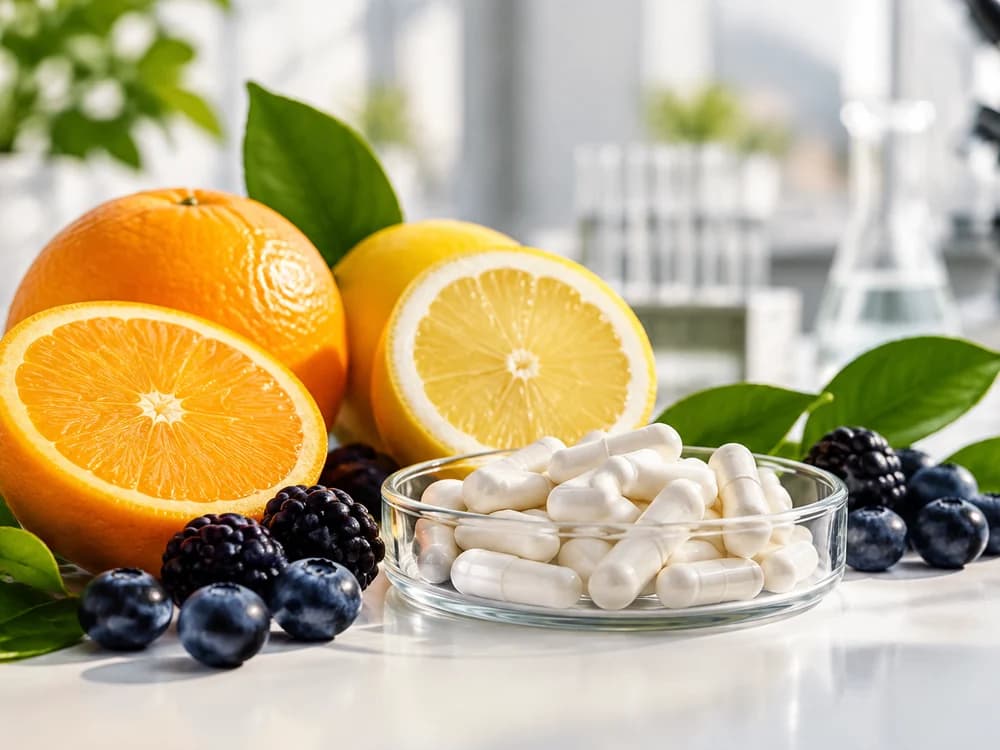
Immune Support Tablet Manufacturer for Retail and Private Label
EUPHM produces immune support tablets in a GMP-certified facility in Guangdong, China. We handle formulation, compression, coating and packing for brands, founders and procurement teams sourcing a reliable supplement partner.
Overview
Immune support tablets are one of the most requested dosage forms in the supplement market. Buyers want a partner who can handle vitamin C, zinc, elderberry, echinacea and mushroom extracts without compromising tablet hardness or shelf life. This page covers our tablet manufacturing capabilities, ingredient options and compliance framework. For broader tablet production details, see our /tablet-manufacturer page. We work with MOQs from 1,000 units per SKU, with lower thresholds for pilot runs.
Tablet Compression Capacity and Equipment
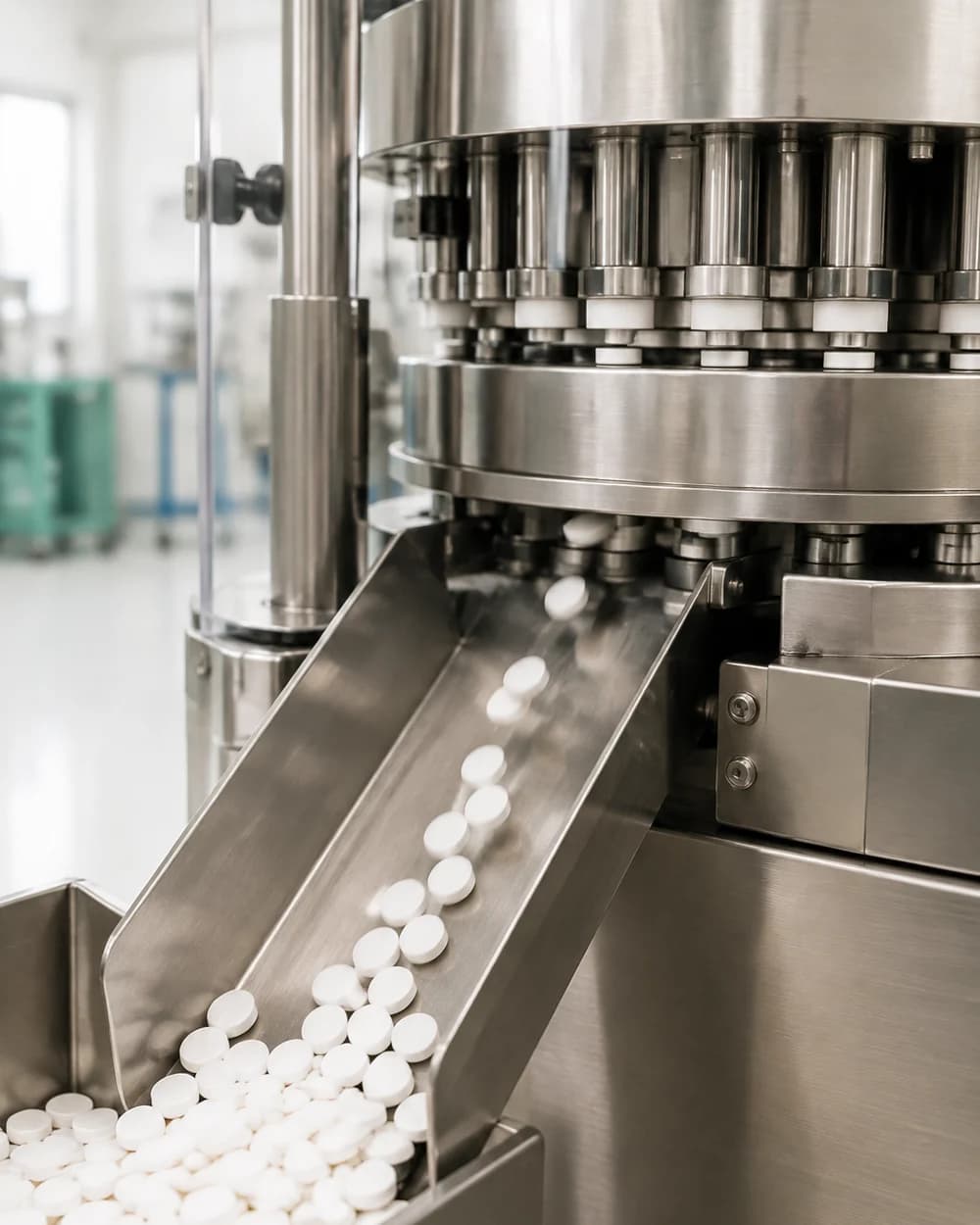
Our plant runs rotary tablet presses with a capacity of 200,000 to 500,000 tablets per shift, depending on tablet size and hardness. For immune support tablets, we typically work with 500 mg to 1,000 mg compression weights. Tooling is available for round, oval, oblong and caplet shapes. We can apply film coating for moisture-sensitive actives such as elderberry or vitamin C, and we offer aqueous coating for cleaner labels. Tablet hardness is controlled between 8 and 15 kp to balance swallowability and mechanical strength during packing and transport.
We handle both direct compression and wet granulation. Direct compression suits vitamin C, zinc and many botanical extracts when flow and compressibility are adequate. Wet granulation is used for higher-dose extracts or when uniform colour and content are critical. Our team runs in-process checks every 30 minutes for weight variation, thickness, hardness and friability. This keeps rejection rates low and protects your production timeline. For effervescent or chewable immune tablets, we have separate lines to avoid cross-contamination.
Immune Ingredient Formulation and Dosage
Immune support tablets commonly combine vitamin C (250–1,000 mg), zinc (5–30 mg), vitamin D3 (400–4,000 IU), elderberry extract (100–500 mg), echinacea (100–400 mg), and beta-glucans (50–250 mg). We also work with mushroom extracts such as reishi, shiitake and maitake at 100–500 mg. For a 500 mg tablet, you can fit two to three low-dose actives with excipients. Higher doses may require a 1,000 mg or 1,200 mg tablet, or a two-tablet serving. We can adjust the formula to meet your label claims and target market regulations.
We source raw materials from approved suppliers with full traceability. Each incoming lot is tested for identity, potency and heavy metals before release to production. Our formulation team can help you choose between synthetic and natural vitamin C, chelated versus oxide zinc, and standardised versus whole-herb extracts. We also offer vegan options where the ingredient supply allows. If you have an existing formula, we can match it or improve tabletability without changing the active profile.
Quality Control and Regulatory Support
Every immune support tablet batch is tested for appearance, weight variation, hardness, disintegration and microbial limits. We retain samples for 12 months and provide certificates of analysis for each shipment. Our facility is GMP-certified, ISO 22000 and HACCP compliant. We are FDA-registered and can support halal and vegan certification depending on your ingredient list. Documentation includes batch records, raw material COAs and finished product specifications. This helps you clear customs and satisfy retailer audits in the US, EU, UK and Middle East.
We do not claim FDA approval. Our role is to manufacture to your specification and provide the paperwork your market requires. For EU clients, we can align with EFSA health claim rules by avoiding unauthorised claims on the label. For US clients, we follow FDA labelling guidance for dietary supplements. For Middle East clients, we can provide halal certificates from recognised bodies. If you need stability testing, we can run accelerated and real-time studies to support a 24-month shelf life.
Quality Control and Batch Documentation
Every batch of immune support tablets is tested at three stages: incoming raw materials, in-process compression, and finished goods. Identity testing by FTIR or HPLC confirms vitamin C, zinc, elderberry, echinacea, or mushroom extracts before release to production. Potency assays verify label claim within 90–110% for vitamins and minerals, while microbial testing covers total aerobic count, yeast and mould, E. coli, and Salmonella. Heavy metals (lead, arsenic, cadmium, mercury) are screened against USP <232> limits, and disintegration testing follows USP <701> with a 30-minute maximum for immediate-release tablets.
In-process checks occur at start-up, every 30 minutes during compression, and at batch end. Weight variation is monitored on a sample of 20 tablets with a ±5% tolerance for tablets under 300 mg and ±4% above. Hardness and thickness are recorded against the approved specification, and friability is tested to USP <1216> with a maximum 1% loss. Any deviation triggers a hold and investigation before the batch proceeds. These records form part of the batch manufacturing record (BMR) and batch packaging record (BPR).
A certificate of analysis (COA) is issued for each batch and includes the product name, batch number, manufacturing date, expiry date, tests performed, specification limits, results, and the analyst and QA sign-off. Retention samples of at least two finished packs per batch are stored under labelled conditions for one year past expiry. Stability testing follows ICH Q1A(R2) at 25°C/60% RH and 40°C/75% RH, with 0, 3, 6, 12, 18, and 24-month pull points for long-term and 0, 3, and 6 months for accelerated. Ongoing stability is conducted annually on one batch per SKU.
Packaging, Labelling and Retail Readiness
Immune support tablets can be packed in HDPE bottles with induction seals and child-resistant closures, blister packs using PVC/PVDC or alu-alu for moisture-sensitive formulas, or stick packs and sachets for single-dose formats. Bottle sizes range from 30 cc to 500 cc, with 60, 90, 120, and 180 count fills being the most common for immune SKUs. Blister cavities are available in 10, 12, or 15 tablets per card, with cartons printed to your artwork. We can apply desiccant canisters or silica gel sachets where the formula requires low moisture transmission.
Labels for the US market must include the statement of identity, net quantity of contents, supplement facts panel, ingredient list, allergen declarations, and the manufacturer or distributor address. For EU retail, nutrition and health claims must comply with Regulation (EC) No 1924/2006, and the label requires the food business operator address and a lot mark. Lot and expiry coding is applied by inkjet or laser on the bottle, blister, and carton, with formats matching your market requirements. We do not print claims without documented substantiation from your side.
Cartons are specified with corrugated board grades suitable for export, typically single-wall B-flute for retail shippers and double-wall BC-flute for bulk. Pallet configurations are built to your retailer's requirements, with standard 1200 x 1000 mm or 1200 x 800 mm pallets, stretch-wrapped and labelled with SSCC if needed. For Amazon FBA, we can apply FNSKU labels, poly-bag units, and prep according to the FBA manual, including suffocation warning labels where applicable. Retail compliance checks cover barcode verification (EAN-13 or UPC-A) and carton marking before dispatch.
MOQ, Lead Times and Delivery
Sampling for immune support tablets starts with a 7–10 working day turnaround after formula and artwork approval. The sample includes a draft COA and a packaging mock-up where requested. Once the sample is approved in writing, mass production runs 20–35 working days depending on tablet count, packaging format, and whether custom tooling is required. Pilot runs below the standard MOQ of 1,000 units per SKU are available on request, subject to a separate setup fee and a minimum batch size of 1,000 units.
Shipping is arranged by air or sea depending on volume and urgency. Air freight typically moves 100–500 kg in 5–10 days door to door, while sea freight is cost-effective above 500 kg with 25–40 days transit to European or US ports. We quote EXW, FOB Shenzhen or Hong Kong, and DDP where the destination allows. DDP includes customs clearance and duties but requires accurate HS codes and importer of record details from your side. We do not under-declare values or split shipments to avoid duties.
Documentation provided with each shipment includes the commercial invoice, packing list, bill of lading or airway bill, certificate of analysis, material safety data sheet (MSDS) for the finished product, and a free-sale certificate where required by your market. Phytosanitary certificates are issued only where the product contains botanical ingredients that fall under plant health rules, and we confirm this at order stage. Certificates of origin can be arranged for preferential tariff treatment. All documents are checked against the order before dispatch, and copies are sent to you for approval.
Formats and Packaging Options
Standard compressed tablet
Round or oval, 250–1,000 mg. Suitable for vitamin C, zinc and botanical extracts. Uncoated or film-coated.
Film-coated tablet
Aqueous or solvent coating for moisture protection and easier swallowing. Ideal for elderberry and high-dose vitamin C.
Chewable tablet
Natural sweeteners and flavours. 500–1,500 mg. Popular for zinc and vitamin C in family ranges.
Effervescent tablet
Separate line to avoid cross-contamination. 1,000–5,000 mg. Requires specific packaging and humidity control.
From Enquiry to Delivery
- 01
Send your brief
Share your formula, target dose, tablet size and market. We review feasibility and send a quote within 2 working days.
- 02
Sample development
We produce samples in 7–10 working days. You receive tablets, a COA and a packaging mock-up for approval.
- 03
Quotation and PO
After sample approval, we confirm pricing, MOQ and lead time. A 30–50% deposit starts production.
- 04
Raw material sourcing
We order and test all actives and excipients. Release to production takes 5–10 working days.
- 05
Production and QC
Compression, coating and packing run over 20–35 working days. In-process checks every 30 minutes.
- 06
Packing and shipping
Bottles, blisters or bulk. We handle export documents and ship by air or sea from Shenzhen or Hong Kong.
Why EUPHM
Flexible moqs
Start at 1,000 units per SKU. Pilot runs available at lower volumes to test the market before scaling.
Full documentation
COA, batch records, stability data and certification support for US, EU, UK and Middle East compliance.
Ingredient expertise
We have compressed vitamin C, zinc, elderberry, echinacea and mushroom extracts for over 10 years.
Questions buyers ask.
What is the MOQ for immune support tablets?+
Our standard MOQ is 1,000 units per SKU for retail bottling. For pilot runs, we can go lower depending on tablet size and packaging. A 500 mg tablet in a 60-count bottle typically starts at 1,000 bottles. Higher doses or custom shapes may require 5,000 units.
Can you match my existing immune tablet formula?+
Yes. Send your formula or a competitor sample. We reverse-engineer the tablet profile and match hardness, disintegration and taste where relevant. We can also suggest cost reductions or cleaner label alternatives without changing the active ingredients. Sample lead time is 7–10 working days.
Which certifications do you hold for immune tablets?+
The facility is GMP-certified, ISO 22000 and HACCP compliant. We are FDA-registered. For halal or vegan claims, we work with certified ingredient suppliers and can arrange third-party certification for your finished product. Certification depends on the specific ingredient list and target market.
How long does mass production take?+
After sample approval and deposit, mass production runs 20–35 working days. This includes raw material testing, compression, coating, packing and QC release. Delays can occur if actives are out of stock or if you request changes to the approved sample. We provide weekly production updates.
Do you provide stability testing for immune tablets?+
Yes. We can run accelerated stability at 40°C/75% RH for 6 months and real-time studies at 25°C/60% RH for 24 months. This supports shelf-life claims and retailer requirements. Stability testing adds 4–8 weeks to the timeline and is quoted separately.
Can you provide a certificate of analysis before shipment?+
Yes. A draft COA is issued after finished goods testing and before shipment, covering identity, potency, microbials, heavy metals, and disintegration. The final signed COA is released with the shipping documents. If you need third-party verification, we can send samples to an accredited external laboratory at your cost, with results typically available in 5–7 working days.
What packaging formats do you recommend for immune tablets?+
For retail, HDPE bottles with induction seals are the most common for 60–180 count immune SKUs. Blister packs suit moisture-sensitive formulas and smaller daily-dose formats. Stick packs and sachets work for single-serve or travel formats. We confirm the format against your stability data and retailer requirements before finalising the packaging specification.
Which Incoterms do you support and what documents are included?+
We quote EXW, FOB Shenzhen or Hong Kong, and DDP where destination rules allow. Standard documents include commercial invoice, packing list, bill of lading or airway bill, COA, MSDS, and free-sale certificate where required. Certificates of origin and phytosanitary certificates are arranged on request. DDP requires accurate HS codes and importer of record details from you before booking.
Have a product in mind?
Send us the brief and we will come back with a formulation direction, indicative price and a realistic lead time — usually within one working day.