Multi-Layer Tablet Manufacturer for Global Brands
EUPHM produces bi-layer and tri-layer tablets at 1,000 unit MOQ per SKU. Pilot runs are available. Sample lead time is 7–10 working days. Mass production runs 20–35 working days from approved formula.
Overview
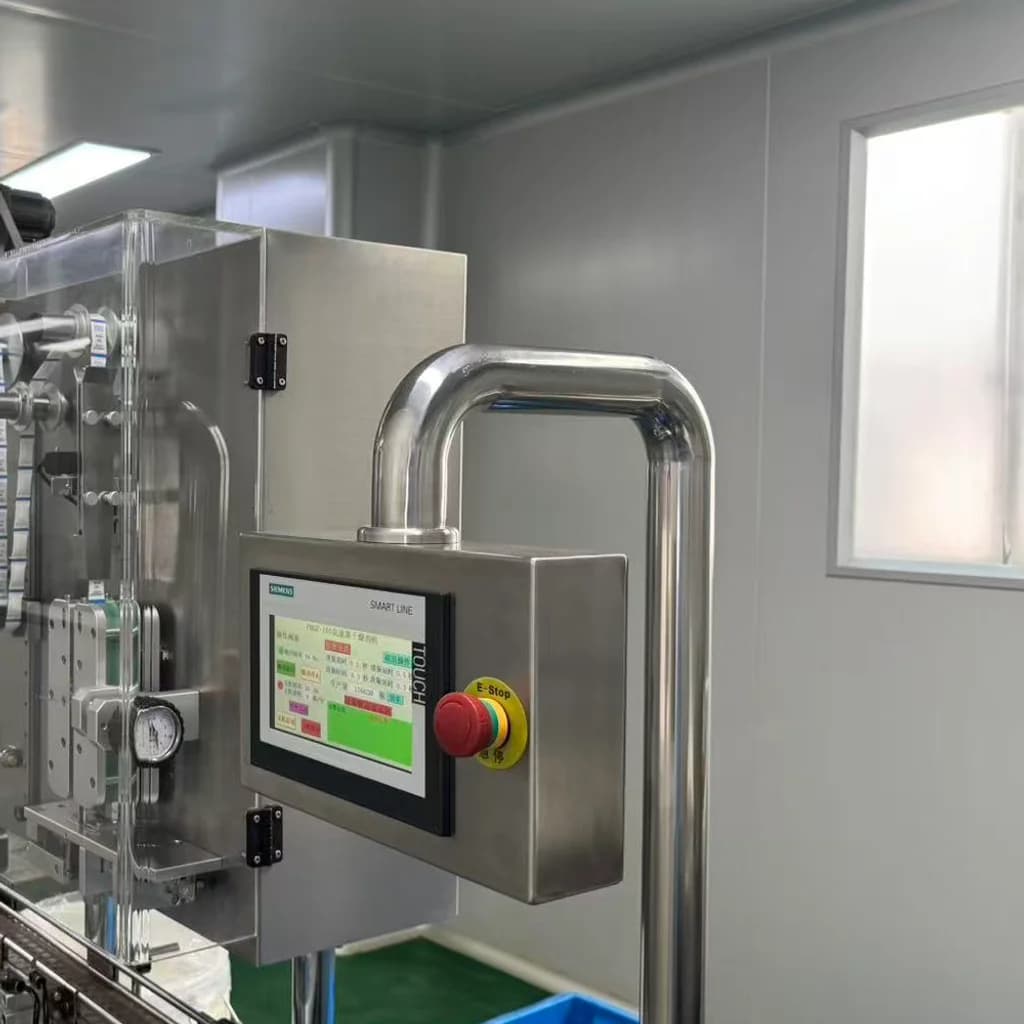
Multi-layer tablets combine two or more formulations into one dosage form. They separate incompatible actives, control release profiles, or deliver a sequence of ingredients in a single swallow. This page covers our capability for brands sourcing a multi-layer tablet manufacturer. For single-layer compression, see our /tablet-manufacturer overview. Our plant in Guangdong runs rotary tablet presses with independent feed systems for each layer, plus in-line weight and hardness checks.
| MOQ | 1,000 units per SKU; lower for pilot runs |
|---|---|
| Sample lead time | 7–10 working days |
| Mass production | 20–35 working days after formula approval |
| Tablet formats | Bi-layer and tri-layer; round, oval, oblong, custom |
| Certifications | GMP, ISO 9001, ISO 22000, HACCP, NSF/ANSI 455-2, halal, FDA-registered |
| Line capacity | Up to 1.2 million tablets per shift across two compression suites |
Layer Compression Capability
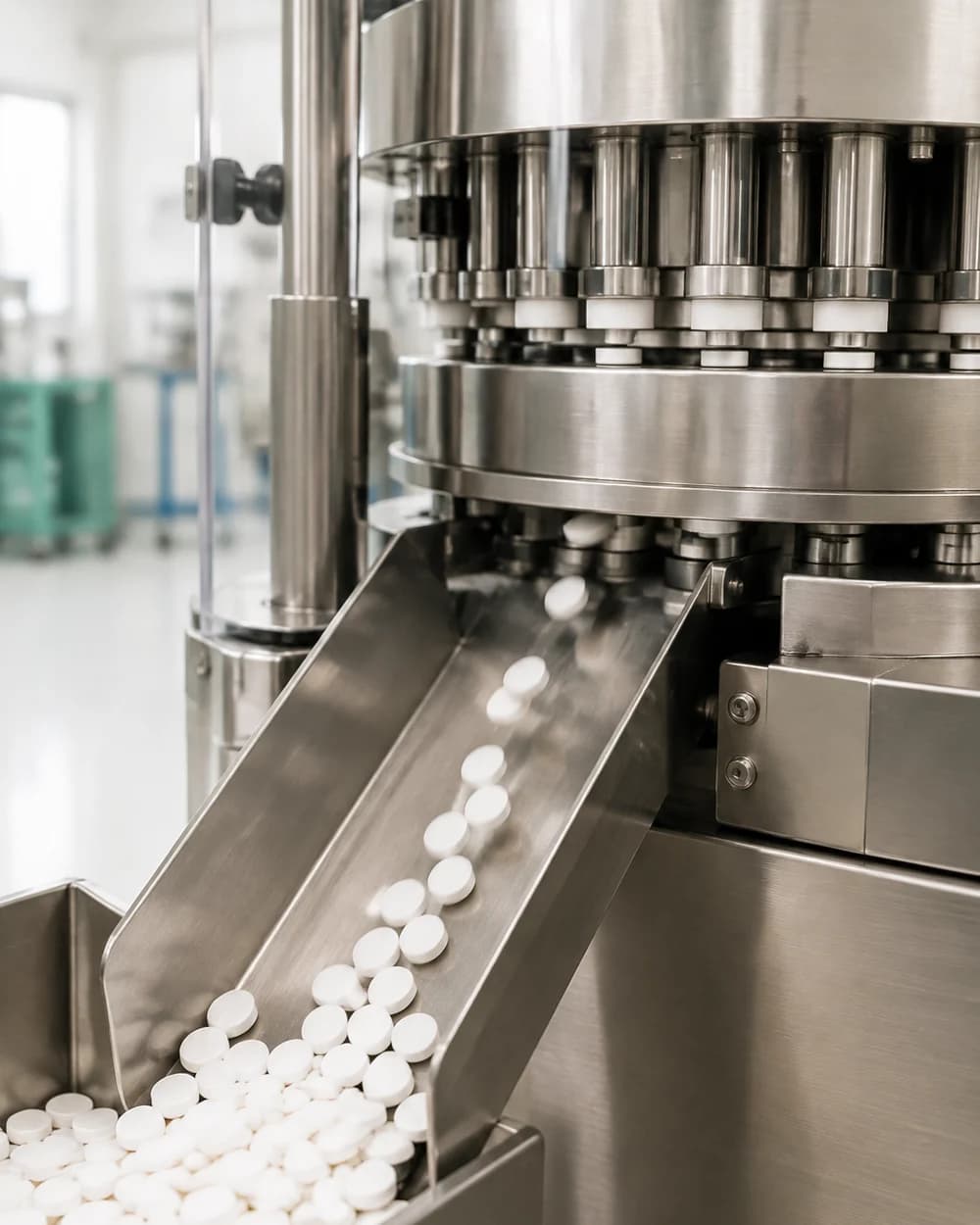
Our rotary presses run two or three independent feed hoppers, each delivering a separate granulation into the die. The first layer is pre-compressed, the second and third are added and compressed again, then the final tablet is ejected. This avoids cross-contamination between layers and holds layer weight to within ±5% of target. We run bi-layer tablets from 6 mm to 22 mm in diameter and tri-layer from 8 mm to 20 mm. Core weight and total weight are checked every 15 minutes during the run.
Tooling is changeable, so the same line handles round, oval, oblong and custom shapes. We can also produce multi-layer tablets with a functional coating after compression. If your formula has one heat-sensitive or moisture-sensitive ingredient, we can place it in a separate layer to reduce degradation during storage. Production capacity is 1.2 million tablets per shift across two suites, which suits both launch volumes and repeat orders.
Formulation and Ingredient Separation
Multi-layer tablets are useful when two actives cannot sit in the same granulation. Examples include a mineral and a vitamin with opposing pH stability, or a probiotic blend and a herbal extract. We test each layer separately for flow, compressibility and moisture before compression. If one layer needs a sustained-release matrix and the other needs immediate release, we adjust the binder and disintegrant system per layer rather than compromising the whole tablet.
For botanicals, we work with standardised extracts and can include 50–800 mg per layer. For vitamins and minerals, common layer loads are 10–500 mg. We also produce multi-layer tablets with a placebo layer for blinding in clinical or sensory trials. Every formula is reviewed for compatibility before we quote. If a two-layer design is not technically feasible, we will say so and propose a single-layer or capsule alternative.
Quality, Compliance and Shipping
EUPHM operates a GMP-certified facility with ISO 22000 and HACCP. The site is FDA-registered. halal and vegan certifications are available depending on the ingredient list and target market. We test each batch for weight variation, hardness, friability, disintegration and micro counts. Certificates of analysis are issued per batch. For the EU, we can provide documentation to support health claims only where authorised; we do not make drug claims.
Retail bottling runs from 30 to 120 count per bottle. Bulk tablets are packed in double polyethylene bags inside fibre drums. Lead time for mass production is 20–35 working days after formula and artwork approval. We ship from Shenzhen and Hong Kong ports. Air freight is available for pilot runs. We handle documentation for the US, EU, UK and Middle East, including halal certificates where required.
Quality Control and Batch Documentation
Every multi-layer tablet batch is tested against a written specification before release. Incoming raw materials are sampled and checked for identity by FTIR or HPLC, potency by assay, microbial limits (total aerobic count, yeast and mould, E. coli and Salmonella), heavy metals (lead, cadmium, arsenic, mercury by ICP-MS), and where relevant pesticide residues. In-process checks run at defined intervals during compression: layer weight, total weight, thickness, hardness, and friability, with results recorded against the batch record. Finished tablets are tested for potency, uniformity of content, disintegration, and dissolution where a release profile is claimed.
A certificate of analysis (COA) accompanies each batch and states the product name, lot number, manufacture and expiry dates, specification limits, test methods, and measured results with pass or fail status. Where a customer requires it, the COA is signed by the quality manager and linked to the retained sample. Retention samples from every batch are stored under controlled conditions for the shelf life plus twelve months, so any later query can be checked against the original material. Stability testing follows a bracketed protocol: typically 0, 3, 6, 12, 18 and 24 months at 25°C/60% RH, with accelerated conditions at 40°C/75% RH for six months, using the same blister or bottle format supplied to the customer.
For multi-layer tablets the additional risk is layer adhesion and moisture migration between layers. We include a layer bond check by visual and manual inspection after defined storage intervals, and record any separation or cracking against acceptance criteria. Disintegration testing is performed on the whole tablet and, where relevant, observed layer by layer. Microbial testing is done on the finished product rather than only on raw materials, because compression and packaging can introduce contamination. If a batch fails any specification, it is placed on hold, investigated, and either reworked under a documented protocol or rejected; the customer is notified before any disposition decision.
Packaging, Labelling and Retail Readiness
Multi-layer tablets can be packed in HDPE bottles with induction seals and child-resistant or standard caps, in PVC/PVDC or aluminium blister packs, in stick packs, or in sachets for single-dose formats. Bottle sizes typically run from 30 to 180 counts, with desiccant where the formulation is moisture-sensitive. Blister tooling is custom-made for the tablet dimensions, so a bi-layer oval requires its own cavity; allow two to three weeks for tooling before the first packaging run. Stick and sachet formats suit powder or smaller tablets and are filled on separate lines, so they are quoted as a distinct packaging option rather than a variation of the bottle line.
For the US market, labels must carry the FDA dietary-supplement panel elements: a statement of identity, net quantity of contents, supplement facts panel with serving size and percent daily value where established, ingredient list in descending order of predominance, and the name and place of business of the manufacturer, packer or distributor. Allergen declarations, if applicable, and the required 'Keep out of reach of children' and storage statements are checked at artwork approval. Lot and expiry coding is applied by inkjet or laser on the bottle, blister or carton, with the format agreed in writing before production; we do not change coding formats without a signed approval.
Cartons are specified with dimensions, board grade, and print colours, and pallets are built to a stated pattern with stretch wrap and corner boards. For Amazon sellers we can apply FNSKU labels and poly-bag the units to the marketplace's requirement, and we can print carton markings to the retail compliance standard the customer supplies. We do not hold a retail account ourselves, so the customer remains the seller of record and is responsible for the accuracy of claims on the label. Artwork proofs are sent as PDFs for sign-off, and no packaging run starts until the approved proof is on file.
MOQ, Lead Times and Delivery from a Multi-Layer Tablet Manufacturer
Sampling for a multi-layer tablet starts with formula and layer design, then a pilot compression run. Sample lead time is typically 7 to 10 working days from receipt of the signed formula brief and any customer-supplied actives, assuming standard excipients are in stock. If a new blister tool or a custom tablet shape is required, add two to three weeks. Samples are sent with a preliminary COA and a packaging mock-up where requested, and the customer is asked to confirm hardness, disintegration and appearance before mass production is scheduled.
Mass production runs 20 to 35 working days after formula approval, depending on layer count, packaging format and whether the actives are customer-supplied or sourced by us. A tri-layer tablet with three release profiles takes longer than a simple bi-layer because each layer is compressed and checked in sequence. The production window is confirmed in writing once the purchase order and deposit are received. We do not quote a fixed date before the formula is locked, because changes to the formulation reset the process validation steps.
Shipments are made by air or sea depending on volume and urgency. Air freight is typically used for samples and for orders under about 200 kg, with transit of 5 to 10 days to major hubs; sea freight is used for pallet quantities, with transit of 25 to 40 days to Europe and 20 to 35 days to the US west coast. We quote EXW, FOB and DDP terms; DDP is available for select destinations where our forwarder can clear customs. Documents provided with each shipment include the COA, MSDS, free-sale certificate, and, where the destination requires it, a phytosanitary certificate or certificate of origin. The customer is responsible for import licensing and for confirming that the product is permitted in the destination market.
Packaging and Format Choices
Bi-layer tablets
Two separate granulations compressed into one tablet. Common for incompatible actives or immediate plus sustained release in a single dose.
Tri-layer tablets
Three independent layers. Used when a middle layer separates two reactive outer layers or when three release profiles are needed.
Coated multi-layer
Functional coating applied after compression. Options include film, enteric, and colour coating for brand differentiation or moisture protection.
Placebo multi-layer
One or more layers contain no active. Used for clinical trials, sensory panels, or blinded consumer studies.
Production in Six Steps
- 01
Send your formula
Share the target actives, layer split, and market. We review feasibility and flag any compatibility risks within 2 working days.
- 02
Quotation and MOQ
You receive a quote with MOQ, unit price, sample lead time, and mass production lead time. MOQ is 1,000 units per SKU.
- 03
Sample production
We produce a pilot batch in 7–10 working days. You receive physical samples with a preliminary specification sheet.
- 04
Sample approval
You test the samples. We adjust the formula or compression parameters if needed. No charge for one round of adjustments.
- 05
Mass production
After written approval, we schedule the run. Production takes 20–35 working days, depending on batch size and coating.
- 06
QC and shipping
Each batch is tested and released with a certificate of analysis. We pack to your specification and ship from Shenzhen or Hong Kong.
Why EUPHM
Low MOQ for trials
Start at 1,000 units per SKU. Pilot runs are available below that. You can test the market before committing to large volumes.
Layer weight control
Each layer is checked to ±5% of target. In-line hardness and thickness checks run every 15 minutes during production.
Multi-market compliance
GMP, ISO 9001, ISO 22000, HACCP, NSF/ANSI 455-2 and halal certification; FDA facility registration for US-bound shipments.
Questions buyers ask.
What is the MOQ for multi-layer tablets?+
MOQ is 1,000 units per SKU for retail bottling. Lower volumes are possible for pilot runs. The exact MOQ depends on tablet size, layer count, and whether a custom coating is required. We confirm MOQ in the quotation.
How long does sampling take?+
Sample lead time is 7–10 working days after we receive your formula and any reference samples. This includes compression, basic QC, and shipping of physical samples to you. One round of formula adjustment is included at no extra charge.
Can you make a tri-layer tablet with three different release profiles?+
Yes. We run tri-layer presses with independent feed systems. Each layer can have its own binder and disintegrant system. Common profiles are immediate, sustained, and delayed release. We test each layer separately before compression.
Which certifications apply to multi-layer tablets?+
The facility holds GMP, ISO 22000, and HACCP. halal and vegan certifications are available depending on the ingredient list and target market. We provide certificates for the specific batch on request. The site is FDA-registered.
What is the mass production lead time?+
Mass production takes 20–35 working days after formula and artwork approval. This covers granulation, compression, coating if required, QC testing, and packing. Shipping time from Shenzhen or Hong Kong is additional and depends on destination.
Can you compress a multi-layer tablet with a customer-supplied active ingredient?+
Yes, provided the material arrives with an identity and potency COA and meets our incoming specification. We sample and test customer-supplied actives before use, and we quarantine any material that fails. If the active is moisture-sensitive or has poor flow, we may need to adjust the layer formulation or add a granulation step, which affects the timeline. We do not accept customer-supplied material without a documented assay and microbial result.
How do you prevent cross-contamination between layers during compression?+
Each layer is fed from an independent hopper and feed frame, and the press is cleaned between products under a documented line clearance procedure. Dust extraction is fitted at the compression zone, and the area is pressure-controlled. For potent or sensitising actives we use dedicated tooling and a validated cleaning regime with swab checks. Batch records record the line clearance signature before the next product starts.
What is the shelf life of a multi-layer tablet and how is it assigned?+
Shelf life is assigned from stability data on the finished product in its marketed pack, not from the raw materials. A typical assignment is 24 months at 25°C/60% RH, supported by accelerated and real-time data. If the customer needs a longer date, extended stability studies are run and the date is only extended when the data support it. The expiry date printed on the pack reflects the approved shelf life at the time of manufacture.
Other versions built in this dosage form.
- Tablet Manufacturer
- Film-Coated Tablet Manufacturer
- Chewable Tablet Manufacturer
- Effervescent Tablet Manufacturer
- Sustained-Release Tablet Manufacturer
- Bi-Layer Tablet Manufacturer
- Sugar-Coated Tablet Manufacturer
- Mini Tablet Manufacturer
- Vitamin C Tablet Manufacturer
- Vitamin D3 Tablet Manufacturer
- Vitamin B12 Tablet Manufacturer
- Vitamin B Complex Tablet Manufacturer
- Multivitamin Tablet Manufacturer
- Folic Acid Tablet Manufacturer
- Probiotics Tablet Manufacturer
- Collagen Tablet Manufacturer
- Biotin Tablet Manufacturer
- Melatonin Tablet Manufacturer
- Magnesium Tablet Manufacturer
- Zinc Tablet Manufacturer
- Iron Tablet Manufacturer
- Calcium Tablet Manufacturer
- Selenium Tablet Manufacturer
- Chromium Tablet Manufacturer
- NMN Tablet Manufacturer
- Glucosamine Tablet Manufacturer
- Hair Skin & Nails Tablet Manufacturer
- Sleep Support Tablet Manufacturer
- Immune Support Tablet Manufacturer
- Menopause Tablet Manufacturer
- Joint Health Tablet Manufacturer
Have a product in mind?
Send us the brief and we will come back with a formulation direction, indicative price and a realistic lead time — usually within one working day.