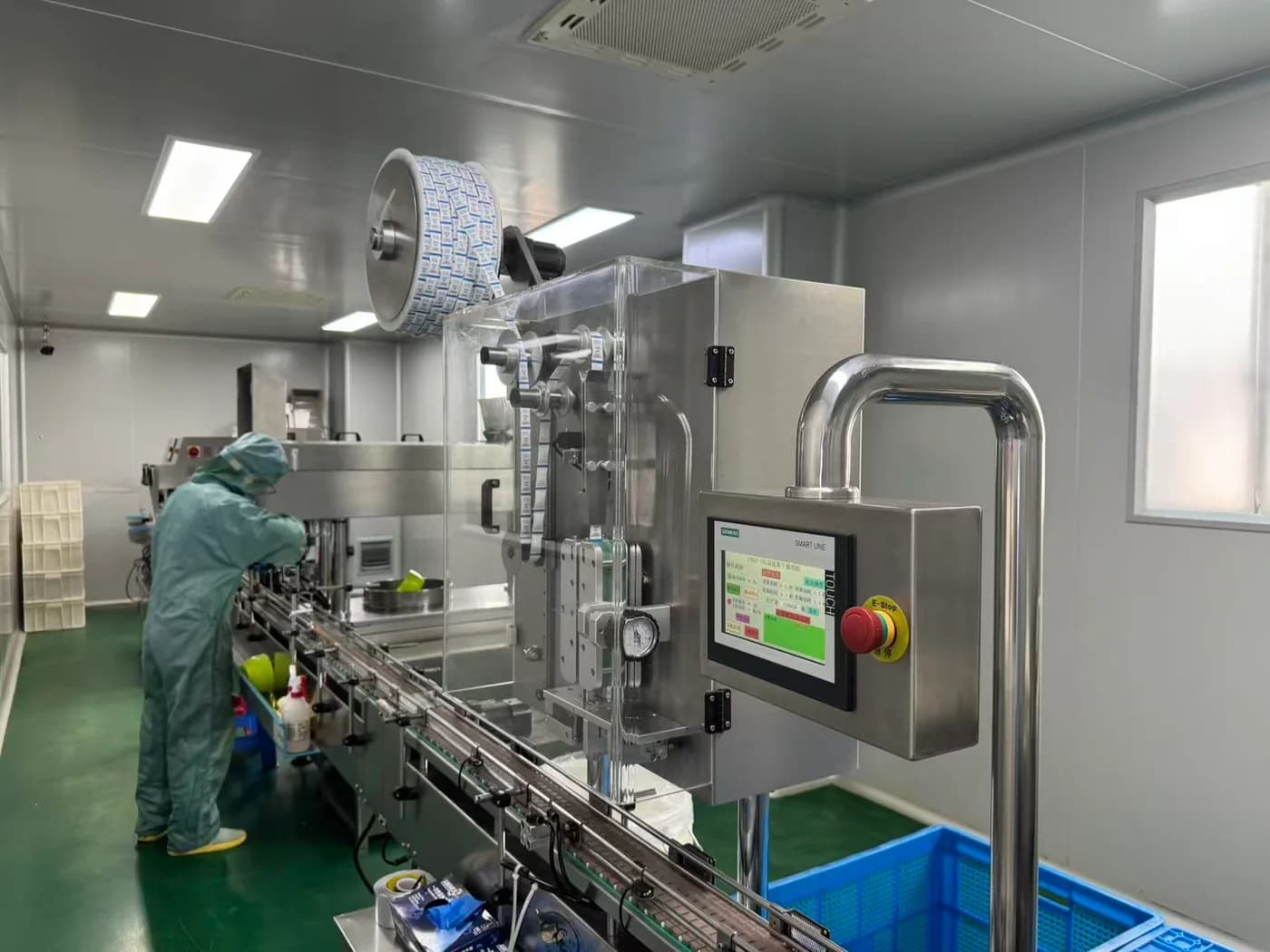
Best Supplement Manufacturers: A Buyer's Comparison Guide
Finding the best supplement manufacturers means comparing hard numbers: MOQ, sample lead time, mass production windows and certifications. This guide sets out the benchmarks buyers in the US, EU, UK and Middle East should apply before signing a contract.
Overview
The supplement manufacturing market is crowded and claims are easy to make. A useful comparison looks at verifiable parameters instead: minimum order quantities, sample turnaround, production capacity, certification scope and audit history. This page breaks down those criteria, shows where a GMP-certified contract manufacturer such as EUPHM sits against them, and helps procurement teams shortlist partners without wasting a quarter on unsuitable quotes.
- Minimum order quantity
- 1,000 units per SKU for retail bottling; lower volumes for pilot runs
- Sample lead time
- 7–10 working days
- Mass production lead time
- 20–35 working days after sample approval
- Certifications
- GMP, ISO 9001, ISO 22000, HACCP, NSF/ANSI 455-2, halal, FDA-registered
- Dosage forms
- Capsules, tablets, softgels, powders, gummies and liquids
- Facility status
- FDA-registered facility in Guangdong, China
Production capacity and lead times
Capacity determines whether a manufacturer can hit your launch date. A plant running multiple encapsulation and tableting lines can schedule a 50,000-unit order without pushing other clients aside. Ask for monthly throughput by dosage form, not a single blended figure. For bottling, confirm the fill weights the line handles: 60, 90, 120 and 180 count bottles are standard, while 30-count or 500-count runs may need separate tooling. EUPHM schedules mass production at 20–35 working days after sample sign-off, with sample turnaround at 7–10 working days.
Lead time also depends on packaging. Stock bottles ship faster than custom-moulded PET or glass. If your brand needs a specific closure, desiccant or induction seal, add two to three weeks for tooling and print approval. Ask whether the quoted lead time starts from purchase order or from artwork approval. The difference is often 10 days. For pilot runs below the standard MOQ of 1,000 units, expect a surcharge and a narrower scheduling window.
Formulation and ingredient sourcing
The best manufacturers do not just press tablets. They help you choose a dosage form that fits the active ingredient. Probiotics need low-moisture handling and often a delayed-release capsule. Oils and softgels require nitrogen flushing. Gummies need pectin or gelatin systems that survive tropical shipping. Ask for a formulation brief that lists excipients, overages and analytical markers. If the manufacturer cannot explain why it chose magnesium stearate over stearic acid, or why it uses a 5% overage on a vitamin, the technical depth is thin.
Ingredient sourcing is a compliance issue as much as a cost issue. For or EU organic claims, the manufacturer must hold the relevant certification and keep segregated storage. Halal status depends on both the ingredient and the production line. Ask for certificates of analysis for each raw material lot, and confirm whether the plant tests incoming botanicals for pesticides and heavy metals. A manufacturer that tests every lot in-house will quote a slightly higher price. That premium is usually cheaper than a recall.
Quality systems and audit readiness
Certifications are a starting point, not a finish line. GMP, ISO 22000 and HACCP cover the basics. What matters is how the manufacturer applies them. Ask for the last two audit reports, including any non-conformances and corrective actions. Check whether the quality team reports to operations or directly to senior management. A QA manager who answers to the production director will face pressure to release borderline batches. Look for documented stability testing: 24-month real-time data or 6-month accelerated data for each formula.
For exports to the EU, the UK and the Middle East, documentation matters as much as the product. You need a free sale certificate, a certificate of origin and, for some markets, a halal certificate from a recognised body. Confirm who prepares these documents and who pays for legalisation. A manufacturer that handles export paperwork in-house saves you weeks. Also ask how it manages label compliance for each market: US supplement facts panels differ from EU nutrition declarations, and Middle East labels often require Arabic. Getting this wrong delays customs clearance.
Quality Control and Batch Documentation
Every batch produced at a GMP-certified supplement manufacturer is tested against a written specification before release. Identity testing confirms the correct raw material, typically by HPLC or FTIR. Potency assays verify that each active ingredient falls within 95–105% of label claim. Microbial testing covers total aerobic count, yeast and mould, E. coli and Salmonella. Heavy metals are screened against USP <232> or EU pharmacopoeia limits, and disintegration testing confirms that tablets and capsules break down within the required time for the chosen dosage form.
Testing happens at three points: incoming raw materials, in-process blends and finished goods. A certificate of analysis (COA) accompanies each batch and lists the test parameter, specification, result and method reference. Retention samples from every batch are stored for at least two years beyond expiry under controlled conditions. A stability protocol with accelerated and real-time arms supports the shelf life claimed on the label, and the data is available for review during a customer audit.
Packaging, Labelling and Retail Readiness
Packaging options include HDPE bottles with induction seals, blister packs, stick packs and sachets. Bottle sizes range from 60cc to 500cc, with child-resistant closures available for the US market. Labelling must include the FDA-required dietary supplement facts panel, ingredient list, allergen statement, net quantity, lot code and expiry date. Lot and expiry coding is applied by inkjet or laser at the filling line, and cartons are printed with the same information for traceability.
For Amazon and retail compliance, the manufacturer can apply FNSKU labels, poly-bag the units and pack to the carton specification required by the retailer. Carton dimensions and pallet configurations are agreed before production so that freight costs are calculated accurately. Export cartons are typically double-walled with a minimum burst strength of 200 psi, and pallets are heat-treated to ISPM 15 where wooden pallets are used.
MOQ, Lead Times and Delivery
Sample turnaround is 7–10 working days after receipt of a signed specification and raw materials. Mass production runs 20–35 working days after sample approval, depending on dosage form and packaging complexity. Air freight takes 5–10 days door to door, while sea freight takes 25–40 days depending on the destination port. Incoterms offered are EXW, FOB and DDP, with DDP available for most major markets.
Shipping documents provided include the commercial invoice, packing list, bill of lading or air waybill, certificate of analysis, material safety data sheet (MSDS) and, where required, a free-sale certificate. Phytosanitary certificates are issued for botanical ingredients where the destination country requires them. The manufacturer can also arrange third-party pre-shipment inspection if the buyer's retailer requires it.
Formats and Packaging Options
Full contract manufacturing
Manufacturer handles formulation, sourcing, production, packaging and export documents. Best for brands without a technical team. Expect MOQ 1,000 units and 20–35 working days production.
Private label
Choose from a catalogue of existing formulas and apply your brand. Lower development cost and faster sampling, but less differentiation. MOQ often starts at 1,000 units per SKU.
Pilot or small batch
Runs below standard MOQ for market testing. Higher per-unit cost and limited packaging choices. Sample lead time remains 7–10 working days; production may extend to 30–40 days.
White label with custom packaging
Stock formula combined with bespoke bottle, label and carton. Balances speed and brand identity. Tooling adds 2–3 weeks; MOQ rises to 5,000 units for custom moulds.
How We Work
- 01
Define your specification
Write down dosage form, fill weight, servings per bottle, target certifications and monthly volume. A clear brief gets accurate quotes and reduces back-and-forth.
- 02
Request samples and quotes
Ask three to five manufacturers for a sample and a costed quote. Compare unit price, MOQ, lead time and what is excluded, such as tooling, lab tests or shipping.
- 03
Audit the facility
Request the last GMP or ISO 22000 audit report. If possible, schedule a video walkthrough of the production and warehouse areas. Check storage conditions for temperature-sensitive ingredients.
- 04
Test the sample
Send samples to an independent lab for potency, heavy metals and microbial testing. A manufacturer that resists third-party testing is a red flag, regardless of price.
- 05
Confirm documentation
Agree in writing who prepares certificates of analysis, free sale certificates, halal documents, and customs paperwork. Assign responsibility for label compliance in each market.
- 06
Place a pilot order
Start with a small run before committing to annual volumes. Use the pilot to check communication, packaging quality and on-time delivery. Scale up only after the pilot meets your standard.
Why EUPHM
Predictable lead times
A manufacturer with documented capacity and scheduling gives you a production date you can build a launch calendar around. 20–35 working days is realistic for mass production.
Audit-ready documentation
GMP, ISO 9001, ISO 22000, HACCP, NSF/ANSI 455-2 and halal certification; FDA facility registration for US-bound shipments.
Scalable MOQ
A partner that supports pilot runs and scales to 1,000 units per SKU lets you test the market without overcommitting capital or warehouse space.
Questions buyers ask.
What is the minimum order quantity for supplement manufacturing?+
For retail bottling, MOQ is typically 1,000 units per SKU. Pilot runs can go lower but carry a higher unit cost and limited packaging options. If you need 10,000 units across three SKUs, ask whether the manufacturer counts MOQ per SKU or per purchase order. The difference affects your cash flow and warehouse planning.
How long does supplement production take?+
Sample lead time is usually 7–10 working days. Mass production runs 20–35 working days after sample approval and receipt of packaging materials. Add 2–3 weeks if you need custom tooling or imported ingredients. Always confirm whether the quoted lead time starts from purchase order or from artwork approval.
Which certifications should a supplement manufacturer hold?+
At minimum, GMP, ISO 22000 and HACCP. If you sell organic, halal or vegan products, the manufacturer needs the corresponding certification for the facility and the specific line. Ask for certificate scope, not just the certificate. A halal certificate for one production line does not cover another line that handles gelatin.
Can a Chinese manufacturer export to the US and EU?+
Yes, provided the facility is FDA-registered and can supply the required export documents. For the EU, you need a free sale certificate and compliance with EU labelling rules. For the US, the facility must be FDA-registered and follow 21 CFR Part 111. For the Middle East, halal certification and Arabic labelling are often required.
How do I compare supplement manufacturers objectively?+
Score each manufacturer on six criteria: MOQ, sample lead time, mass production lead time, certification scope, audit history and export documentation support. Ask for the same data from every supplier. A manufacturer that cannot provide a recent audit report or third-party lab results should not make your shortlist, regardless of price.
What documentation is provided with each batch?+
Each batch ships with a certificate of analysis covering identity, potency, microbials, heavy metals and disintegration. A material safety data sheet, free-sale certificate and, for botanicals, a phytosanitary certificate are available on request. Retention samples are kept for two years beyond expiry.
Can you handle Amazon FNSKU labelling and retail-ready packaging?+
Yes. The manufacturer can apply FNSKU labels, poly-bag units and pack to the carton and pallet specification required by Amazon or other retailers. Carton dimensions and pallet configurations are agreed before production so freight costs are accurate.
What are the typical Incoterms and shipping times?+
EXW, FOB and DDP are offered. Air freight takes 5–10 days door to door, sea freight 25–40 days depending on the port. DDP is available for most major markets, and the manufacturer can arrange pre-shipment inspection if required.
Have a product in mind?
Send us the brief and we will come back with a formulation direction, indicative price and a realistic lead time — usually within one working day.