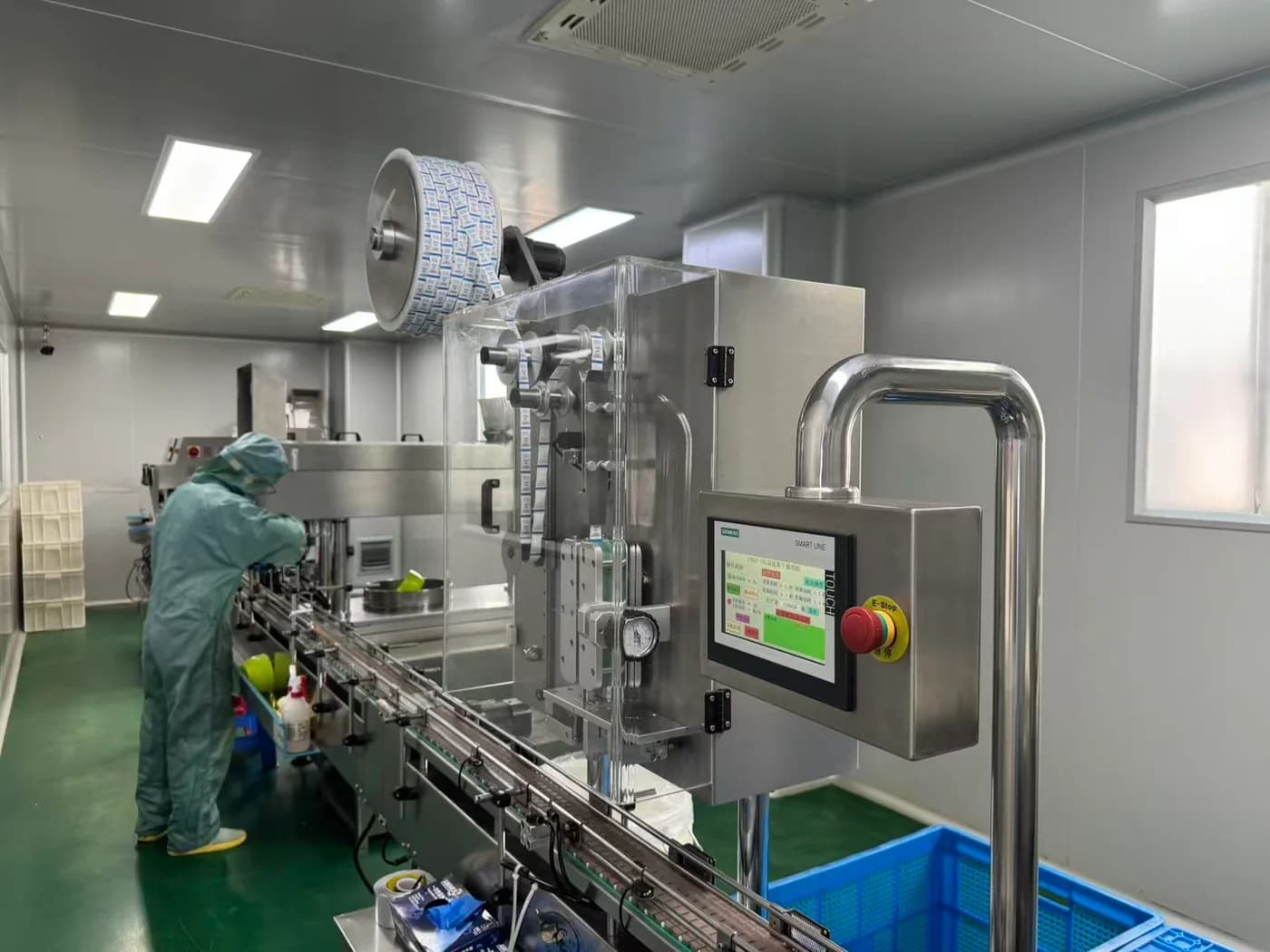
Best Supplement Manufacturers in Sydney: What to Compare
Sydney brands sourcing a contract manufacturer should compare MOQ, sample speed, certification scope and freight into Port Botany. This guide covers the numbers to check before you commit.
Overview
Sydney has a dense contract manufacturing base, but capacity, MOQ and certification vary widely. Most local bottlers quote MOQs of 1,000 units per SKU for retail-ready runs, with pilot batches lower. Sample turnaround typically runs 7-10 working days and mass production 20-35 working days, depending on ingredient lead times and packaging. If you need halal or vegan claims, confirm the certification is held by the manufacturing site, not only by a supplier upstream.
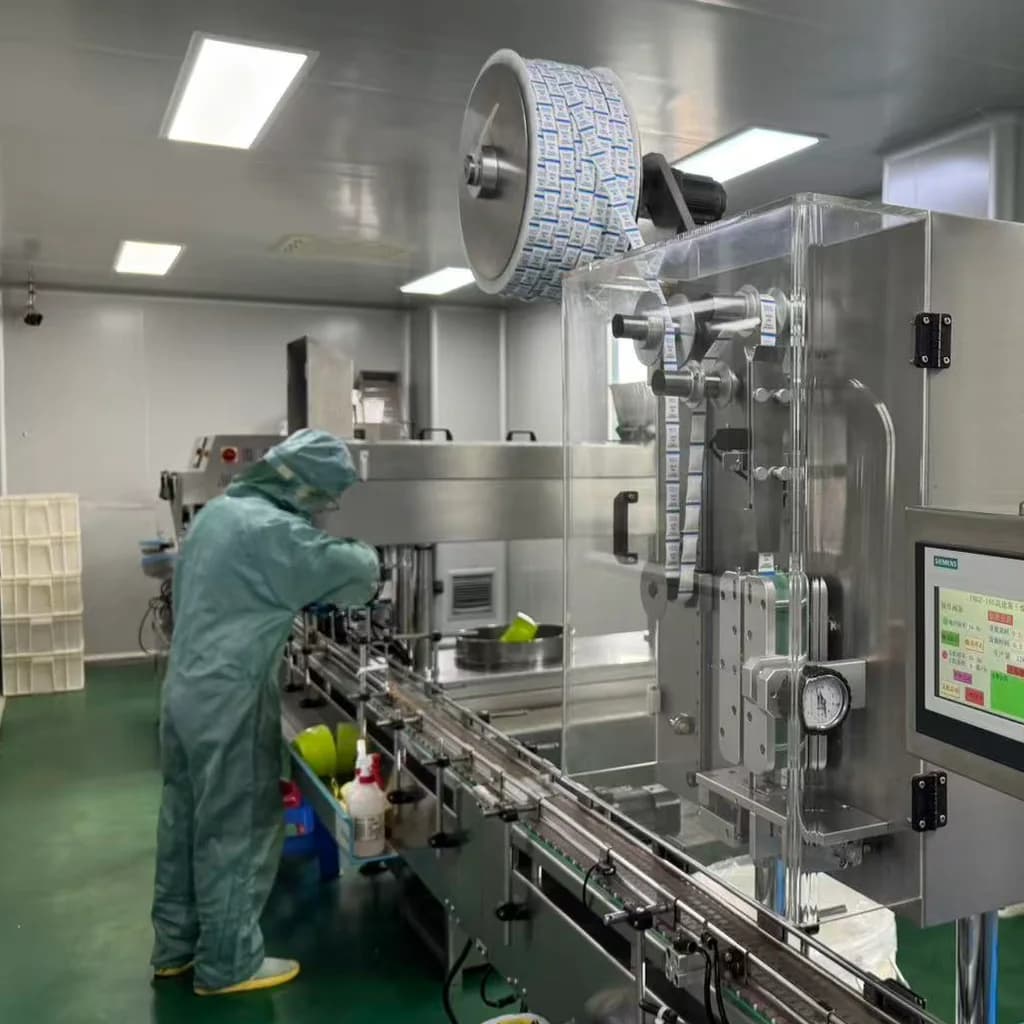
- MOQ (retail bottling)
- 1,000 units per SKU; lower for pilot runs
- Sample lead time
- 7-10 working days
- Mass production
- 20-35 working days after approval
- Certifications
- GMP, ISO 9001, ISO 22000, HACCP, NSF/ANSI 455-2, halal, FDA-registered
- Fill weights
- Capsules 300-1,200 mg; tablets 500-1,500 mg; powders 100 g-2 kg
- Line capacity
- Bottling lines up to 60,000 units per day
Manufacturing capability and capacity
Sydney contract manufacturers typically run capsule filling, tablet compression and powder blending lines, with bottling capacity from 10,000 to 60,000 units per day. Ask for the actual line rate on your dosage form, not a plant-wide figure. Encapsulation speeds of 60,000-120,000 capsules per hour are common on automatic machines, but changeover, cleaning and QC holds reduce effective daily output. For a 5,000-unit run, most sites can complete filling and packing within 5-8 working days once materials are released.
Packaging capability matters as much as blending. Check whether the site handles induction sealing, child-resistant closures, desiccant sachets and label application in-house. Outsourced packing adds 5-10 working days and a second set of freight costs. If you plan to sell on Amazon AU or via pharmacy distributors, confirm the site can apply GS1 barcodes and lot codes that meet retailer requirements. Capacity is rarely the constraint for 1,000 unit runs; material lead time usually is.
Formulation and ingredient sourcing
Australian formulators work with TGA-listed ingredients and permitted excipients. If your formula includes botanicals such as ashwagandha, turmeric or ginseng, ask for standardised extract ratios and marker compound levels, not just raw herb weight. A 10:1 extract at 500 mg is not equivalent to 5,000 mg of dried root. For sports nutrition, check protein raw material sources and whether the site tests for heavy metals and microbial limits on every lot. Ingredient lead times for imported actives can run 4-6 weeks, which sits inside a 20-35 working day production window.
Pilot runs let you test a formula before committing to 1,000 units. A typical pilot covers 500–1,000 units and includes stability checks at 25°C and 40°C for 4-12 weeks, depending on the claim. Vegan capsules, organic-certified powders and halal-certified gelatin all affect cost and lead time. Confirm which certifications apply to your specific SKU, since a site may hold halal certification for some lines and not others. Get the certificate scope in writing before you pay a deposit.
Quality systems and freight into Sydney
A GMP certificate is the baseline. ISO 22000 and HACCP add food-safety coverage, but they do not replace batch testing. Ask for a certificate of analysis per lot covering identity, potency, heavy metals, microbial limits and, where relevant, residual solvents. For TGA-listed medicines, the manufacturer must hold a TGA licence; for listed complementary medicines, the sponsor holds the listing and the site must meet GMP. Check which framework applies to your product before comparing quotes, because the compliance path changes the cost.
Freight into Sydney from an offshore contract manufacturer typically runs 18-30 days by sea to Port Botany, plus 3-5 days for customs clearance and delivery. Air freight cuts transit to 5-8 days at 4-8 times the cost. For a 5,000-unit run at 500 mg per capsule in 60 mL bottles, a single pallet may cover the shipment, making air viable for launch stock. EUPHM ships from Guangdong with GMP, ISO 22000 and HACCP certification, and can quote both sea and air options against your Sydney delivery address.
Quality control and batch documentation at Sydney supplement manufacturers
A contract manufacturer in Sydney should test every batch against a written specification before release. Identity testing by FTIR or HPLC confirms the raw material is what the COA claims. Potency assays verify the active marker compound is within 95-105% of label claim for vitamins and 90-110% for herbal extracts. Microbial testing covers total aerobic count, yeast and mould, E. coli and Salmonella. Heavy metals (lead, arsenic, cadmium, mercury) are tested per ICP-MS. Disintegration testing follows USP <2040> for tablets and capsules, with typical limits of 30 minutes in water at 37°C.
Testing happens at three points: incoming raw materials, in-process checks during blending and encapsulation, and finished product release. A Sydney manufacturer running a 5,000-unit batch will typically pull 10-20 capsules or tablets for composite sampling. Retention samples of each batch are kept for the shelf life plus one year, usually at 25°C/60% RH. Stability protocols follow ICH Q1A(R2) with accelerated conditions at 40°C/75% RH for six months and long-term data at 25°C/60% RH for 24-36 months. Real-time stability data is what supports the expiry date on the label.
The certificate of analysis (COA) issued with each batch should list the product name, batch number, manufacture and expiry dates, tests performed, specification limits, results and the analyst's signature. A COA that only states 'conforms' without numerical results is not adequate for retail or Amazon compliance. Ask for a sample COA before placing a purchase order. For export orders, the COA should reference the pharmacopoeial method used (USP, BP or EP) so the importer's quality team can verify the test is appropriate.
Packaging, Labelling and Retail Readiness
Sydney manufacturers offer bottles (HDPE or PET, 60-250 cc), blisters (PVC/PVDC or alu-alu), stick packs and sachets. Bottle filling lines typically run at 60-120 bottles per minute with induction sealing and induction cap sealing. Blister lines run at 200-400 blisters per minute. For stick packs, fill weights range from 2 g to 30 g. Labelling must include the FDA dietary supplement label elements if the product is sold in the US: statement of identity, net quantity, supplement facts panel, other ingredients, and the address of the manufacturer or distributor. For Australia, the TGA requires an AUST L number for listed complementary medicines.
Lot and expiry coding is applied by inkjet or laser on the bottle base, carton flap and, where required, the blister foil. Carton specifications matter for freight: a standard Sydney export carton holds 12-24 bottles, with a gross weight of 8-12 kg. Pallets are typically 1,200 x 1,000 mm or 1,100 x 1,100 mm, shrink-wrapped and strapped, with 48-60 cartons per pallet. For Amazon FBA, the manufacturer should apply FNSKU labels and poly-bag each unit if required. Retail-ready packaging for Coles or Woolworths needs a barcode (EAN-13) and may require a specific shelf-ready tray.
Before production, approve a printer's proof or digital label proof. Check that the supplement facts panel values match the batch formula and that allergen statements are correct. For products making vegan or halal claims, the label artwork must match the certification held by the manufacturing site. A common delay is artwork that omits the country of origin or the manufacturer's address. Allow 5-7 working days for label proofing and 10-14 days for printed packaging lead time if the manufacturer is sourcing labels locally.
MOQ, lead times and delivery from Sydney supplement manufacturers
Sample turnaround is typically 7-10 working days from approved formula and packaging. This includes blending a small batch, encapsulating or tableting, and sending a courier sample. If custom packaging is required, add 10-14 days for label printing. Production windows run 20-35 working days after sample approval and receipt of deposit. Ingredient lead times drive most delays: a standard vitamin C or multivitamin blend is usually in stock, while specialised herbal extracts or probiotics may add 15-25 days. Plan for 45-60 days from purchase order to ex-factory for a new SKU.
For delivery into Sydney, air freight takes 3-5 days from most Asian manufacturing hubs, with a cost of AUD 6-12 per kg for 100-500 kg shipments. Sea freight takes 18-28 days port-to-port, with LCL costs around AUD 150-300 per cubic metre plus destination charges. FCL is cost-effective above 15 cubic metres. Incoterms matter: EXW means the buyer arranges everything from the factory door; FOB includes export clearance and loading at the origin port; DDP means the manufacturer delivers to the buyer's Sydney warehouse with duties and taxes paid. Confirm which Incoterm is quoted, as the difference can be 15-25% of the product cost.
Documents provided with each shipment should include the commercial invoice, packing list, bill of lading or air waybill, certificate of analysis for each batch, material safety data sheet (MSDS) for concentrated extracts, and a free-sale certificate if requested by the importer. For products containing plant materials, a phytosanitary certificate may be required by the Australian Department of Agriculture, Fisheries and Forestry. Certificates of origin are needed for preferential tariff treatment under ChAFTA. Keep copies of all batch records and COAs for at least five years for TGA and FDA audit purposes.
Configurations to Compare
Full turnkey production
Formulation, raw material sourcing, blending, filling, packing and labelling handled by one site. Highest control, MOQ typically 1,000 units per SKU, lead time 20-35 working days.
Toll blending only
You supply actives, the manufacturer blends and fills. Lower unit cost, but you carry ingredient QC risk and may need to manage two suppliers. MOQ often 1,000–1,000 units.
Private label stock formulas
Choose from existing formulas and apply your label. Fastest route to market, sample in 7-10 working days, but limited differentiation and the site controls the formula.
Pilot and stability batch
Small run of 500–1,000 units for testing, stability and retailer samples. Useful before committing to a 5,000-unit retail order. Adds 4-12 weeks for stability data.
How We Work
- 01
Define your specification
Write down dosage form, fill weight, actives, claims, pack size and target retail channel. This determines which sites can quote and whether TGA or GMP rules apply.
- 02
Request sample and quote
Ask for a sample of a comparable product and a written quote with MOQ, unit cost, tooling and lead time. Sample turnaround should be 7-10 working days.
- 03
Audit certifications
GMP, ISO 9001, ISO 22000, HACCP, NSF/ANSI 455-2 and halal certification; FDA facility registration for US-bound shipments.
- 04
Review batch documentation
Ask to see a sample certificate of analysis and batch record. Confirm heavy metals, microbial and potency testing are done per lot, not per quarter.
- 05
Confirm freight and duties
Get door-to-door freight quotes to Sydney, including customs clearance, GST and any biosecurity inspection. Sea runs 18-30 days, air 5-8 days.
- 06
Place pilot then scale
Run 500–1,000 units, check stability and packaging, then place the 1,000 unit retail order. Mass production takes 20-35 working days after approval.
Why EUPHM
Lower MOQ and unit cost
Offshore GMP sites often quote MOQs of 1,000 units against 5,000-10,000 locally, with unit costs 20-40% lower on the same specification.
Certification coverage
GMP, ISO 9001, ISO 22000, HACCP, NSF/ANSI 455-2 and halal certification; FDA facility registration for US-bound shipments.
Freight flexibility
Sea freight into Port Botany suits 5,000+ unit runs at 18-30 days; air freight suits launch stock at 5-8 days. Both can be quoted door-to-door.
Questions buyers ask.
What is the MOQ for a Sydney supplement manufacturer?+
Most Sydney contract manufacturers quote 1,000 units per SKU for retail-ready bottling. Pilot runs can be lower, often 500–1,000 units. Offshore GMP sites may match or undercut this, but factor in 18-30 days sea freight and customs clearance into your launch timeline.
How long do samples take?+
Sample lead time is typically 7-10 working days for stock formulas. Custom formulations that need new flavour or actives sourcing can take 3-4 weeks. Ask for a sample of a comparable product before you commit to a full batch.
What certifications should I check?+
Start with GMP, ISO 22000 and HACCP. If you make halal or vegan claims, confirm the manufacturing site holds those certifications for your specific line. Request certificates with scope and expiry dates, not just logos on a website.
How long does mass production take?+
Allow 20-35 working days after formula and packaging approval. This covers raw material release, blending, filling, packing and QC. Ingredient lead times for imported actives can add 4-6 weeks, so confirm material availability before you set a launch date.
Is it cheaper to manufacture offshore?+
Unit costs are often 20-40% lower offshore, but add freight, customs, GST and biosecurity inspection. Sea freight runs 18-30 days to Port Botany; air freight 5-8 days at 4-8 times the cost. For 5,000-unit runs, the landed cost can still favour offshore GMP sites.
Can a Sydney manufacturer produce a batch smaller than 1,000 units?+
Many Sydney contract manufacturers will run pilot batches of 500–1,000 units for stability or market testing, but the per-unit cost is typically 30-50% higher than a 5,000-unit run. Setup, cleaning and line clearance costs are fixed regardless of batch size. Ask for a pilot batch quotation that separates material cost from setup cost, and confirm whether the pilot batch can be used for commercial sale or is restricted to testing only.
What is the difference between a COA and a certificate of free sale?+
A certificate of analysis (COA) reports the test results for a specific batch, including identity, potency, microbials and heavy metals. A certificate of free sale (CFS) is a government or chamber-of-commerce document confirming that the product is legally manufactured and sold in the country of origin. Importers in the Middle East and parts of Asia often require a CFS for customs clearance. The COA is batch-specific; the CFS is product-specific and usually valid for one to two years.
How should I handle stability testing if I want a 24-month shelf life?+
To claim a 24-month shelf life, you need real-time stability data at 25°C/60% RH for at least 12 months, plus accelerated data at 40°C/75% RH for six months. Many manufacturers will release the first commercial batches with a shorter interim expiry date (for example 12 months) while real-time data accumulates. Budget for three time points (0, 6 and 12 months) and retain samples from each batch. Stability testing typically costs AUD 1,500-1,000 per SKU.
Have a product in mind?
Send us the brief and we will come back with a formulation direction, indicative price and a realistic lead time — usually within one working day.