Best Softgel Manufacturers for Supplement Brands: A Buyer's Comparison
Softgel capacity, MOQ and certification profiles vary widely between contract manufacturers. This comparison covers the criteria that decide whether a softgel supplier fits your launch timeline, unit economics and target markets.
Overview
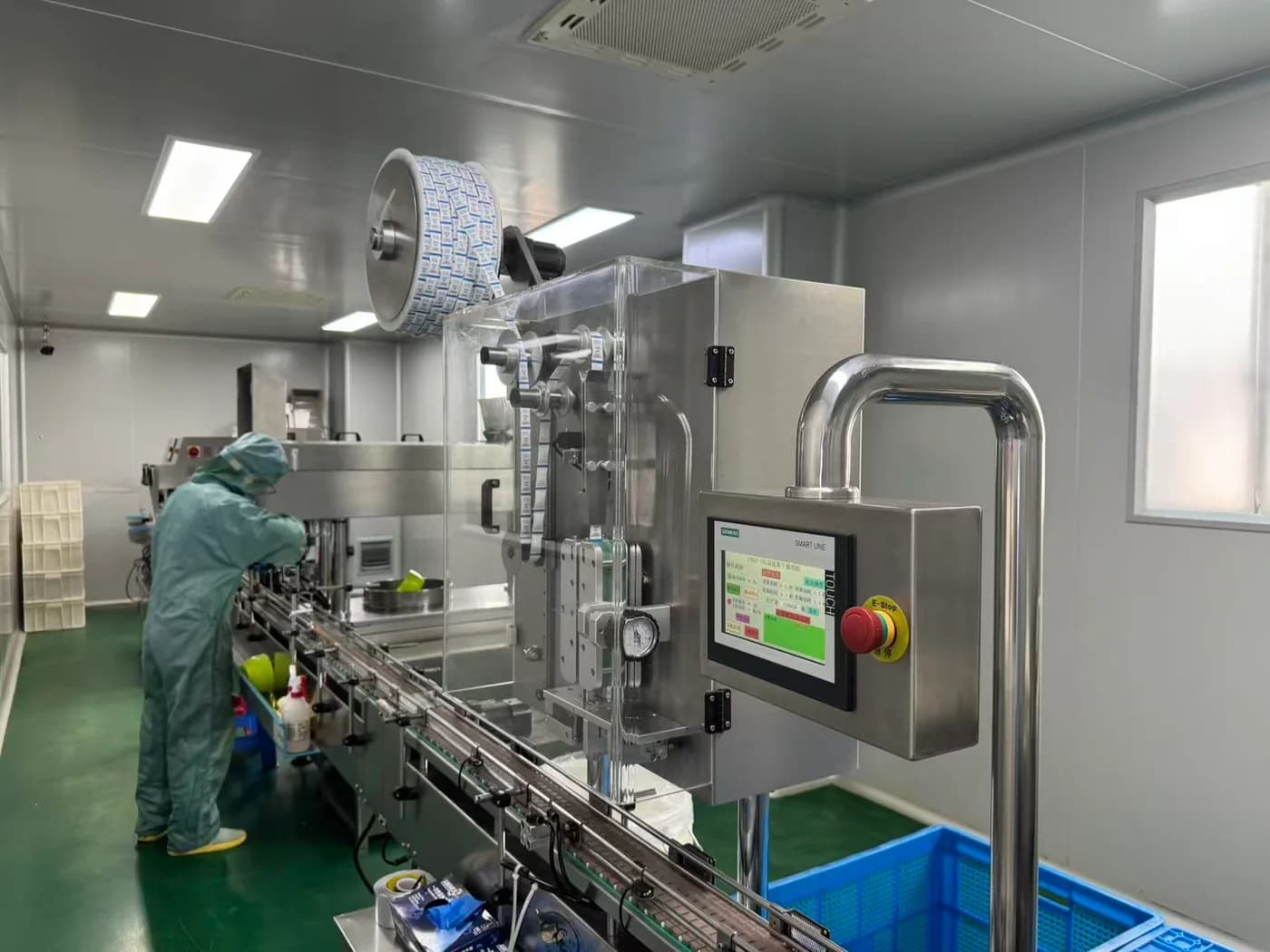
Softgels suit oil-based actives, fat-soluble vitamins and ingredients that degrade in tablet compression. But the supplier landscape splits sharply: high-MOQ pharmaceutical plants, low-cost regional fillers, and mid-volume GMP contract manufacturers. The right choice depends on your annual volume, target markets and whether you need halal certification. This page sets out the comparison criteria buyers use, then shows where a Guangdong-based GMP facility fits.
Softgel Capacity and Format Range
Softgel manufacturing is not a single process. Rotary die encapsulation handles most nutraceutical volumes; accentric and seamless lines cover chewable, enteric and sustained-release formats. A supplier worth comparing should state its fill weight window, shell options and drying capacity in numbers, not adjectives. Typical nutraceutical softgels run 150 mg to 1,500 mg, in oblong, oval, round or custom shapes. Shell formulations include gelatin, fish gelatin, modified starch and carrageenan for vegan or halal-sensitive markets.
Capacity matters most when your forecast moves. A plant running multiple encapsulation lines can absorb a reorder without pushing your slot by weeks. Ask for monthly output per line, drying tunnel count and the ratio of nutraceutical to pharmaceutical work. A facility that splits capacity between both often has tighter scheduling discipline than a single-category plant. For pilot runs, confirm whether the line is scaled down or whether you are paying for a full production day.
Formulation, Fill and Ingredient Sourcing
The best softgel manufacturers solve formulation problems before they reach the line. That means checking compatibility between the active and the carrier oil, adjusting viscosity for the fill pump, and testing whether the ingredient survives encapsulation heat. Common issues include suspended powders settling in the tank, fish oil oxidation during hold time, and shell brittleness when the fill contains high water activity. A supplier should flag these in the trial report, not after the first 50,000-unit run.
Ingredient sourcing is part of the comparison. Ask whether the manufacturer buys oils, extracts and actives directly or through traders, and whether it holds certificates of analysis for every lot. Organic, halal claims depend on the supply chain, not just the finished product test. For vegan softgels, modified starch and carrageenan shells avoid gelatin entirely, but they run at different line speeds and drying times. Confirm the shell system before you set your label claim.
Quality Systems, Documentation and Logistics
Compliance is where softgel suppliers separate. A GMP-certified facility with ISO 22000 and HACCP covers the baseline for US, EU and UK retail. Add halal certification if your target markets require them. FDA registration is relevant for US-bound product, but it is a facility registration, not an approval. Ask to see the certificate scope, not just the certificate. Scope tells you which product categories and processes are actually covered.
Logistics decide landed cost. Softgels are heavy and temperature-sensitive. A Guangdong-based plant shipping to Los Angeles, Rotterdam or Jebel Ali needs documented stability data, desiccant and foil barrier packaging, and a freight plan that avoids summer heat exposure. Lead time from purchase order to dispatch runs 20-35 working days for mass production, plus 7-10 working days for samples. Build 2-3 weeks of buffer for ocean freight and customs. Air freight suits pilot and launch quantities.
Quality Control and Batch Documentation
Every softgel batch is tested at three stages: incoming raw materials, in-process gel and fill, and finished product. Identity and potency are confirmed by HPLC or GC depending on the active. Microbial limits follow USP <2021> or <2022> with total aerobic count under 1,000 CFU/g and absence of E. coli and Salmonella. Heavy metals are screened by ICP-MS against California Proposition 65 and EU pharmacopoeia limits. Disintegration testing uses USP <2040> at 37°C in water or simulated gastric fluid, with typical softgel results of 10 to 20 minutes.
A certificate of analysis (COA) for each lot lists the product name, lot number, manufacturing date, expiry date, tests performed, specification limits, results and the analyst and QA sign-off. Buyers also receive a batch record summary showing fill weight range, seam thickness, drying loss and yield. Retention samples of every lot are kept for the full shelf life plus 12 months at 25°C/60% RH and, where relevant, accelerated conditions of 40°C/75% RH for 6 months. Stability protocols follow ICH Q1A(R2) with time points at 0, 3, 6, 12, 18 and 24 months.
For markets requiring it, the manufacturer can supply a free-sale certificate, GMP certificate from the local authority, and a declaration that the product is not irradiated and contains no TSE/BSE risk materials. If your brand makes structure/function claims, the batch documentation should include a statement that the product was manufactured under 21 CFR Part 111 conditions. None of this replaces your own regulatory review, but it shortens supplier qualification and supports an FDA inspection or an Amazon compliance request.
Packaging, Labelling and Retail Readiness
Softgels are filled into HDPE bottles with induction seals, blisters (PVC/PVDC or alu-alu), stick packs or sachets. Standard bottle sizes are 30, 60, 90, 120 and 180 counts, with child-resistant closures available. Labelling must include the statement of identity, net quantity, supplement facts panel, other ingredients, directions, warnings, and the manufacturer/distributor name and address. For US retail, the FDA dietary-supplement label rules in 21 CFR 101.36 apply, including the ‘Keep out of reach of children’ warning and, if required, the ‘Manufactured in a facility that also processes…’ allergen statement.
Lot and expiry coding is applied by inkjet or laser on the bottle, carton and shipper. Expiry is typically set at 24 months from the date of manufacture, supported by stability data. Cartons are printed with the lot, expiry, barcode (UPC or EAN) and, for Amazon, the FNSKU label can be applied by the factory or by a third-party prep centre. Pallet specifications follow the buyer’s retailer: standard 48x40 inch or 1200x1000 mm pallets, stretch-wrapped, with a maximum height of 1.8 m and a pallet label showing SSCC and carton count.
Retail readiness also covers the supplement facts panel format, which must be approved before printing. The factory provides a dieline and artwork template, and will not print without a signed proof. For EU markets, the label must show the nutrition declaration per 100 g and per portion, the batch number, and the name of the food business operator established in the EU. If you sell on Amazon, the factory can apply the FNSKU, poly-bag the bottle with a suffocation warning, and print the carton with the Amazon barcode to avoid a prep fee at the fulfilment centre.
MOQ, Lead Times and Delivery
Sampling starts with a 7 to 10 working day turnaround for a pilot batch of 1,000 to 2,000 softgels, depending on whether the fill is an existing formula or a new development. The sample is sent with a draft COA and a label proof. Once the sample is approved and the purchase order is confirmed, mass production takes 20 to 35 working days for retail bottling, plus 5 to 7 days for third-party testing if required. MOQ is 1,000 units per SKU for retail bottling, with lower pilot quantities considered case by case.
Shipping is by air or sea. Air freight from Guangdong to the US or EU takes 5 to 8 days door to door for 100 to 500 kg, while sea freight takes 25 to 35 days port to port for full containers. The factory quotes EXW, FOB Shenzhen or Hong Kong, or DDP to your warehouse. DDP includes customs clearance and duties but requires an accurate HS code and product description. For small parcels, express couriers handle 20 to 100 kg with a 3 to 5 day transit.
Documents provided with each shipment include the commercial invoice, packing list, bill of lading or air waybill, COA per lot, material safety data sheet (MSDS) for the finished product, free-sale certificate, and GMP certificate. For plant-derived ingredients, a phytosanitary certificate is issued where the destination country requires it. Certificates of origin can be arranged for preferential tariff treatment. The factory keeps a copy of every shipping document for two years, which helps if your customs broker requests a retrospective check.
Formats and Packaging Options
Pharmaceutical contract manufacturers
High MOQ, typically 50,000 units or more. Strong regulatory files. Best for large brands with multi-year forecasts and pharmaceutical-grade claims.
Nutraceutical GMP plants
MOQ 1,000 units per SKU. Broad format range, retail-ready bottling. Suits growing brands launching or scaling multiple SKUs.
Low-cost regional fillers
Lowest unit price, often 1,000-unit MOQ. Certification scope and documentation are usually thinner. Suitable for domestic-only, non-claim markets.
Private-label stock softgels
No formulation work. Fastest route to market. Limited differentiation, and you compete on the same SKUs as other brands.
From Enquiry to Delivery
- 01
Define volume and markets
Set annual units per SKU and list target countries. This filters suppliers immediately. EU and UK retail needs different certification than domestic-only channels.
- 02
Request certificate scope
GMP, ISO 9001, ISO 22000, HACCP, NSF/ANSI 455-2 and halal certification; FDA facility registration for US-bound shipments.
- 03
Order a pilot sample
A 7-10 working day sample tells you about communication speed, formulation feedback and whether the fill weight matches the spec sheet.
- 04
Audit the formulation report
Review stability data, fill compatibility notes and shell system choice. Ask what failed in trial and how it was adjusted. Good suppliers document this.
- 05
Confirm packaging and freight
Check bottle, desiccant and foil options, plus stability data for your shipping lane. Heat exposure in transit affects softgel shelf life.
- 06
Lock the production slot
Mass production runs 20-35 working days. Confirm the slot in writing and agree a reorder trigger before your first container clears customs.
Why EUPHM
MOQ that fits a launch
1,000 units per SKU for retail bottling. Pilot runs below that. You can test a SKU without committing to a container.
Certification for export markets
GMP, ISO 9001, ISO 22000, HACCP, NSF/ANSI 455-2 and halal certification; FDA facility registration for US-bound shipments.
Documentation you can hand over
Certificates of analysis, stability data and formulation reports prepared for retail buyers and importers. Reduces friction at customs and listing.
Questions buyers ask.
What is the typical MOQ for softgel manufacturing?+
For retail bottling, most nutraceutical GMP plants set MOQ at 1,000 units per SKU. Pharmaceutical contract manufacturers often start at 50,000 units. Pilot runs can go lower, sometimes from 1,000 units, but unit cost rises because the line setup is the same.
How long does softgel production take?+
Samples take 7-10 working days. Mass production runs 20-35 working days after you approve the sample and formulation. Add 2-3 weeks for ocean freight and customs clearance. Air freight is faster and suits launch quantities.
Do I need halal certification for softgels?+
It depends on your market. Gelatin shells are usually bovine or porcine, which rules out halal claims. Fish gelatin, modified starch and carrageenan shells are alternatives. If you sell into the Middle East or to consumers, confirm the shell system before you finalise the label.
Can softgels be made vegan?+
Yes. Vegan softgels use modified starch or carrageenan instead of gelatin. They perform differently on the line, with slower drying and different shell elasticity. Not every ingredient suits a vegan shell. Ask for a trial before committing to a vegan claim.
What certifications should a softgel manufacturer hold?+
At minimum, GMP, ISO 22000 and HACCP. Add halal certification if your target markets or label claims require them. For US-bound product, check FDA registration. Registration is a facility listing, not an approval, so read the certificate scope carefully.
What is the difference between a softgel and a liquid-filled hard capsule?+
A softgel is a one-piece gelatin or vegetarian shell formed, filled and sealed in a single operation, which gives a hermetic seal and suits oil-based fills. A liquid-filled hard capsule is a two-piece shell with a banded seam, often used for lower volumes or when a vegetarian shell is needed without softgel equipment. Softgels typically have a longer shelf life for oils, while liquid-filled hard capsules offer faster changeover for small batches.
Can you supply softgels with enteric coating or delayed release?+
Yes. Enteric coating is applied to the finished softgel using a pH-sensitive polymer that resists gastric fluid and releases in the intestine. This is common for probiotics, enzymes and ingredients that irritate the stomach. The coating adds 3 to 5 working days to production and requires a separate stability check. Delayed-release claims must be supported by disintegration or dissolution data, which the factory can provide in the batch documentation.
How do you handle allergen and cross-contamination controls in a softgel facility?+
The facility follows a documented allergen control plan: dedicated equipment or validated cleaning between products containing soy, fish, shellfish or gluten, and air handling with positive pressure in filling rooms. Allergen statements are printed on the label and carton based on the actual formulation. Cleaning validation uses swab tests for protein residues, with acceptance limits set before production. Buyers receive a cleaning log summary with each batch record if requested.
Have a product in mind?
Send us the brief and we will come back with a formulation direction, indicative price and a realistic lead time — usually within one working day.